I Let My Ex Grind On Me At The Party And Called My Husband Insecure… He Took Off His Ring And Left…
I Let My Ex Grind On Me at the Party and Called My Husband Insecure—He Took Off His Ring and Left
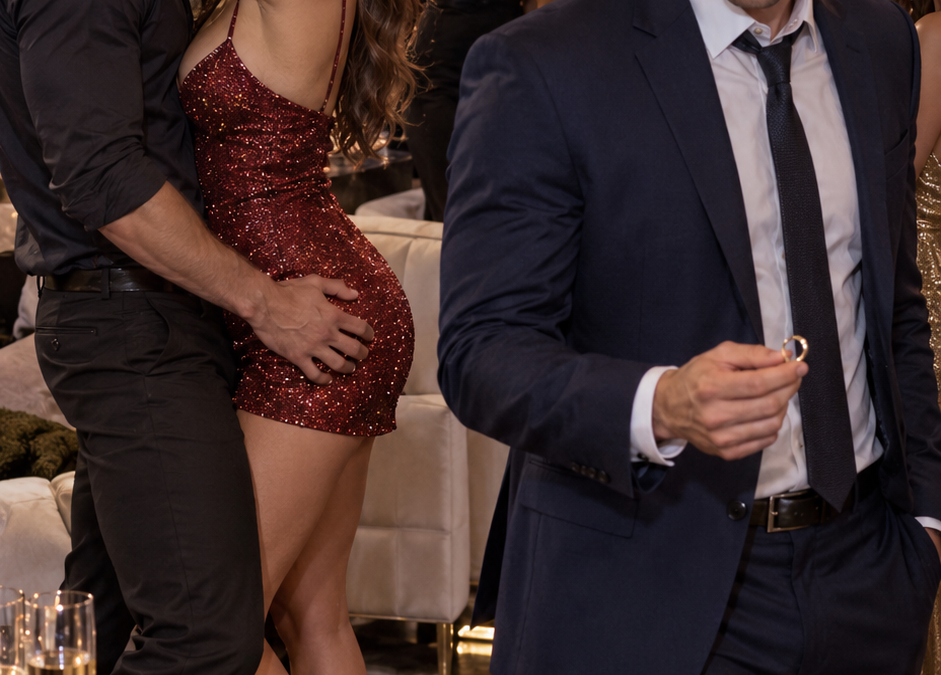
His hands were on my hips when my husband saw us.
Scott didn’t shout. He didn’t threaten my ex, didn’t knock over a chair, didn’t even ask me what the hell I thought I was doing.
He only removed his wedding ring—and somehow, that was worse.

PART ONE — THE NINETY SECONDS THAT ENDED MY MARRIAGE
By the time Scott appeared in the doorway, Andre’s hands were still hovering near my waist.
The music was loud enough that I felt the bass in my ribs. Someone had opened the sliding door to my cousin Rochelle’s backyard, letting July heat push into the air-conditioned living room. Behind Scott, I could see the red glow of the grill, folding lawn chairs scattered across the grass, and my uncle standing frozen beside the cornhole boards.
Scott looked at Andre.
Then he looked at me.
“Vanessa,” he said.
Just my name.
I was twenty-nine years old. I’d been married to Scott for four years and with him since I was twenty-two. I knew every version of his voice—the tired one after a fourteen-hour shift, the amused one when our dog stole his socks, the quiet one he used when something actually mattered.
This was a voice I had never heard before.
“Can you come outside for a minute?”
He didn’t accuse me.
That should have made it easier to follow him.
Instead, it embarrassed me.
Rochelle was sitting on the couch with a red plastic cup in her hand. Her sister Michelle stood near the kitchen. Andre was behind me, close enough that I could still feel the heat from his body.
And Rochelle’s fifteen-year-old daughter, Kiana, was standing near the hallway holding her phone against her chest.
I didn’t know yet that she’d been recording.
I only knew people were watching.
So instead of going with my husband, I smiled the way people smile when they’re trying to make someone else look unreasonable.
“Scott, seriously?”
His jaw tightened.
“Outside.”
That one word landed differently.
Andre stepped back.
He understood the room before I did.
Maybe that should have told me something.
But I was already committed to protecting myself from humiliation, and once pride takes control of a moment, it will burn down things you spent years building just to keep you from looking embarrassed for thirty seconds.
“It’s dancing,” I said.
Scott’s eyes dropped briefly to where Andre’s hands had been.
“That’s what we’re calling it?”
Something inside me flared.
Not guilt.
Defensiveness.
And because defensiveness is often just shame wearing armor, I reached for the sharpest weapon I had.
“Oh my God, Scott. Stop being insecure.”
The room seemed to become quieter even though the music hadn’t changed.
Michelle looked down.
Rochelle’s mouth tightened.
Andre moved another step away from me.
Scott didn’t.
He stood perfectly still.
And that was when I realized I’d said it loudly enough for everyone to hear.
For one second, his face showed everything.
Pain.
Embarrassment.
Recognition.
Then all of it disappeared.
He looked at my left hand.
Then at his.
Scott reached for his wedding ring.
My stomach tightened.
“What are you doing?”
He twisted the plain gold band once.
Twice.
It resisted at his knuckle before sliding free.
“Scott.”
He looked at it in his palm.
Four years earlier, I’d watched him put that ring on in a small stone chapel outside Fort Worth while his hands trembled harder than mine. We’d paid for that wedding ourselves. His grandmother had cried through the entire ceremony. My mother had danced until midnight.
Now he closed his fingers around the ring.
“Enjoy the party, Vanessa.”
He slipped it into the front pocket of his jeans.
Then he walked away.
No slammed door.
No threat.
No dramatic speech.
The side gate clicked shut.
Thirty seconds later, I heard his truck start on the street.
For some reason, the sound made me furious.
I turned toward the room as if everyone owed me an explanation.
Michelle spoke first.
“That was wrong.”
I laughed.
Actually laughed.
“What was wrong?”
“Vanessa.”
“What?”
Michelle stared at me.
“You know what.”
“It was dancing.”
Nobody answered.
That silence felt like judgment, so I attacked it.
“You all know Scott. He gets weird about anything involving my past.”
Rochelle put her drink on the coffee table.
“No, he doesn’t.”
“Excuse me?”
“He doesn’t.”
There was no anger in her voice.
That made it worse.
She got up and walked toward the backyard.
One by one, the others followed.
Andre remained near the kitchen island.
For the first time that night, he looked uncomfortable.
“You okay?” I asked.
He exhaled.
“I think I should probably go.”
That offended me too.
“So now you’re scared?”
“I’m not scared.”
He glanced toward the patio.
“I just don’t want to be involved in somebody’s marriage blowing up.”
The hypocrisy of that statement should have been obvious.
Instead, I folded my arms.
“Nothing is blowing up.”
Andre looked at me for two long seconds.
“Okay.”
He left twenty minutes later.
I stayed until almost eleven.
Not because I was having fun.
Because going home first felt like admitting Scott had been right to leave.
That was the logic I was using then.
I had converted my marriage into a contest, and I hadn’t even noticed.
When I finally drove home, Scott’s truck was in the driveway.
Relief came first.
See?
He was home.
He’d cooled down.
We would argue, sleep badly, and by Tuesday this would become one more story about Scott overreacting.
I walked inside.
The kitchen lights were off.
The microwave clock glowed 11:17.
Scott sat at the table.
An overnight bag was on the chair beside him.
I stopped in the doorway.
“What is that?”
“I’m going to my mom’s.”
His voice was flat.
“For the night?”
“Don’t know.”
My irritation returned immediately.
“You’re seriously doing this?”
Scott rubbed both hands over his face.
“I’m not fighting tonight.”
“Then don’t.”
“I’m not.”
“But you’re packing a bag.”
“Yes.”
“Which is dramatic.”
He looked at me.
I should have stopped.
There were so many opportunities that night when I could have chosen a different direction.
That was one of them.
Instead, I stepped closer.
“This is exactly what I meant at Rochelle’s. You don’t know how to deal with me having a past. Andre and I dated years ago.”
Scott slowly lowered his hands.
“Your past wasn’t behind you with his hands on your hips.”
I scoffed.
“We were dancing.”
“You were grinding on him.”
“Oh, come on.”
“I watched the video.”
My throat tightened.
“What video?”
Scott didn’t answer.
“Kiana recorded you.”
For the first time that night, cold moved through me.
“Why was she recording me?”
“That’s your question?”
“No. I’m saying—”
“I wasn’t looking for you, Vanessa.”
His voice remained controlled, but something cracked beneath it.
“I was outside playing cornhole with your uncle. A fifteen-year-old girl thought what you were doing looked wrong enough to come find me.”
I looked away.
“Teenagers record everything.”
Scott gave a short, exhausted laugh.
“Okay.”
“I didn’t cheat on you.”
“I didn’t say you did.”
“You’re acting like I did.”
“I’m acting like I watched my wife push her body against her ex-boyfriend while he had both hands on her.”
His words made the scene sound ugly.
That angered me because the scene had been ugly.
“You always do this.”
“Do what?”
“Turn something small into something huge.”
Scott stared at me.
Then came the moment I wish I could reach backward through time and stop.
I said it again.
“Insecure.”
His expression changed.
Not much.
A tiny shift.
But I knew why.
Years earlier, Scott had told me about a woman he’d dated before me.
Whenever he questioned her disappearing overnight or flirting with other men, she called him insecure. She had used that word until he’d started apologizing for having boundaries at all.
I knew that.
And I used it anyway.
Scott stood.
He lifted the overnight bag.
“Good night, Vanessa.”
“That’s it?”
“That’s it.”
He walked toward the spare bedroom.
“You can’t just shut me out.”
He stopped.
For half a second, I thought he might turn around.
Instead, he said quietly, “You already decided what my feelings mean. What exactly are we supposed to discuss?”
The spare-room door closed.
I stood alone in the hallway.
Then I poured wine.
I sat on the couch.
And at 11:42 p.m., I texted Rochelle.
Scott is being ridiculous.
No response.
He literally packed a bag because I danced with Andre.
Nothing.
I stared at the screen.
Finally, I typed:
You saw it. Tell me I’m not crazy.
The typing indicator appeared.
Then disappeared.
Appeared again.
The message that eventually came through contained only six words.
You don’t want my answer tonight.
I slept on the couch.
At 6:54 the next morning, I woke to the low growl of Scott’s truck.
By the time I reached the front window, he was backing into the street.
I ran to the kitchen.
No note.
No coffee mug.
No wedding ring on the counter.
Nothing.
The spare bedroom had been made perfectly.
For several minutes, I searched the house for his ring.
I checked the bathroom.
His nightstand.
The kitchen drawer where we kept loose coins.
Nothing.
And because I was still determined to tell myself a story in which I had not broken anything serious, I found comfort in that.
He’d taken the ring.
That meant he wasn’t done.
A man who was truly finished would leave it behind.
I believed that with absolute certainty.
Three weeks later, I would learn what Scott taking that ring actually meant.
And by then, there would be no marriage left to save.
PART TWO — EVERYONE SAW IT BEFORE I DID
For the next two days, I turned my marriage into a public-relations problem.
At work Monday morning, my coworker Leah noticed the swollen skin beneath my eyes.
“Bad weekend?”
“My husband threw a tantrum at a cookout.”
Leah stopped sorting insurance forms.
“A tantrum?”
“My ex was there. We danced. Scott got jealous and left.”
She waited.
I hated the pause.
“What?”
“Nothing.”
“Just say it.”
Leah leaned against the filing cabinet.
“What kind of dancing?”
There it was again.
The detail nobody would let me escape.
“Normal dancing.”
“Okay.”
The way she said okay told me she didn’t believe me.
I opened the billing software harder than necessary.
“It wasn’t sexual.”
Leah returned to her desk.
“I didn’t say it was.”
By lunch, I was irritated with her too.
Scott texted at 1:13.
My chest tightened when his name appeared.
Finally.
Did the water bill autopay go through?
I read the message three times.
That was all.
I typed a paragraph.
Deleted it.
Typed another.
Deleted that too.
Finally:
Yes.
His answer came thirty seconds later.
Thanks.
No anger.
No demand.
No accusation.
Nothing to push against.
And without his anger, my role became harder to maintain.
Tuesday evening, he texted again.
Coming by at 6:30 for work clothes. I’ll be quick.
I spent almost an hour preparing what I intended to say.
I would explain trust.
Marriage.
Communication.
Boundaries that weren’t controlling.
I rehearsed phrases in the bathroom mirror until I sounded calm enough to make him look unreasonable.
Scott arrived at 6:34.
He walked straight past me.
“Hi.”
“Hey.”
He entered our bedroom and pulled a suitcase from the closet.
My prepared speech immediately began falling apart.
“So we’re not even going to talk?”
“I’m here for clothes.”
“I can see that.”
He folded three pairs of work pants.
“You’ve had two days.”
Scott put shirts on hangers across the bottom of the suitcase.
“I’ve had two days to what?”
“Cool down.”
He looked up.
“I’m not angry.”
That unsettled me.
“Obviously you’re angry.”
“No.”
“Then what are you?”
Scott zipped the first compartment.
“Clear.”
One word.
Clear.
I followed him into the bathroom while he collected his razor, toothbrush, deodorant, and medication.
“Adults don’t just leave.”
He put everything into a toiletry bag.
“Adults also don’t humiliate their spouse and call them defective for reacting.”
“I didn’t call you defective.”
“You knew what you were saying.”
“You’re twisting it.”
Scott stopped.
He faced me.
“No, Vanessa. I’m finally refusing to twist it.”
Then he walked around me.
Fourteen minutes after arriving, he was gone.
I know because later that night I checked our security cameras.
6:34:17.
Arrival.
6:48:51.
Departure.
I watched the footage five times.
I told myself I was studying his body language.
Really, I was searching for hesitation.
There wasn’t any.
Wednesday afternoon, Michelle called.
I almost didn’t answer.
“Hey.”
“Can you talk?”
Her tone made my stomach tighten.
“I’m at work.”
“This won’t take long.”
I stepped into the parking lot.
Texas heat pressed against my skin.
“What?”
Michelle took a breath.
“Andre messaged me before the party.”
I stopped beside my car.
“What do you mean?”
“Instagram. About two weeks before.”
“What did he say?”
“He asked if you’d be at Rochelle’s Fourth of July thing.”
The parking lot seemed to tilt slightly.
“What did you tell him?”
“That you probably would.”
“Why?”
“Because I didn’t think anything of it.”
I pressed my fingers to my forehead.
“He asked specifically about me?”
“Yes.”
“Did he say why?”
“No.”
She hesitated.
“Vanessa, I’m sorry. I wouldn’t have answered if I’d thought—”
“If you’d thought what?”
Another pause.
“That you’d let him do that.”
The words hit harder than I expected.
“You think this is my fault?”
Michelle sighed.
“I think Andre came because he wanted to see if there was still something there.”
“You don’t know that.”
“No.”
“But?”
“But he found out.”
I hung up before she could finish.
For almost ten minutes, I sat in my car with the engine running.
The air conditioner blasted cold air across my arms.
Andre hadn’t happened to appear.
He’d come looking for me.
The knowledge created the first real crack in the story I’d been telling myself.
I drove to his apartment after work.
Andre opened the door wearing gym shorts and a gray T-shirt.
He smiled.
“Well, look who—”
“Why did you ask Michelle if I’d be at Rochelle’s party?”
His smile faded.
“Come inside.”
“No.”
“Vanessa.”
“Answer me.”
He leaned against the doorframe.
His ease annoyed me now.
“I wanted to see you.”
“Why?”
“Because I hadn’t in a while.”
“You follow me on Instagram.”
“That’s not the same.”
“You knew I was married.”
“Obviously.”
“Then why come looking for me?”
Andre studied me.
When he answered, there was no shame in it.
That somehow made it worse.
“I always thought you married Scott too fast.”
My mouth went dry.
“What?”
“You were twenty-five.”
“We’d been together three years.”
“Yeah.”
He shrugged.
“You changed when you got with him.”
“Changed how?”
“You got serious.”
I stared.
Andre smiled faintly.
“You used to be fun.”
There are sentences that do not hurt because they are true.
They hurt because some part of you once wanted them to be true.
I had missed that version of myself.
Not Andre exactly.
The woman I had been around Andre.
Twenty-three.
Unpredictable.
Desired.
Always on the edge of some plan.
Scott loved me differently.
He remembered my dentist appointments.
He kept jumper cables in my trunk.
When my father had surgery, Scott slept in a hospital chair for two nights without making any of it about himself.
Andre made me feel exciting.
Scott made me feel safe.
Somewhere along the way, I’d started treating safety like boredom.
“What did you think would happen at the party?” I asked.
Andre looked almost surprised by the question.
“I wanted to see if the connection was still there.”
“And?”
His eyes held mine.
“You answered that.”
I felt heat climb my neck.
“It was dancing.”
Andre gave me a look I recognized immediately because I’d seen versions of it from everyone else.
“Vanessa.”
“What?”
“You backed into me.”
Silence.
“You kept dancing.”
I swallowed.
He continued carefully.
“I didn’t force you.”
“I didn’t say you did.”
“Then don’t come over here acting like I tricked you.”
My face burned.
Andre stepped back into his apartment.
“For what it’s worth, I didn’t think Scott would leave.”
The statement stopped me.
“You thought about Scott?”
He hesitated.
That was answer enough.
I drove home with both hands locked around the steering wheel.
For the first time, there was no satisfying villain available.
Andre had come with an agenda.
But I had opened the door.
At 9:18 p.m., I texted Scott.
I found out Andre asked Michelle if I was going to be at the party. He planned to see me. I understand now that it wasn’t as random as I thought.
I stared at the message.
Then added the sentence that ruined whatever honesty had come before it.
But the dancing was still just dancing, and I think you’re making it bigger than it was.
I pressed send.
Scott never answered.
The next afternoon, I drove to his friend Mitchell’s apartment.
Mitchell opened the door eight inches.
“Hey, Vanessa.”
“Is Scott here?”
His expression told me yes.
“I need five minutes.”
“He doesn’t want to talk.”
“I’m his wife.”
“I know.”
“Then let me in.”
“I can’t.”
Anger rushed through me.
“You’re seriously keeping me out of my own marriage?”
Mitchell’s face hardened slightly.
“No. Scott asked for one place where he doesn’t have to argue.”
That shut me up.
I wrote a note on the back of an envelope from my glove compartment.
I love you. I know I hurt you. Please don’t make a permanent decision while you’re angry.
I handed it to Mitchell.
Three days passed.
No answer.
Sunday afternoon, Scott returned for more belongings.
And the second I opened the door, I saw the wedding ring again.
Only it wasn’t where it belonged.
The gold band was on the ring finger of his right hand.
My heart lifted.
He was still wearing it.
Still holding on.
Still deciding.
At least that was what I believed.
Then Scott walked into our living room and picked up the framed photograph of his grandfather.
And suddenly, without understanding why, I felt afraid.
PART THREE — THE RING ON THE WRONG HAND
Scott’s grandfather Walter had been dead for six years.
The photograph showed him in a dark suit outside a brick church in Fort Worth, smiling beside Scott’s grandmother Louise on their fiftieth anniversary.
Scott loved that photograph.
He wrapped it in a dish towel before placing it inside a box.
I watched his right hand.
The ring caught the sunlight.
“You taking that too?”
“Yeah.”
I wanted to ask about the ring.
I didn’t.
Hope can make intelligent people superstitious.
I was afraid naming it might somehow destroy what I thought it meant.
Instead, I followed Scott through the house.
He had a handwritten list.
Toolbox.
External hard drive.
Tax documents.
Passport.
His grandfather’s photograph.
A watch his mother had given him.
He wasn’t gathering random belongings.
He was removing roots.
“Did you get Daisy’s shots done?” he asked.
“Yesterday.”
“Rabies too?”
“Yes.”
“Okay.”
“She’s been looking for you.”
His hands paused over a box.
Only for a second.
Then he continued packing.
“I miss her.”
Not me.
Her.
I felt the distinction.
“You can come see her.”
“I know.”
“Whenever.”
He nodded.
I hated his calmness.
Anger would have given me something.
Calmness gave me only consequences.
“I miss you.”
Scott stopped near the front door.
His hand rested on the knob.
My eyes went again to the ring on his right hand.
“I know you do, Vanessa.”
His voice was gentle.
Then he left.
I replayed those words all night.
I know you do.
Not leave me alone.
Not it’s over.
Not I don’t love you.
I constructed hope out of grammar.
My mother destroyed it the next morning.
She called at 8:06.
“Why didn’t you tell me?”
My stomach dropped.
“Tell you what?”
“Rochelle called.”
I closed my eyes.
“Mom—”
“What happened?”
“You already talked to Rochelle.”
“I want to hear you say it.”
I sat at the kitchen table.
“We were at the cookout. Andre showed up.”
“Your ex.”
“Yes.”
“And?”
“We danced.”
“What kind of dancing?”
I nearly laughed from frustration.
Why did everyone ask that?
“Mom.”
“What kind?”
“Close.”
“His hands on you?”
“Yes.”
“Your body against his?”
I stared at the tabletop.
“Yes.”
“And Scott saw?”
“Kiana showed him a video.”
My mother went quiet.
“What happened when he came inside?”
“He asked me to go outside.”
“And you?”
“I told him it wasn’t a big deal.”
“Vanessa.”
“I called him insecure.”
My mother inhaled slowly.
“What did you think was going to happen?”
The question irritated me.
“So you’re on his side too.”
“I’m not on a side.”
“It sounds like it.”
“All right.”
Her voice sharpened.
“Imagine you’re at a family party. Scott’s ex-girlfriend has her backside pressed against him while he’s holding her hips. You walk in and ask him privately to come outside. He looks at you in front of everybody and says you’re insecure.”
I said nothing.
“How do you feel?”
“It’s different.”
“Why?”
“Because—”
Nothing came.
My mother waited.
Then she said the sentence that dismantled something inside me.
“The dancing was disrespectful. What you did afterward was cruel.”
My throat tightened.
“I wasn’t trying to be cruel.”
“Intent doesn’t erase function.”
I’d hear almost those exact words again later from a therapist.
At the time, they made me furious.
“You don’t understand.”
“I understand perfectly.”
“No, you don’t.”
“You let another man touch you, and when your husband said it hurt him, you made his hurt the problem.”
I stood so fast the chair scraped backward.
“So I’m supposed to just hate myself now?”
“No.”
Her voice softened.
“You’re supposed to stop lying to yourself.”
I began crying.
She let me.
Then she said, “I love you. But I’m not going to help you turn Scott into a bad man so you can feel like a good woman.”
That was the first time my mother had ever refused to stand in my corner.
Or maybe she hadn’t refused.
Maybe she’d realized the corner I was asking her to defend didn’t deserve defending.
After we hung up, I sat on the kitchen floor.
The house was silent.
Daisy came over and rested her head against my knee.
I buried my face in her fur.
And for the first time since the party, I said the sentence aloud.
“I hurt him.”
Not he misunderstood me.
Not everyone is overreacting.
Not it was just dancing.
I hurt him.
Once the sentence existed in the room, I couldn’t put it back.
I found Dr. Lila Loomis through my insurance directory.
Her office was on the second floor of a medical building in North Dallas, between a dermatologist and an accounting firm.
At our first appointment, she asked why I was there.
“My husband left.”
“Why?”
I told the story.
Or tried to.
Within three minutes, she interrupted me.
“You’re giving me interpretations.”
“What?”
“You said the dance was harmless. Interpretation. You said your husband overreacted. Interpretation.”
She placed her pen on the legal pad.
“Tell me only what happened.”
I stared at her.
“What do you mean?”
“Actions. No motives. No adjectives.”
The exercise felt stupid.
Then I started.
“My ex came to the party.”
She nodded.
“I talked to him.”
Another nod.
“He took my hand when a song came on.”
“And?”
“I went with him.”
“Did he force you?”
“No.”
“We danced.”
“What kind?”
I almost laughed.
Even the therapist.
“Grinding.”
She waited.
“His hands were on my hips.”
“What happened next?”
“My husband saw a video.”
“And?”
“He came inside and asked me to step outside.”
“And?”
“I refused.”
“And?”
“I called him insecure in front of people.”
“And?”
“He took off his wedding ring and left.”
Dr. Loomis sat back.
“How does that version feel?”
I looked toward the window.
“Ugly.”
“Why?”
“Because there’s nowhere to hide.”
That became the beginning.
Not healing.
Not redemption.
Just the removal of hiding places.
During the third session, Dr. Loomis asked something I had avoided even in my own head.
“Why Andre?”
I shrugged.
“He was there.”
“No.”
Her answer came immediately.
“He was physically there. That doesn’t explain why you emotionally permitted what happened.”
I looked down.
“Andre made me feel…”
I stopped.
“Feel what?”
“Young.”
“You are young.”
“Not like that.”
I struggled for words.
“Unattached. Wanted.”
Dr. Loomis nodded.
“What did Scott make you feel?”
“Safe.”
“And how had you begun interpreting safe?”
I knew the answer.
“Boring.”
There it was.
The confession underneath all the others.
Scott hadn’t become less loving.
I had become less impressed by love that didn’t make me anxious.
I had spent years saying I wanted stability, then resented the man who gave it to me because stability couldn’t produce the chemical rush of uncertainty.
Andre had not been an accident.
He had been a mirror.
And I liked the woman reflected in it.
Then Dr. Loomis asked about the word.
“Insecure.”
I went still.
“What did you intend that word to do?”
“Tell Scott he was overreacting.”
“No. That’s what you claim it meant.”
She leaned forward.
“What did you intend it to do in that moment?”
I knew.
I didn’t want to say it.
“Vanessa?”
“Shut him down.”
“Why that word?”
My eyes burned.
Because I knew his history.
Because Scott had once told me that his previous girlfriend had used the same word whenever he questioned behavior that made him uncomfortable.
Because I’d watched him talk about that relationship with shame.
Because he’d told me it took years to trust his own instincts again.
And at the party, I had reached directly into that old wound.
“I knew it would hit him.”
Dr. Loomis didn’t rescue me from the silence.
“So the word was not accidental.”
“No.”
“It was strategic.”
A tear rolled down my cheek.
“Yes.”
That was when I understood why Scott hadn’t argued.
He wasn’t simply reacting to another man touching his wife.
He’d watched the person who knew him best use private information as a public weapon.
I covered my face.
“Oh God.”
Dr. Loomis waited until I looked up.
“What do you want to do now?”
“Tell him.”
“Why?”
“So he’ll understand.”
“Understand what?”
“That I know.”
“And then?”
I froze.
She held my gaze.
“If the real answer is ‘so he’ll come home,’ then your confession is still partly a transaction.”
That hurt.
“What am I supposed to do?”
“Tell the truth because he deserves the truth.”
“And if he doesn’t come back?”
“Then you tell it anyway.”
I left the session with my hands trembling.
That night, I texted Scott.
Not a paragraph.
Not an apology.
Only a request.
Would you meet me Saturday morning at Mason’s Diner on Buckner? I have things I need to say. I’m not asking you to come home or make any decision. I just want to tell you the truth without defending myself.
Four hours passed.
Then five.
At 11:47 p.m., my phone lit up.
One word.
Saturday.
I should have felt relieved.
Instead, I stared at Scott’s answer with a growing certainty that whatever happened in that diner was going to determine the shape of the rest of my life.
PART FOUR — THE TRUTH WITHOUT AN EXCUSE
I arrived twenty-two minutes early.
Mason’s Diner hadn’t changed since Scott and I used to eat there after church with his mother.
Same cracked red booths.
Same silver napkin dispensers.
Same smell of coffee, bacon, and industrial lemon cleaner.
I chose our old booth near the window.
That was probably a mistake.
Too much history.
At 9:03, Scott walked in.
My eyes went directly to his right hand.
The ring was still there.
Hope rose before I could stop it.
Scott sat across from me.
“Hey.”
“Hi.”
A waitress poured coffee.
Neither of us touched the menu.
For several seconds, the small ordinary noises of the diner seemed unbearably loud.
Forks against plates.
A baby squealing three booths away.
The hiss of the grill.
Finally, Scott looked at me.
“You said you wanted to talk.”
I nodded.
“I wrote things down.”
“Okay.”
“I don’t want to read them.”
“Then don’t.”
I folded the paper in half.
My fingers were shaking.
“I’ve been seeing a therapist.”
Scott’s expression didn’t change.
“I know.”
I blinked.
“How?”
“Your mom mentioned it to mine.”
Of course.
Family networks survived marriages better than marriages survived themselves.
I took a breath.
“Andre wasn’t an accident.”
Scott looked toward the coffee.
“I don’t mean I planned for him to be there. I didn’t.”
He remained silent.
“But I kept him in a place in my head where he shouldn’t have been.”
Scott’s eyes lifted.
I continued.
“I liked knowing he still thought about me. I liked who I felt like around him. Younger. More exciting. Like I hadn’t chosen one life yet.”
My throat tightened.
“I spent years saying your steadiness made me feel safe. Somewhere along the way, I started punishing you for the same thing.”
Scott rubbed his thumb along the coffee mug.
I forced myself to keep going.
“When Andre pulled me toward the living room, I could have stopped. I didn’t. When he put his hands on me, I could have moved them. I didn’t.”
Scott looked away briefly.
The pain was small but visible.
That almost stopped me.
I continued because stopping would have been another attempt to protect myself.
“When you came inside, your face should have mattered more to me than everybody watching.”
His jaw moved.
“It didn’t.”
I swallowed.
“My pride mattered more.”
Scott’s eyes returned to me.
“And the word.”
I almost couldn’t say it.
“Insecure.”
His expression hardened.
I nodded.
“I knew what that word meant to you.”
Silence.
“You told me what your ex did.”
“Yeah.”
“I remembered.”
That changed his face.
Until that moment, maybe some part of him had wondered whether I’d forgotten.
I hadn’t.
“I used it because I knew it would hurt you enough to put you on defense.”
Scott stared at me.
“I wanted the room to see you as the problem so I wouldn’t have to be the woman doing something wrong.”
The waitress approached.
“You folks ready to order?”
Scott shook his head.
“Just coffee for me.”
She glanced at me.
“Same.”
When she left, I continued.
“The worst part wasn’t Andre.”
Scott’s eyes narrowed slightly.
“The worst part was you asking me to come outside.”
My voice broke.
“You were giving me a chance to protect us privately.”
He looked down.
“And I humiliated you publicly instead.”
Neither of us spoke.
I wiped beneath my eye.
“I’m sorry.”
It sounded too small.
So I didn’t say it again.
Scott sat quietly for almost a minute.
Then he breathed out.
“I believe you.”
I looked up.
“What?”
“I believe you.”
Something cracked open inside me.
Scott continued before hope could fill it.
“I believe everything you just said.”
I pressed my lips together.
“I can tell you’ve done work.”
I began crying.
“And I think you’re sincere.”
“Then—”
He lifted one hand.
I stopped.
“But the woman you’re describing at the party was sincere too.”
The sentence landed like a weight.
Scott’s voice stayed calm.
“That’s what I’ve been trying to understand.”
I wiped my face.
“You think I’ll do it again?”
“I don’t know.”
“I won’t.”
“You can’t know that.”
“I do know.”
Scott shook his head.
“Vanessa, three weeks ago you knew something else.”
I went silent.
“You knew it was harmless.”
His words weren’t cruel.
“You knew I was insecure.”
He took a breath.
“You knew everybody was overreacting.”
Each statement stripped something away.
“Now you know this.”
He leaned back.
“Maybe this version of you is stronger. I hope she is.”
“She is.”
“But both versions are you.”
I covered my mouth.
Scott looked toward the window.
“I’ve spent the last month asking myself whether I could stay married to someone if I believed their apology.”
My heart pounded.
“And?”
His eyes returned to mine.
“I can forgive you and still not trust the marriage.”
My breathing changed.
“Scott—”
“I filed Wednesday.”
For a second, I didn’t understand.
“Filed what?”
His face folded with sadness.
Then I knew.
“No.”
“Vanessa.”
“No.”
“I filed for divorce.”
The diner continued around us.
That was the strangest thing.
Nobody stopped eating.
Nobody heard a marriage die.
A man at the counter poured ketchup over his hash browns.
A little boy dropped a spoon.
The waitress carried three glasses of orange juice past us.
Life refused to acknowledge the scale of what had just happened.
“You filed before hearing me?”
“Yes.”
“Why meet me then?”
“Because you asked.”
“Scott.”
“And because I thought you deserved to hear it from me.”
I stared at him.
“How can you say you believe me and still do this?”
“Because believing you’re sorry doesn’t restore what happened.”
“I can change.”
“I hope you do.”
“For us.”
His eyes filled slightly.
“No.”
That word broke something in me.
I leaned back.
Then my eyes fell to his right hand.
The ring.
Still there.
A final piece of hope.
I pointed at it.
“Then why are you still wearing that?”
Scott looked down.
He was quiet for several seconds.
When he looked up again, grief had replaced every other emotion.
“My grandfather wore his ring on his right hand after Grandma Louise died.”
I stared.
Scott touched the band.
“He said the marriage was over, but it had mattered.”
My mouth went dry.
“He wore it there while he mourned.”
Suddenly, I remembered.
The photograph.
Walter outside the church.
A story Scott had told me years earlier.
I had laughed softly and said it sounded old-fashioned.
Scott had answered, It means something to me.
I hadn’t remembered.
He had.
“This isn’t hope?” I whispered.
Scott’s eyes filled.
“No.”
The word barely made sound.
“It’s grief.”
Every time I’d seen the ring and told myself Scott was still choosing, he had already chosen.
Every time I interpreted it as a door left open, he had been carrying a funeral on his hand.
I couldn’t speak.
Scott rubbed the ring once with his thumb.
“I didn’t move it because the marriage meant nothing.”
He looked directly at me.
“I moved it because it meant everything.”
That hurt more than anger could have.
I lowered my head.
For the first time since the party, there was nothing left to negotiate.
Scott had heard the truth.
He believed me.
He saw my regret.
And he was leaving anyway.
PART FIVE — FORGIVENESS WAS NOT THE SAME AS RETURNING
We stayed in the diner another twelve minutes.
I know because the receipt said 9:41 when Scott paid for his coffee.
I didn’t beg.
Not because I suddenly became dignified.
Because something about the ring took the fight out of me.
“What do you need from me?” I asked.
Scott looked surprised.
“For the divorce.”
He rubbed his jaw.
“I want it simple.”
I nodded.
“No dragging it out.”
“Okay.”
“No trying to punish each other.”
“Okay.”
“Daisy stays with you. Your schedule is better for her.”
That nearly broke me again.
Scott loved that dog.
“You can see her.”
“I know.”
“Whenever you want.”
He nodded.
We walked outside together.
The Texas sun was bright enough to make me squint.
At his truck, Scott turned.
“For what it’s worth…”
I waited.
“I’m glad you’re doing the work.”
I cried quietly.
“I wish I’d done it before.”
“So do I.”
There was no cruelty in his answer.
That’s what made it unbearable.
If Scott had hated me, I could have hated him back.
Instead, he unlocked his truck.
“Take care of yourself, Vanessa.”
“You too.”
He drove away.
I stayed in the parking lot until the heat inside my car became unbearable.
The divorce papers arrived four days later.
Seeing my name printed beside Scott’s under the words Petition for Dissolution of Marriage did something no conversation had managed to do.
It made everything bureaucratically real.
Marriage had once been vows, photographs, Christmas mornings, groceries, sex, arguments, flu medicine, mortgage payments, and Scott warming my side of the bed while I brushed my teeth.
Now it was numbered paragraphs.
Property.
Equity.
Debts.
Possession.
Signatures.
I hired Elena Garza, a family-law attorney recommended by Dr. Loomis.
She was efficient and unemotional.
“You don’t have children?”
“No.”
“Any dispute over the house?”
“No.”
“Retirement accounts?”
“We’re splitting what accumulated during marriage.”
“Vehicles separate?”
“Yes.”
She looked over the documents.
“This can be clean.”
Clean.
What a strange word for ending a life.
I signed everything she put in front of me.
The house sold six weeks later.
On closing day, I stood alone in the empty living room.
The walls looked lighter where our photographs had hung.
Daisy’s nails clicked against the hardwood.
I walked through each room.
The kitchen where Scott had packed his overnight bag.
The spare bedroom where he’d slept his last night under the same roof as me.
The bathroom where I’d rehearsed speeches designed to make him wrong.
In the bedroom closet, I found a single wooden hanger he’d left behind.
I sat on the floor holding it.
Not because the hanger mattered.
Because grief attaches itself to ordinary things when the important things are too large to carry.
I continued therapy.
Dr. Loomis refused to turn my progress into a consolation prize.
One afternoon, I told her, “Sometimes I feel like I’m becoming the person Scott needed.”
She shook her head.
“Don’t do that.”
“Do what?”
“Make your growth another way to stay married to him psychologically.”
The sentence irritated me.
Then frightened me.
“What should I become?”
“Someone you can live with.”
I looked down.
“Even if nobody rewards me for it?”
“Especially then.”
That became the harder work.
It was easy to change while imagining Scott might eventually notice.
It was harder to change after accepting he never had to.
I blocked Andre.
No dramatic message.
No final accusation.
I opened Instagram on a Tuesday night, removed him, blocked the number, deleted the old thread, and put my phone down.
For several seconds, I expected to feel something.
Victory.
Sadness.
Closure.
Nothing came.
That told me what Andre had really been.
Not a lost love.
A function.
He represented a version of myself I’d been feeding long after that version should have grown up.
Once I stopped needing the reflection, the mirror became irrelevant.
The final divorce hearing came in October.
The courthouse hallway smelled faintly of dust and burnt coffee.
Scott sat with his attorney near the windows.
He wore a navy shirt I’d bought him two Christmases earlier.
His right hand rested on his knee.
The ring remained there.
I sat across the hall.
We nodded to each other.
No hug.
No hostility.
After everything, our ending was polite.
That almost felt unfair.
The judge reviewed the agreement.
Asked questions.
Confirmed signatures.
Then, with language so ordinary it seemed impossible, she ended our marriage.
Four years reduced to a sentence.
Outside the courtroom, Scott shook Elena’s hand.
Then mine.
His grip was warm.
“Take care.”
“You too.”
He walked toward the elevator.
His mother Diane was waiting near the far end of the hall.
I nearly passed her without speaking.
“Vanessa.”
I stopped.
Diane had never been a dramatic woman.
She wore the same silver cross necklace I’d seen at every Thanksgiving and Christmas since I was twenty-two.
“I’m sorry,” she said.
My eyes burned.
“So am I.”
She touched my forearm.
There was no judgment in it.
Maybe that’s why I told her.
“He explained the ring.”
Diane’s face changed.
“On his right hand?”
I nodded.
“He said Walter did that after Louise died.”
Diane looked toward the elevator where Scott had disappeared.
“My father wore his that way for three years.”
I swallowed.
“Three years?”
“He said he wasn’t ready to remove something that had represented fifty-one years of his life.”
Her voice softened.
“When he finally took it off, he put it in a little wooden box on his dresser.”
I pictured Scott doing the same someday.
“What did Walter say?”
Diane gave a sad smile.
“He told us the grieving was finished.”
My chest tightened.
“Scott called me after the party.”
I looked at her.
“The first week?”
“Yes.”
“What did he say?”
Diane hesitated.
“He asked me if I remembered what Dad had done with the ring.”
Cold moved through me.
“He already knew then?”
“I think part of him did.”
My eyes filled.
Diane squeezed my arm.
“I hoped you’d give him a reason to move it back.”
The kindness in that sentence hurt more than accusation.
“But I understand why he couldn’t.”
I nodded.
There was nothing else to say.
Diane started to walk away.
Then I asked the question I’d been carrying.
“Does he hate me?”
She turned.
“No.”
The answer came instantly.
And strangely, that wasn’t comforting.
Diane understood.
“Sometimes love survives a marriage.”
She glanced toward the elevators.
“Trust doesn’t always survive with it.”
Then she left.
I stood in the courthouse hallway long after everyone else was gone.
That was the day I finally stopped hoping Scott would move the ring back to his left hand.
But I wasn’t prepared for the day he would remove it completely.
PART SIX — THE LIFE THAT DOESN’T LOOK LIKE A SECOND CHANCE
Divorce did not transform me overnight.
There was no montage.
No dramatic haircut.
No spontaneous trip to Europe.
No handsome stranger conveniently appearing at a coffee shop.
There were bills.
Work.
Therapy.
Dog walks.
Microwave dinners.
Sunday mornings when I woke up reaching toward a side of the bed that no longer existed.
I rented a small apartment in Richardson after the house sold.
The first night there, Daisy wandered from room to room searching for familiar furniture.
Then she sat by the front door.
Waiting.
I understood.
For months, I had to learn the difference between guilt and responsibility.
Guilt wanted punishment.
Responsibility wanted change.
Guilt said I deserved to be miserable forever.
Responsibility said that would be useless.
Dr. Loomis made me examine patterns I’d once treated as personality.
Why did attention feel like proof of worth?
Why had calm love eventually felt less valuable than uncertain attraction?
Why did embarrassment make me attack rather than apologize?
Why had being wrong felt more dangerous than being cruel?
Those questions were harder than the divorce paperwork.
There was no lawyer to complete them for me.
One evening, my mother came over with takeout.
We sat on the floor because my dining table hadn’t arrived yet.
“I’m proud of you,” she said.
I laughed bitterly.
“For destroying my marriage?”
“No.”
She looked at me carefully.
“For not turning your mistake into your identity.”
I stared at the carton in my hands.
“Some days it feels like it is.”
“Then you’re still making everything about you.”
I looked up.
She smiled slightly.
“Accountability isn’t supposed to become another form of narcissism.”
Only my mother could make comfort sound like an insult.
But she was right.
If I spent the rest of my life saying I’m terrible, I’m terrible, I’m terrible, I was still staring only at myself.
Real change meant looking outward.
Listening.
Respecting other people’s limits.
Accepting that apologies did not create debts.
Scott didn’t owe me reconciliation because I’d improved.
That was one of the hardest truths of all.
Around Christmas, I received a text from him.
My heart still reacted before my mind could.
Merry Christmas. Hope you and Daisy are doing well.
I sat staring at it.
Seven months earlier, I would have searched every word for hidden meaning.
Why hope?
Why mention Daisy?
Why text at 8:17 instead of noon?
Now I answered:
Merry Christmas. We’re doing okay. I hope you are too.
He liked the message.
Nothing else.
And for the first time, I let nothing mean nothing.
In February, I went on one date.
His name was Aaron.
He was funny, divorced, kind.
Halfway through dinner, I realized I was measuring everything he did against Scott.
The way he held his fork.
The way he listened.
The way he laughed.
It wasn’t fair.
At the end of the evening, I told Aaron the truth.
“I’m not ready.”
He smiled.
“I figured.”
I laughed.
“That obvious?”
“A little.”
There was no tragedy.
He wished me well.
I drove home alone.
And strangely, I felt proud.
Not because I’d rejected someone.
Because I’d finally resisted the impulse to use another person’s attention to manage my own emptiness.
Months passed.
Then one Saturday afternoon in late spring, I went to Target for detergent, paper towels, and dog treats.
I was halfway down the cleaning aisle when I saw Scott.
He was holding two bottles of dish soap.
Comparing labels.
Of course he was.
Scott could turn buying soap into a research project.
For a second, instinct told me to turn around.
Then he looked up.
Our eyes met.
“Vanessa.”
“Hey.”
He smiled.
Not the old smile.
But real.
“How are you?”
“Good.”
I surprised myself by meaning it.
“You?”
“Good.”
He held up the bottles.
“Apparently I’ve become emotionally invested in fragrance-free detergent.”
I laughed.
“You were always eighty years old.”
“There she is.”
The sentence hit me.
Not romantically.
Like opening an old photograph.
We talked for maybe ninety seconds.
Work.
Daisy.
His new apartment.
My mother’s garden.
Nothing dangerous.
Nothing unfinished.
Then Scott reached toward the shelf to put one bottle back.
And I saw his right hand.
Bare.
Completely bare.
No gold band.
No indentation.
No pale strip of skin.
Nothing.
My breath caught so quietly he didn’t notice.
Walter’s ritual.
Three years for Walter.
Less than one for Scott.
The length didn’t matter.
The meaning did.
Scott had taken the ring off.
The mourning was over.
“You okay?” he asked.
I realized I’d gone silent.
“Yeah.”
I smiled.
“Just remembered something.”
He nodded.
Neither of us said what.
We said goodbye near the end of the aisle.
Scott pushed his cart toward groceries.
I stood beside shelves of detergent and watched him leave.
He didn’t look back.
This time, neither did I.
I drove home with my hands steady on the wheel.
When I reached my apartment, I went directly to my bedroom.
My wedding ring was still inside a ceramic dish on the nightstand.
I had carried it through the move.
Through the divorce.
Through Christmas.
Through therapy.
I picked it up.
For months, I’d told myself I kept it because the marriage mattered.
Maybe that had once been true.
But holding it now, I recognized something else.
Part of me had been waiting.
Not for Scott to return.
For permission to stop grieving.
Scott had found his.
I hadn’t.
I sat on the edge of the bed with the ring in my palm.
Then I remembered our wedding.
Scott’s trembling fingers.
His grandfather Walter in the front pew.
Diane crying.
My mother laughing when the DJ mispronounced our last name.
Scott whispering during our first dance, Can you believe we actually did it?
I remembered ordinary mornings too.
His coffee cup.
His work boots by the door.
The ridiculous way he folded bath towels.
The first night Daisy slept between us.
The marriage had contained good things.
My failure at the end did not make all of them fake.
That mattered.
Because for months, I had believed accountability required destroying every beautiful memory along with myself.
It didn’t.
I could admit I had betrayed the marriage without claiming the marriage had never been real.
I closed my fingers around the ring.
Then I cried.
Not because I wanted Scott back.
Because I finally understood why he had needed to leave.
PART SEVEN — WHAT THE BETRAYAL ACTUALLY WAS
For a long time, I thought the worst thing I did at Rochelle’s party happened during those ninety seconds with Andre.
His hands on my waist.
My body against his.
The bass shaking the windows.
But that wasn’t the whole betrayal.
The deeper betrayal came afterward.
Scott walked into that room already hurt.
And instead of protecting the man I’d promised to protect, I protected my ego from embarrassment.
He gave me a private exit.
I made his pain public.
He asked for a conversation.
I gave him a diagnosis.
Insecure.
One word.
But words don’t exist only inside dictionaries.
They exist inside histories.
And I knew Scott’s.
I knew that word had once been used to make him doubt his instincts.
I knew he had trusted me with that wound.
Then, when I needed a weapon, I reached for it.
That was betrayal too.
Maybe worse.
Because Andre only had access to my body for ninety seconds.
I had access to Scott’s vulnerabilities for years.
And I used one against him exactly when he needed me not to.
There is a kind of apology people give when they’re still secretly negotiating.
I’m sorry, so forgive me.
I’m sorry, so stay.
I’m sorry, so stop being angry.
I’m sorry, so prove I’m not a bad person.
Those apologies are not really gifts.
They’re invoices.
I gave Scott several of them before I understood the difference.
The apology in the diner was the first one that cost me something.
Because it did not buy him back.
He accepted my truth without accepting my return.
At first, that felt unbearable.
Later, it became the thing that taught me the most.
Love is not a courtroom where remorse automatically reduces the sentence.
Sometimes a person can believe you’ve changed and still decide they cannot safely build a life around that belief.
Sometimes forgiveness means releasing hatred.
Not reopening a door.
I saw Andre once after that.
Almost a year after the party.
I was leaving a grocery store when he called my name from across the parking lot.
He looked mostly the same.
Same smile.
Same easy posture.
For one second, I remembered the old feeling.
The charge.
The possibility.
Then it disappeared.
“Hey,” he said.
“Hi.”
“You look good.”
“Thanks.”
He shoved his hands into his pockets.
“I heard you and Scott finalized everything.”
“We did.”
“I’m sorry.”
I studied him.
Once, I would have wanted him to say something more.
That he’d regretted coming.
That he’d secretly loved me.
That what happened had meant something.
Now none of those possibilities interested me.
“You don’t have to be sorry.”
He looked surprised.
“You weren’t married to him.”
Andre’s smile disappeared.
“I played a part.”
“You did.”
I nodded.
“So did I.”
He looked toward his car.
“For what it’s worth, I never meant to wreck your marriage.”
“I know.”
That was true.
People don’t have to intend the full consequences of their choices to be responsible for the choices themselves.
Andre had wanted to know whether he could still get access to me.
I had answered yes.
Everything after that belonged to me.
“I should go,” I said.
Andre nodded.
“Take care, Vanessa.”
“You too.”
I drove away without checking the mirror.
That night, I opened the drawer of my nightstand.
The ceramic dish was still there.
So was the ring.
I held it for a long time.
Then I found a small wooden box I’d bought months earlier at a craft market in Plano.
I put the ring inside.
Not in the trash.
Not in the mail to Scott.
Not on a chain around my neck.
Inside the box.
I closed the lid.
Walter had taught Scott a ritual for honoring something after it ended.
Without meaning to, Scott had passed part of that lesson to me.
I didn’t need to pretend my marriage had meant nothing in order to let it go.
And I didn’t need to pretend it could be restored in order to honor what had once been real.
For the first time, the nightstand was empty.
I turned off the lamp.
Daisy climbed onto the bed and circled twice before lying against my feet.
The apartment was quiet.
But it no longer felt abandoned.
It simply felt like mine.
PART EIGHT — THE LAST THING HE EVER GAVE ME
Almost two years after the Fourth of July party, my mother called while I was driving home from work.
“Are you sitting down?”
“I’m driving.”
“Then pull over.”
My heart jumped.
“What happened?”
“Nothing bad.”
“Mom.”
“I ran into Diane.”
That name still carried weight, though less than before.
“Okay.”
“Scott’s engaged.”
I changed lanes automatically.
Then pulled into the parking lot of a pharmacy.
For several seconds, I stared through the windshield.
A younger version of me would have collapsed.
Maybe called someone.
Maybe searched social media.
Maybe compared faces.
Instead, I asked one question.
“Is he happy?”
My mother paused.
“Diane says he is.”
I closed my eyes.
Something inside me hurt.
Of course it did.
Healing had never erased love from history.
It only changed what love was allowed to demand.
“Good.”
My mother didn’t speak.
“Really,” I said. “Good.”
“You okay?”
“Yeah.”
And after a moment, I realized that I was.
Sadness existed.
But devastation didn’t.
There was a difference.
I didn’t ask her name.
I didn’t ask how they met.
I didn’t ask if she was prettier, younger, smarter, calmer, more exciting.
Those questions belonged to the old Vanessa.
The one who measured herself through other people’s desire.
I drove home.
Made dinner.
Walked Daisy.
And later that night, I opened the wooden box.
My ring remained inside.
It looked smaller than I remembered.
I ran one finger across the band.
Then I smiled.
Not happily.
Not sadly.
Honestly.
Scott had once loved me enough to promise me his entire life.
I had once loved him enough to make the same promise.
For years, we kept it.
Then I damaged something I didn’t yet know how to repair.
By the time I learned, Scott had discovered that loving me and remaining married to me were no longer the same choice.
For a long time, I thought his leaving was the cruelest consequence.
It wasn’t.
The cruelest consequence was clarity.
Knowing exactly what I’d lost.
Knowing exactly how I’d helped lose it.
And knowing that growth does not always return the thing that taught you to grow.
But clarity eventually became something else.
Freedom.
Not freedom from responsibility.
Freedom from repetition.
I would never again call someone’s boundary insecurity just because their boundary inconvenienced me.
I would never again treat stability like proof that love had become dull.
I would never again confuse being desired with being valued.
And if someone trusted me enough to hand me the map to their wounds, I would understand what that trust meant.
A map is given so you can avoid the dangerous places.
Not so you can aim more accurately when you’re angry.
I closed the wooden box.
This time, I carried it to the closet.
I put it on the top shelf behind a stack of photo albums.
Then I returned to bed.
Outside, traffic moved along the highway.
Somewhere across the city, Scott was building another life.
I hoped it was a good one.
Not because I expected some cosmic reward for wishing him well.
Not because I wanted him to hear about my maturity.
He would probably never know.
That was the point.
The change finally belonged to me.
And maybe that was the last thing Scott gave me without ever meaning to.
He taught me that consequences could be accepted without turning them into bitterness.
He taught me that a person could love what something had been and still recognize that it was over.
He taught me that forgiveness did not require reconciliation.
Most of all, he taught me something I should have understood before I ever stood in my cousin’s living room with another man’s hands on my waist.
Marriage isn’t protected only by avoiding affairs.
It is protected in smaller moments.
In whose dignity you defend when people are watching.
In what you do when an old temptation walks through a gate carrying a six-pack and a familiar smile.
In whether the person who knows your weaknesses uses that knowledge to shelter you or defeat you.
And in whether, when your spouse quietly asks you to step outside, you understand what they are really offering you.
Scott had offered me a chance.
Not to prove I was innocent.
To remember who we were.
I chose my pride instead.
He took off his ring and walked through the side gate.
For years, that was the image I remembered most clearly.
But eventually, another one replaced it.
Scott standing in the Target aisle, his right hand bare, comparing two bottles of dish soap as if life had become ordinary again.
For a long time, I believed the emptiness on his finger represented my failure.
Now I understand it differently.
It meant he survived me.
And eventually, I survived the woman I had been too.
Not by pretending she wasn’t real.
By making sure she would never again be the only version of me capable of taking control.
Some mistakes follow you because they deserve to.
Not as punishment.
As instruction.
And every once in a while, when I remember the Fourth of July, I still hear Scott’s voice through the music.
“Vanessa. Can you come outside for a minute?”
There was no accusation in it.
No rage.
Just one last quiet chance to choose my marriage before my pride.
I know now exactly what I should have done.
I should have stepped away from Andre.
I should have followed my husband outside.
I should have looked at the pain on his face and treated it as something precious enough to protect.
I should have said, “You’re right. I crossed a line.”
Six words.
They might not have solved everything.
But they would have told Scott that when forced to choose between defending my ego and defending our marriage, I still knew which one mattered more.
Instead, I called him insecure.
He removed his ring.
And by the time I understood what that moment had really cost me, he was already learning how to live without it.
So was I.
The difference was that Scott understood the ending first.
I had to lose him before I finally learned how to see it.