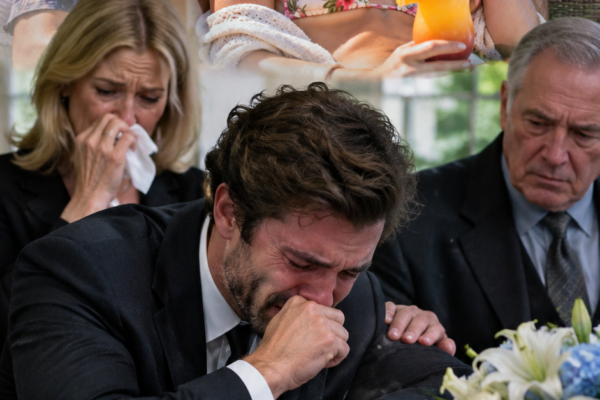
The Mafia Boss Betrayed His Pregnant Wife—Then She Discovered His Darkest Secret….

The Mafia Boss Betrayed His Pregnant Wife—Then She Discovered His Darkest Secret
At seven months pregnant, Natalie Thorn opened her bedroom door and found her husband with another woman.
The woman smiled, looked at Natalie’s pregnant belly, and told her she was never strong enough to survive being a mafia boss’s wife.
But six weeks later, Natalie would discover that the affair was only the beginning—and the darkest secret her husband had buried could destroy everyone she loved.

PART 1 — The Woman in My Bedroom
The Betrayal That Changed Everything
The first thing Natalie noticed was the laughter.
Not the clothes scattered across the bedroom floor. Not the half-empty wineglass on her husband’s nightstand. Not even the expensive perfume drifting through the doorway.
It was the laughter.
Low, intimate, and familiar.
The kind of laughter people shared when they believed nobody else had a right to hear it.
Natalie stood in the hallway of their Seattle penthouse, one hand resting against her seven-month pregnant belly, the other gripping the phone she had driven twenty minutes home to retrieve.
For a moment, she told herself she had misunderstood.
Julian was supposed to be at his office. He had kissed her forehead at breakfast, reminded her to eat something before her appointment, and promised to come home early enough to help assemble the baby’s crib.
He had even smiled when she complained that the instructions were probably written by someone who had never seen a screwdriver.
That was three hours ago.
Now a woman’s voice floated from the bedroom.
“You really think she’ll never find out?”
Natalie’s breath caught.
Then came Julian’s answer.
“Keep your voice down.”
His voice.
Her husband’s voice.
The voice that had whispered love into her hair when she couldn’t sleep. The voice that had promised, just two weeks earlier, that their daughter would never have to be afraid of anything.
Natalie pushed open the bedroom door.
Julian Thorn stood beside the floor-to-ceiling windows, his white dress shirt unbuttoned, his dark hair disheveled.
Brielle Sutton, his executive assistant, sat on the edge of their bed.
Her shoes were on the carpet. Her blouse was partially undone. A crystal wineglass rested between her fingers.
For several seconds, nobody moved.
Julian went pale.
“Natalie.”
She couldn’t answer.
Her eyes moved from his shirt to the bed, then to Brielle’s face.
Brielle smiled.
Not nervously.
Not apologetically.
She smiled with the quiet satisfaction of someone who had waited a very long time for an audience.
“You’re home early,” she said.
Natalie swallowed.
“What are you doing?”
Julian stepped forward.
“Baby, listen to me.”
“Don’t call me that.”
The words escaped before she realized she was speaking.
Julian stopped.
Brielle slowly placed her wineglass on the nightstand.
“Honestly, Natalie, perhaps this is better.”
Julian turned sharply.
“Brielle. Enough.”
But Brielle stood, smoothing her expensive navy skirt.
“You deserve to know the truth. Julian needs a woman who understands his world. Someone who can stand beside him without pretending his life is some beautiful fairy tale.”
Natalie stared at her.
“What?”
Brielle’s eyes dropped to her belly.
“You’re sweet. Everybody says that. You read children’s books to underprivileged kids, organize charity events, and believe kindness can solve everything.”
Her smile hardened.
“But sweet women don’t survive men like Julian.”
The room seemed to tilt.
Natalie reached for the doorframe.
Julian moved toward her immediately.
“Sit down. Please. You’re shaking.”
She stepped away from him.
“Did you bring her into our bed?”
He said nothing.
“Julian.”
His jaw tightened.
“Yes.”
One word.
No explanation.
No place to hide.
Natalie looked toward the cream-colored pillows she had chosen when they moved into the penthouse.
Two Sundays earlier, Julian had rested his head there while she held his hand against their daughter’s movements.
He had told her that becoming a father frightened him more than any enemy ever had.
She had kissed him and called him ridiculous.
Now another woman was standing beside those same pillows.
Natalie removed her wedding ring.
Julian’s expression changed.
“Don’t.”
She placed it on the dresser beside a framed photograph from their wedding.
The photograph showed Julian laughing, something he rarely did in public.
He looked young in it.
Almost innocent.
“I thought,” Natalie whispered, “that whatever you did outside this house, you were honest with me inside it.”
Julian closed his eyes.
“There are things you don’t understand.”
“Then you should have told me.”
“I was trying to protect you.”
She laughed once.
It was a small, terrible sound.
“From what? The truth?”
Brielle opened her mouth.
Natalie turned toward her.
“Not another word.”
Something in Natalie’s voice silenced the room.
She walked toward the door.
Julian followed.
“Natalie, please. There is more happening here than you know.”
She stopped without turning around.
“Is she pregnant too?”
“No.”
“Do you love her?”
“No.”
“How long?”
Julian hesitated.
And in that hesitation, Natalie heard every answer she had ever feared.
She looked over her shoulder.
“You don’t get to choose which truth hurts me.”
Then she walked out.
The House That Was Never Hers
The private elevator carried Natalie down forty-two floors.
She watched the numbers change above the doors.
Forty-one.
Thirty-eight.
Thirty-five.
Her hands wouldn’t stop trembling.
At the lobby, Frank, the elderly doorman who had worked in the building for sixteen years, rose from his chair.
“Mrs. Thorn? I thought you were—”
He stopped.
Natalie’s face had answered whatever question he intended to ask.
“Would you like me to call your driver?”
“No, thank you.”
“It’s raining pretty hard.”
“I know.”
He opened the glass doors.
She stepped into the rain without an umbrella.
Inside her car, she sat with both hands on the steering wheel.
Her phone began ringing.
JULIAN.
Again.
JULIAN.
Again.
Eleven calls came before she finally turned the phone facedown.
She wanted to scream.
She wanted to drive back upstairs and demand every detail.
She wanted to crawl into the version of her life that had existed before she pushed open that bedroom door.
Instead, her daughter kicked.
Hard.
Natalie pressed her hand against her stomach.
“I’m here,” she whispered.
She said it again, because she needed to hear herself.
“I’m still here.”
Then she drove to the one person she had spent eight months avoiding.
Her sister.
Rachel Brennan lived in a narrow brick townhouse on Capitol Hill, twenty minutes from the penthouse and an entire lifetime away from the world Julian had built around Natalie.
Rachel was thirty-six, a litigation attorney, unmarried, and almost offensively independent.
Eight months earlier, they had argued over Julian.
Rachel had questioned his business relationships, the men who accompanied him everywhere, and the way Natalie always seemed to ask permission before making plans.
Natalie had accused her sister of being jealous.
Rachel had said something Natalie never forgot.
“One day you’ll need to make a decision he doesn’t like. I hope he lets you.”
They hadn’t spoken since.
Now Natalie stood on Rachel’s porch, drenched and exhausted, waiting for the door to open.
Rachel appeared wearing an old college sweatshirt.
Her expression shifted the moment she saw Natalie.
“Nat?”
Natalie opened her mouth.
Nothing came out.
Rachel looked at her sister’s swollen belly, her trembling hands, and the rain dripping from her hair.
Then she stepped aside.
“Come inside.”
No questions.
No accusations.
No satisfaction at being right.
Just an open door.
Twenty minutes later, Natalie sat at Rachel’s kitchen table with a mug of tea she couldn’t drink.
Rachel listened while she described the bedroom.
She didn’t interrupt.
Not when Natalie mentioned Julian’s shirt.
Not when she described Brielle’s smile.
Not even when she repeated the words about sweet women being too weak to survive powerful men.
Only then did Rachel reach across the table and take her hand.
“Where are you staying tonight?”
Natalie looked up.
“Can I stay here?”
Rachel stared at her.
“Are you seriously asking me that?”
Natalie’s face crumpled.
And for the first time since leaving the penthouse, she cried.
Rachel moved around the table and wrapped her arms around her.
“You’re staying here,” she whispered. “And nobody is taking you anywhere you don’t want to go.”
The First Secret
By midnight, Rachel had made three phone calls.
One to a family attorney named Walter Pruitt.
One to a forensic accountant she trusted.
And one to a private security consultant.
Natalie watched from the living room.
“Rachel, I don’t want anyone fighting Julian.”
Her sister ended the third call.
“Neither do I.”
“Then why security?”
“Because your husband doesn’t own a normal construction company, Natalie.”
Natalie looked away.
She knew what people whispered about Julian Thorn.
Seattle newspapers called him a billionaire developer.
Business magazines praised his redevelopment projects, waterfront properties, hotels, and logistics investments.
But there were other stories.
Stories about competitors who suddenly withdrew from bidding.
Witnesses who changed statements.
Businesses that paid for protection they never publicly acknowledged.
Natalie had asked Julian about them once.
He had taken her face between his hands.
“Some of my business is ugly,” he admitted. “But you’ll never be part of that ugliness.”
She had believed him.
Rachel sat beside her.
“I need you to understand something. I am not trying to turn you against Julian. He did that himself.”
Natalie wiped her cheeks.
“What happens now?”
“Tomorrow we find out what belongs to you, what belongs to him, and what he’s been hiding.”
Across the city, Julian Thorn stood alone in the bedroom where his marriage had ended.
Brielle was gone.
Her phone had been switched off.
She had left behind a glass of wine, one diamond earring, and a faint trace of perfume that made Julian feel physically sick.
Sam Delgado, his oldest friend and head of security, stood in the doorway.
“Should I find Mrs. Thorn?”
Julian looked at the wedding photograph beside Natalie’s ring.
“She’s at her sister’s.”
“Do you want me to bring her home?”
Julian turned.
“Never ask me that again.”
Sam lowered his eyes.
Julian rubbed a hand across his face.
“Find Brielle. Quietly.”
“And Natalie?”
“Make certain nobody touches her. Nobody approaches her. Not even to deliver a message.”
Sam hesitated.
“The Harlans will hear about the separation.”
“They probably already have.”
Julian looked toward the bedroom window.
Then he said something that made Sam’s expression tighten.
“If they know what happened today, the baby is in danger.”
The Name in the Financial Records
Two days later, Walter Pruitt arrived at Rachel’s house carrying a leather briefcase.
He was a silver-haired attorney with an impatient voice and the unsettling habit of looking directly at people while they spoke.
Natalie explained what had happened.
Walter asked questions about dates, accounts, ownership records, and Julian’s security arrangements.
When she finished, he folded his hands.
“Your divorce can be handled through the courts. Your safety is a separate matter.”
“I don’t want his money.”
“That isn’t the issue.”
“What is?”
Walter opened a folder.
“Your husband has been transferring substantial assets into a protected trust.”
Natalie frowned.
“For whom?”
Walter looked at her belly.
“Your daughter.”
He placed several documents on the table.
Eighteen months of transfers.
Investment holdings.
Insurance arrangements.
Property interests.
Millions of dollars had quietly moved out of Julian’s personal control.
Natalie looked up.
“I didn’t know any of this existed.”
“That’s not all.”
Walter produced another document.
It contained a threat assessment dated July.
The language was dry, almost bureaucratic.
But one sentence made Natalie’s stomach tighten.
The anticipated Thorn heir remains a high-value pressure point.
“What does that mean?”
Rachel read the document over her shoulder.
Walter answered carefully.
“Julian has enemies who believe your child can be used to influence him.”
Natalie’s fingers closed around the edge of the table.
“How long has he known?”
“At least three months.”
“And he never told me.”
“Apparently not.”
Natalie remembered a black SUV that had followed her to the literacy center.
A man who had stood too long outside her doctor’s office.
Julian’s sudden insistence that she use a driver.
All those little changes she had dismissed as the ordinary anxieties of an expectant father.
“He was watching me.”
“He may call it protection.”
“Protection would have been telling me.”
Rachel said nothing.
Natalie looked down at the photograph of the man she had married.
For years, Julian had made her feel safe.
Now she was beginning to understand that feeling safe and being free were not always the same thing.
That evening, Walter called again.
This time, his voice was different.
“Brielle Sutton has disappeared.”
Natalie sat upright.
“What do you mean?”
“Her apartment is empty. Her car is still in the garage. Her phone is disconnected.”
Rachel moved closer.
“And there’s something else,” Walter continued. “We traced the staffing agency that originally placed her inside Julian’s company.”
Natalie waited.
“It belongs to a shell corporation controlled by the Harlan organization.”
“The people threatening my baby?”
“Yes.”
A cold sensation moved through Natalie’s chest.
Walter continued.
“And Natalie, we found evidence that somebody inside Julian’s own security team helped them.”
For several seconds, she couldn’t speak.
Then Walter said the name.
“Ray Dugan.”
Natalie knew Ray.
He had attended their wedding. He had eaten at their dinner table. He had carried groceries upstairs when Natalie was too tired to lift them.
Ray had even helped Julian choose the paint color for their daughter’s nursery.
“Are you sure?” she whispered.
“We’re checking the financial trail.”
Natalie stared toward the dark kitchen window.
Ray knew her doctor’s appointments.
He knew where Rachel lived.
He knew the nursery wasn’t finished.
And he knew exactly when Natalie would be alone.
Then Walter spoke again.
“There’s one more thing. The money trail suggests the operation began long before Brielle entered your husband’s life.”
Natalie slowly lowered herself into a chair.
“How long?”
Walter hesitated.
“Possibly before you married him.”
And for the first time, Natalie wondered whether the man she had married had been hiding something far worse than another woman.
PART 2 — The Marriage They Planned to Destroy
The Divorce Papers
Natalie filed for divorce on a Friday morning.
There were no cameras outside the courthouse.
No dramatic confrontation.
No expensive jewelry thrown across a room.
She sat in Walter’s office with Rachel beside her, read every page of the petition, and signed her name.
Her hand shook only once.
It happened when she reached the section concerning their unborn daughter.
Walter had prepared temporary provisions addressing medical decisions, visitation after birth, and the disclosure of any security arrangements that could affect the child.
Natalie read that section twice.
“Add something.”
Walter looked up.
“What would you like?”
“No one gets to arrange surveillance around my daughter without telling me. Not Julian. Not his employees. Nobody.”
Rachel nodded.
Walter made the amendment.
“Anything else?”
Natalie held the pen above the paper.
“Yes. He cannot make decisions about where she lives, where she goes, or who protects her without my knowledge.”
Walter looked at her for a moment.
“That’s going to be an important part of negotiations.”
“Then make it important.”
She signed.
For weeks, she had imagined that ending her marriage would feel like losing a limb.
Instead, when Walter gathered the documents, she felt something she hadn’t expected.
Relief.
Not happiness.
Not triumph.
Just the relief of finally making a decision nobody else had made for her.
At 2:43 that afternoon, Julian received notice of the divorce petition.
He was sitting in his downtown office when his attorney handed him the documents.
The glass walls overlooked Seattle’s waterfront.
Below him, ferries moved slowly across Elliott Bay.
He read Natalie’s name.
Then he read the words dissolution of marriage.
He placed the papers on the desk.
His attorney, Martin Shaw, cleared his throat.
“We can contest several of these provisions.”
“No.”
“Julian, your wife is requesting a substantial degree of independent decision-making concerning the child.”
“She’s the mother.”
“Of course, but—”
“Give her what she’s asking for.”
Martin studied him.
“And the financial disclosures?”
“Everything legitimate. Every account. Every property. No games.”
“Some of your holdings aren’t simple.”
Julian looked up.
“Then we make them simple enough to disclose.”
Martin fell silent.
After he left, Sam entered.
“Ray isn’t answering his phone.”
Julian’s expression darkened.
“Find him.”
“His apartment’s empty.”
“What about Brielle?”
“Nothing confirmed.”
Julian stood and walked toward the window.
He had built an organization around one simple rule: nobody disappeared unless someone powerful wanted them gone.
And now two people close enough to know the inside of his home had vanished.
“Victor Lang is moving,” Sam said.
Julian didn’t turn.
“Then he’s closer than we thought.”
The Woman He Couldn’t Control
The following Monday, Natalie returned to the East Side Children’s Literacy Center.
Rachel offered to drive.
Natalie refused.
Dana Whitlock, the independent security consultant Rachel had hired, accompanied her only after explaining precisely how the arrangement would work.
Dana was a former federal protective-service officer with short dark hair, an old knee injury, and no interest in Julian Thorn’s reputation.
“If you want me outside, I stay outside,” she told Natalie. “If you want me gone, I leave. I do recommend you keep someone nearby while this threat is active.”
“Will you tell Julian where I go?”
“No.”
“Even if he asks?”
“Especially if he asks.”
For the first time in days, Natalie almost smiled.
The center occupied the first floor of a renovated brick building beside a neighborhood grocery store.
There were mismatched bookshelves, children’s drawings on the walls, and an old blue couch that had survived three failed fundraising campaigns.
None of it was glamorous.
Natalie loved every inch.
She had spent six weeks developing a new reading initiative for children whose families couldn’t afford private tutoring.
The application was under review by a regional education foundation.
If approved, it would pay for books, weekend classes, and two additional literacy specialists.
Julian had once offered to fund the whole project.
Natalie had refused.
She wanted the program to survive because it mattered, not because she was married to a wealthy man.
Now that choice felt more important than ever.
“Miss Natalie!”
A little girl named Sophie hurried toward her holding a picture book.
Natalie crouched carefully.
“Did you finish it?”
Sophie nodded.
“Twice.”
“Then you owe me a review.”
Sophie considered that seriously.
“The dragon was mean at first, but he got better.”
Natalie laughed softly.
“I’ll remember that.”
Across the room, Marisol Vega, one of the center’s regular volunteers, watched the exchange.
Marisol was a quiet woman in her late thirties who worked nights at a hospital laundry service and spent her free afternoons helping children practice reading.
She approached once Sophie had gone.
“You look tired.”
“That’s one word for it.”
Marisol hesitated.
“Everybody’s been asking about you.”
Natalie rearranged a stack of books.
“People ask too many questions.”
“Then I won’t.”
Natalie looked up.
Marisol smiled gently.
“Sometimes people just need somewhere they don’t have to explain themselves.”
The words stayed with Natalie.
Later, while reviewing attendance records, she noticed an unusual donation in the center’s financial history.
Three years earlier, an anonymous foundation had paid for the building’s emergency roof repairs.
The foundation’s name was Harbor Community Holdings.
Natalie frowned.
She hadn’t recognized the name at the time.
Now it seemed strangely familiar.
She photographed the entry and sent it to Walter.
Can you check who owns this?
His reply came twenty minutes later.
Already looking.
The Woman in the Dark Coat
That evening, Rachel spread surveillance photographs across her dining table.
Walter had obtained portions of the penthouse building’s security footage through the legal process.
Natalie recognized the lobby immediately.
The white marble.
The enormous brass clock.
Frank’s desk near the elevators.
At 8:21 on the morning of the affair, a woman wearing a dark coat entered the building.
Her face was partially hidden by a scarf.
She used a valid access card.
At 8:44, after Natalie had left for the literacy center, the woman entered the private elevator.
Seven minutes later, she emerged carrying nothing.
Natalie leaned closer.
“That’s not anyone who works in the building.”
“No,” Walter agreed.
“Then how did she get upstairs?”
“Ray Dugan controlled access credentials.”
Natalie examined the still photograph.
The woman looked ordinary.
Not threatening.
Not nervous.
She moved with the ease of someone completing a routine errand.
Natalie remembered arriving home and finding her phone beside the kitchen fruit bowl.
She always checked her bag before leaving.
Wallet.
Keys.
Phone.
It was a habit.
She had checked that morning too.
The woman in the dark coat had gone upstairs after Natalie left.
Suddenly the forgotten phone didn’t seem like an accident.
“She took it out of my bag,” Natalie said.
Rachel looked at her.
“That would explain why you came home.”
Natalie stared at the photograph.
“They wanted me to find them.”
Walter nodded slowly.
“That’s what the evidence suggests.”
Natalie pushed back from the table.
All afternoon, she had been telling herself the affair was an ordinary betrayal made monstrous by Julian’s power.
Now the betrayal had a timetable.
An elevator code.
A woman with a false identity.
And someone who knew exactly how to steer her home.
“Why?” she whispered.
Walter looked at Rachel.
“Separating you from Julian could weaken his organization, expose his movements, and make him vulnerable to his rivals.”
Natalie felt the baby move.
“So they used me.”
Walter didn’t soften the answer.
“Yes.”
The Husband Who Said Nothing
Julian called Natalie’s attorney the following day.
Not Natalie.
He understood, at least, that she no longer wanted him making decisions about how she should feel.
Walter put the call on speaker with Natalie’s permission.
“I understand you want all relevant security information,” Julian said.
“Correct,” Walter replied.
“I’ll provide what I have.”
Natalie leaned toward the phone.
“Julian.”
Silence.
Then his voice changed.
“Nat?”
She hated what hearing him did to her.
The familiar warmth in his voice could still reach parts of her that knew nothing about divorce petitions or financial disclosures.
“I saw the lobby footage.”
Julian was silent.
“Who is the woman in the coat?”
“We’re trying to identify her.”
“Did you know someone had entered our home?”
“No.”
“Did you know Brielle was connected to the Harlans?”
A longer silence.
“I suspected someone inside my company was leaking information.”
“That’s not what I asked.”
“No. I didn’t know about that connection.”
Natalie closed her eyes.
“How long were you sleeping with her?”
“Four months.”
Four months.
Four months of kisses before work.
Four months of dinners with Natalie across the table.
Four months of Julian touching her stomach and talking about their daughter’s future.
Natalie steadied her breathing.
“Did you ever plan to tell me?”
Julian’s voice grew quieter.
“I kept telling myself I would end it.”
“That’s not an answer.”
“No.”
The word hurt more because it was finally honest.
“Did you love her?”
“No.”
“Then why?”
She heard his breath catch.
“I was afraid.”
Natalie almost laughed.
“Of what?”
Julian said nothing.
That silence stretched until Rachel reached toward the phone.
Natalie stopped her.
“Whatever you’re hiding, Julian, you’re not protecting me anymore. You’re protecting yourself.”
She ended the call.
Across town, Julian sat motionless behind his desk.
Sam had entered halfway through the conversation.
“Should I get you a drink?”
Julian shook his head.
“There’s a file in the private archive. The Harbor file.”
Sam’s face tightened.
“Julian.”
“Get it.”
“We agreed nobody would ever open that again.”
Julian looked at the divorce petition.
“I agreed to a lot of things I shouldn’t have.”
Sam didn’t move.
Julian raised his eyes.
“Bring me the file.”
The Payment
The next morning, Walter arrived with a new set of documents.
He had traced payments from the staffing company that hired Brielle.
The money moved through several businesses before reaching an account controlled by Ray Dugan.
The transfers began months before the affair.
They continued after Brielle entered Julian’s household.
And they increased sharply the week Natalie discovered them.
Rachel examined the records.
“Ray wasn’t merely letting someone in. He was being paid.”
Walter nodded.
“We believe he supplied Natalie’s schedule and access information.”
Natalie sat with her hands folded over her belly.
“Julian trusted him.”
“So did you,” Rachel said.
Natalie remembered Ray bringing her ginger tea during the early months of pregnancy.
He had once spent twenty minutes explaining why Julian’s favorite watch was unreliable.
He had joked that no amount of money could make his boss patient.
A man who knew all those small details had helped strangers invade their home.
“Do you know where he is?”
“No,” Walter answered. “But we found the woman from the lobby. Her name is Marla Quinn. She has ties to Victor Lang’s shipping interests.”
He opened another folder.
“There’s something unusual about the dates.”
Natalie looked down.
One payment had been made shortly after her wedding.
Another after she announced her pregnancy.
A third appeared three months before she learned about the affair.
The transactions weren’t large enough to attract attention.
But together they formed a pattern.
“Ray was providing information about me for years,” Natalie said.
“Possibly.”
“Why?”
Walter hesitated.
“That is what we’re trying to establish.”
Then Rachel’s phone rang.
She listened briefly, her expression changing.
“Are you certain?”
She stepped into the hallway.
Natalie watched through the doorway as her sister stood very still.
When Rachel returned, she locked the front door.
“What happened?” Natalie asked.
Rachel glanced toward Dana, who was standing beside the window.
“We’ve received confirmation that Victor Lang’s people have been asking about a sealed file Julian keeps outside his company records.”
Natalie felt cold.
“What file?”
Rachel looked at Walter.
He answered carefully.
“It’s called the Harbor file.”
“What’s in it?”
“We don’t know.”
Rachel sat beside her sister.
“But one thing is becoming clear. Someone is trying very hard to get it.”
Natalie stared at the paperwork.
Then Walter placed a photograph on the table.
It showed Julian leaving an old waterfront warehouse eight years earlier.
Beside him stood a younger Victor Lang.
They weren’t enemies in the photograph.
They were shaking hands.
Natalie looked up.
“Julian told me he’d never worked with that man.”
Walter said nothing.
Rachel reached for her sister’s hand.
And Natalie understood.
The man threatening her daughter wasn’t simply her husband’s enemy. Once, he had been his partner.
PART 3 — The Secret Beneath the Empire
Before He Became Her Husband
Eight years before Natalie discovered the affair, Julian Thorn had been a different kind of dangerous man.
He was thirty-four, ambitious, and still struggling to consolidate control of the criminal network his father had left behind.
The organization operated behind legitimate construction companies, shipping contracts, and commercial real estate investments.
But those businesses also concealed illegal freight agreements, extortion payments, and arrangements with men who preferred threats to negotiation.
Victor Lang had been one of Julian’s closest business partners.
Victor was older, colder, and far more comfortable hurting people to obtain what he wanted.
Julian liked to tell himself he was different.
He preferred contracts to threats.
Money to violence.
Influence to intimidation.
The distinction made him feel civilized.
It didn’t make his business innocent.
Their partnership ended after a waterfront redevelopment project known internally as Harbor Seventeen.
The project had promised hundreds of construction jobs and millions in investment.
What it delivered to some of its original residents was something very different.
That history lived inside a black leather folder Julian had kept locked away for years.
And for the first time since sealing it, he was afraid of what would happen when someone else opened it.
Sam placed the folder on his desk.
“You know why I never wanted to see this again,” Sam said.
Julian didn’t look up.
“Yes.”
“Lang will use it to destroy you.”
“He’s already destroying me.”
Sam folded his arms.
“The difference is this one could send you to prison.”
Julian finally looked at him.
“Do you think I don’t know that?”
His voice wasn’t loud.
That made the question worse.
Sam turned toward the door.
“Your wife still doesn’t know what happened at Harbor Seventeen.”
“No.”
“And if she finds out?”
Julian stared at the folder.
“She’ll have another reason never to come home.”
For a long time, neither man spoke.
Then Julian opened the folder.
The first page held a photograph of a waterfront apartment building.
The second listed the project’s financing partners.
The third contained names.
Families.
Addresses.
Payments.
And instructions issued under Julian’s authority.
One name had been marked in red.
Marisol Vega.
Julian remembered her.
Not her face.
Her refusal.
He had been told that a tenant was delaying the property acquisition and threatening to speak publicly about the pressure tactics used against residents.
His people had asked for permission to increase the pressure.
He had authorized it.
At the time, he hadn’t asked whether she had children or where she would go afterward.
He had asked how soon the development could proceed.
Now the woman he had barely considered was volunteering at his wife’s literacy center.
And someone who knew that connection had made certain she was still there.
The Life Natalie Had Built
Natalie first learned Marisol’s history on a Wednesday afternoon.
They were packing donated books when Marisol asked if everything was all right.
Natalie hesitated.
“Do you remember Harbor Seventeen?”
The book in Marisol’s hand slipped against the table.
For the first time since Natalie had known her, the woman’s expression closed.
“Why?”
“I came across the name in some records.”
Marisol looked toward the classroom.
The children were occupied with a reading activity.
She lowered her voice.
“I lived there.”
Natalie nodded.
“What happened?”
Marisol rubbed her thumb along the edge of a paperback.
“They wanted the building. A developer bought the property and said everybody would be compensated.”
“Were you?”
“Eventually. Less than what we’d been promised.”
She looked toward the window.
“My husband had died the year before. I had a little boy and a mother who couldn’t climb stairs. I needed time to find somewhere affordable.”
Natalie waited.
“Then men began visiting. They never said they were threatening me. They just explained all the things that could go wrong if I kept refusing.”
Marisol gave a humorless smile.
“One of them knew where my son went to school.”
Natalie’s stomach tightened.
“What did you do?”
“I signed.”
Marisol placed the book in the donation box.
“We moved three times that year. My son stopped talking to his teachers. Mom’s health got worse. Eventually we found a place, and I found work.”
“I’m sorry.”
Marisol shrugged.
“People tell you to move on. Sometimes you do. It doesn’t mean you forgot.”
Natalie looked at the shelves around them.
“Why did you start volunteering here?”
“My son learned to read here after we moved. His teacher recommended the program.”
Her face softened.
“He needed a place where somebody thought he was smart.”
Natalie stood quietly.
For three years, she had worked beside Marisol.
She had admired her patience.
She had never known why the woman flinched whenever a stranger asked for her address.
Now Natalie knew.
She also knew the name of the developer responsible for Harbor Seventeen.
Julian Thorn.
The Conversation Neither Could Escape
Natalie called Julian that evening.
He answered immediately.
“I need to ask you about Harbor Seventeen.”
Silence.
Then Julian said, “Who told you about that?”
“That’s your first question?”
“Natalie—”
“Did your company force people out of their homes?”
Julian took a breath.
“Yes.”
She shut her eyes.
“Did you know they were being threatened?”
“I knew pressure was being applied.”
“That’s a convenient phrase.”
“I know.”
“No, Julian, I don’t think you do.”
She stood beside Rachel’s kitchen window, watching headlights move through the rain.
“One of those women works at my literacy center. She lost her home. Her child suffered. She told me men knew where her son went to school.”
Julian said nothing.
“Did you authorize that?”
Another silence.
“Yes.”
Natalie gripped the phone.
“Did you know her circumstances?”
“No. I didn’t ask.”
Her throat tightened.
“You didn’t ask.”
“I should have.”
“Did you ever go back and find out what happened to those families?”
“Not then.”
Natalie leaned against the counter.
She had expected denial.
Maybe anger.
Maybe another explanation about things she couldn’t understand.
The admission was somehow harder.
“All those years you told me you kept your business away from me because you didn’t want it to hurt me.”
“I meant that.”
“But you didn’t care who else it hurt.”
Julian closed his eyes.
She heard him breathe.
“Not enough.”
Natalie looked toward her sister, who stood across the kitchen without speaking.
“Do you know what I did today?”
“No.”
“I helped a little boy sound out the word home. He drew one underneath it, with a green door and flowers. His mother lost hers because men like you decided money was more important.”
She paused.
“I don’t know how you live with that.”
Julian looked at the photograph of Natalie on his desk.
For years, he had found ways to live with it.
He had called the project necessary.
He had told himself his rivals would have done worse.
He had pointed to the jobs created and the money paid.
He had made every explanation except the one that mattered.
“I don’t have an answer you deserve,” he said.
“No,” Natalie replied. “You don’t.”
She ended the call.
And this time, the silence afterward didn’t feel like grief.
It felt like the beginning of clarity.
The Truth Behind Brielle’s Smile
Five weeks after the affair, Walter arrived at Rachel’s house before sunrise.
His coat was damp.
He carried a folder so thick that Natalie immediately knew something had changed.
“We found Brielle.”
Natalie stood.
“Where?”
“Federal agents located her in a property outside Olympia. She’d been held there for eight days.”
Rachel’s face tightened.
“By Lang?”
“People working for him.”
“Is she alive?” Natalie asked.
“Yes. She’s injured, but she’s receiving treatment.”
Walter sat down.
“She’s also cooperating.”
Natalie slowly lowered herself into a chair.
Walter opened the folder.
Brielle had been recruited twenty-two months earlier.
At first, her job was simple.
Collect information.
Copy schedules.
Identify employees who could be bribed.
Report which properties and financial arrangements mattered most to Julian.
But Victor Lang had become impatient.
Julian was moving assets away from the criminal organization.
He had begun separating legitimate companies from illegal operations.
And he had quietly restricted access to the Harbor file.
Lang needed to stop him.
Brielle had been instructed to become Julian’s mistress, create evidence of the relationship, and destroy his marriage.
When she resisted, Lang showed her photographs of her sister and two young nieces living in Lyon, France.
The photographs were recent.
One showed her niece entering school.
Another showed Brielle’s sister leaving work.
Lang had explained what would happen if Brielle stopped cooperating.
Walter placed the photographs on the table.
Natalie couldn’t look at them for long.
“Did Julian know?”
“Not everything. Brielle says he believed someone was threatening her family, but she wouldn’t tell him who. He also suspected she had been sent to gather information.”
Natalie stared at Walter.
“So he knew something was wrong.”
“Yes.”
“And he still continued the affair.”
“Yes.”
That answer mattered.
The coercion explained Brielle’s actions.
It didn’t make Julian’s decisions disappear.
Walter continued.
“Julian tried to end their relationship several times. Each time Brielle was threatened more severely. He eventually stopped trying to force an explanation from her.”
Rachel folded her arms.
“He could have told Natalie.”
“Yes,” Walter said. “And Brielle could have gone to federal authorities earlier. None of them made those choices.”
Natalie looked toward the floor.
“Why did Brielle humiliate me?”
Walter hesitated.
“According to her statement, Lang wanted you to leave Julian that day. She was told to make reconciliation feel impossible.”
Natalie remembered the smile.
The way Brielle had spoken about her literacy work.
The carefully aimed cruelty.
“She knew what mattered to me,” Natalie said.
“She read your emails and your grant proposal.”
Natalie pressed a hand against her chest.
Her private messages.
The work she had written alone.
The one thing she believed Julian’s wealth couldn’t influence.
All of it had been studied by strangers searching for the most painful way to hurt her.
Walter lowered his voice.
“Brielle wants to speak with you.”
Natalie didn’t answer.
“She says she has information about the Harbor file that she never gave Lang.”
Rachel looked sharply at him.
“What information?”
Walter opened another document.
“She says Julian kept records of illegal operations, including his own signed authorizations. He originally preserved them to protect himself if the organization fractured.”
Natalie looked down.
There it was.
The darkest possibility.
Julian hadn’t kept the records simply because he regretted what happened.
He had kept them because they were useful.
Walter continued.
“But Brielle says something changed when Julian learned you were pregnant. He started gathering enough evidence to dismantle the network, including proof of his own involvement.”
Natalie sat very still.
Her husband had been preparing to surrender the empire.
But only after years of benefiting from it.
Only after innocent people had suffered.
Only after the threat reached the child he loved.
Rachel broke the silence.
“Has Brielle provided documents?”
“Some. But there’s a final piece she refuses to hand over without speaking to Natalie.”
“What piece?”
Walter looked at Natalie.
“A document bearing Julian’s signature.”
He paused.
“And according to Brielle, it proves that the danger surrounding your daughter began with a decision Julian made years before you met him.”
Natalie had believed the affair was the worst thing her husband could do to her. Now she was afraid to discover what he had done to everyone else.
PART 4 — The Woman Who Came Back
Six Weeks After the Affair
The knock came at 8:15 on a Thursday evening.
Three quiet taps.
Natalie was helping Rachel fold baby clothes at the dining table when Dana Whitlock looked up from her phone.
“Someone’s at the front door.”
Rachel checked the security camera.
A woman stood on the porch wearing a dark wool coat.
Her hair was shorter than Natalie remembered.
A medical brace covered her left wrist.
There was a fading bruise beneath her cheekbone.
Natalie knew the face.
She had seen it across her husband’s bedroom.
She had imagined that face countless times while lying awake at night.
Brielle Sutton.
Rachel turned.
“You’re not opening that door.”
Natalie approached the monitor.
Brielle looked exhausted.
Not beautiful in the effortless way Natalie remembered.
Not confident.
Just exhausted.
“She came here for a reason,” Natalie said.
“We don’t know what that reason is.”
Dana contacted the security team outside.
No visible weapons.
No immediate threat.
But a woman had been walking alone through the neighborhood for several minutes before approaching the house.
Natalie studied the monitor.
“Let her in.”
Rachel looked at her.
“Nat.”
“Please.”
Rachel hesitated, then opened the door.
Brielle stepped inside.
Her eyes found Natalie immediately.
For several seconds, neither spoke.
Then Brielle whispered, “I’m sorry.”
Natalie felt something cold move through her.
She had imagined that apology so many times.
Sometimes she imagined shouting.
Sometimes she imagined refusing to hear it.
But now that Brielle was standing in front of her, all Natalie could see was the brace on her wrist.
“You look like you haven’t eaten,” Natalie said.
Brielle blinked.
“What?”
“Have you eaten?”
“Not today.”
Natalie turned toward the kitchen.
“Rachel, could you get her something?”
Her sister stared at her.
Natalie kept her eyes on Brielle.
“I haven’t forgiven you. I’m asking whether you’ve eaten.”
Brielle lowered her head.
“Thank you.”
They sat at the kitchen table.
Brielle placed a manila envelope between them.
Inside were messages, photographs, bank records, and a notarized statement describing Victor Lang’s operation.
Natalie turned the pages without speaking.
Eventually she reached a handwritten letter.
Brielle’s handwriting was small and uneven.
I knew what I was doing would destroy your marriage. I also knew that refusing could put my sister and her children in danger.
That doesn’t excuse the things I said to you.
I chose words I knew would hurt because I had read your private messages. Your literacy center was the part of your life you had built without Julian. I attacked it because I knew it mattered.
Natalie stopped reading.
“Why did you smile?”
Brielle’s eyes filled.
“Because I was supposed to.”
“That isn’t an answer.”
Brielle looked at her.
“There was a listening device connected to my phone. Lang’s people were monitoring the conversation. If you hesitated, I was supposed to make you feel foolish for wanting to stay.”
Natalie remembered standing in the bedroom, struggling to breathe.
Brielle continued.
“I’d already been told what would happen if I failed.”
“Did Julian know they were listening?”
“No. He knew I was being threatened, but not that day was staged.”
Natalie looked down at the letter.
“I hated you.”
“I know.”
“I still don’t know what to feel about you.”
“You don’t owe me anything.”
Natalie raised her eyes.
“Understanding why you hurt me doesn’t mean you didn’t hurt me.”
Brielle nodded.
“I know.”
For the first time, her voice broke.
“I know.”
The File Julian Buried
Brielle pushed a second envelope across the table.
“This is why I came.”
Natalie opened it.
Inside were copies of documents from Harbor Seventeen.
The first pages contained redevelopment agreements and financial schedules.
The next pages described payments to tenants who had been pressured into surrendering their leases.
Then came internal memoranda.
Legal language had been used to hide what was happening.
Accelerated vacancy strategy.
Noncooperative resident management.
Enhanced leverage measures.
Natalie read the phrases slowly.
They meant something simple.
People had been frightened until they gave up their homes.
She turned another page.
There was Julian’s signature.
Below it, a recommendation from Ray Dugan concerning several residents who had refused to cooperate.
One of them was Marisol Vega.
Natalie felt sick.
“Julian signed this.”
Brielle nodded.
“Yes.”
“Did he know what Ray intended to do?”
“The records indicate he approved the pressure campaign. Ray handled the methods.”
Natalie looked down.
Her husband hadn’t personally visited Marisol’s apartment.
He hadn’t stood outside her child’s school.
He hadn’t made the threatening phone calls.
But he had authorized the operation that gave other men permission to do those things.
His distance from the suffering had been part of how he maintained his power.
Brielle reached for another page.
“This is the part Lang wanted.”
Natalie examined it.
Eight years earlier, Julian and Victor had signed a confidential agreement dividing control of several waterfront operations.
Victor would handle certain shipping arrangements and private enforcement.
Julian would provide access through properties and companies under his control.
The agreement created the financial relationship that allowed Lang to expand.
Years later, Julian began cutting those ties.
Lang had responded by collecting every secret he could use against him.
“You said the danger to my daughter started here,” Natalie whispered.
“Lang built his organization with money and access from that agreement. When Julian tried to leave, Lang considered it betrayal.”
“And he decided to punish us.”
Brielle nodded.
“But there is something Julian never told you.”
Natalie’s eyes lifted.
“Something else?”
Brielle reached into the envelope.
She removed a small photograph.
It showed Julian outside the Harbor Seventeen building, standing beside several tenants.
Marisol was among them.
On the back was a handwritten note.
They were never told who authorized the removals.
Natalie recognized Julian’s handwriting from thousands of notes left on their kitchen counter.
She stared at it.
“When did he write this?”
“Three months before your wedding.”
Natalie’s throat tightened.
Julian had known.
Not every detail, perhaps.
But enough to understand that people had been deceived.
And he had still kept the truth buried.
Brielle spoke softly.
“He was afraid exposing the past would destroy everything he had built.”
Natalie looked at the photo.
“He let them keep believing they were powerless.”
Brielle didn’t answer.
Natalie thought about the photograph in her wedding album.
The beautiful reception.
The flowers.
The vows.
The man who had looked at her as if nothing in the world mattered more.
Now she understood how much of his life had been constructed around keeping consequences away from himself.
She placed the documents back inside the envelope.
“I’m giving these to Walter.”
“That’s why I brought them.”
“Even if they send Julian to prison?”
Brielle met her eyes.
“Especially then.”
The Men Outside
At 8:41, Rachel’s phone vibrated.
Dana had been watching the street cameras.
She stood and moved toward the window.
Her expression changed.
“Rachel, get the emergency bag.”
Natalie looked up.
“What?”
Dana checked her radio.
“Two SUVs have stopped nearby. A third vehicle is approaching from the north.”
Brielle went pale.
“They followed me.”
Rachel grabbed the manila envelopes.
“How?”
“I changed cars. I walked the last several blocks.”
Dana moved toward the back door.
“There’s no time to work that out.”
Natalie pressed a hand against her belly.
A tightening sensation moved across her lower abdomen.
She tried to breathe through it.
Dana noticed.
“Are you in pain?”
“Just tightness.”
Rachel was already reaching for her phone.
“Dr. Patel has arranged an entrance at Swedish Medical. We’re going there.”
Natalie stared at her.
“You called my doctor?”
“When we learned Victor Lang was in Seattle.”
For once, Natalie didn’t argue.
Dana handed her a coat.
“We leave through the back.”
Brielle stood.
“They want me. If I stay, you can go.”
Natalie looked at her.
“No.”
“Natalie—”
“You don’t get to make another decision for me.”
Brielle stopped.
Natalie took the envelope from Rachel.
“We all leave.”
The alley behind Rachel’s house was narrow and wet.
A gray sedan waited near the far corner.
Dana moved first.
Rachel stayed beside Natalie.
Brielle followed, clutching her injured wrist.
They were almost at the car when headlights exploded across the brick walls.
A black SUV blocked the alley.
A man stepped out.
He wore a dark coat and carried no visible weapon.
“Miss Sutton.”
Brielle froze.
The man looked at Natalie.
“Mrs. Thorn, this doesn’t concern you. We only need Miss Sutton and the documents.”
Dana stepped between them.
“Back away.”
The man smiled slightly.
“Nobody needs to get upset.”
Natalie felt another tightening sensation.
Stronger this time.
Rachel guided her toward the sedan.
“Get inside.”
Natalie climbed into the back seat.
Brielle stood beside the open door.
The man took a step closer.
“Victor would prefer to settle this quietly.”
Brielle lifted her phone.
“The confession is already with federal investigators,” she called. “Taking me won’t erase it.”
For the first time, the man’s expression changed.
Another pair of headlights appeared at the far end of the alley.
Then a third.
Dana spoke urgently into her radio.
“Confirm identities before anyone moves.”
A voice crackled through the speaker.
Federal agents were approaching.
At the same moment, Natalie’s phone rang.
JULIAN.
She stared at the screen.
Then answered.
“I know where you are,” Julian said.
She looked toward the alley entrance.
“How?”
“Dana contacted Sam when the vehicles appeared. Stay inside the car. Help is arriving.”
Natalie’s anger rose instantly.
“Are your people here?”
“Yes.”
“You promised—”
“I know. Dana asked for support. Nobody is approaching you without her approval.”
The man beside the SUV glanced toward the approaching vehicles.
For a moment, it seemed he might refuse to leave.
Then he saw the federal agents moving into position behind him.
He raised his hands slightly and retreated toward the SUV.
Nobody fired.
Nobody shouted.
The alley was suddenly crowded with vehicles and urgent voices.
Dana opened Natalie’s door.
“We’re leaving.”
Rachel climbed in beside her.
Brielle entered the front passenger seat.
As the sedan pulled away, Natalie looked through the rear window.
Under the streetlights, a familiar man stood beside a black car.
Julian.
He was watching her leave.
He made no attempt to follow.
The Hospital Corridor
At the hospital, Dr. Priya Patel examined Natalie immediately.
The baby’s heartbeat was strong.
There was no evidence of an immediate emergency.
But Natalie’s blood pressure was elevated, and the abdominal tightening concerned the doctor.
“You’ve been under severe stress,” Dr. Patel said.
Natalie stared at the ceiling.
“That’s one way to describe it.”
“I’m keeping you overnight. We need to monitor you and the baby.”
Rachel sat beside her.
Brielle remained in a chair near the window.
Nobody had asked her to stay.
Nobody had asked her to leave.
For several minutes, the only sound was the steady rhythm of the fetal monitor.
Then Natalie looked toward Brielle.
“I don’t forgive you.”
Brielle nodded.
“I understand.”
“But I believe you about Lang.”
Brielle swallowed.
“Thank you.”
“And what happened in that alley matters.”
A tear slipped down Brielle’s cheek.
Natalie looked away.
“I just don’t know what it means yet.”
At 10:19, Julian arrived.
He remained in the corridor until Dr. Patel told Natalie he was there.
Natalie considered refusing to see him.
Then she remembered the photograph.
The signed authorization.
Marisol.
The families who had lost their homes.
“Tell him I’ll speak to him for five minutes.”
Julian stood when she entered the corridor.
There was a cut above his eyebrow.
His shirt was wrinkled.
He looked as though he hadn’t slept in days.
His eyes went immediately to her belly.
“Is she okay?”
“She’s fine.”
His shoulders lowered.
“And you?”
“I’m being monitored.”
He nodded.
Natalie leaned against the wall opposite him.
“I saw the Harbor file.”
Julian became very still.
“All of it?”
“Enough.”
He looked down.
Natalie watched his face.
“Why did you keep those records?”
Julian took a long breath.
“At first, because they were leverage. I thought if Lang ever turned against me, I’d have enough to destroy him.”
“And later?”
“When I found out you were pregnant, I started seeing what I’d built differently.”
Natalie shook her head.
“Don’t make our daughter the reason those people deserved justice.”
He looked up.
She continued.
“They deserved it before she existed.”
Julian’s eyes filled with something she had never seen there before.
Not tears.
Something quieter.
The shame of a man who had run out of explanations.
“You’re right.”
Natalie nodded.
“That’s what frightens me, Julian. You knew things were wrong long before you decided to change them.”
He swallowed.
“I did.”
“Then don’t ask me to believe you’re suddenly a different person because you love our baby.”
“I won’t.”
She looked at his injured face.
“The divorce continues.”
“I know.”
“Those documents are going to federal investigators.”
“I know.”
“And if you want our daughter to grow up safe, you’ll stop hiding behind other people.”
Julian held her gaze.
“Then I’ll tell them everything.”
Natalie studied him.
For the first time, she wasn’t sure whether she believed him.
But she knew what she needed.
“Don’t promise me,” she said. “Do it.”
She turned and went back to her room.
Julian remained in the hallway.
At 2:17 the following morning, Natalie woke to a sharp pain low in her abdomen.
She reached for the call button.
Another contraction followed.
By the time Dr. Patel arrived, Natalie was gripping the edge of the mattress.
The doctor examined her, then looked toward the nurse.
“She’s in labor.”
Rachel was called immediately.
So was Julian.
At 3:04, Julian entered the hospital’s underground parking garage.
He had left his office without his usual security escort.
He was halfway toward the elevator when three men stepped out from behind a parked SUV.
One of them smiled.
“Mr. Thorn. Victor Lang’s associates would like five minutes.”
Julian looked at the elevator.
Three floors above him, his daughter was about to be born.
“I don’t have five minutes.”
The man moved into his path.
“Then we’ll make this quick.”
Julian stopped.
And somewhere above him, Natalie screamed as another contraction tore through her body.
Her daughter was coming into the world—and Julian Thorn might never make it upstairs to meet her.
PART 5 — The Price of His Sins
Five Minutes Too Late
Julian saw the first punch coming.
He didn’t see the second.
It struck his ribs and sent him against the side of a parked car.
One of the men grabbed his jacket.
“Mr. Harlan wants the original Harbor documents.”
Julian pushed himself upright.
“Tell him they’re already gone.”
The man’s expression changed.
“Where?”
“Federal prosecutors.”
For a moment, nobody moved.
Then the man lunged.
The struggle was brief, desperate, and ugly.
Julian knocked one attacker backward, but another pulled a knife and caught him across the side.
Pain shot through his body.
He staggered toward the elevator.
A security alarm began sounding near the garage entrance.
The attackers heard approaching voices.
One ran.
Another followed.
Julian pressed his hand against his side and forced himself toward the elevator.
He didn’t think about the men.
He didn’t think about his reputation.
He thought about Natalie.
And the daughter who had never heard his voice outside her mother’s stomach.
When the elevator opened on the maternity floor, Rachel was standing near the nurses’ station.
She turned.
Her face drained of color.
“Julian?”
“Where is she?”
Rachel stared at the blood spreading across his shirt.
“What happened?”
“Garage.”
“You’re hurt.”
“Is Natalie okay?”
Rachel grabbed his arm.
“You are going to sit down before you collapse.”
A nurse hurried toward them.
Julian tried to protest.
Rachel looked him directly in the eyes.
“Your daughter needs a living father. Stop arguing.”
He sat.
It was the first time Rachel could remember Julian Thorn obeying anyone without resistance.
The First Cry
The medical staff treated Julian’s injury while Natalie labored nearby.
He needed stitches but remained stable.
Rachel stayed with him while the doctor worked.
For several minutes, neither spoke.
Then Julian said, “Thank you for calling me.”
Rachel looked at the hospital doors.
“I called because Natalie wanted you informed.”
“I know.”
“Don’t mistake that for forgiveness.”
“I won’t.”
Rachel turned toward him.
“Are you really going to surrender everything?”
Julian nodded.
“The records. The illegal accounts. The agreements with Lang. All of it.”
“And the people you hurt?”
His face tightened.
“They’ll get restitution. The prosecutors have the records they need.”
“That’s not what I asked.”
Julian looked at her.
Rachel spoke quietly.
“Do you understand that some of those people will never get back what you took?”
He lowered his eyes.
“Yes.”
Rachel studied him for a long moment.
“Then perhaps you’re finally beginning to understand what Natalie has been saying.”
At 4:26 a.m., Dr. Patel entered the corridor.
She was smiling.
“Mother and baby are doing beautifully.”
Julian stood so quickly that he winced.
“A girl?”
“A girl. Seven pounds, four ounces.”
He closed his eyes.
Rachel touched his shoulder.
“She’s here.”
Julian looked toward the delivery rooms.
For years, men had moved aside when he entered a building.
Doors had opened.
Problems had disappeared.
People had obeyed.
Now he stood in a hospital corridor, unable to stop his hands from trembling.
“Can I see them?”
Dr. Patel nodded.
“Five minutes. If Natalie agrees.”
The nurse returned shortly afterward.
“She’s ready.”
Julian entered Room Seven slowly.
Natalie lay against the pillows, exhausted, her hair damp around her face.
A tiny baby slept against her chest.
Julian stopped in the doorway.
He stared.
The baby’s fingers were curled beneath her chin.
Her dark hair lay flat against her forehead.
She looked impossibly small.
And somehow larger than everything Julian had ever owned.
Natalie watched his expression.
“Come closer.”
He approached the bed.
“She’s beautiful,” he whispered.
Natalie looked down.
“She’s loud, too.”
A faint smile touched his mouth.
“Good.”
He sat carefully in the chair beside her.
For a long moment, neither spoke.
Then Natalie said, “I haven’t named her.”
Julian looked up.
“You didn’t have to wait for me.”
“I know.”
She brushed a finger along the baby’s cheek.
“I’ve been thinking about Willa.”
Julian repeated it softly.
“Willa.”
“Do you like it?”
“I love it.”
Natalie nodded.
“Then Willa it is.”
The baby stirred.
Julian extended one finger, stopping just short of touching her.
“May I?”
Natalie looked at his hand.
The bruised knuckles.
The trembling fingers.
The man who had promised her everything and nearly destroyed it all.
“Yes.”
Julian gently touched his daughter’s palm.
Willa’s tiny fingers closed around his.
His face changed.
He bowed his head.
Natalie looked away, giving him the privacy of the moment.
After a while, Julian whispered, “I’m sorry.”
Natalie closed her eyes.
“I know.”
“I’ll spend the rest of my life making certain she never inherits what I built.”
Natalie looked directly at him.
“She doesn’t need an empire.”
Julian nodded.
“She needs a father,” Natalie continued. “One who tells the truth. One who shows up when he says he will.”
“I’ll be that.”
She studied him.
“Then prove it.”
The Truth He Finally Gave Away
Over the following months, Julian did what Natalie had demanded.
He cooperated with federal investigators.
His records exposed financial crimes, illegal freight operations, intimidation campaigns, and the agreements that had allowed Victor Lang’s organization to expand.
Ray Dugan surrendered and provided additional evidence.
Lang and several associates faced federal charges.
Julian’s legitimate companies were separated from the criminal network and placed under independent supervision where necessary.
The illegal operations were dismantled.
But cooperation did not erase responsibility.
Julian admitted that he had authorized unlawful conduct, concealed evidence, and profited while other people suffered.
The Harbor Seventeen families received notice of the federal restitution process.
Natalie helped Marisol find independent legal representation.
When Marisol learned that Julian had personally signed the authorization against her, she sat silently for several minutes.
Then she asked Natalie a question.
“Did you know?”
Natalie’s throat tightened.
“No.”
Marisol studied her face.
“I believe you.”
Natalie swallowed.
“I married him. I defended him. I made excuses for things I didn’t understand.”
Marisol reached across the table.
“You didn’t send those men to my door.”
“But I benefited from his money.”
“Then decide what you want to do with that knowledge.”
Natalie never forgot those words.
She returned the anonymous funding connected to Harbor Community Holdings through an arrangement reviewed by the center’s board.
The literacy program pursued legitimate grants and community donations.
For the first time, Natalie understood how complicated rebuilding could be.
It wasn’t enough to walk away from Julian.
She also had to examine what she had accepted without asking questions.
The Witness
The divorce became final the following winter, after Washington’s required waiting period.
Natalie received the notice while Willa slept against her chest.
She read it twice.
Then she placed her phone beside the rocking chair.
There were no tears.
Not because the marriage hadn’t mattered.
Because it had mattered so much that she refused to pretend the ending was simple.
Julian never contested the divorce.
He agreed to an appropriate custody arrangement and followed the temporary visitation conditions while the federal case proceeded.
He came early.
He didn’t bring gifts Natalie hadn’t approved.
He didn’t try to turn conversations about Willa into conversations about their marriage.
Those changes mattered.
But they weren’t enough to undo the past.
Months later, as Julian’s criminal case moved toward sentencing, Walter called Natalie.
“The prosecution may ask you to provide a victim impact statement concerning the threats, surveillance, and disruption to your life.”
Natalie looked toward Willa, sleeping in her crib.
“Do I have to?”
“No. It’s your decision.”
She sat quietly.
For years, powerful men had decided what she should know.
What she should fear.
What she should accept.
Now a courtroom might finally allow her to speak without asking anyone’s permission.
“Tell them I’ll do it.”
Walter paused.
“Are you certain?”
Natalie looked at her daughter.
“Yes.”
Then she added something she would never have been able to say six months earlier.
“I don’t want to destroy Julian. I want the truth to exist without him controlling it.”
PART 6 — What She Chose to Carry
The Woman Who Finally Spoke
When Natalie entered the federal courtroom, Julian was already seated beside his attorney.
He wore a dark suit.
There were no bodyguards beside him.
No employees waiting for instructions.
No men watching the doors.
For the first time since Natalie had known him, his power meant almost nothing in the room.
He looked at her once.
Then lowered his eyes.
Natalie approached the front of the courtroom.
Her written statement had been reviewed with counsel, and the judge permitted her to address the impact of the offenses relevant to her family’s case.
She unfolded the paper.
For a moment, her hands shook.
Then she began.
“When I married Julian Thorn, I knew he was a complicated man. I didn’t understand how much of his life depended on other people being afraid of him.”
The courtroom was silent.
“I believed he kept me safe. I believed our home was separate from his business. I believed that if something threatened our family, he would tell me.”
She paused.
“He didn’t.”
Julian remained motionless.
Natalie continued.
“I was pregnant when I discovered his affair. Later, I learned that our marriage had been targeted by people who wanted to hurt him. I learned that my movements had been monitored and that my unborn child had been treated as a bargaining chip.”
She swallowed.
“Those people are responsible for what they did. But Julian made choices long before they came after us.”
She looked toward him.
“He chose secrecy. He chose control. He chose an organization that harmed people he didn’t have to look in the eye.”
Her voice steadied.
“I don’t believe a person becomes good simply because he finally stops doing something wrong. But I do believe people should be allowed to take responsibility.”
She folded her statement.
“My daughter deserves to know her father as a whole person. That means knowing he loved her. It also means knowing he made terrible decisions and faced consequences.”
Julian closed his eyes.
Natalie’s final words were quiet.
“I am not asking this court to punish him for breaking my heart. I am asking that the harm done to innocent people not disappear behind his wealth, his cooperation, or his love for his family.”
She stepped away.
Julian did not speak to her afterward.
He didn’t need to.
Twenty-Two Months
Under a plea agreement involving substantial cooperation, Julian was convicted on the charges to which he admitted responsibility.
He received a custodial sentence, restitution obligations, and continuing restrictions on his business activities.
The sentence was twenty-two months.
Some people believed it was too short.
Others argued his cooperation had prevented further harm.
Natalie didn’t spend her days debating whether the punishment was enough.
She knew no sentence could return Marisol’s lost years or erase the fear Brielle’s family had endured.
Justice was not a single event.
It was a process that required people to keep telling the truth after the headlines faded.
Before Julian reported to prison, he visited Willa at the small house Natalie had rented near Lake Union.
The house had an overgrown garden.
The kitchen was painted pale yellow.
There were picture books on the coffee table and toys beneath the couch.
Julian stood in the doorway, looking around.
“It’s beautiful.”
Natalie smiled faintly.
“It’s ours.”
He understood the distinction.
Willa was eight months old, fascinated by spoons, and convinced that every object within reach belonged in her mouth.
Julian sat on the rug beside her.
He spent nearly forty minutes helping her stack colorful wooden blocks.
Each time Willa knocked them over, she laughed.
Eventually she crawled into his lap.
Julian looked toward Natalie.
“Will she remember me?”
Natalie sat across from him.
“Not these visits. Not the way you want.”
He nodded.
“Will you tell her about me?”
“I’ll tell her the truth in ways she can understand.”
He looked down at their daughter.
“That’s fair.”
Natalie watched him.
For the first time, she realized Julian was no longer asking her to protect him from the consequences of his choices.
He was asking whether he could still have a place in his daughter’s life.
“You can call at the times we arrange,” she said. “You can send her books. When she’s old enough, she can hear you read them.”
Julian’s mouth tightened.
“Thank you.”
“Don’t thank me yet. There will be birthdays you miss. First words. First steps. You’ll have to live with that.”
He nodded.
“I know.”
Willa grabbed his shirt collar.
Julian gently freed the fabric from her fist.
“I’ll keep showing up however I’m allowed.”
Natalie believed he meant it.
That didn’t mean she was taking him back.
The Years That Changed Everything
Julian served his sentence.
He called when permitted.
He wrote letters.
He mailed children’s books through approved channels.
During video visits, he read picture books with the same seriousness he had once brought to business negotiations.
Willa sometimes watched.
Sometimes she wandered away.
Sometimes she shouted at the screen because the pages weren’t turning fast enough.
Julian learned to accept whatever attention his daughter offered.
Meanwhile, Natalie built a life she had once been terrified to imagine.
The literacy center received its grant.
The funding supported additional reading programs, weekend workshops, and services for families facing housing instability.
Marisol eventually became a paid community outreach coordinator.
Rachel visited every Sunday, usually carrying food from a restaurant and pretending she had cooked it.
Their mother came from Spokane whenever she could.
Natalie began writing at night.
At first, she wrote because she couldn’t sleep.
She wrote about the bedroom.
The rain.
The elevator doors.
The humiliating realization that someone had studied her private life well enough to destroy it.
Then she wrote about Rachel opening the door.
About Brielle.
About Marisol.
About discovering that being loved by someone didn’t mean every choice that person made was loving.
The pages grew into a manuscript.
She called it What I Walked Away With.
It wasn’t a revenge story.
It wasn’t a defense of Julian.
It was about a woman learning that she could love someone, grieve someone, and still refuse to return to the life he offered.
When the book was published, letters arrived from readers across the country.
Some described marriages.
Some described families.
Others described workplaces where powerful people had made decisions for them and called it protection.
Natalie answered as many as she could.
The book became successful.
But the moment that stayed with her came from an ordinary envelope without a return address.
Inside was a handwritten note.
I read your book. I finally told my sister what was happening in my marriage. She opened the door.
Natalie sat at her kitchen table and cried.
Not from sadness.
From knowing that the terrible day she had once wanted to erase had become part of something that helped another woman leave.
The Woman She Never Forgave
Brielle entered a federal witness-protection arrangement with her family.
She eventually reunited with her sister and nieces.
Before leaving Seattle, she sent Natalie one final letter.
It contained no request for forgiveness.
No explanation of the threats.
No attempt to excuse herself.
Just a few sentences.
I used to believe survival meant doing whatever someone powerful demanded.
You showed me that surviving and living aren’t the same thing.
I’m trying to learn the difference.
Natalie read the letter twice.
Then she folded it and placed it in a drawer.
She didn’t reply.
Her compassion had limits.
Those limits no longer made her feel cruel.
Brielle could rebuild her life without Natalie’s forgiveness.
And Natalie could understand Brielle’s suffering without inviting her back into her own.
The Garden Wall
Eighteen months after Julian came home from prison, Willa was four years old.
She had dark curls, stubborn opinions, and an extraordinary ability to turn any quiet afternoon into an investigation.
Julian visited regularly under the custody arrangement.
He was no longer the billionaire people stepped aside for.
He worked within the restrictions imposed after his conviction, maintained a modest life compared with the one he had once known, and kept every appointment he made with his daughter.
He still noticed exits before furniture.
He still disliked uncertainty.
But he listened more.
And when Natalie said no, he stopped.
One warm spring afternoon, they sat in Natalie’s garden while Willa collected dandelions.
The yellow kitchen glowed through the open back door.
A breeze moved through the trees.
Willa approached the low stone wall beside the flower beds.
Julian noticed immediately.
“She’s going to climb that.”
Natalie looked up from her book.
“Probably.”
“She might fall.”
“Probably.”
He glanced at her.
Natalie smiled.
“She’s four, Julian. Let her try.”
Willa planted one sneaker against the stones.
She pushed herself upward.
Her foot slipped.
She landed on the grass with a surprised grunt.
Julian moved forward instinctively.
Natalie placed a hand lightly against his arm.
“Watch.”
Willa sat for a moment, examining the wall.
Then she stood.
This time she chose a different foothold.
She pulled herself up.
One knee reached the top.
Then the other.
Finally, she turned around and lifted both arms.
“I DID IT!”
Julian laughed.
It was a full, unguarded laugh.
Natalie realized she hadn’t heard that sound in years.
Willa beamed.
“Mommy! Daddy! Look!”
“We see you, sweetheart,” Natalie called.
Julian stood close enough to help if she needed him.
But he didn’t reach out.
He let her enjoy what she had accomplished.
Natalie watched him.
The man in the garden was still Julian Thorn.
He had not become innocent.
He had not erased his history.
And nothing about the afternoon restored their marriage.
But he had changed in ways that mattered.
Not because he had made a dramatic speech.
Not because he had surrendered money.
Because he had learned, painfully and imperfectly, that loving someone meant allowing them to choose a life that might not include him in the way he wanted.
Willa climbed down.
She ran toward Natalie and collapsed into her lap.
“Did you see?”
“Every second.”
Julian sat across from them.
His eyes met Natalie’s.
“Thank you,” he said quietly.
She knew what he meant.
For allowing him to be present.
For telling Willa the truth.
For never using their daughter to punish him.
Natalie shook her head.
“Don’t thank me for being her mother.”
He smiled faintly.
“All right.”
Willa reached for both of their hands.
For a moment, the three of them sat together in the grass.
Not as the family they had once been.
As the family they had learned how to become.
Natalie thought about the woman she had been on that rainy Tuesday.
The woman standing in a doorway, believing her entire life was over because her husband had chosen someone else.
She wished she could reach backward through time and tell her something.
That grief would not last forever.
That her sister would open the door.
That she would discover the truth, even when it was worse than she feared.
That she would make mistakes, find courage, and build a life that belonged to her.
And that one day she would sit in a garden, watching her daughter laugh, without wishing for the old penthouse or the man she had once believed Julian was.
Willa scrambled to her feet and ran toward the flowers.
Julian followed at an easy distance.
Natalie remained on the grass.
Above them, the afternoon sunlight spilled across the garden wall.
The past had not disappeared.
The damage had not been undone.
But the future no longer belonged to the people who had tried to control it.
Natalie had lost a marriage.
She had uncovered a criminal empire’s secrets.
She had watched the man she loved face the consequences of the harm he had caused.
And she had learned something no one could take away.
Forgiveness was not the price of freedom. Love was not ownership. And walking away did not mean she had lost.
Willa turned back toward her.
“Mommy, come see!”
Natalie smiled.
She closed her book, stood, and walked toward her daughter.
This time, she wasn’t walking away from anything.
She was walking toward the life she had chosen.
THE END