Two of my best friends came to my wife and molested her while I was at work… She didn’t mind!

TWO OF MY BEST FRIENDS CAME TO MY WIFE WHILE I WAS AT WORK—AND THE WORST PART WAS SHE WANTED THEM THERE
My neighbor thought he was warning me about one man.
Then he told me he had seen two men leaving my house together.
Both of them had been standing beside me at my wedding.
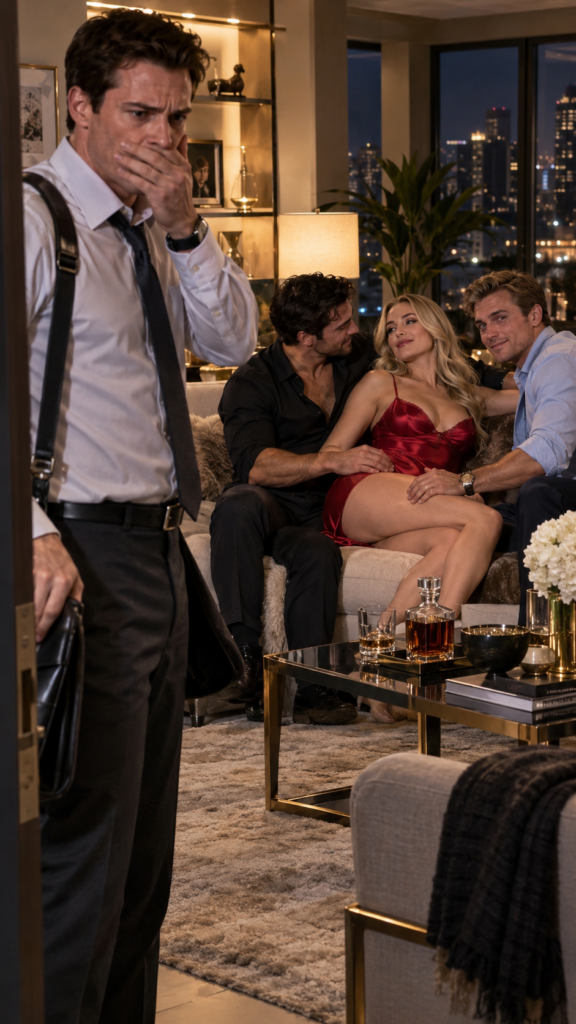
PART ONE — THE WHITE FORD
The first time Jimmy Jefferson mentioned the white Ford, I laughed.
Not because anything was funny, but because there are moments when your mind rejects a fact before your body has time to understand it. I was standing beside my mailbox with my laptop bag over one shoulder, still thinking about a software deployment that had gone sideways that afternoon, when Jimmy came across his lawn holding pruning shears.
“Todd,” he said, lowering his voice, “you got a minute?”
Jimmy was sixty-eight, retired, and professionally incapable of minding his own business. He noticed recycling bins left out too long, sprinkler systems running during rainstorms, strange dogs wandering through the neighborhood. Normally, I treated his observations as harmless background noise.
That evening, his face was different.
“I don’t want you thinking I’m watching your house,” he said.
I smiled. “That sentence usually means somebody’s watching my house.”
He didn’t smile back.
He pulled out his phone.
“There’s a car that comes by sometimes when you’re gone.”
The photograph showed a white Ford parked half a block from my driveway.
I recognized it immediately.
Philip’s.
For a few seconds, I simply stared at the screen.
Philip Harper had been my friend since ninth grade. We had skipped class together, failed at our first business together, gotten drunk for the first time together, and stood beside each other when my father died.
There were people you questioned.
Philip had never been one of them.
“You sure that’s during the day?” I asked.
“Usually between noon and two.”
I zoomed in on the picture.
The license plate was unmistakable.
“When did you take this?”
“Tuesday.”
Tuesday.
I had been downtown until six.
Judith had been home.
A pressure formed behind my ribs, small enough to ignore if I concentrated.
“Maybe he was dropping something off.”
“Could be,” Jimmy said.
That was when I looked at him.
Jimmy was giving me an escape route because he knew exactly what his information sounded like.
I handed the phone back.
“If you see it again, call me.”
His eyebrows lifted slightly.
“You sure?”
“Yes.”
Jimmy nodded.
Then he went back to trimming his hedge as though he hadn’t just opened a crack in the floor beneath my marriage.
I stayed beside the mailbox another thirty seconds.
From the outside, my house looked perfect.
Two-story brick. Black shutters. Hydrangeas Judith had chosen after spending three days comparing shades of blue online. A silver SUV in the driveway. Warm light spilling from the kitchen.
I had spent years building that life.
At twenty-one, while Philip and Allan chased one failing business after another, I had taught myself software engineering through online courses and sleepless nights. Eventually I became good enough that companies paid me for problems other people couldn’t solve.
Money came slowly.
Then quickly.
By twenty-nine, I earned more in a year than my parents had made in five.
Judith entered my life before the biggest promotions.
She had been twenty-one, working a register at a department store, beautiful in a way she seemed almost embarrassed by. She had ambitions buried beneath insecurity, and I had been arrogant enough to believe I could see her future before she could.
I introduced her to a photographer.
Then an agent.
Then a social media producer.
Three years later, Judith had brand contracts, magazine shoots, seventy thousand followers, and strangers recognizing her in restaurants.
I was proud of her.
Maybe too proud.
Because somewhere along the way, I stopped asking whether she was still becoming the woman I had fallen in love with.
I only noticed that she looked happy.
That night she greeted me wearing a white robe.
“You’re late,” she said.
“Deployment issue.”
Her mouth curved. “Good. That means you’re stressed.”
“That’s good?”
“For me.”
She reached for the robe’s belt.
Underneath was a nurse costume—white stockings, red trim, ridiculous little cap.
I stared at her.
Judith laughed.
“You’re supposed to look less terrified.”
“I’m deciding whether this violates several medical regulations.”
“Upstairs.”
“What about dinner?”
“It can wait.”
She kissed me before I could say anything else.
For the next hour, Philip’s Ford disappeared from my mind.
That was Judith’s talent.
She could make the room she was standing in feel like the only room in the world.
Later, she slept against my chest while rain tapped softly against the bedroom windows. I stared at the ceiling and felt foolish.
A cheating wife did not behave like this, I told myself.
A cheating wife pulled away.
She became distant.
Cold.
Protective of her phone.
Judith had laughed with me over dinner. She had reached for my hand while we watched television. She had kissed my shoulder before falling asleep.
Jimmy was probably mistaken about why Philip had visited.
That explanation lasted until Thursday.
At 12:17 p.m., my phone rang.
Jimmy.
I was at my desk eating a sandwich over the keyboard.
“Todd?”
My stomach tightened before he said anything.
“Yeah.”
“The Ford’s back.”
I stopped chewing.
“How long?”
“Maybe ten minutes.”
“Anyone get out?”
“One man. I think.”
Think.
I hated that word.
“Call me when he leaves.”
“You got it.”
The next four hours were useless.
I reread the same code review six times.
Every sound from my phone made my shoulders tighten.
At 4:46, Jimmy finally called.
“It’s leaving.”
I stood so quickly my chair rolled backward.
“Philip?”
There was silence.
Then Jimmy said, “Two men got into the car.”
My hand froze around the phone.
“Two?”
“Yeah.”
“Did you recognize the second one?”
“No. Dark hair. About your age.”
Allan had dark hair.
For the first time, I felt something colder than jealousy.
I felt excluded.
Philip and Allan had known each other through me.
If they were both visiting my wife secretly, then this wasn’t a mistake.
It was a system.
That evening, I watched Judith carefully.
She stood at the kitchen island chopping basil while music played from a speaker. Her phone rested faceup beside a glass of wine.
Nothing guarded.
Nothing nervous.
“How was your day?” she asked.
“Long.”
“Mine too.”
“What did you do?”
The knife stopped.
Only for a fraction of a second.
Then it continued.
“Emails. Laundry. Planning for Saturday’s shoot.”
She glanced at me.
“Why?”
“No reason.”
I looked at the knife moving through the basil.
One answer.
One tiny pause.
That was all.
I decided not to confront her.
Not yet.
Because accusation changes people.
It tells them where you are looking.
I wanted to know what existed before anyone had the opportunity to hide it.
Two days later, Allan called.
“Club tonight,” he said. “You, me, Phil. Bring Judith.”
“I thought you guys hated couples’ nights.”
“We’re evolving.”
“You said that about crypto.”
“That was different.”
Across the kitchen, Judith looked up when she heard Allan’s name.
“Who is it?” she asked.
“Allan.”
Her eyes stayed on me.
“Tell him I said hi.”
I did.
Then Allan said, “Come on, man. We haven’t gone out properly in forever.”
Judith leaned against the counter.
I saw anticipation in her face.
It disappeared when I answered.
“Not tonight.”
Allan groaned.
“We already have plans,” I added.
Judith looked away.
That tiny movement bothered me more than it should have.
After the call, she opened the refrigerator harder than necessary.
“You wanted to go?”
“No.”
“You looked disappointed.”
“I’m allowed to look at things.”
Her tone had sharpened.
“I didn’t say you weren’t.”
“Then stop analyzing my face.”
She closed the refrigerator.
Silence stretched between us.
Five seconds later, she softened.
“Sorry. Long week.”
She touched my arm.
The argument vanished almost before it existed.
But something had changed.
I had started noticing seconds.
Pauses.
Expressions.
The space between words.
And once you begin measuring a marriage that closely, you discover how much of love depends on never checking the math.
On Monday, I borrowed four small security cameras from a colleague.
I told him our neighborhood had experienced break-ins.
The lie tasted metallic.
I installed one facing the living room, another near the kitchen, one upstairs near the hallway, and one covering the driveway. I hated myself during every minute of it.
Judith would have been furious if she knew.
That was the point.
For two weeks, nothing happened.
Nothing.
I watched her work from home.
I saw her rehearse advertisements in front of the living-room windows. I saw her burn toast. I watched her dance alone while folding laundry and talk to her mother for forty-three minutes on speakerphone.
No Philip.
No Allan.
No secret meetings.
I checked her phone twice while she slept.
Nothing.
Her messages were ordinary.
Her social media accounts were clean.
Her email contained contracts, photographers, friends, family.
I began feeling ashamed.
Jimmy had seen Philip’s car, yes.
But there could be explanations.
Maybe Philip had stopped by.
Maybe Allan had been with him.
Maybe Judith had forgotten.
Maybe I was destroying trust because an old neighbor had too much time on his hands.
Then came Thursday.
I was at work drinking bad coffee when I opened the camera application almost out of habit.
Judith appeared on the living-room screen.
She was walking toward the front door.
I switched to the exterior camera.
White Ford.
My breath stopped.
Philip stepped from the driver’s side.
Allan emerged from the passenger seat.
Neither carried anything.
No tools.
No packages.
No reason.
Judith opened the door before they knocked.
And smiled.
Not the polite smile you give your husband’s friends.
Not surprise.
Recognition.
Expectation.
Philip hugged her.
His hand stayed against the small of her back.
Allan stepped inside behind them.
I turned up the audio.
Judith laughed.
“You’re late.”
Philip answered, “Blame him.”
Allan said, “I told you we should’ve left earlier.”
Judith shut the door.
Then she locked it.
Something inside me became completely still.
I watched Philip remove his jacket.
Allan tossed his keys onto my coffee table.
My coffee table.
The one Judith and I had chosen together after arguing for twenty minutes about whether walnut matched the floors.
Philip looked toward the stairs.
“Same rules?”
Judith smiled.
“Same rules.”
She walked upstairs.
Philip and Allan exchanged a look.
Then both men began removing their shirts.
I didn’t shout.
I didn’t throw my phone.
I didn’t drive home.
I simply sat there in my office with sixty-seven employees moving through the building around me while my marriage died on a six-inch screen.
Then Judith returned downstairs.
She was wearing the nurse costume.
The one she had worn for me.
And that was when I understood something worse than infidelity.
This wasn’t new.
This wasn’t spontaneous.
This had rituals.
Rules.
History.
Philip looked at her and laughed.
“Seriously?”
Judith placed one finger against her lips.
“Todd loved it.”
Allan grinned.
“That makes it better.”
My vision blurred.
For a moment, I thought I was going to faint.
Then Philip said something that cleared my head instantly.
“How much time do we have?”
Judith checked her phone.
“Four hours.”
Four hours.
She knew my schedule.
They knew my schedule.
They had built their betrayal around it.
I closed the camera feed.
Not because I couldn’t watch.
Because I no longer needed to.
The question was no longer whether my wife was cheating.
The question was how long three people I trusted had been rehearsing normality in front of me.
And by the time Judith opened the front door for them that afternoon, I had already made the first decision that would change all four of our lives.
I wasn’t going home to confront them.
I was going to let them believe I still knew nothing.
PART TWO — ACT NORMAL
The hardest thing I ever did was kiss Judith that night.
Not because I still loved her.
Because part of me did.
That was the problem.
Betrayal doesn’t erase love immediately. It contaminates it. Every good memory remains standing, but suddenly you don’t know which ones have been touched.
When I came home, Judith was making pasta.
She turned from the stove wearing gray sweatpants and one of my old university shirts.
“Hey.”
“Hey.”
She kissed me.
I smelled shampoo.
Her hair was damp.
Freshly washed.
My stomach tightened.
“How was work?” she asked.
“Productive.”
“That sounds ominous.”
I smiled.
“I fixed something that had been bothering me.”
She had no idea what I meant.
That almost made me laugh.
Dinner felt surreal.
Judith complained about an advertising client who wanted her to reshoot a video because the lighting made their product “look emotionally unavailable.” I nodded in the right places.
She reached across the table for parmesan.
Her wedding ring caught the kitchen light.
I stared at it too long.
“What?” she asked.
“Nothing.”
“You’re being weird.”
“Tired.”
She studied me.
For one dangerous moment, I thought she knew.
Then she smiled.
“You work too much.”
I nearly choked.
That night, she reached for me in bed.
I gently caught her wrist.
“Not tonight.”
Her expression changed.
Only slightly.
“You okay?”
“Headache.”
“Since when do headaches stop you?”
“Since this one.”
She withdrew her hand.
“Fine.”
The word was small.
Cold.
I turned away.
For the first time in our marriage, I understood how much information lived inside silence.
The next morning, I called Patricia Sloan.
Patricia had handled contracts for my first consulting company. She was fifty-three, terrifyingly organized, and one of the few people I trusted more than I trusted myself when angry.
“This isn’t business,” I said.
“Then you sound worse than usual.”
“My wife is having an affair.”
Patricia went quiet.
“With two of my closest friends.”
Another pause.
“Come in.”
“I can’t today.”
“Then tomorrow.”
“I need to know what not to do.”
Her answer was immediate.
“Do not empty accounts. Do not change locks. Do not threaten anyone. Do not post recordings online. Do not destroy property. Do not touch them.”
Each sentence felt irritatingly specific.
“You think I’m unstable?”
“I think you’re injured.”
“That’s not the same thing.”
“It becomes the same thing in a courtroom surprisingly often.”
I leaned back in my chair.
“What should I do?”
“Preserve evidence legally. Get copies of your financial records. Document property. Stop discussing strategy with mutual friends. And Todd?”
“Yeah?”
“Do not tell Judith you know until we understand what else you don’t know.”
That sentence stayed with me.
What else you don’t know.
I had been so focused on the physical betrayal that I had ignored everything surrounding it.
Money.
Messages.
Timing.
People.
The next three nights, after Judith fell asleep, I reviewed our finances.
At first, nothing looked dramatic.
Then patterns emerged.
Small cash withdrawals.
Two hundred.
Three hundred.
Five hundred.
Amounts too modest to trigger alarm.
Taken repeatedly over eleven months.
The total was $18,400.
I printed every transaction.
Then I checked transfers from our joint account.
There were payments to a company called H&A Food Ventures.
I knew that name.
Philip and Allan’s business.
Their fast-food stand.
Most payments were labeled “consulting” or “event catering.”
Judith had never mentioned hiring them.
The total exceeded twenty-six thousand dollars.
I sat at my desk at two in the morning staring at the number.
Forty-four thousand dollars.
Money from our marriage.
Going toward two men sleeping with my wife.
The next day, I drove to Patricia’s office.
She spread the documents across her conference table.
“Do you own their company?”
“No.”
“Investor?”
“No.”
“Any contracts?”
“No.”
“Did Judith have authority to transfer money?”
“Joint account.”
“So yes.”
I hated that answer.
Patricia tapped one payment.
“Does she do events?”
“Sometimes.”
“Could these be legitimate?”
“Maybe.”
“That word matters.”
“I saw them having sex in my house.”
“That proves an affair. It does not prove financial fraud.”
Her calm irritated me.
“So what am I supposed to do?”
“Separate what you feel from what you can prove.”
“That’s easy for you.”
“No,” she said. “It’s useful for you.”
I looked away.
Patricia softened.
“Anger wants one large action. The law prefers fifty small boring ones.”
“What if I want them ruined?”
“Then don’t do anything stupid enough to ruin yourself first.”
I left with instructions.
Open an individual account for future earnings.
Copy tax returns.
Photograph valuables.
Document business ownership.
Do not move marital funds without advice.
Do not alert Judith.
The strategy felt disappointingly bloodless.
Then, gradually, I understood its power.
I didn’t need revenge.
I needed clarity.
And clarity was already hurting them more than rage could.
That weekend, Philip and Allan came over.
Of course they did.
They arrived carrying beer and pizza.
Philip hugged me.
Actually hugged me.
“Man, you look terrible.”
“Work.”
Allan laughed. “You say that like work doesn’t pay for this palace.”
He dropped onto my leather couch.
The couch.
I stared at him sitting where I had watched him touch my wife.
Judith came from the kitchen.
“Hey, boys.”
Philip looked at her.
It lasted perhaps half a second.
But now I knew how to read it.
The familiarity.
The private amusement.
She handed them beers.
I watched her fingers brush Philip’s.
Allan started a video game.
For two hours, I became an anthropologist studying people I thought I knew.
Philip avoided excessive eye contact with Judith when I was watching.
Allan overcompensated by teasing her.
Judith behaved almost perfectly.
Almost.
At one point Philip went to the kitchen.
Thirty seconds later Judith followed.
“I’m getting ice,” she said.
There was ice in the bucket beside her.
I waited ten seconds.
Then I walked toward the kitchen.
Their voices stopped before I entered.
Philip stood beside the refrigerator.
Judith was near the sink.
Nothing improper.
Nothing visible.
But distance can be staged.
“Need something?” Judith asked.
“Water.”
Philip smiled.
“Hydration. Very responsible.”
I poured a glass.
My hand was steady.
That surprised me.
After they left, Judith began loading the dishwasher.
“You were quiet tonight.”
“Was I?”
“Yeah.”
“Thinking.”
“About?”
I leaned against the counter.
“People.”
Her shoulders stiffened.
“What people?”
“Friends.”
She turned slowly.
For one second, panic flashed across her face.
Then she smiled.
“You’re being mysterious.”
“Am I?”
She laughed.
But the laugh was too quick.
I walked upstairs without explaining.
That night, she stayed awake longer than usual.
I could hear her breathing.
At 1:17 a.m., she slipped from bed.
I waited.
Bathroom door closed.
No water ran.
I checked the network logs on our router.
A second device connected.
Then disappeared eleven minutes later.
Judith had another phone.
The realization was so simple that I almost admired it.
I had checked her regular phone.
She had wanted me to.
The next morning, I watched her leave for a shoot.
Then I searched.
I hated myself again.
Closets.
Drawers.
Shoeboxes.
Luggage.
Nothing.
Finally, I opened the bathroom vanity and removed the bottom drawer.
Behind it sat a black smartphone.
No case.
No passcode notification preview.
I didn’t touch it.
Photographs were enough.
Then I replaced the drawer.
That afternoon, Judith called me.
Her voice was bright.
“Want to get dinner somewhere nice tonight?”
“Why?”
“Do I need a reason?”
“No.”
“Seven?”
“Sure.”
We went to Maison Bleu, the restaurant where I had proposed.
That wasn’t coincidence.
Judith wore a dark green dress and the earrings I bought her for our anniversary.
She looked breathtaking.
She always had.
For half the meal, we talked about nothing.
Then she reached across the table.
“Are we okay?”
There it was.
The first real crack.
“Why wouldn’t we be?”
“You’ve been distant.”
“Busy.”
“You’re always busy.”
She watched my face.
“This is different.”
I took a sip of wine.
“Maybe I’m thinking about where we’re going.”
“As a couple?”
“As people.”
Her fingers tightened around the stem of her glass.
“What does that mean?”
“I don’t know yet.”
Judith sat back.
For the first time, I saw fear.
Not guilt.
Fear.
She knew something was shifting but didn’t know how much I understood.
Her next move told me everything.
She smiled.
Then she changed the subject.
A person who believes nothing is wrong asks more questions.
A person hiding something fears answers.
Two days later, Patricia called.
“You were right about the payments.”
I stood.
“How?”
“Your wife’s management company listed H&A Food Ventures as a subcontractor for seven promotional events.”
“Were they?”
“Not according to the venues.”
My mouth went dry.
“What does that mean?”
“It means invoices exist for services the venues say were never performed.”
Twenty-six thousand dollars.
Not gifts.
Invoices.
Paperwork.
“What happens now?”
“That depends on who created the invoices.”
I already knew.
Philip handled bookkeeping for their business.
Allan handled operations.
Judith had approved every payment.
Three signatures.
Three people.
One system.
That evening, I received another alert from the cameras.
White Ford.
They were back.
I watched Judith open the door.
This time I didn’t turn away.
Not because I wanted to see what happened.
Because I wanted the conversation before it happened.
Philip entered carrying a folder.
“Did you talk to him?”
Judith shook her head.
“No.”
Allan closed the door.
“You need to.”
“I said I will.”
“When?”
“When he stops acting weird.”
Philip frowned.
“What do you mean weird?”
Judith lowered her voice.
“He’s watching me.”
My heart thudded.
Allan laughed.
“Paranoid.”
“I’m serious.”
Philip placed the folder on my coffee table.
“What could he know?”
Judith looked toward the staircase.
Then she said the words that changed the entire shape of the betrayal.
“Not about us.”
She swallowed.
“I’m worried he knows about the money.”
Philip’s face hardened.
Allan stopped smiling.
For the first time, they weren’t lovers hiding an affair.
They were partners protecting something.
And then Philip opened the folder.
Inside were documents bearing the logo of my company.
That was when I realized they hadn’t only been using my marriage.
They had been using my name.
PART THREE — THE SECOND BETRAYAL
I zoomed in until the document filled my screen.
My company logo sat across the top.
Underneath it was something that looked like a procurement authorization.
My signature appeared at the bottom.
I had never signed it.
For several seconds, I couldn’t breathe.
Philip tapped the page.
“He won’t check these.”
Judith crossed her arms.
“You don’t know Todd.”
Philip smiled.
“I know him better than you think.”
That sentence hurt more than it should have.
Maybe because there had been a time when it was true.
Allan picked up another paper.
“When does the next payment clear?”
“Friday,” Judith said.
“How much?”
“Thirty.”
Thirty thousand.
Philip shook his head.
“No. Too much at once.”
“We need it.”
“You said twenty.”
“We owe suppliers.”
Allan muttered something.
Judith snapped, “Then maybe stop pretending that stupid stand is profitable.”
Silence.
Philip’s face changed.
There was resentment in it.
Not toward her.
Toward me.
Judith immediately saw it.
“I didn’t mean—”
“Yes, you did.”
“All I’m saying is—”
“You’re saying Todd was right.”
There it was.
My name.
Sitting between them like a fourth person.
Judith sighed.
“I’m saying we need to be careful.”
Philip laughed without humor.
“Careful? You live in a six-hundred-thousand-dollar house because he types on a laptop.”
My jaw tightened.
Allan said, “Drop it.”
“No. Seriously. Everything comes easy to him.”
Judith looked uncomfortable.
“That isn’t true.”
“He works fifteen hours a week.”
“He worked eighty when he was learning.”
The defense surprised me.
Philip stared at her.
“Whose side are you on?”
Judith’s expression went cold.
“Don’t ask me that.”
For the first time since discovering the affair, I saw the real structure of their relationship.
Philip wasn’t simply attracted to my wife.
He resented my life.
Allan followed Philip because Allan had always followed whoever spoke with the most confidence.
And Judith?
Judith wanted something different.
Excitement.
Attention.
Perhaps power.
Perhaps the thrill of making three men orbit her instead of one.
But money had bound all three together.
The affair was the secret.
The business was the leverage.
I called Patricia immediately.
“I need you to see something.”
“Send it.”
“I can’t electronically.”
“Why?”
“Forged company documents.”
Silence.
Then her voice changed.
“Do not touch anything.”
“I’m watching them right now.”
“Todd.”
“They’re in my house.”
“Leave them there.”
“They’re discussing stealing from me.”
“And you’re collecting evidence.”
I closed my eyes.
Every instinct demanded movement.
Drive home.
Kick down the door.
Grab Philip by the throat.
Ask Judith how she could do this.
Instead I sat in my office.
Still.
“Tell me what to do.”
“Call your CFO.”
“He doesn’t know about this.”
“He does now.”
My CFO was a woman named Lena Cho.
Forty minutes later, she and I sat inside a small conference room reviewing accounts.
She found the transaction attempt in eleven minutes.
Thirty-two thousand dollars.
Scheduled Friday.
Vendor: H&A Food Ventures.
Authorization: mine.
Except it wasn’t.
Lena stared at me.
“You didn’t approve this?”
“No.”
She looked again.
“Someone used your credentials.”
“Can you stop it?”
“Yes.”
“Don’t.”
Her head snapped up.
“What?”
“Don’t stop it yet.”
“Todd, this is fraud.”
“I know.”
“If it clears—”
“I know.”
She studied me.
“What aren’t you telling me?”
I told her.
Not everything.
Enough.
When I finished, Lena removed her glasses.
“Your wife?”
“Yes.”
“And your friends?”
“Yes.”
She sat back.
“Jesus.”
I almost laughed.
That was the first ordinary reaction anyone had given me.
Patricia was legal strategy.
I was controlled rage.
Lena simply looked horrified.
“Do you want me to call the police?”
“Not yet.”
“Why?”
“Because I want to know how deep it goes.”
Lena hesitated.
Then nodded.
“We can flag the transaction without blocking it.”
“Do that.”
“We can also preserve login records.”
“Do that too.”
For the next week, my life split into two realities.
In one, I was Todd Mercer, husband.
I cooked dinner.
I asked Judith about work.
I slept beside her.
I joked with Philip and Allan in our group chat.
In the other reality, I sat with attorneys and accountants cataloging how three people had quietly taken pieces of my life.
The amount was larger than we thought.
Fake vendor payments stretched back fourteen months.
Some came through Judith’s management company.
Others touched my consulting business.
Total exposure: $93,600.
Philip had created invoices.
Judith had approved transfers.
Allan had provided business banking information.
All three had benefited.
Then Lena found something worse.
“They tried to open a line of credit.”
“How much?”
“One hundred fifty thousand.”
“In whose name?”
She rotated the monitor.
My consulting LLC.
My signature.
My personal guarantee.
I felt nothing for several seconds.
That scared me.
“Did it go through?”
“No. Lender requested additional verification.”
“When?”
“Three weeks ago.”
Three weeks.
Judith had kissed me goodnight three weeks ago.
Philip had played video games beside me.
Allan had complained about rent.
And somewhere between those ordinary moments, they had tried to put a hundred fifty thousand dollars of debt in my name.
“Why would they need that much?”
Lena looked at me.
“That’s what we need to find out.”
The answer came from Allan.
Not because he confessed.
Because he panicked.
Friday afternoon, the flagged payment failed.
We had deliberately allowed the system to reject it at final authorization.
At 2:14 p.m., Philip called Judith.
The living-room microphone captured everything.
“What happened?”
“I don’t know.”
“You said it was approved.”
“It was.”
“Check again.”
“I am checking.”
Allan’s voice came from somewhere nearby.
“We need that money today.”
Judith snapped, “Stop talking.”
Philip said, “What changed?”
Silence.
Then Judith whispered, “Todd.”
My pulse jumped.
“What about him?”
“He moved something.”
“How do you know?”
“Our joint account.”
“What?”
“His salary isn’t going in anymore.”
They had noticed.
Good.
Philip said, “Call him.”
“No.”
“Judith.”
“If he knows, calling him makes it worse.”
Allan’s breathing sounded heavy.
“What if he knows everything?”
Nobody answered.
For almost twenty seconds, the only sound was the refrigerator compressor.
Then Philip said, “He doesn’t.”
Judith replied softly, “You don’t know that.”
That evening, I arrived home at six-twenty.
Judith was waiting.
No music.
No dinner.
No television.
She stood in the living room holding a glass of wine she hadn’t touched.
“You moved your paycheck.”
I set down my keys.
“Yes.”
“Why?”
“I wanted to.”
“Into what account?”
“Mine.”
Her face tightened.
“We’re married.”
“I’m aware.”
“So why?”
I took off my jacket.
“Why does it matter?”
“Because married people don’t suddenly move money without discussing it.”
The irony was almost unbearable.
I looked at her.
Judith realized it a second too late.
Her face changed.
I walked closer.
“You’re right.”
She swallowed.
“We should discuss money.”
“Todd—”
“How much have you given Philip and Allan?”
There it was.
Not everything.
Just enough.
Her eyes widened.
“I don’t know what you’re talking about.”
That answer killed the final surviving piece of hope.
Not because she lied.
Because she lied instantly.
No confusion.
No question.
No hesitation.
Prepared.
I nodded slowly.
“Okay.”
“What does that mean?”
“Nothing.”
“You’re accusing me of something.”
“I asked a question.”
“You’re acting insane.”
That word.
Insane.
A weapon disguised as concern.
I smiled faintly.
“Then you have nothing to worry about.”
I walked upstairs.
Judith followed.
“Todd.”
I kept walking.
“Todd!”
I entered the bedroom.
She grabbed my arm.
“Look at me.”
I did.
For the first time, her composure cracked.
“What do you know?”
The question came out before she could stop it.
We both heard it.
I looked down at her hand on my arm.
Then back at her face.
“That’s an interesting question.”
She released me.
“I meant—”
“I know what you meant.”
Her breathing changed.
“Todd, whatever you think—”
“Don’t.”
One word.
Quiet.
She stopped.
I removed a suitcase from the closet.
Her face drained of color.
“What are you doing?”
“Packing.”
“For where?”
“A hotel.”
“Why?”
“I need space.”
She stood between me and the door.
“No.”
“No?”
“You don’t get to walk out without telling me what this is.”
I almost admired the audacity.
I zipped the suitcase.
“You walked out of this marriage a long time ago, Judith.”
Her lips parted.
Silence.
There are moments when truth doesn’t need evidence because the guilty person recognizes its shape.
She knew.
I knew.
And suddenly the entire room seemed too small for both of us.
“Is this about Philip?”
I looked at her.
She whispered, “Todd…”
Not Allan.
Philip.
Interesting.
I picked up my suitcase.
She stepped aside.
Then, as I reached the door, she said, “It isn’t what you think.”
I stopped.
That sentence has probably survived every civilization because guilty people keep believing it can change facts.
I turned.
“What do I think?”
Judith said nothing.
“Tell me.”
Her eyes filled with tears.
Not enough to fall.
“Todd…”
“What do I think happened?”
Her silence answered.
I left.
But I didn’t go to a hotel.
I drove to Patricia’s office.
Because while Judith believed our marriage had finally become the crisis, she still didn’t understand something.
The divorce papers were already drafted.
And by Monday morning, Philip and Allan were going to discover that losing my friendship was the smallest problem they had.
PART FOUR — EVERYBODY LIES DIFFERENTLY
Philip called seventeen times that weekend.
I answered the eighteenth.
“Dude, what the hell is going on?”
His voice sounded concerned.
Beautifully concerned.
“I left the house.”
“What?”
“Judith and I are having problems.”
Silence.
Then he performed.
“Oh, man.”
I closed my eyes.
“You okay?”
“Not really.”
“What happened?”
“I think she’s hiding something.”
Another pause.
Longer.
“Like what?”
“I don’t know.”
Philip breathed out.
“Don’t jump to conclusions.”
There it was.
Advice from the man inside the conclusion.
I leaned back in the hotel chair.
“You think I’m imagining things?”
“I’m saying marriages get weird.”
“Would you tell me if you knew something?”
The silence this time lasted nearly three seconds.
“Of course.”
I smiled.
“Thanks.”
“Listen, whatever happens, me and Allan are here.”
“I know.”
And for the first time, I meant those words exactly as they sounded.
They were there.
Right in the middle of it.
Allan called fifteen minutes later.
Different approach.
Angrier.
“What did Judith do?”
No greeting.
No concern.
Straight to accusation.
“I didn’t say she did anything.”
“Phil said you think she’s hiding something.”
“Maybe.”
“Women, man.”
I stared at the ceiling.
“What does that mean?”
“You give them everything and sometimes they still need drama.”
This from a man sleeping with his best friend’s wife.
I almost admired the psychological gymnastics.
“You think she’d cheat?”
Allan’s answer came too quickly.
“No.”
“Why?”
“She loves you.”
I laughed softly.
He misunderstood it.
“See? You know I’m right.”
“Yeah.”
When we hung up, I finally understood why they had gotten away with it.
They weren’t brilliant.
They were familiar.
We forgive poor performances from people we trust because we don’t realize we’re watching a performance.
Monday began at 8:30 a.m.
Patricia filed the divorce petition.
At nine, our forensic accountant completed the first report.
At ten-fifteen, my company’s attorney notified the lender that the credit application had been fraudulent.
At eleven, H&A Food Ventures received a preservation notice instructing them not to destroy financial records.
At 12:06, Judith was served.
I know the exact time because she called at 12:07.
“What did you do?”
Her voice was shaking.
“I filed.”
“You filed for divorce?”
“Yes.”
“Without talking to me?”
I looked out the office window.
“You’ve been talking without me for a long time.”
Silence.
Then anger.
“You don’t know anything.”
“I know enough.”
“Where are you?”
“At work.”
“I’m coming there.”
“No.”
“You can’t stop me.”
“If you enter my office, security will escort you out.”
Her breathing became ragged.
“Todd, please.”
First please.
I waited.
“We need to talk.”
“We will. With attorneys.”
“This is our marriage.”
“It was.”
She began crying.
Real crying this time.
I felt it.
That was the part nobody tells you.
Watching someone who betrayed you suffer does not automatically feel satisfying.
Sometimes it feels like watching a house burn after you finally admit you can’t save it.
“Todd, I made mistakes.”
Plural.
Interesting.
“What mistakes?”
“I don’t want to do this on the phone.”
“Then tell your attorney.”
“You’re my husband.”
“Not for much longer.”
She stopped crying.
When she spoke again, her voice was colder.
“So that’s it?”
“No.”
I looked at the financial report on my desk.
“That isn’t it.”
She went silent.
I continued.
“Your lawyer will also receive documentation concerning payments to H&A Food Ventures.”
Nothing.
“Judith?”
“What payments?”
Still lying.
Even now.
I closed my eyes.
“Goodbye.”
I hung up.
At 12:31, Philip called.
At 12:38, Allan called.
At 12:44, Philip called again.
At 1:03, Judith’s attorney contacted Patricia.
At 2:17, H&A’s bank records were requested through legal process.
By evening, the alliance began cracking.
Allan showed up at my hotel.
I had not told him where I was staying.
That meant Judith had.
He stood outside my door looking like he hadn’t slept.
“Todd.”
I didn’t invite him inside.
“How’d you find me?”
“Judith.”
“What do you want?”
He glanced down the hallway.
“Can we talk?”
“We’re talking.”
“Not here.”
“This works.”
Allan shoved his hands into his pockets.
“Phil screwed up.”
I almost smiled.
Thirty hours.
That was how long loyalty lasted once consequences arrived.
“How?”
“All the business stuff.”
“What business stuff?”
He looked at me.
“You know.”
“I’d like to hear you say it.”
Allan swallowed.
“Some invoices weren’t legitimate.”
“Some?”
“I didn’t create them.”
“Who did?”
“Phil.”
“And Judith?”
“She approved them.”
“What did you do?”
His jaw tightened.
“I let them use the account.”
“Why?”
“We were drowning.”
There it was.
Not evil.
Desperation.
Envy.
Weakness.
The ingredients people use when they want forgiveness for choices they made repeatedly.
“You could’ve asked me for help.”
Allan laughed bitterly.
“We did ask.”
“When?”
“For years.”
“No. You complained. That isn’t asking.”
“You made us feel like failures.”
I stared at him.
“How?”
“Every time you talked about coding. Investments. Travel. Your house.”
“You came to my house voluntarily.”
“You always had to be the guy who made it.”
I felt something inside me settle.
“You think that’s why you slept with my wife?”
His face went blank.
He had not expected me to say it.
There are truths people can survive as long as nobody speaks them.
I stepped closer.
“You think I don’t know?”
Allan’s mouth opened.
Nothing came out.
“How long?”
“Todd…”
“How long?”
He looked away.
That was the answer before the answer.
“Eight months.”
My chest tightened.
Eight months.
Christmas.
My birthday.
Our anniversary.
Eight months.
“Both of you?”
He nodded.
“Together?”
Another nod.
The hallway tilted slightly.
I put one hand against the doorframe.
Allan noticed.
For the first time, shame reached his face.
“It wasn’t supposed to become—”
“Don’t.”
He stopped.
“Who started it?”
His eyes shifted.
“Judith.”
That answer did not comfort me.
“What happened?”
Allan rubbed his forehead.
“Phil came over one afternoon. She’d been drinking. They kissed.”
“And you?”
“Later.”
“How much later?”
“Couple weeks.”
I laughed once.
Empty.
“So Philip slept with my wife and thought the natural next step was inviting you.”
“It wasn’t like that.”
“How was it?”
Allan had nothing.
I studied him.
This man had eaten at my parents’ table.
Borrowed money from me at nineteen.
Helped carry my father’s coffin.
I realized grief can arrive for living people too.
“Did you ever feel guilty?”
“Yes.”
“When?”
He looked at me.
“After.”
“Not before?”
Silence.
“Not enough to stop.”
“Todd—”
“Leave.”
“I can help you with Phil.”
That sentence almost made me angry.
Almost.
Instead, I felt tired.
“You’re still doing it.”
“What?”
“Trying to survive by selling someone beside you.”
His face reddened.
“I’m trying to make this right.”
“No. You’re trying to make yourself less wrong.”
He looked down.
“Leave.”
This time he did.
The following afternoon, Philip requested a meeting.
I agreed.
Public place.
Coffee shop.
He arrived wearing a jacket over a shirt I had bought him for his birthday.
That detail bothered me more than expected.
He sat down.
“Allan talked.”
“Yes.”
“He’s lying about parts.”
“Of course he is.”
“I didn’t start the financial stuff.”
“Judith?”
“No. Allan.”
Interesting.
Different liar.
Same instinct.
Philip leaned toward me.
“Todd, listen. I screwed up.”
“With my wife?”
“Yes.”
“With my company?”
“Yes.”
“With my identity?”
His eyes flickered.
“That wasn’t supposed to hurt you.”
I laughed.
The woman at the next table glanced over.
“You forged my signature.”
“We were going to repay it.”
“You applied for debt in my name.”
“We had a contract coming.”
“You slept with Judith in my house.”
His jaw tightened.
“That has nothing to do with business.”
“It has everything to do with business.”
“How?”
“Because you wanted my life without doing what I did to build it.”
Philip stared at me.
Then something ugly surfaced.
“You really believe you built everything alone?”
“No.”
“You got lucky.”
“Sometimes.”
“You met the right people.”
“Yes.”
“You had time.”
“We all had time.”
His eyes hardened.
“You always thought you were better than us.”
There it was.
The old wound.
Not Judith.
Not money.
Hierarchy.
“You thought I was better,” I said.
Philip laughed.
“See? That.”
“No. I never thought about it until you made my success an insult to you.”
“You loved showing it off.”
“I invited my friends into my home.”
“Your giant home.”
“I paid for vacations.”
“Exactly.”
“I helped with your business.”
“Exactly.”
I stared at him.
The contradiction was almost sad.
Every kindness had become evidence against me because receiving help made him feel small.
So he had rewritten generosity as humiliation.
“How long did you hate me?”
Philip’s expression shifted.
“I don’t hate you.”
“Then how did you do this?”
He had no answer.
I leaned back.
“That’s what I thought.”
He looked at his coffee.
“Judith said you two were unhappy.”
I smiled.
There it was.
The oldest permission slip in infidelity.
“What else did she say?”
“That you ignored her.”
“Did you believe her?”
“Sometimes.”
“Enough to ask me?”
He looked up.
“You wouldn’t have told the truth.”
“You didn’t ask.”
Silence.
“Did she say we were separating?”
“Yes.”
“When?”
“Early on.”
“Eight months ago?”
“Yes.”
“Did you notice I still lived there?”
Philip’s face tightened.
“Relationships are complicated.”
“No. Your justification was complicated.”
I stood.
“Where are you going?”
“Back to work.”
“Todd.”
I looked at him.
He seemed suddenly younger.
Not physically.
Emotionally.
Like the boy who used to blame teachers for failed exams.
“You’re going to destroy us.”
I shook my head.
“No.”
His eyes narrowed.
“You already made the choices. I’m just refusing to protect you from them.”
I left.
That evening, Patricia called.
“We have the bank records.”
“And?”
“The fake invoices are the smaller problem.”
I closed my eyes.
“What now?”
“H&A took out private loans.”
“So?”
“Collateral includes equipment they don’t own.”
“Whose?”
“Yours.”
I sat upright.
“My equipment?”
“Server hardware from your consulting office.”
“How?”
“Serial numbers.”
“Where would they get those?”
Patricia was quiet.
Then she said, “From someone who had access to your office.”
Only one of them had ever used my key card.
Judith.
And suddenly the affair looked less like the reason for everything.
It looked like the method.
Judith hadn’t merely betrayed our marriage.
She had been helping Philip build a counterfeit version of my life behind my back.
PART FIVE — WHAT JUDITH REALLY WANTED
Judith asked to meet me alone.
Patricia advised against it.
I went anyway.
Not because I expected truth.
Because I finally wanted to hear the lie from beginning to end.
We met in the house.
Our house.
The same house where everything had happened.
Judith sat at the kitchen table without makeup.
I had seen her that way a thousand mornings.
Yet she looked unfamiliar.
There were dark circles beneath her eyes.
Her wedding ring was gone.
Mine had been removed four days earlier.
For several seconds, neither of us spoke.
Then she said, “I loved you.”
Past tense.
I pulled out a chair.
“When did you stop?”
She looked down.
“I don’t know.”
“Before Philip?”
“I don’t know.”
“Before Allan?”
Her jaw tightened.
“You make it sound disgusting.”
I almost smiled.
“What word would improve it?”
She flinched.
I immediately regretted the cruelty.
Not because it was inaccurate.
Because I didn’t want to become someone who needed to wound her to feel taller.
Judith folded her hands.
“I was lonely.”
“I was there.”
“You were physically there.”
“And emotionally?”
She looked at me.
“You were always fixing something.”
“Work?”
“Everything.”
She gestured around the kitchen.
“The house. Investments. My career. Trips. Our future.”
Her voice cracked.
“You never stopped building long enough to notice whether I still wanted the life you were building.”
That landed.
I hated that it landed.
Because betrayal does not make every complaint false.
“You could have told me.”
“I tried.”
“When?”
“Hundreds of little times.”
I thought back.
Her irritation when I worked late.
Her requests to travel spontaneously.
The clubs I refused.
The dinners I postponed.
Were those attempts?
Maybe.
But communication hidden inside resentment is still hidden.
“You also could have left.”
She nodded.
“I know.”
“Instead you slept with my friends.”
Tears formed.
“Yes.”
“Why them?”
Judith inhaled slowly.
“Philip made me feel reckless.”
“Meaning?”
“You always saw consequences.”
“I’m an adult.”
“He saw moments.”
“And Allan?”
She looked ashamed.
“Allan happened later.”
“That isn’t an answer.”
She wiped one cheek.
“After Philip, everything felt ruined anyway.”
That sentence hurt more than I expected.
Once she crossed one line, she had treated every additional line as cheaper.
A morality of sunk costs.
“If it was ruined, why stay with me?”
Her eyes lifted.
“Because I still loved parts of our life.”
“Parts.”
“Todd—”
“The house?”
“No.”
“Money?”
“No.”
“Travel?”
“No.”
“Then what?”
“You.”
Silence.
“You don’t get to say that.”
“I know how it sounds.”
“How does it sound?”
“Impossible.”
“Exactly.”
She leaned forward.
“People can love someone and still destroy them.”
“I know.”
My voice surprised both of us.
Judith became still.
I continued.
“I know because I still loved you after I saw you with them.”
Her face collapsed.
I looked away.
That was the first time I admitted it aloud.
Not to Patricia.
Not to Lena.
Not to myself.
I had still loved Judith while collecting evidence against her.
Still loved her when I moved my salary.
Still loved her when the divorce papers were served.
Love had not protected her from consequences.
And consequences had not instantly killed love.
Judith covered her face.
For a while, only her breathing filled the room.
Then I asked the question that mattered most.
“The money.”
She lowered her hands.
“Philip needed help.”
“So you stole from me.”
“I didn’t think of it that way at first.”
“How did you think of it?”
“He needed thirty thousand to keep the stand open.”
“You could have asked me.”
“He refused.”
“Why?”
“You know why.”
Pride.
Of course.
“So you transferred it.”
“Yes.”
“Then more.”
She nodded.
“He kept needing more.”
“And fake invoices?”
“His idea.”
“You approved them.”
“Yes.”
“My company?”
Her eyes closed.
“Yes.”
“The credit line?”
“Todd…”
“One hundred fifty thousand dollars.”
“I was going to stop it.”
“You signed it.”
“I was going to stop it.”
“After?”
She began crying again.
“I don’t know.”
I watched her.
That answer felt more truthful than anything else she had said.
She had entered something she could no longer control.
One lie protected another.
One transfer required another.
One affair demanded another explanation.
Eventually, she wasn’t choosing between right and wrong.
She was choosing which disaster arrived first.
“Why my company?”
“Philip said the business would recover.”
“You believed him?”
“I wanted to.”
“Why?”
She looked at me for a long time.
Then she whispered, “Because if he succeeded, then what I did would mean something.”
There.
The real truth.
Judith could not bear for her betrayal to be meaningless.
If Philip became successful, if the business survived, if their secret created something tangible, then perhaps she could reinterpret eight months of deception as a path toward another life.
But if H&A failed?
Then she had risked everything for nothing.
I sat back.
“You weren’t helping Philip.”
She frowned.
“You were trying to justify yourself.”
Her lips trembled.
“That’s not fair.”
“No.”
I stood.
“None of this is.”
She looked around the kitchen.
“What happens to the house?”
“We sell it.”
Her face tightened.
“I love this house.”
“So did I.”
“Todd…”
“I can’t live here.”
She looked toward the living room.
Toward the couch.
She understood.
Neither could she, probably.
“What happens to me?”
The question was so naked that I almost softened.
Then I remembered the forged signature.
“You get a lawyer.”
“I have one.”
“Then listen to them.”
“What happens to Philip and Allan?”
“That depends on investigators.”
Her eyes snapped up.
“Police?”
I said nothing.
“Todd.”
“You forged financial documents.”
“I didn’t forge your signature.”
“You submitted documents containing it.”
“Philip made them.”
“You used them.”
She stood.
“Please.”
I looked at her.
“Don’t do this.”
“Do what?”
“Destroy their lives.”
I stared.
Judith heard herself.
Her face changed.
I spoke softly.
“You’re asking me to protect them.”
“No.”
“Yes.”
“I’m asking you not to go too far.”
“How far did you go?”
She lowered her eyes.
I walked toward the door.
“Todd.”
I stopped.
“Was any of it real?”
I turned.
She was crying again.
“Us?”
She nodded.
“Yes.”
“All of it?”
“Yes.”
“Even during those eight months?”
Her mouth opened.
No sound came.
That was the most truthful answer she gave me.
Some of it had been real.
Some of it had not.
And perhaps the reason betrayal hurts so badly is because reality does not divide cleanly afterward.
I left the house.
Three days later, H&A Food Ventures closed.
Not because of me.
Their primary supplier had stopped extending credit.
The fake invoices were under review.
Their lender froze an account.
Employees quit after paychecks were delayed.
A business they had kept alive through pride and deception finally encountered arithmetic.
Philip blamed Allan.
Allan blamed Philip.
Both blamed Judith.
Judith blamed herself.
And for the first time, nobody blamed me.
Then something unexpected happened.
Allan contacted the investigator.
Voluntarily.
He offered records.
Emails.
Messages.
Invoices.
Everything.
In exchange for cooperation.
Philip called me that night.
His voice was almost unrecognizable.
“He sold us out.”
I stood on the balcony of my temporary apartment.
“You sound surprised.”
“You knew?”
“No.”
“He gave them everything.”
“What did you expect?”
“Loyalty.”
That word.
From Philip.
I laughed.
He went silent.
“Sorry,” I said. “That one got me.”
“This isn’t funny.”
“No.”
I looked at the city lights.
“It really isn’t.”
“Todd, I need help.”
“With what?”
“A lawyer.”
“You have money.”
“No, I don’t.”
“What happened to the ninety-three thousand?”
Silence.
“Debt.”
“Then ask Judith.”
“She won’t answer me.”
Interesting.
The triangle was collapsing.
“Why are you calling me?”
“Because we were friends.”
Were.
He heard it after saying it.
I answered quietly.
“That’s why this hurts.”
Philip said nothing.
Then he whispered, “I’m sorry.”
I had imagined those words for weeks.
I thought they would feel like victory.
They didn’t.
“Are you?”
“Yes.”
“For what?”
“All of it.”
“Be specific.”
He exhaled shakily.
“For touching what was yours.”
The phrase disturbed me.
“Judith wasn’t mine.”
He went quiet.
I continued.
“She was my wife. She made choices. Don’t turn her into property because it makes your betrayal easier to understand.”
“I didn’t mean—”
“I know.”
“Todd…”
“What are you actually sorry for?”
Long silence.
Then Philip said, “I wanted to prove I could take something from you.”
There it was.
Pure.
Ugly.
Human.
I closed my eyes.
“Why?”
“Because everything worked for you.”
“No, it didn’t.”
“It looked like it did.”
“You were there when my dad died.”
“I know.”
“You saw me working from two in the morning until sunrise.”
“I know.”
“You saw the businesses fail.”
“I know.”
“Then what did you think I stole from you?”
His voice broke.
“Nothing.”
That answer mattered.
Perhaps more than any apology.
Philip had finally admitted the enemy he had spent years fighting had never actually attacked him.
“I hope you get help,” I said.
“What does that mean?”
“It means I’m done.”
I hung up.
Two weeks later, Patricia called with the final forensic report.
The number was worse.
But the legal picture was better.
Allan’s cooperation established Philip’s role in creating invoices.
Judith’s electronic approvals established hers.
Bank logs documented Allan’s participation.
My company recovered part of the attempted loss through insurance and frozen funds.
The criminal side would take months.
The divorce would take longer.
Yet one part ended immediately.
I never spoke to Philip again.
And when Judith contacted me with one final request, it wasn’t money she wanted.
It was a meeting.
She said she needed to tell me something about the first afternoon Philip came to our house.
Something she had never told Allan.
Something Philip didn’t know she remembered.
I agreed to meet her.
And what she told me changed the one part of the story I thought I already understood.
PART SIX — THE FIRST AFTERNOON
We met in a park.
Judith chose it because there were people nearby but not close enough to hear.
She sat on a bench overlooking a pond where children threw bread to ducks despite a sign asking them not to.
For several minutes, we watched the water.
Then she said, “Philip didn’t come over to sleep with me the first time.”
I didn’t respond.
“He came to ask for money.”
“How much?”
“Twenty thousand.”
“For the business?”
“Yes.”
“Why didn’t he ask me?”
“He said you’d say no.”
“Would I?”
Judith looked at me.
“Probably.”
She was right.
Not because I wouldn’t help.
Because I would have asked for financial statements.
A plan.
A budget.
Philip hated being examined.
“What happened?”
“I told him I couldn’t give him that much without you knowing.”
She picked at a loose thread on her sleeve.
“He started talking about you.”
“What about me?”
“How lucky you were. How you always landed on your feet.”
I almost laughed.
“Sounds familiar.”
“He was angry.”
“At me?”
“At himself, mostly.”
Judith stared at the pond.
“He said being around us made him feel like he was watching the life he should’ve had.”
I said nothing.
“Then he asked if I ever felt trapped.”
That question mattered.
I turned toward her.
“What did you say?”
“I said sometimes.”
There it was.
The first opening.
Not seduction.
Recognition.
Two people nursing different resentments and discovering they could use each other as proof.
“He said you treated me like a project.”
I felt that one.
“Did I?”
“Sometimes.”
I nodded.
Judith looked surprised.
“You’re not going to argue?”
“What would be the point?”
Her eyes filled.
“Todd, you did so much for me. That was part of the problem.”
“How?”
“I stopped knowing which parts of my life were mine.”
I considered that.
The photographer.
Agent.
Producer.
Brand strategy.
I had helped with everything.
At the time, helping felt like love.
Perhaps sometimes it had also been control wrapped in competence.
“I thought you wanted it.”
“I did.”
“Then why resent me?”
“Because wanting help and resenting dependence can exist together.”
That was painfully reasonable.
Again, betrayal had not made every emotion irrational.
“What happened with Philip?”
“He kissed me.”
“Did you stop him?”
Judith looked directly at me.
“No.”
Good.
No rewriting.
No pretending.
“Did you want him to?”
“Yes.”
The word hurt.
But clean pain was easier than confusion.
“What happened afterward?”
“I told him it couldn’t happen again.”
I smiled faintly.
“It did.”
“Four days later.”
“That quickly?”
She nodded.
“Then the money?”
“After.”
“How much?”
“Ten thousand first.”
“And he realized the relationship made you easier to manipulate.”
Judith stiffened.
“I don’t know.”
“I do.”
She looked down.
“Maybe.”
“What about Allan?”
“That was Philip.”
“How?”
“He invited him over one day.”
“Without telling you?”
“Yes.”
My stomach tightened.
This was where the original title would have become a lie if told carelessly.
“What happened?”
Judith looked at me.
“I could have told Allan to leave.”
“But you didn’t.”
“No.”
“Did either of them force you?”
Her answer was immediate.
“No.”
That mattered.
Whatever else happened, Judith owned her choices.
She breathed out slowly.
“I think part of me wanted to prove something.”
“To who?”
“You.”
I frowned.
“You didn’t know.”
“I know.”
She wiped her cheek.
“It wasn’t logical.”
“What were you proving?”
“That you didn’t control everything.”
The honesty was brutal.
I nodded once.
“And every time you came home not knowing, I had won.”
She started crying.
“I hate saying that.”
“But it’s true.”
“Yes.”
I looked across the pond.
Strangely, that confession hurt less than expected.
Because I finally understood.
Judith’s affair had not begun because Philip was better.
Or because I was worse.
It had begun as rebellion.
Then secrecy made it exciting.
Then money made it complicated.
Then guilt made it difficult to stop.
Then fear made all of them protect the lie.
It was less romantic than I imagined.
More pathetic.
More human.
“Why tell me this now?”
Judith wiped her face.
“Because Philip is saying I manipulated him.”
“Did you?”
“Sometimes.”
“And did he manipulate you?”
“Yes.”
“Both can be true.”
She nodded.
“I know.”
We sat in silence.
Then Judith said, “There’s something else.”
Of course there was.
“There’s always something else.”
She almost smiled.
Then her face became serious.
“I kept a record.”
My head turned.
“Of what?”
“The transfers.”
“Why?”
“At first because Philip kept changing numbers. Later…”
She looked down.
“Because I got scared.”
“Where?”
“Cloud storage. Separate account.”
“Does your lawyer know?”
“No.”
“Why are you telling me?”
“Because if the investigators find it, it proves everything.”
“Including your part.”
“Yes.”
I studied her.
“You understand what that can do to you?”
“Yes.”
“Then why?”
She looked toward the water.
“Because I’m tired of protecting the version of me that did this.”
For the first time since the betrayal, I saw something in Judith that resembled the woman I had married.
Not innocence.
Responsibility.
It arrived late.
But late is not the same as never.
“Give it to your lawyer,” I said.
“You don’t want it?”
“No.”
“Why?”
“Because I don’t want to be the person who controls what happens to you.”
Her eyes lifted.
“That’s what started this, remember?”
She cried quietly.
I stood.
“Todd.”
I stopped.
“Will you ever forgive me?”
There was no easy answer.
So I gave her the true one.
“I don’t know.”
She nodded.
“That’s fair.”
“But forgiveness and reconciliation aren’t the same thing.”
“I know.”
“We’re still getting divorced.”
“I know.”
I walked away.
That evening, I felt lighter.
Not happy.
Not healed.
Lighter.
For months, I had been carrying a question heavier than anger.
Why?
Why wasn’t I enough?
Why Philip?
Why Allan?
Why risk everything?
Judith’s answer showed me I had been asking the wrong question.
People do not always betray because someone else lacks something.
Sometimes they betray because something inside themselves is unresolved, hungry, resentful, afraid, or desperate to feel powerful.
That realization did not excuse her.
It released me.
The criminal investigation eventually moved forward.
Allan accepted responsibility early and cooperated.
Philip fought everything.
Judith turned over her records.
The evidence she had secretly saved became central.
I did not attend every hearing.
I stopped needing front-row seats to their consequences.
The divorce took seven months.
The house sold.
I thought watching strangers move into it would destroy me.
Instead, I stood across the street on closing day and felt almost nothing.
A moving truck sat in the driveway.
A little girl ran through the front door holding a stuffed bear.
Her father followed carrying a lamp.
Her mother laughed from the porch.
For them, the house was beginning.
For me, it had ended months earlier.
That was okay.
I drove away before they noticed me.
Six weeks later, I moved to Florida.
Not permanently.
I told myself one year.
I rented a small place near the water.
No giant house.
No leather couch.
No rooms designed to impress anyone.
Just white walls, a balcony, one bedroom, and enough quiet to hear myself think.
At first, the silence was unbearable.
Then it became expensive in a different way.
It demanded honesty.
I began noticing how much of my identity had been built around being the successful one.
The fixer.
The provider.
The person who knew what came next.
Judith had been wrong to betray me.
Philip and Allan had been wrong to use me.
But I also had to admit something about myself.
I had confused being needed with being loved.
Helping Judith succeed had made me feel valuable.
Helping Philip and Allan financially had made me feel generous.
Solving everyone’s problems allowed me to avoid asking whether those relationships were healthy without my solutions.
That was my work to do.
Not their excuse.
Mine.
Then, eight months after the divorce, I received a letter.
Paper.
Actual paper.
No return address.
I recognized Judith’s handwriting.
I almost threw it away.
Instead, I opened it on my balcony.
It contained no request.
No plea.
No explanation.
Just three handwritten pages.
She wrote that she had accepted a plea agreement relating to the financial case.
She wrote that she had lost several modeling contracts after the scandal became known privately within the industry.
She wrote that she was working with a smaller agency and living in an apartment.
Then came the line that made me stop.
I used to think losing everything would prove that you were the one who gave me everything. Instead it taught me how little I had ever learned to build alone.
I read it twice.
She apologized.
Not for “hurting me.”
Not for “making mistakes.”
Specifically.
For Philip.
For Allan.
For the money.
For the signature.
For lying when I asked directly.
For letting me question my instincts.
For turning our home into a place I could no longer enter without seeing ghosts.
Specific apologies carry weight.
She ended with:
I don’t expect forgiveness. I just wanted to finally tell the truth when there was nothing left for the truth to save.
I folded the letter.
Then I placed it in a drawer.
I did not reply.
Not because I hated her.
Because sometimes silence is not punishment.
Sometimes it is completion.
Three months later, another message arrived.
This one from Allan.
He was working at a warehouse.
He had completed community service and was paying restitution.
He wrote only four sentences.
He apologized.
He said he understood if I never responded.
He thanked me for the time before everything became poisoned.
Then he wished me well.
I deleted it.
Philip never apologized again.
The last I heard, he had moved back in with an uncle while his case continued.
Once, that information would have pleased me.
Now it simply sounded like weather happening in another city.
The final surprise came almost a year after the day Jimmy showed me the photograph.
I was back home visiting my mother.
At a grocery store, I saw Jimmy.
He was examining watermelons with the seriousness of a surgeon.
“Mr. Jefferson.”
He turned.
“Todd!”
He hugged me.
“How’s Florida?”
“Warm.”
“That’s generally the reputation.”
I laughed.
We talked for several minutes.
Then Jimmy became quiet.
“I always wondered whether I should’ve stayed out of your business.”
I looked at him.
“Why?”
“Maybe ignorance would’ve been easier.”
I considered that.
There was a time when I might have agreed.
The old Todd wanted harmony.
Appearance.
A clean house.
Successful friends.
A beautiful wife.
A life that photographed well.
The man standing beside the watermelons wanted something else.
Reality.
Even when it hurt.
“Easier isn’t always better,” I said.
Jimmy nodded.
Then he smiled.
“You seeing anyone?”
“Jimmy.”
“What? I’m retired. This is my entertainment.”
I laughed.
“No.”
“Good.”
“Good?”
“Learn to be alone before you invite somebody into the house.”
Unexpected wisdom from the neighborhood surveillance department.
“I’m working on it.”
I walked away smiling.
Outside, afternoon sun reflected from rows of parked cars.
For half a second, I saw a white Ford and my body reacted before my mind did.
Chest tightening.
Breath stopping.
Memory firing.
Then I looked again.
Different model.
Different plate.
Different life.
I stood there until my heartbeat slowed.
That moment taught me more about healing than anything else had.
Healing wasn’t forgetting.
It wasn’t forgiving everyone.
It wasn’t pretending the betrayal had made me stronger.
Some wounds do not improve you.
They simply wound you.
Healing was discovering that the memory could still knock on the door without being allowed to enter.
I got into my rental car.
Before starting the engine, I looked at my reflection in the rearview mirror.
I was thirty-one.
Older around the eyes.
Less certain about people.
More certain about boundaries.
I thought of Philip sitting on my couch.
Allan carrying beer into my kitchen.
Judith standing in that nurse costume while I watched from an office miles away.
For a long time, I believed that afternoon was the moment they took something from me.
It wasn’t.
They took my trust months earlier.
That afternoon was simply when I stopped unknowingly giving it away.
There is a difference.
A powerful one.
The consequences that followed were not satisfying because Philip lost his business, Allan lost my friendship, or Judith lost our marriage.
The real satisfaction came from something quieter.
I did not become them.
I did not let humiliation turn me violent.
I did not destroy my own future trying to make their suffering equal mine.
I documented.
I walked away.
I let facts become consequences.
And eventually, I stopped measuring my recovery by how badly they were doing.
That was freedom.
I started the engine.
My phone buzzed.
A message from Lena.
She had been promoted after I stepped back from daily operations.
Board approved the expansion. Drinks when you’re back?
I smiled.
Absolutely.
Then another notification appeared.
A photograph from my mother.
Jimmy standing beside the produce section holding the watermelon he had finally chosen.
Apparently he had demanded she photograph it because, according to him, “Todd doubted my process.”
I laughed aloud.
An ordinary laugh.
No bitterness beneath it.
No second meaning.
Just laughter.
I drove toward my mother’s house with the windows down.
The road ahead was bright enough that I lowered the visor.
For years, I had believed success meant building a life nobody could take from me.
The house.
Money.
Marriage.
Career.
Friends.
I had been wrong.
Anything outside you can disappear.
People leave.
Money moves.
Promises break.
Rooms become memories.
Success, I eventually learned, was being able to lose what you thought defined you and discover there was still a person underneath.
Judith did not destroy me.
Philip did not defeat me.
Allan did not steal my life.
They revealed something I had been too comfortable to see.
A beautiful life built on unexamined trust is still fragile.
So I built differently the second time.
Slowly.
Quietly.
Without needing anyone to envy it.
And years later, when I finally understood what had happened, I stopped calling that white Ford the beginning of the worst period of my life.
It was the end of one.
The beginning came after.
Because the day I discovered my wife with two of my best friends wasn’t the day I lost everything.
It was the day three people showed me exactly who they were—
and I finally learned that walking away could be more powerful than revenge.