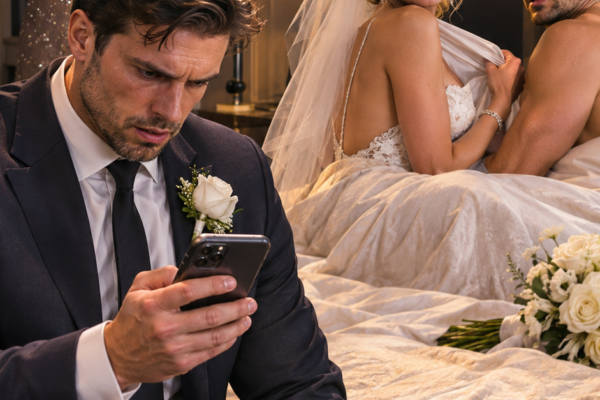
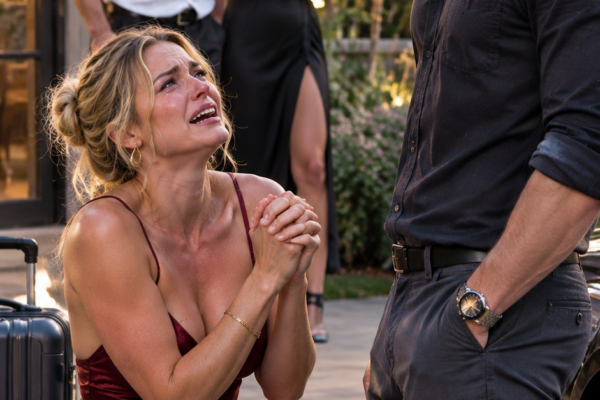
After a Fight, the Mafia Boss Refused to Drive His Wife Home… The Next Morning, She Was Gone…
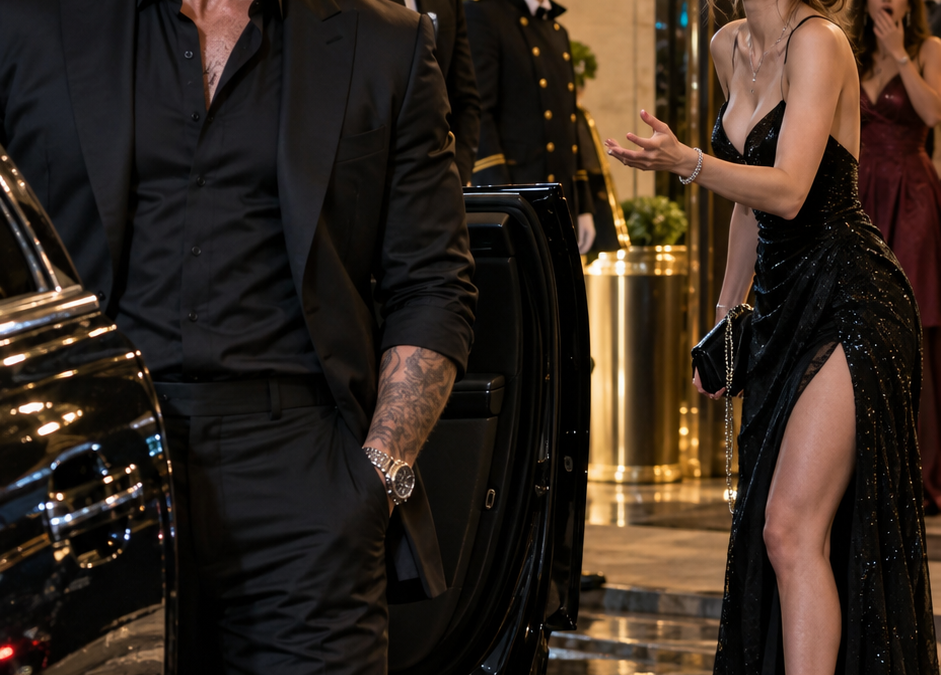
After a Fight, the Mafia Boss Refused to Drive His Wife Home… The Next Morning, She Was Gone
He left his wife alone in the rain to teach her a lesson.
By sunrise, her blood was drying in an alley.
And for the first time in his life, the most feared man in Chicago understood what it meant to be powerless.
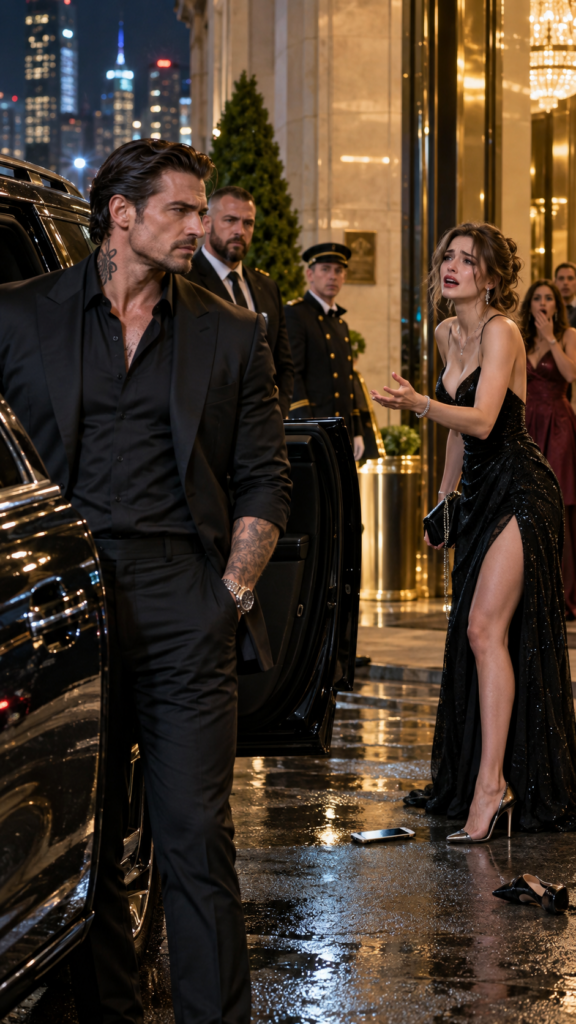
The Last Dance Before the Fall
The grand ballroom of the Drake Hotel glittered beneath crystal chandeliers, warm and golden against the November storm battering the windows. Politicians laughed beside union chiefs. Real estate developers toasted judges whose campaigns they had quietly financed. Men who ordered deaths over breakfast wore tuxedos and spoke tenderly about children’s hospitals.
At the center of that polished illusion stood Mateo Falcone.
To the mayor, he was a philanthropist who had rebuilt three schools on the South Side. To federal investigators, he was the untouchable head of the Falcone organization, controlling ports, unions, underground casinos, and half the political favors in Cook County.
To Clara Falcone, he was the man who had once promised he would become better than his father.
She stood beside a champagne fountain in an ice-blue silk gown, one hand wrapped around a crystal flute she had not touched. At twenty-eight, Clara was still striking enough to turn heads without trying, but exhaustion had settled into the angles of her face. Concealer could not entirely hide the shadows beneath her eyes.
Being Mateo’s wife meant waking whenever a car slowed outside their house.
It meant memorizing emergency numbers and pretending not to notice armed men standing behind the roses at charity dinners.
Across the ballroom, Mateo leaned against a marble pillar while his underboss, Thaddeus Russell, spoke close to his ear. Thaddeus handed him a burner phone. Mateo glanced at the screen, and the warmth disappeared from his face.
Clara knew that expression.
It was the stillness that came before someone suffered.
She set down her glass and crossed the ballroom. Guests smiled at her, but she barely saw them. Her heels struck the hardwood with a steady rhythm that concealed the panic building beneath her ribs.
“Mateo.”
Thaddeus stepped back. “Mrs. Falcone. You look beautiful tonight.”
“Leave us, Thad.”
Thaddeus looked at Mateo rather than obeying her.
That small hesitation hurt more than Clara expected. Even after five years of marriage, a man in Mateo’s organization still needed permission from her husband before respecting her request.
Mateo gave a slight nod. Thaddeus disappeared into the crowd.
“What happened at Peter’s warehouse?” Clara asked.
Mateo adjusted one of his cuff links. “Not here.”
“My brother called me twenty minutes ago. Federal agents raided his logistics company this afternoon.”
“Keep your voice down.”
“They found crates of automatic rifles in his shipping containers.”
A senator’s wife passed behind them, laughing too loudly. Mateo waited until she was gone before stepping closer.
“I’m handling it.”
“You told me you stopped using Peter’s company.”
“I told you I would keep your family safe.”
“That is not the same answer.”
His jaw tightened. “Clara.”
“Were those your guns?”
The jazz band played a bright, elegant melody while something cold opened between them.
Mateo looked toward the ballroom doors. “Come with me.”
He placed a hand near her elbow. Clara pulled away before he could touch her.
That movement drew the attention of two nearby guests. Mateo’s face did not change, but she saw humiliation flare behind his eyes.
He led her into a velvet-lined corridor outside the ballroom. Once the doors closed behind them, the music became muffled, and his control began to crack.
“You do not confront me like that in public.”
“You lied to me in private. Where was I supposed to confront you?”
“Peter is not going to prison.”
“They found weapons in his warehouse.”
“I have people inside the Port Authority, the police department, and the federal task force. The evidence will become complicated.”
Clara stared at him. “Listen to yourself.”
“I am protecting your brother.”
“You put him in danger.”
“You think the house, the guards, the cars, and the protection surrounding you appeared because I bought a few apartment buildings?”
“I never asked for diamonds.”
“No, you only enjoy being alive long enough to complain about them.”
The cruelty of the remark landed between them.
Clara lowered her voice. “Five years ago, you stood in a church and promised me you wanted out.”
“I said I wanted to build something legitimate.”
“You said you were tired of blood.”
“And then the Russians came for our territory. The cartel pushed north. Half my captains started wondering whether I had become too soft to lead.”
“So you chose to prove them wrong.”
“I chose survival.”
“No. You chose power.”
Mateo stepped closer, forcing her to tilt her head to meet his gaze.
“You knew who I was when you married me.”
“I knew a man who hated what his father had become.”
The muscles in Mateo’s face hardened.
Clara should have stopped. She saw the warning, understood the wound beneath it, and struck anyway.
“You’re becoming him.”
His father had ruled through paranoia and cruelty. He had isolated Mateo’s mother from her family, controlled every room she entered, and driven her into a despair from which she had never returned. Mateo had spent his youth swearing he would never repeat those sins.
For one naked second, pain crossed his face.
Then the mask returned.
“Get your coat,” he said.
“I’m not finished.”
“We are leaving.”
“I am not one of your soldiers.”
“No. You are my wife, and you will not humiliate me in front of this city.”
Clara held his gaze. “Maybe the humiliation is hearing the truth.”
Mateo leaned close enough that she could smell whiskey on his breath.
“We are going home.”
She turned away from him and walked toward the private elevator.
As Mateo followed, his phone vibrated in his pocket.
He glanced at the message from Thaddeus.
The warehouse situation is contained. Peter knows what to say.
Mateo deleted it before Clara could turn around.
He did not know that someone else in the hotel had already photographed the message over his shoulder.
And that the photograph had just been sent to the man waiting outside.
The Choice in the Garage
The private parking garage beneath the hotel smelled of wet concrete, gasoline, and old winter air. Rain hammered the ramp leading to the street, carried sideways by a wind strong enough to rattle the metal signs hanging from the ceiling.
Frank Marino waited beside the black Maybach.
For twenty years, Frank had survived the Falcone organization by noticing everything and reacting to almost nothing. He opened the rear door as Mateo and Clara emerged from the elevator.
Clara stopped ten feet from the car.
“Call Thaddeus.”
Mateo turned. “Get in.”
“Tell him to remove Peter’s name from every manifest.”
“This is not how these things work.”
“Then tell him you’re taking responsibility.”
Mateo laughed once, without humor. “You want me to confess to a federal weapons charge?”
“I want you to stop using my family as a shield.”
“Peter knew he was letting us use the containers.”
“He knew you were moving imported electronics. He did not know about guns.”
Mateo’s silence answered her.
Clara’s lips parted. “You never told him.”
“It was safer that way.”
“For whom?”
“Everyone.”
“My brother could spend twenty years in prison because you decided ignorance was protection.”
“He will not spend a night in prison.”
“You cannot promise that.”
“I just did.”
She looked at him as if trying to find something familiar beneath the expensive suit and controlled expression.
“Call Thaddeus,” she repeated. “Fix it now.”
Mateo glanced toward Frank.
His driver’s face remained neutral, but the presence of another man changed the argument. It was no longer only about Peter, the weapons, or the broken promise. In Mateo’s world, authority had to appear absolute.
Clara saw the shift and hated it.
“You care more about looking weak in front of him than losing me.”
“Do not drag Frank into this.”
“I’m not. You did the moment you decided your marriage was a performance.”
“Enough.”
“No.” Her voice cracked, but she did not lower it. “If you do not make that call, I am not going back to the house.”
“You’re exhausted.”
“I am serious.”
“You are angry.”
“I am finished being afraid.”
The rain blew down the ramp, lifting strands of her hair. Her gown offered almost no protection from the cold. She folded her arms around herself, but her chin remained high.
Mateo saw her shaking.
He remembered a younger Clara standing beneath an awning outside a bookstore during their first winter together. She had forgotten her coat. He had wrapped his around her shoulders and walked three blocks in the snow wearing only his shirt because he could not bear to see her cold.
That man still existed somewhere inside him.
But pride stood between memory and action.
“Choose,” Clara said. “Your ego or your marriage.”
The garage went silent except for the rain.
Mateo felt Frank’s attention through the windshield. He imagined his captains hearing that Clara had given him an ultimatum and he had obeyed. He imagined Thaddeus’s polite expression hiding contempt. He imagined his father’s voice telling him that love turned powerful men into servants.
“You want to walk?” Mateo asked.
Clara’s face changed.
It was not anger anymore. It was disbelief.
“Mateo.”
“Then walk.”
For several seconds, she waited.
She waited for him to exhale, curse himself, remove his coat, and cross the space between them.
He did none of those things.
Mateo slid into the Maybach.
The armored door closed with a heavy, final sound.
Through the tinted glass, he saw Clara standing beneath the fluorescent lights. Her eyes shone, but she did not wipe them.
Frank settled behind the wheel.
“Boss,” he said quietly, “I can call another car for Mrs. Falcone.”
“Drive.”
“It is after two. The storm—”
“I said drive.”
Frank looked into the rearview mirror. “She does not have security with her.”
Mateo struck the leather partition with his fist.
“She wants to prove a point. Let her.”
Frank’s jaw moved, but he put the vehicle in gear.
As the Maybach rolled away, Clara took one involuntary step after it.
Mateo saw the movement.
For the rest of his life, he would remember that single step.
The car turned toward the ramp. Its taillights washed her face red for a moment, then vanished into the storm.
Clara remained still until the engine disappeared.
She removed her phone from her clutch and tried to call Evelyn Carter, her closest friend. A low-battery warning flashed. Before the call connected, the screen went black.
“Of course,” she whispered.
She could have returned to the hotel, but pride was not Mateo’s weakness alone. The thought of walking back through the gala, soaked in tears and humiliation, felt impossible.
She gathered the hem of her dress and climbed the ramp.
Rain struck her with such force that she gasped.
Within seconds, her hair clung to her face and the silk darkened against her skin. She crossed one street, then another, looking for a taxi. The storm had emptied the roads.
A dark delivery van moved slowly past the intersection.
Clara barely noticed it.
Two blocks later, she heard an engine behind her again.
This time, the van stopped.
The side door opened.
Clara turned just as a gloved hand reached from the darkness.
She swung her clutch into the man’s face and heard him curse. Another figure came from behind, wrapping an arm around her throat. She kicked backward, caught someone’s knee, and broke free long enough to run into the narrow alley behind an old jazz club.
Her bare shoulder struck the brick wall.
A weapon flashed beneath the security light.
Clara raised her arms.
The blow came from the side.
The alley tilted. Her knees struck pavement, and warm blood ran past her ear.
As hands seized her ankles and dragged her toward the van, she heard a man with an Irish accent laugh.
“Your husband should have driven you home.”
The Cold Side of the Bed
The Maybach entered the Falcone estate at 2:54 a.m.
Mateo walked through the front doors without acknowledging the security guards. He went directly to his study and poured three fingers of Macallan into a crystal glass.
He expected his phone to ring before he finished the first drink.
Clara would call and demand a driver. She would stay at a hotel or Evelyn’s house. By morning, they would resume the argument in private, where he could explain that Peter was protected and the guns would never be connected to him.
He finished the whiskey.
No call came.
Mateo loosened his tie and checked his phone. Nothing.
“She wants me to worry,” he muttered.
The words sounded convincing in the empty study.
He climbed the stairs and left the hallway light on. Clara hated returning to a dark house. Even in anger, he remembered that.
At 3:40, he checked the clock beside the bed.
At 4:15, he told himself she was safe with Evelyn.
At some point after five, the whiskey pulled him into sleep.
When he woke, sunlight was cutting through a gap in the curtains. His head ached. Without opening his eyes, he reached toward Clara’s side of the bed.
His hand touched cold sheets.
Mateo sat up.
The pillows were untouched. Her side of the comforter remained smooth.
“Clara?”
No answer.
He crossed the bedroom and entered the bathroom. Her skin-care bottles stood in their usual arrangement. A robe hung beside the shower.
Her closet was unchanged. The suitcase she used for short trips remained on the top shelf.
Mateo dialed her number.
The call went straight to voicemail.
He dialed again.
Then a third time.
“You’ve reached Clara. Leave a message.”
He hung up before the tone.
A slow pressure formed behind his sternum. It was not yet fear. Mateo Falcone did not permit fear to become real until he had exhausted every other explanation.
He called Evelyn.
She answered on the third ring. “Mateo?”
“Is Clara with you?”
There was a pause.
“What happened?”
“We had an argument.”
“What kind of argument?”
“The kind married people have. Is she there?”
“No.”
The pressure in his chest sharpened.
“She didn’t call you?”
“I left the gala around one. I sent her a message when I got home, but she never answered.”
Mateo stood completely still.
Evelyn’s voice changed. “Where did you last see her?”
“At the hotel.”
“Inside?”
He did not answer quickly enough.
“Mateo.”
“In the parking garage.”
“What do you mean, in the parking garage?”
“She refused to get into the car.”
“And you left?”
“She said she would walk.”
“In that storm?”
“She could have returned to the hotel.”
“Did you see her return?”
“No.”
“Did you arrange another car?”
Mateo closed his eyes.
Evelyn inhaled sharply. “Her phone is always on.”
“The battery may have died.”
“She carries a charger.”
“She had a small clutch.”
“You left her alone after two in the morning because she embarrassed you?”
“It was not like that.”
“It is exactly like that.”
He ended the call.
For a second, the bedroom felt strangely distant, as if he were viewing it through glass. Then his instincts took over.
Mateo ran downstairs and entered the security control room.
Two guards stood immediately.
“Gate logs,” he ordered. “Did my wife return last night?”
Keller, the head of estate security, searched the records.
“No, sir. Your vehicle entered at 2:54. No other authorized entry after that.”
“Check the pedestrian cameras.”
“She did not approach the property.”
Mateo dialed Thaddeus.
His underboss answered with a thick, sleepy voice. “Boss?”
“Clara is missing.”
Silence erased the sleep from Thaddeus’s voice.
“When did you see her last?”
“Two-thirty. Drake Hotel garage.”
“What happened?”
“I left without her.”
Another silence.
Mateo heard judgment in it, whether it existed or not.
“Track her phone,” he said. “Pull traffic cameras, business feeds, toll cameras, and license-plate readers. Start at the hotel and move north. Put every available man on the streets.”
“We’ll find her.”
“Do not tell me what we will do. Tell me when it is done.”
He called Frank next.
The driver answered immediately.
“Go back to the Drake. Find out whether she reentered the hotel. Speak to every employee who worked overnight. Pay them. Threaten them. I do not care which method works.”
“Yes, boss.”
Mateo hung up and looked down at his hands.
They were steady.
That frightened him more than shaking would have.
For the next two hours, the Falcone organization moved across Chicago with the speed of an occupying army. Bartenders were pulled from their beds. Parking attendants were questioned. Private surveillance systems were accessed through bribery or force.
Mateo paced his study while black coffee cooled untouched on his desk.
He imagined Clara furious in a hotel suite.
Then he imagined a drunk driver.
Then a robbery.
Then the Russians.
Each possibility stripped away another piece of his certainty.
At 11:47 a.m., Thaddeus called.
“Boss.”
Mateo heard the difference in his voice.
“Where is she?”
“We don’t have her yet.”
“What did you find?”
“Two blocks north of the hotel, behind the Green Mill. The cameras were destroyed.”
Mateo gripped the desk.
“Say the rest.”
“We found her clutch and phone.”
He stopped breathing.
“The phone was smashed against the wall,” Thaddeus continued. “There are signs of a struggle.”
“How much blood?”
“Boss—”
“How much?”
“A lot.”
The crystal coffee cup slipped from Mateo’s hand and shattered on the floor.
For a decade, he had commanded men who would kill at a gesture. He owned judges, police captains, port inspectors, and elected officials.
None of it could undo one order.
Drive.
Mateo stared at the broken porcelain.
Then Thaddeus spoke again.
“There is something else. We found a gun near the alley.”
“Whose?”
“It carries the crest of Viktor Orlov.”
The Russian boss who had threatened Clara’s life three months earlier.
Mateo’s grief became rage so quickly that he failed to notice how carefully Thaddeus had delivered the name.
Blood in the Rain
The alley behind the jazz club had been closed by Falcone soldiers before the police could arrive.
Freezing drizzle fell from a colorless sky. It ran down the fire escapes and gathered in potholes stained rust-red by Clara’s blood.
Mateo stepped from an SUV while it was still moving.
Thaddeus waited beneath an umbrella beside Dr. Alistair Finch, a former medical examiner who had spent the last eight years ensuring that Falcone problems never reached official reports.
“Show me.”
Thaddeus moved aside.
Clara’s clutch lay near the wall. One of its jeweled clasps was missing. Her phone rested in pieces several feet away.
The blood trail began beneath a damaged security light and ended near tire marks at the alley entrance.
Mateo crouched.
The knees of his suit darkened in the dirty water. He picked up the clutch with both hands, as though it were something fragile and alive.
A faint trace of Clara’s perfume remained beneath the metallic smell.
Dr. Finch adjusted his glasses. “The volume appears worse because of the rain. She likely suffered a scalp wound. Those bleed heavily.”
“Was she conscious?”
“I cannot know.”
“Guess.”
Finch hesitated. “The scuff pattern suggests she resisted while being moved.”
Mateo studied the blood streaks.
“She fought.”
“Yes.”
“Would the injury kill her?”
“Not by itself.”
Those three words were the first air Mateo had taken since arriving.
Thaddeus pointed to the shattered security camera. “Professional job. The valuables were left behind. They wanted her, not her money.”
“Who knew she would be here?”
“No one could have predicted the argument.”
“They were watching the hotel.”
“That would be my assessment.”
Mateo stood.
His face had gone so still that the men around him shifted uneasily.
“Close the ports. Freeze rail freight. No private plane takes off from an airport within one hundred miles without our approval. Stop every truck connected to the Russians.”
“That will cost millions,” Thaddeus said.
Mateo turned slowly.
“If my wife dies, money will be the least valuable thing left in this city.”
“I am only saying the unions—”
“Let them revolt.”
“Mateo—”
“If Clara is not alive by midnight, I will bury every man who profited while she bled.”
Thaddeus lowered his eyes. “Understood.”
Frank approached carrying an evidence bag. Inside was a modified Glock with a double-headed eagle carved into its grip.
“Found in a storm drain one block east,” he said.
Mateo examined it.
The emblem belonged to Viktor Orlov’s Bratva crew.
Three months earlier, Mateo had taken control of two gambling rooms on the South Side. Viktor had responded by sending a photograph of Clara leaving a gallery opening. The message beneath it had contained only five words.
Beautiful women should travel carefully.
Mateo had nearly started a war then. Clara had persuaded him to negotiate.
Now she was gone.
“Prepare the River North teams,” he said. “We visit Viktor.”
Frank did not move.
Mateo looked at him. “What?”
“The weapon was found too easily.”
Thaddeus’s eyes sharpened. “Are you questioning the evidence?”
“I am questioning whoever wanted us to find it.”
Mateo stared at the carved eagle.
His mind, clouded by guilt and fury, recognized the truth but did not accept it. Caution required time. Time was something Clara might not have.
“If Viktor knows nothing,” Mateo said, “he will have the opportunity to convince me.”
The River North bathhouse was a fortress disguised as a luxury spa. By early afternoon, its windows were shattered, its security guards disarmed, and Viktor Orlov sat bound to a chair in the basement office.
Mateo questioned him personally.
The Russian boss denied ordering the abduction through broken breaths. He cursed Mateo, threatened his captains, and offered money, weapons, and territory.
But when Mateo showed him a photograph of Clara’s blood, Viktor’s confusion was immediate and genuine.
“That gun was stolen two weeks ago,” Viktor said. “One of my couriers disappeared with it.”
“Convenient.”
“Your woman negotiated peace between us. I do not harm diplomats.”
“You threatened her.”
“I threatened you through her. There is a difference.”
“Not to me.”
Viktor spat blood onto the floor. “Someone wants us at war.”
Mateo looked at the man’s eyes and knew he was telling the truth.
He stepped outside while his soldiers searched the building.
Thaddeus followed. “He may be lying.”
“He isn’t.”
“Pain can make men convincing.”
“No. Fear makes them honest. Viktor is afraid of what happens if Clara dies, because he knows I will destroy him whether he is responsible or not.”
Mateo wiped rain from his face.
“Someone planted the gun. Someone knew exactly how I would react.”
His encrypted phone vibrated.
Only four people possessed that number: Clara, Thaddeus, his offshore banker, and Mateo himself.
The screen showed an unknown caller.
Mateo answered and placed the call on speaker.
For several seconds, they heard dripping water and the hum of heavy machinery.
Then a man spoke with a South Boston accent.
“I hear the king of Chicago has been upsetting the Russians.”
Mateo’s blood cooled.
“Declan Murphy.”
“The one and only.”
Declan was a mercenary whose name surfaced whenever someone wealthy needed violence without a flag attached to it.
“Let me speak to my wife.”
“She has had a difficult morning.”
“If you have touched her—”
“She broke one man’s nose and tore another man’s ear open with a hairpin. I would say she has done most of the touching.”
Behind the mockery, Mateo heard a woman breathing.
“Clara?”
A muffled sound came through the phone.
Mateo closed his eyes.
She was alive.
“What do you want?”
“The federal evidence from Peter Valenti’s warehouse. The manifests, the seized drives, and the port-access logs.”
“Those weapons belonged to the cartel.”
“Very good.”
“The raid has not been made public. How do you know what was taken?”
Declan laughed softly.
“Your house has more open windows than you think.”
Mateo looked at Thaddeus.
His underboss stared toward the damaged bathhouse rather than meeting his eyes.
“You have twenty-four hours,” Declan said. “Bring the evidence alone. Try to trace me, and your wife becomes a collection of memories.”
The call ended.
Thaddeus exhaled. “We mobilize every team. Search warehouses, cold-storage facilities, abandoned factories—”
“No.”
Thaddeus stopped.
Mateo removed a second phone from his coat.
While the bathhouse was being searched, he had quietly ordered Frank to obtain location records for every senior lieutenant. Paranoia had kept Mateo alive since he was nineteen.
“Where were you after the gala?”
“At home.”
“Lincoln Park?”
“Yes.”
“Your secondary phone connected to a tower in Uptown at 3:12 this morning.”
Thaddeus’s face lost color.
“That phone was in one of my cars.”
“The car’s tracker remained in Lincoln Park.”
Thaddeus’s right hand moved toward his jacket.
Frank drew his pistol from behind them.
“Do not,” he said.
Mateo stepped close to the man who had stood beside him at his wedding.
“You knew about the raid. You knew about the argument. You followed her.”
“I did not touch Clara.”
“But you told Declan where to find her.”
Thaddeus swallowed.
Mateo saw the answer.
“Why?”
His underboss’s fear hardened into resentment.
“Because you were destroying everything we built.”
Mateo did not blink.
“You refused narcotics contracts. You rejected the cartel’s distribution deal. You spent millions buying legitimate businesses that will never earn half of what the docks make in one month.”
“I was protecting the family.”
“You were changing it for her.”
“I was keeping poison out of our neighborhoods.”
“You were becoming weak.”
Mateo leaned closer. “Where is my wife?”
Thaddeus smiled with one corner of his mouth.
“You abandoned her before I ever did.”
Frank’s gun remained aimed at his head.
Mateo’s expression did not change, but something inside him broke cleanly.
“Take him to Cicero.”
Thaddeus’s smile vanished.
Because he knew the railyard was where Falcone loyalty went to die.
The Brother Beneath the Skin
The abandoned Cicero railyard stretched beneath a crumbling overpass, filled with rusting freight cars and weeds pushing through cracked concrete.
Rain drummed against the roof of an old dispatch office.
Thaddeus sat bound to a chair.
Mateo stood across from him without his suit jacket. His sleeves were rolled to the elbows, but his hands remained at his sides.
There was a time when Thaddeus had known every secret Mateo possessed.
They had grown up three streets apart. At seventeen, Thaddeus had taken a knife wound meant for him. At twenty-four, Mateo had carried him out of a burning gambling room. When Mateo married Clara, Thaddeus had raised a glass and promised to protect her as family.
Now his betrayal sat between them like a corpse.
“Where is she?” Mateo asked.
Thaddeus’s lip was split, but his gaze remained defiant.
“You think killing me will fix your marriage?”
“No.”
“You think rescuing her will make her forget that you left her?”
“No.”
“Then why are you doing this?”
Mateo stepped forward.
“Because she is still alive.”
Thaddeus laughed painfully. “You don’t know that.”
Mateo pulled out his phone and played the short section of the call in which Clara’s breathing could be heard.
“She was alive forty minutes ago.”
“You always did hear what you wanted.”
Mateo stopped the recording.
“Who hired Declan?”
“The cartel.”
“Which representative?”
“I never met him.”
“Then how did they contact you?”
“Encrypted messages.”
“Where is the drop?”
“No.”
Mateo studied him.
In previous years, an answer would have been forced through violence. Yet as he looked at Thaddeus, Mateo saw how every act of brutality had narrowed his world. Fear created obedience, never loyalty. His father had taught him the opposite, and the lesson had poisoned two generations.
Mateo pulled a chair across the floor and sat.
Thaddeus frowned. “What is this?”
“You wanted my empire.”
“I wanted to save it.”
“You wanted my chair.”
“I deserved a voice.”
“You had one.”
“A voice you ignored whenever Clara whispered in your other ear.”
Mateo leaned forward. “You hate her because she reminded me that this life was not inevitable.”
“She made you ashamed of us.”
“She made me ashamed of myself.”
For the first time, Thaddeus’s anger wavered.
Mateo continued. “Peter’s warehouse was your idea. You said it was isolated, clean, and controlled.”
“It was.”
“Until the cartel learned about the route.”
“They already knew.”
Mateo went still.
Thaddeus realized he had said too much.
“Peter told them,” Mateo said.
The underboss looked away.
Mateo rose slowly. “Clara’s brother was involved before the raid.”
Thaddeus remained silent.
“Peter was stealing from the cartel.”
“He was moving product separately.”
“Narcotics?”
Thaddeus’s jaw tightened.
Mateo felt nausea, not surprise.
Peter had always wanted more. More respect, more money, more access to the organization. Mateo had kept him at a distance because Clara wanted her brother untouched by criminal business.
Peter had apparently resented the protection.
“The raid was supposed to save him,” Mateo said.
Thaddeus laughed. “You still believe that?”
“I tipped the federal task force anonymously. The cartel thought law enforcement seized their weapons before Peter could steal them.”
“And Peter lost three million dollars.”
“He would have lost his head.”
“He did not need saving. He was negotiating a larger agreement.”
Mateo’s mind assembled the pieces.
Peter had provided his warehouse voluntarily. He had placed the weapons where they would be discovered. The federal raid created chaos, allowing evidence to disappear. Then Clara’s kidnapping drew Mateo’s soldiers away from his estate and businesses.
“Peter wants control of the organization.”
“He wants a modern organization,” Thaddeus said. “No sentimental rules. No neighborhoods protected because your mother once lived there. No rejected contracts because your wife dislikes the merchandise.”
“And you believed he would share power with you?”
Thaddeus’s silence was almost pitying.
Mateo saw the truth before he admitted it.
Thaddeus had been promised the throne.
Peter had never intended to give it to him.
“Where is Clara?”
Thaddeus looked toward the rain-dark window.
“The old Hammond processing plant in Fulton Market. Sublevel two.”
“How many men?”
“Twenty, perhaps more.”
“Is Peter there?”
“He planned to arrive after you delivered the drives.”
Mateo walked toward the door.
Behind him, Thaddeus spoke.
“Mateo.”
He stopped.
“We were brothers.”
Mateo looked back at the man bound to the chair.
“My brother would have protected my wife.”
Thaddeus’s face tightened.
Mateo left him alive.
That decision surprised Frank, who waited outside.
“What do we do with him?”
“Turn over his financial records, communications, and shipping accounts to the federal prosecutor.”
Frank stared. “You want him arrested?”
“I want him to live long enough to understand that loyalty purchased by fear disappears the moment fear changes direction.”
They entered the SUV.
Frank started the engine.
Before the vehicle moved, Mateo’s phone received an incoming file from an unknown number.
It was an audio recording.
His own voice said, clearly and coldly:
Leave Clara at the hotel. She will draw Declan into the open. If she gets hurt, that is the price of protecting the family.
Mateo listened twice.
The words had been assembled from different conversations, but the edits were nearly invisible.
A second message followed.
She has heard it too.
The Woman in the Freezer
Clara woke tied to a steel chair.
Her head throbbed with every heartbeat. The air smelled of rust, bleach, and old meat. A utility light swung above her, making the room move in slow circles.
Declan Murphy sat on a crate several feet away, eating from a paper container.
“You are more trouble than expected,” he said.
Clara tested the ropes around her wrists. “You should have expected more.”
“One of my men needs stitches because of you.”
“He should choose a safer career.”
Declan smiled. “Now I understand why Falcone married you.”
“You understand nothing about my husband.”
“Do you?”
He placed a phone on the crate and played the edited recording.
Mateo’s voice filled the freezing room.
Leave Clara at the hotel. She will draw Declan into the open. If she gets hurt, that is the price of protecting the family.
Clara stopped pulling against the ropes.
Declan watched her face carefully.
“Play it again.”
He did.
The second time, she noticed tiny changes in the background noise, but shock made certainty impossible. Mateo had lied about the warehouse. He had used Peter’s company without permission. He had driven away while she stood alone in the rain.
Could there be another betrayal beneath the first?
Declan leaned forward.
“He used you.”
Clara lifted her eyes. “Then why keep me alive?”
“Because Peter wants him here.”
Her breath caught.
Declan’s smile widened.
“Did I say too much?”
“My brother is involved?”
“He believes Chicago requires younger leadership.”
“You are lying.”
“Possibly.”
He showed her a photograph of Peter entering the building earlier that day.
Clara stared at it until the image blurred.
Peter had called her in panic after the raid. He had sounded terrified. She had spent the entire gala defending him.
Perhaps that had been the point.
Declan stood. “Your husband will bring us the evidence. Then Peter will take his place.”
“And me?”
“That depends on whether your brother remains sentimental.”
He left the room with two guards.
Clara lowered her head and forced herself to breathe slowly.
Panic would consume energy. Cold would consume more.
She examined the room.
A ventilation grate stood low on the wall. A rusted pipe protruded beneath a damaged sink. One guard carried a revolver in a loose holster and spent most of his time looking at his phone.
Clara had grown up around Mateo’s world without becoming part of it. People mistook that for helplessness. Mateo had insisted that she learn defensive driving, emergency medicine, and how to fire several weapons. He called it preparation.
She had called it proof that their life was wrong.
Now she used every lesson.
When the guards untied one hand to make her drink, Clara let the cup fall. One man cursed and bent to pick it up.
She struck his temple with the metal edge of the chair restraint.
The second guard reached for her. Clara drove her knee upward, tore the revolver from his holster, and fired into the ceiling.
Both men dropped instinctively.
She ran.
Barefoot and dizzy, she crossed the processing room while alarms began to sound. Her gown caught on a hook and tore from knee to hip. She crawled through the ventilation opening seconds before bullets struck the wall behind her.
The shaft was narrow, black, and coated with dust.
Clara moved toward the sound of refrigeration units.
Behind her, men shouted.
She emerged inside a deep freezer and pushed the steel door until only a narrow gap remained.
The temperature was brutal. Frost formed along the walls, and her wet dress offered no warmth. She found an old worker’s jacket and wrapped it around herself.
The revolver contained four remaining rounds.
Clara waited behind hanging plastic curtains, listening as gunfire erupted in the building.
A tactical team had arrived.
She wanted to believe it was Mateo.
Then she remembered the recording.
Footsteps entered the processing room.
“Clara!”
Mateo’s voice.
It was rough, frantic, and closer than she expected.
She pressed the revolver against her chest.
“Clara, it’s me. You’re safe.”
The freezer door opened.
Mateo stepped into the darkness wearing body armor. Blood marked one side of his face, and his rifle swept the room.
Clara emerged from behind the curtains.
The revolver pointed directly at his heart.
“Do not move.”
His rifle dropped immediately.
“Clara.”
“You left me because you knew they were coming.”
Mateo froze.
“They played me a recording.”
“It was altered.”
“You said Peter was a liability. You said I was the price of protecting the family.”
“I never said those things together.”
“You ordered the raid.”
“Yes.”
The answer struck harder than a denial would have.
Clara’s hands began to shake.
“You admitted it.”
“I ordered the raid to save Peter.”
“Stop lying.”
“Your brother stole from the cartel. He was moving narcotics through routes he accessed using my name. They were going to kill him.”
“No.”
“I tipped off the task force so the merchandise would be seized before the cartel discovered what he had done.”
“Peter called me terrified.”
“He wanted you to confront me. He needed us divided.”
“You knew he was involved?”
“Not until tonight.”
Mateo took one slow step.
Clara cocked the revolver.
He stopped.
“I did not leave you as bait,” he said. “I left you because I was proud, cruel, and more afraid of appearing weak than of hurting the woman I loved.”
Tears slid down Clara’s bruised face.
“That is not better.”
“No.”
“You saw me shaking.”
“Yes.”
“You knew I had no protection.”
“Yes.”
“You still told Frank to drive.”
Mateo’s eyes filled, but he did not look away.
“Yes.”
The honesty weakened her grip more than excuses would have.
“I came back,” he whispered.
“After they took me.”
“I know.”
“You always come back after the damage is done.”
The revolver lowered slightly.
Mateo removed his body armor and placed it on the floor, leaving himself exposed.
“If you believe I betrayed you, pull the trigger. I will not stop you.”
Clara stared at him.
For years, Mateo had commanded every room he entered. Now he stood unarmed, accepting the possibility that she might end his life.
She lowered the gun.
It struck the floor with a metallic crack.
Her legs failed.
Mateo crossed the distance and caught her before she hit the ice. He wrapped his coat around her and held her against his chest.
“I’m sorry,” he said into her hair. “I am sorry.”
Clara pressed her palms against him, uncertain whether she wanted to hold him or push him away.
Then slow applause came from the doorway.
Declan Murphy stood with a pistol aimed at Mateo’s back.
Beside him was Peter.
Clara looked at her brother’s immaculate overcoat and calm expression.
The last hope inside her face disappeared.
Peter smiled.
“I always told you Mateo would eventually break your heart.”
A Crown Built for a Traitor
Peter entered the freezer as though arriving for a business meeting.
His shoes were clean despite the blood and debris outside. He wore leather gloves and held a chrome pistol loosely beside his thigh.
Clara remained on the floor inside Mateo’s coat.
“What have you done?” she asked.
Peter sighed. “I solved a problem.”
“You had me kidnapped.”
“I needed Mateo outside his fortress.”
“Your men hit me.”
“That was not authorized.”
Declan laughed behind him. “She fought. Adjustments were necessary.”
Peter’s expression showed annoyance rather than guilt.
Clara understood then that her brother had not become a monster overnight. Ambition had simply given him permission to reveal what had always been growing beneath the surface.
“You called me after the raid,” she said. “You pretended to be afraid.”
“I was angry.”
“You used me to confront him.”
“I knew you were the only person capable of distracting him.”
Mateo rose, keeping himself between Clara and the weapons.
“You worked with the cartel,” he said.
Peter looked pleased. “They wanted a Midwest distribution network. You kept refusing.”
“No narcotics. No trafficking.”
“Yes, your precious rules.” Peter’s lip curled. “You run casinos, extortion, stolen freight, and weapons, but you pretend two lines make you honorable.”
“They kept poison away from neighborhoods under our protection.”
“They kept us poor compared with every organization around us.”
“You call this poor?”
“I call it stagnant.”
Declan shifted his pistol. “We are wasting time.”
Peter ignored him. “I offered the cartel Peter Valenti Logistics. They offered capital, protection, and the backing to remove you.”
“You stole their shipment first.”
“I needed leverage.”
Mateo gave a humorless smile. “You stole from men who remove skin for unpaid debts.”
“I knew you would protect me for Clara.”
The truth settled heavily.
Peter had used his sister’s love as insurance.
Clara pushed herself upright against the freezer wall.
“You knew Mateo would order the raid.”
“I knew he could not let them kill me.”
“You let me believe he destroyed my life.”
“He has destroyed your life.”
“You tied me to a chair.”
“To free you.”
“From what?”
Peter gestured toward Mateo. “From him. Once he is gone, I can make the organization legitimate on the surface. You can have the safety you always wanted.”
Clara stared at him.
“You are planning to distribute narcotics across Chicago.”
“Business is not personal.”
“You had your sister beaten.”
Peter’s face tightened. “I told you that was not the plan.”
“It became the plan the moment you hired men who saw me as an object.”
Declan’s smile disappeared. “Careful.”
Clara looked directly at him. “You need Peter alive until the cartel accepts the transfer of power. After that, he becomes unnecessary.”
Peter glanced toward Declan.
The mercenary’s expression revealed nothing.
Clara continued, sensing the fracture.
“And Peter cannot pay you unless he controls Mateo’s accounts. He does not have the transfer codes.”
“Clara,” Peter warned.
“You have promised each other money neither of you possesses.”
Declan looked at Peter. “You said the offshore access was secured.”
“It will be once Mateo is dead.”
“Only three accounts transfer through succession,” Mateo said. “The rest require Clara’s biometric authorization.”
Peter’s eyes flicked toward his sister.
That movement confirmed the lie.
Declan raised his gun toward Peter. “You neglected that detail.”
Peter raised his weapon in return. “Do not forget who hired you.”
“I forget clients quickly.”
For one unstable second, the balance changed.
Mateo moved.
He struck Declan’s arm upward as the pistol fired. The shot tore through the freezer ceiling. Peter fired at Mateo, hitting his shoulder and spinning him sideways.
Clara dove for the revolver.
Declan kicked Mateo to the floor and aimed at his chest.
Clara fired.
The bullet struck Declan’s side. He staggered but remained standing.
Mateo seized his wrist, forcing the weapon away. The two men crashed against the steel wall.
Peter swung his pistol toward Clara.
Her brother’s face held terror now, stripped of sophistication and ambition.
“Put it down!”
Clara kept the revolver aimed at him.
“You would shoot me?” he asked.
“You already decided I was expendable.”
“I am your brother.”
“No. You are a man who remembers the word only when it protects him.”
Peter’s finger tightened.
Before either could fire, Lucas and the tactical team entered the processing room.
“Drop it!”
Peter turned toward the doorway.
Mateo shouted, “Alive!”
Lucas fired once into Peter’s weapon hand.
The chrome pistol fell to the ice.
Peter screamed and collapsed to his knees.
Declan used the distraction to reach for a knife.
Mateo drove him against the wall, but the gunshot wound had weakened his arm. Declan reversed their positions and pressed the blade beneath Mateo’s ribs.
Clara fired her last round.
The bullet struck the knife from Declan’s hand and shattered two of his fingers.
Lucas crossed the room and forced the mercenary to the ground.
“Secure them,” Mateo ordered.
Blood spread beneath his shoulder.
Clara reached him as his knees buckled.
She pressed both hands against the wound.
“Stay with me.”
Mateo’s face had gone pale. “Are you hurt?”
“Stop asking about me.”
“I need to know.”
“I am alive.”
His eyes searched hers.
“I came back.”
Clara’s mouth trembled. “You should never have left.”
“I know.”
The words were barely audible.
His body went limp in her arms.
As Lucas called for the medical team, Peter knelt nearby with his injured hand bound.
He looked at his sister.
“You chose him.”
Clara turned toward him, her hands covered in Mateo’s blood.
“No, Peter. You made me choose the truth.”
The Letter Beside His Heart
Mateo woke three days later in a private hospital suite overlooking Lake Michigan.
The first thing he felt was pain.
The second was absence.
A heart monitor measured his pulse in quiet electronic beats. His left shoulder was immobilized, and every breath pulled against stitches beneath the bandages.
Frank sat beside the window reading a newspaper.
When Mateo moved, he folded it.
“Welcome back.”
“Clara.”
Frank’s expression shifted.
“Where is she?”
“She stayed for two days.”
“Where is she now?”
Frank placed a sealed envelope on the tray beside the bed.
Mateo stared at Clara’s handwriting.
“No.”
“She waited until the doctors said you were stable.”
“No.”
“Lucas drove her to the airport this morning.”
Mateo tried to sit. Pain tore through his shoulder.
“Which airport?”
“Boss.”
“Which airport?”
“O’Hare.”
“Destination?”
“She asked us not to tell you.”
Mateo looked at Frank.
Ordinarily, that tone would have ended careers or lives. Frank did not look away.
“You left her once when she needed you,” he said. “Do not turn her departure into another decision you make for her.”
Mateo’s anger vanished.
He opened the envelope.
The letter was several pages long.
Mateo,
If you are reading this, you survived. I sat beside you for two nights listening to a machine prove that your heart was still beating. I thought that sound would be enough to make me stay.
You came for me. You risked your life, exposed a traitor, and saved me from my own brother. I will always know that the man I married was inside that building.
But the man who left me in the garage was also you.
Mateo stopped reading.
His eyes burned. He forced them back to the page.
I cannot separate your love from the fear surrounding it anymore. Every promise arrives with armed guards. Every act of protection creates another enemy. My brother believed power would make him safe. Thaddeus believed betrayal would make him important. You believe control can keep loss away.
None of you were safe.
This life turns people into weapons and then acts surprised when they wound the people closest to them. I do not want the house, the cars, the accounts, or the name. I want mornings without checking the driveway. I want to hear a door close without wondering whether someone has come to kill my husband.
I forgive you for the garage. Forgiveness does not mean I can return to the same road.
Do not search for me.
Do not send men. Do not follow the plane. Do not turn love into another form of surveillance.
The greatest proof that you love me will be allowing me to leave.
Clara
Mateo read the letter twice.
When he finished, he folded it with one hand and placed it beneath his pillow.
Frank remained near the window.
“Do you want the charter traced?”
Mateo stared at the city.
Chicago stretched beneath a pale winter sky. From the hospital window, it appeared clean and peaceful. He knew the streets beneath contained debts, bodies, frightened men, and businesses held together by threats.
His empire.
A cemetery with revenue.
“No,” he said.
Frank nodded.
Mateo’s phone rested on the bedside table. Dozens of encrypted messages waited. Captains wanted permission to retaliate against the cartel. Union leaders demanded answers. Politicians needed reassurance.
He opened a message from Lucas.
Peter and Declan are secured. Awaiting orders.
Mateo typed slowly.
Deliver them alive to the federal task force with the warehouse records, cartel communications, and Thaddeus’s accounts.
Frank looked at the screen.
“That evidence connects to us.”
“Yes.”
“It could destroy the organization.”
“Yes.”
Frank studied him. “Are you sure?”
Mateo looked toward Clara’s empty chair.
“For the first time in years.”
Within twelve hours, federal agents raided six Falcone properties.
Captains called Mateo a coward. Two threatened war. One tried to remove funds from an offshore account and discovered the money had already been transferred into a legal trust for victims of organized crime.
Mateo remained in his hospital bed while the empire began to collapse.
His attorney arrived after sunset.
“If you cooperate fully, we may limit the charges,” she said. “But you will still go to prison.”
“How long?”
“Possibly twelve years. With the information you have, perhaps seven.”
Mateo nodded.
“You understand that cooperation will make you a target.”
“I have always been a target.”
“This is different.”
“No.” He looked at the skyline. “This is the first target I chose for the right reason.”
That night, he recorded a message for every member of the Falcone organization.
He did not threaten them.
He released them.
Those who wanted legitimate work would receive positions in companies placed under independent management. Those who continued trafficking, extortion, or violence would find their records in federal hands.
At the end of the recording, Mateo removed the ring bearing the Falcone crest.
He placed it beside Clara’s letter.
By morning, the king of Chicago had surrendered his crown.
But surrendering power was easier than surviving without the woman who had taught him why it was necessary.
The Price of Becoming Better
Mateo pleaded guilty six months later.
The courthouse steps were crowded with reporters. Television crews shouted questions about the ports, bribed officials, missing money, and the collapse of Chicago’s most influential criminal organization.
Mateo wore a plain dark suit without bodyguards.
His shoulder had healed badly, leaving him with limited movement and a scar stretching toward his collarbone. He no longer carried a weapon.
Inside the courtroom, Peter sat with his attorney.
Clara’s brother had agreed to testify against cartel contacts in exchange for a reduced sentence. Even then, he faced decades in federal prison for conspiracy, kidnapping, narcotics distribution, and attempted murder.
When Peter saw Mateo, hatred filled his face.
“You ruined everything,” he whispered as guards led him past.
Mateo did not answer.
Declan received life without parole.
Thaddeus accepted a plea deal after learning Peter had always intended to kill him. His testimony dismantled what remained of the organization’s political network.
Captain Harrison Fodell, three port officials, two judges, and a state senator were indicted.
Mateo received eight years.
At sentencing, the judge asked whether he wished to make a statement.
Mateo stood.
“There are people I hurt who will never hear an apology from me,” he said. “There are families whose names I do not know because I paid other men not to tell me. I spent years calling fear respect and control protection.”
The courtroom remained silent.
“I believed power could prevent loss. It only delayed the moment I had to see what I had become.”
He did not mention Clara.
Her absence was present in every word.
Mateo entered federal prison in Terre Haute at thirty-seven.
The first months were harder than gunfire.
There were no drivers, no guards he had selected, and no rooms that changed when he entered. Men who had once feared his name watched for weakness. Former rivals tested him. Younger inmates tried to earn reputations by provoking him.
Mateo refused every invitation to rebuild power inside.
He worked in the prison library and attended counseling sessions he initially despised. He wrote letters to families harmed by his organization, though most were returned unopened.
Every Sunday, he wrote to Clara.
He never sent the letters.
He wrote about ordinary things—the weather beyond the narrow window, a book she would have enjoyed, the way coffee in the prison cafeteria tasted burned. He never asked her to return.
On the anniversary of the garage, he wrote only one sentence.
I finally understand that leaving someone in the cold begins long before the car drives away.
Three years into his sentence, Frank visited.
He had aged. His hair was almost entirely gray, and he now managed a legitimate transportation company employing former Falcone drivers.
“You look different,” Frank said.
“So do you.”
“I sleep more.”
Mateo smiled faintly. “That sounds expensive.”
Frank’s expression turned serious.
“I saw Clara.”
Mateo’s hands stopped moving.
“Where?”
“She asked me not to tell you.”
He looked toward the visitation-room window.
“Is she safe?”
“Yes.”
“Happy?”
“I think she is learning.”
Mateo nodded.
“Does she know what happened?”
“She knows about the plea, the cooperation, the foundations. She knows you have not searched for her.”
“Did she ask about me?”
Frank hesitated.
Mateo raised one hand. “Do not answer.”
“Why?”
“Because I do not want to turn one question into hope she never offered.”
Frank leaned back.
“You have changed.”
“I had nowhere left to hide.”
Before leaving, Frank placed an envelope against the glass.
A guard checked it and delivered it to Mateo.
Inside was a photograph of a small community center near the coast. Children stood beside a garden while a woman faced away from the camera, helping a girl plant flowers.
Mateo recognized Clara immediately.
On the back, in her handwriting, were eight words.
Peace is quieter than I expected, but it grows.
He held the photograph for a long time.
There was no address.
No invitation.
Only proof that she was alive.
For the first time since the hospital, Mateo cried.
Not because she was gone.
Because she had found the life he had once promised her.
The Door He Did Not Force Open
Mateo was released after six years and four months.
He left prison carrying one bag, Clara’s photograph, and the letters he had never sent.
Frank waited outside in a black sedan.
Not a Maybach.
Mateo looked at it and smiled.
“Very modest.”
“It has excellent safety ratings.”
They drove toward Chicago.
The skyline appeared on the horizon, familiar but no longer belonging to him. Several former Falcone properties had become clinics, housing programs, and rehabilitation centers through the restitution trust.
The mansion had been sold.
The ballroom where his marriage began to break had undergone renovation.
“Where will you stay?” Frank asked.
“I rented an apartment.”
“Security?”
“An alarm system.”
“That is not what I meant.”
“It is what I have.”
Frank glanced at him. “There are still people who hate you.”
“They have reasons.”
“And people who would use you.”
“They will be disappointed.”
Mateo spent his first year working quietly with companies that employed men leaving prison. He refused interviews. When journalists requested a memoir, he declined.
He attended meetings with survivors of organized crime and listened while they described losses connected to the Falcone name.
Some cursed him.
One man threw a cup of coffee at his chest.
Mateo did not defend himself.
At night, he returned to a one-bedroom apartment where silence waited.
He kept Clara’s letters and photograph in a wooden box. The unsent letters remained beneath them.
Eighteen months after his release, a new envelope arrived.
There was no return address.
Inside was a train ticket to a small town on the Oregon coast.
The departure date was three weeks away.
No message accompanied it.
Mateo did not ask Frank to verify who had purchased the ticket. He did not search passenger records or property databases.
For three weeks, he lived with uncertainty.
Then he boarded the train alone.
Rain followed him west.
The town was quiet, built around a harbor and narrow streets lined with weathered houses. Mateo walked from the station carrying only a small bag.
The community center from the photograph stood near the ocean.
Children’s drawings covered the windows. A garden stretched along one side of the building, filled with herbs, winter roses, and young trees supported by wooden stakes.
Clara stood among them.
Her hair was shorter. She wore jeans, boots, and a gray sweater. There were no diamonds, no guards, and no anxiety in the way she moved.
Mateo stopped at the gate.
She saw him.
Neither moved for several seconds.
Clara placed her gardening gloves on a bench and approached.
“You came.”
“You sent the ticket.”
“I wanted to know whether you could come without taking control of the journey.”
“I almost had Frank check the purchase record.”
“Almost?”
“Several times.”
A small smile touched her mouth, then disappeared.
Mateo looked at her carefully. “You seem well.”
“I am.”
“I am glad.”
“You look older.”
“I am.”
“And quieter.”
“I am trying.”
Wind moved through the garden.
Clara studied the scar near his collar. “Frank said your shoulder never healed properly.”
“It works well enough.”
“Do you still have pain?”
“Yes.”
She nodded as though storing the information, not forgiving it.
Mateo did not step closer.
“I brought the letters,” he said.
“All of them?”
“One for every Sunday.”
“You could have sent them.”
“You asked me not to search for you. A letter can be another way of entering a place without permission.”
Clara looked toward the ocean.
“I hated you for a long time.”
“You had every right.”
“I hated myself for missing you.”
“You did not owe me that.”
“I know.”
She sat on the bench. Mateo remained standing until she gestured toward the other end.
He sat, leaving space between them.
“The night in the garage,” Clara said, “I thought our argument was about Peter.”
“So did I.”
“It was about whether you saw me as a person you loved or something you possessed.”
Mateo looked at his hands.
“I saw the difference only after I lost you.”
“You did not lose me in the alley.”
“No.”
“You lost me when you chose humiliation over compassion.”
“Yes.”
“And saving me did not erase that.”
“No.”
She studied his face, perhaps searching for resistance.
He offered none.
“I followed the trials,” she said. “The sentencing. The foundations. I spoke to Frank twice a year.”
Mateo smiled faintly. “He concealed that well.”
“He was loyal to both of us.”
“He was the only man in my organization who understood what loyalty meant.”
“Why did you surrender?”
“Because I read your letter and realized that bringing you home would mean nothing if home remained dangerous.”
“You could have dismantled the organization without confessing.”
“I might have rebuilt it later.”
Clara looked down.
Mateo continued. “Prison was the first place where I could not confuse choice with control.”
“Do you regret it?”
“I regret that it took losing you.”
“That is not what I asked.”
“No. I do not regret surrendering.”
The answer seemed to loosen something in her shoulders.
A little girl came running from the center carrying a broken watering can. She stopped when she saw Mateo.
“Clara, the handle fell off.”
“I’ll fix it in a minute, Mia.”
The child looked at Mateo. “Who is he?”
Clara’s expression became uncertain.
Mateo waited.
“He is an old friend,” she said.
The words hurt.
He accepted them.
Mia ran back toward the building.
Clara watched her go. “Three years ago, I would have introduced you as my husband even after leaving.”
“What changed?”
“I learned that titles can become cages.”
Mateo nodded.
“I am not asking for the title.”
“What are you asking for?”
“One conversation.”
“We are having one.”
“Then I have everything I came for.”
Clara looked at him sharply.
“You are not going to ask me to return?”
“No.”
“You crossed the country.”
“Because you opened the door.”
“And if I close it?”
“I leave.”
She turned away, blinking against the wind.
Mateo reached into his bag and removed the wooden box of letters.
He placed it between them.
“You do not have to read these.”
“Why bring them?”
“Because they belong to the years I owed you honesty.”
Clara placed her hand on the lid.
“Where are you staying?”
“A hotel near the station.”
“For how long?”
“My return ticket is tomorrow.”
She looked at him.
“You already bought a return ticket?”
“Yes.”
“You truly expected to leave after one day.”
“I expected nothing.”
For the first time, Clara’s eyes filled with tears.
Mateo did not reach for her.
The old Mateo would have touched her because he needed to relieve his own discomfort. The man beside her waited until she chose.
Clara moved her hand from the box and placed it over his.
His breath stopped.
“This is not forgiveness,” she said.
“I know.”
“It is not a promise.”
“I know.”
“You cannot return to my life and become the center of it.”
“I do not want to become the center.”
“What do you want?”
“To stand somewhere in the light, if you decide there is room.”
Clara’s fingers tightened around his.
“Miss your train tomorrow.”
Mateo closed his eyes.
The request was small.
It felt larger than every empire he had ever controlled.
The Road Home
Mateo stayed in Oregon for four days.
He slept at the hotel each night. Clara never invited him to her house, and he never asked.
During the day, he repaired shelves at the community center, carried soil into the garden, and listened while Clara described the life she had built. She worked with women escaping violent homes and families displaced by organized crime.
The irony was not lost on either of them.
On the fourth evening, they walked beside the harbor.
“I used some of the restitution money,” Clara said. “It came through a grant. I nearly refused it.”
“Why didn’t you?”
“Because guilt does not help people. Resources do.”
Mateo looked toward the fishing boats.
“You always understood power better than I did.”
“I understood its cost.”
They stopped beneath a streetlamp.
Rain had begun to fall, light but cold.
Clara looked upward and laughed softly.
“What?”
“The universe has an ugly sense of humor.”
Mateo removed his coat.
He did not place it around her.
He held it out.
Clara looked at the coat, then at him.
“May I?” he asked.
She nodded.
Mateo settled it gently over her shoulders.
For a moment, neither spoke.
The memory of the garage stood between them: fluorescent lights, freezing wind, the armored door closing.
“I waited for you to stop the car,” Clara said.
“I know.”
“No. You know now. That night, I watched the taillights and kept thinking they would turn red. I thought Frank would brake. I thought you would open the door.”
Mateo’s face tightened.
“I saw you take a step after us.”
She looked at him.
“You remember?”
“Every night.”
Clara drew the coat closer.
“I do not want your suffering to become another reason I comfort you.”
“It won’t.”
“I needed you to understand what happened to me without making your guilt the most important pain in the room.”
Mateo nodded. “I left you exposed because protecting my authority mattered more than protecting your dignity. The kidnapping was not something I planned, but the abandonment was.”
Clara looked toward the water.
“That is the first time you have called it abandonment.”
“It was.”
She breathed out slowly.
The harbor lights trembled across the dark surface.
“Peter writes to me,” she said.
Mateo turned.
“I have never answered.”
“You do not owe him an answer.”
“He says he is sorry.”
“Perhaps he is.”
“You believe him?”
“I believe prison gives people time to discover many emotions. Remorse is only useful when it does not demand access to the person harmed.”
Clara glanced at him. “You learned that in counseling?”
“Yes.”
“You used to call counseling paid weakness.”
“I was an expert on unpaid weakness.”
She laughed, surprising both of them.
The sound was quiet and genuine.
Mateo smiled.
They walked back toward the center.
At the gate, Clara stopped.
“I have a meeting tomorrow morning.”
“I can work in the garden.”
“You are leaving tomorrow afternoon.”
“I can change the ticket.”
“Stay another week.”
Mateo looked at her.
“Are you sure?”
“No.”
He waited.
Clara’s eyes held fear, caution, and something warmer that neither of them was ready to name.
“But I am willing.”
Mateo nodded. “Then I will stay.”
Their reconciliation did not happen in a single embrace.
It occurred in ordinary choices.
Mateo learned to ask before helping. Clara learned to speak before resentment hardened into silence. They attended counseling together, sometimes leaving sessions angry and sitting in separate cars afterward.
Months passed before she invited him into her home.
A year passed before she wore her wedding ring again.
Even then, she placed it on her right hand.
“It means this marriage is being rebuilt,” she told him. “Not resumed.”
Mateo wore no ring.
He said he would wait until she decided the old marriage was gone and something new had taken its place.
Two years after he arrived in Oregon, they returned to Chicago for the opening of a rehabilitation center funded by the last Falcone assets.
The former Drake gala crowd was absent.
Instead, the room held social workers, former inmates, neighborhood organizers, and families who had once lived beneath the shadow of Mateo’s organization.
After the ceremony, Frank drove them toward the airport.
Rain struck the windows.
As they passed the hotel, Mateo looked toward the underground parking entrance.
Clara noticed.
“Stop the car,” she said.
Frank glanced into the mirror.
Mateo’s body went rigid.
Clara repeated, “Please stop.”
Frank pulled beneath an awning near the sidewalk.
Clara opened her door.
Mateo followed her into the rain.
They stood beside the garage ramp where the worst night of their marriage had begun. The building had changed, but the slope, concrete pillars, and fluorescent glow were the same.
Clara wrapped her arms around herself.
Mateo removed his coat.
This time, he did not offer it.
He stepped close enough that she could take it if she wished.
She did.
“I used to dream about this place,” she said.
“So did I.”
“In my dreams, you always drove away.”
Mateo looked toward the street. “In mine, I got out before the car moved.”
Clara slipped her arms into his coat.
“You cannot change that night.”
“No.”
“You cannot save the woman who stood here.”
“No.”
“She had to save herself.”
“Yes.”
Clara studied the man before her.
He no longer carried the Falcone crest. No guards stood behind him. There was no armored car waiting to protect his pride.
“What would you do now?” she asked.
“If we had the same argument?”
“Yes.”
“I would listen before defending myself.”
“And if I still refused to get into the car?”
“I would give you the keys.”
Despite herself, Clara smiled. “And if I refused those?”
“I would wait here until you decided where you wanted to go.”
“For how long?”
“As long as you needed.”
The rain intensified, drumming against the awning.
Clara stepped closer and placed her palm against the scar beneath his collar.
“I do not forgive the man who left me here,” she said.
Mateo held her gaze.
“I understand.”
“But I love the man who finally came back without an army.”
Her words broke through the last wall he had kept standing.
Mateo lowered his forehead to hers.
“May I take you home?”
Clara looked toward Frank’s car, then back at her husband.
“No.”
Mateo’s face remained calm, though pain moved through his eyes.
Clara took his hand.
“We’ll walk.”
They stepped out from beneath the awning together.
Chicago rain soaked their clothes as they moved down the sidewalk, passing the alley where blood had once marked the pavement and the streets Mateo had once believed he owned.
He no longer had an empire.
He no longer had men who would burn a city at his command.
What he had was Clara’s hand in his, offered freely rather than held by fear.
Years earlier, Mateo Falcone had driven away because he believed yielding would make him weak.
He had returned as a man who understood that love was not proven by possession, rescue, or sacrifice made after the wound.
Love was the decision not to create the wound at all.
The following morning, Clara’s side of the hotel bed was empty.
For one terrible second, Mateo’s heart stopped.
Then he heard her laughing from the balcony.
She stood in the morning light holding two cups of coffee, his coat wrapped around her shoulders.
“You thought I was gone again,” she said.
Mateo crossed the room but stopped before touching her.
Clara opened one arm.
He stepped into it.
“I know better than to leave without telling you now,” she whispered.
Mateo held her carefully, looking out over the city that had once cost him everything.
“No,” he said. “You know you are free to leave.”
Clara rested her head against his chest.
“And you finally know how to give me a reason to stay.”