My Brother Stole My Fiancée — Dad Said, “He Makes Her Happier Than You.” I Said, “Probably.” Then I…
My Brother Stole My Fiancée — Dad Said, “He Makes Her Happier Than You.” I Said, “Probably.” Then I…
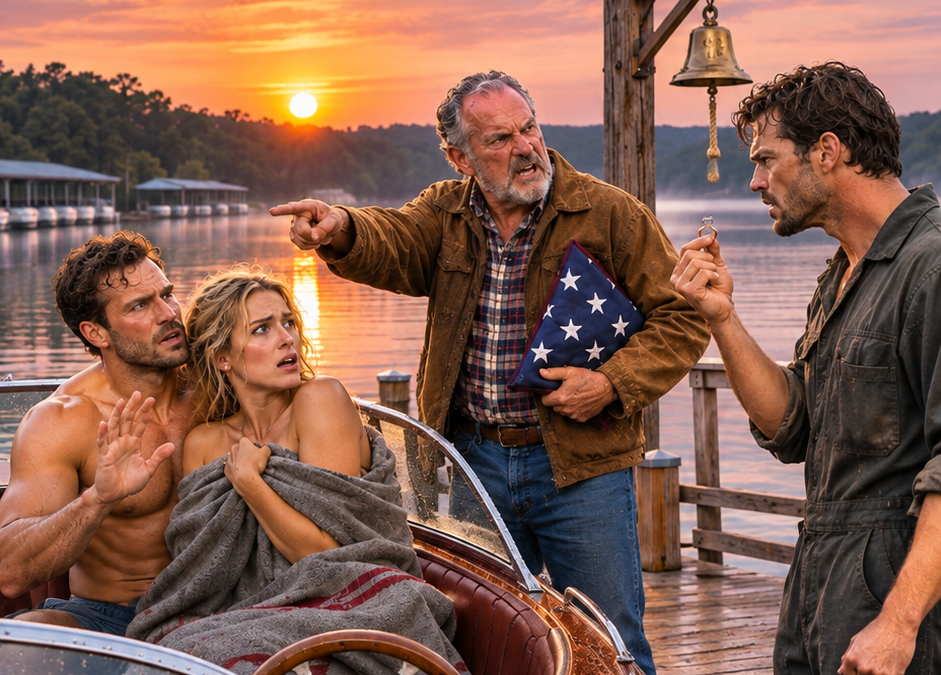
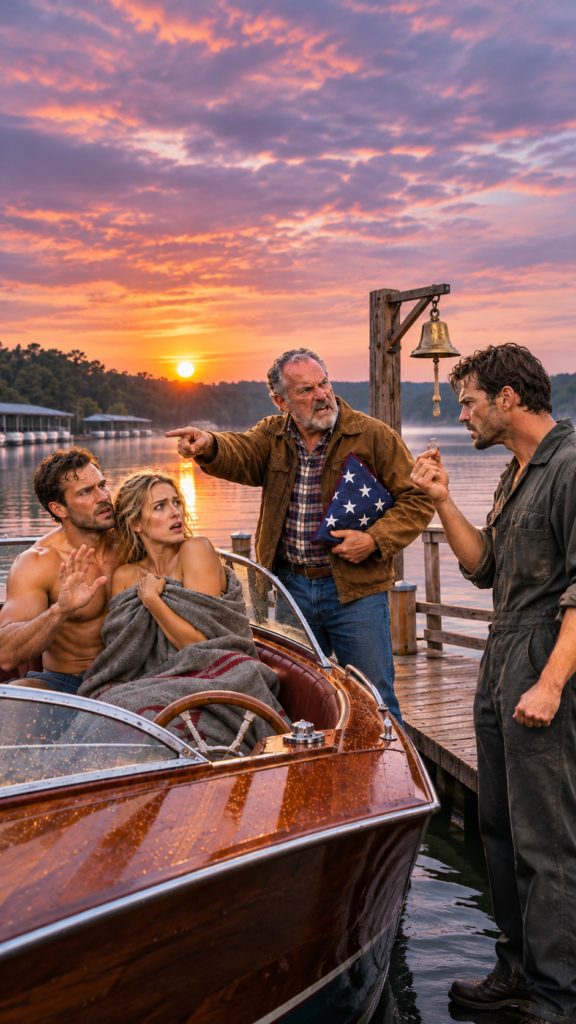
I caught my little brother kissing my fiancée on my grandfather’s boat, seven weeks before our wedding.
My father looked straight at me and said, “He makes her happier than you ever did. Be a man about it.”
I said, “Probably.” What none of them knew was that my grandfather had left me the one thing they needed to take everything else away from me.
PART 1 — THE MORNING MY FAMILY DECIDED I WAS REPLACEABLE
The first thing I noticed was the engagement ring.
It was sitting on the mahogany dashboard of my grandfather’s 1958 Chris-Craft, right beside the throttle, catching the pale orange light of a Missouri sunrise.
The second thing I noticed was my fiancée, Raelyn Prior, curled beneath a gray blanket against my younger brother’s chest.
Then she lifted her head and kissed him.
Not a nervous kiss. Not a drunken mistake. It was slow and familiar, the kind of kiss people share when they’ve woken up together enough times to forget that what they’re doing is wrong.
I stood on the dock, holding a paper bag containing two breakfast sandwiches I’d bought on my way home.
One was for her.
“Raelyn.”
Her head snapped toward me.
For a moment, she didn’t move. Her eyes traveled from my face to the sandwiches and back again, and something changed in her expression.
It wasn’t surprise.
It was the look of someone realizing an arrangement had ended before she was ready.
“Jake.”
My brother Blake sat upright, dragging the blanket with him.
“Okay,” he said immediately. “Okay, man. Just listen.”
I didn’t look at him.
I stepped into the boat, picked up the engagement ring, and held it between my thumb and forefinger.
My mother’s ring.
She’d worn it for twenty-three years. After she died, my grandfather had kept it in a little velvet box until the day I told him I’d found a woman I wanted to marry.
Now it was lying beside a throttle as though someone had taken it off before washing dishes.
“How long?” I asked.
Raelyn pressed a hand against her mouth.
“Jake, please. I was going to tell you.”
“How long?”
Blake answered.
“Since New Year’s.”
Four months.
Four months of Sunday dinners, wedding arrangements, Christmas photographs still hanging in my father’s hallway, and Raelyn falling asleep beside me while her phone lit up with messages she always turned away to read.
I looked down at the ring.
“Get off my boat.”
“Jake,” Blake began.
“Both of you.”
He stood, pulling on his jeans. Raelyn wrapped herself in his jacket, and they climbed onto the dock without another word.
I stayed in the cockpit.
The boat’s name, Miss Ida, was painted in gold letters across the stern. I’d spent three winters restoring her, one plank at a time, because she’d been named for my grandmother.
I could still remember my grandfather sitting beside me while I sanded the first piece of rotten mahogany.
“Some things are worth fixing, Jake,” he’d said. “But you’ve got to know whether the wood is damaged or whether it’s already gone.”
Back then, I thought he was talking about boats.
At 6:30 that morning, I heard the flagpole halyard rattling.
My father, Earl Rucker, came walking down the dock with a folded American flag under one arm.
He was sixty-four, broad-shouldered, silver-haired, and still capable of making a stranger believe they’d been friends for twenty years.
He took one look at Raelyn wearing Blake’s jacket.
One look at Blake standing in his socks.
One look at me.
And he sighed.
“Jake, let’s not make a scene. People are waking up.”
I stared at him.
“That’s what you’re worried about?”
He shifted the flag beneath his arm.
“I know you’re upset.”
“Do you?”
Blake looked toward the water.
My father stepped closer.
“Son, look at her face.”
Raelyn lowered her eyes.
“He’s making her happy,” Dad continued. “Happier than you ever did, if we’re being truthful. You spend your whole life fixing engines and worrying about dock posts. Blake knows how to enjoy living.”
I couldn’t quite believe what I was hearing.
Dad glanced at my brother.
“Sometimes people find they’re better suited to somebody else. Doesn’t mean anyone needs to become the villain.”
Then he delivered the sentence that ended something in me far older than my engagement.
“Be a man about it.”
Blake cleared his throat.
“Dad, you said Jake wouldn’t be back until this afternoon.”
Silence.
My father turned sharply toward him.
“That’s not helping.”
I watched the exchange.
Then I asked, “You knew?”
Dad rubbed the bridge of his nose.
“I’ve seen them together since March. I thought they should have time to sort things out.”
“You’ve known for a month?”
“Don’t make me the problem here, Jake.”
He looked genuinely irritated now, as though I had interrupted a necessary business conversation.
“You’ve always been the responsible one. Blake’s different. People like him. Raelyn needs somebody who makes her laugh.”
I remembered all the mornings I’d dragged Blake’s damaged rental boats home.
All the nights I’d covered the fuel dock when Dad wanted to entertain customers.
All the excuses I’d made because Blake was, according to everyone who mattered in my family, the one people liked.
My hands had been trembling since I stepped into the boat.
Suddenly, they stopped.
“Probably,” I said.
Dad frowned.
“What?”
“You’re probably right. He probably does make her happier.”
Blake looked relieved.
Raelyn didn’t.
She knew me better than either of them, or at least I had believed she did.
“Jake,” she said carefully, “can we talk tonight?”
“No.”
My father shook his head.
“Probably isn’t much of an answer.”
“It’s the only one you’re getting.”
He studied me, searching my face for anger he could argue with.
When he found none, his shoulders relaxed.
“Good man,” he said. “Your grandfather always said you had a cool head.”
Then he walked away to raise the flag.
And I realized he thought he’d won.
My name is Jake Rucker. I was thirty-six years old that spring, and I’d spent nearly my entire life working at Rucker’s Marina on Lake of the Ozarks, Missouri.
My grandfather, Otto Rucker, built the place in 1962 with a borrowed bulldozer and more stubbornness than money.
He’d spent years working on tugboats along the Mississippi River before coming home to build something that belonged to him.
The first dock had twelve slips.
By the time I was grown, there were 140.
The marina had a fuel station, a bait store, a small pavilion, and a service shop where I repaired everything from fishing outboards to expensive cruisers owned by people who thought routine maintenance was optional.
My grandfather had brought one thing from his riverboat days.
A brass bell.
He hung it from a wooden post at the end of the main dock.
Every evening, he counted the boats leaving the cove and the boats returning.
When the last one came home, he rang the bell once.
I was eight when he first let me help.
“Remember this, Jake,” he told me. “The count isn’t finished when the last boat leaves. It’s finished when everybody gets home.”
My father never cared much for that ritual.
He was excellent at sales. He could convince a vacationing accountant from Kansas City that a boat costing more than his first house was a reasonable Father’s Day present.
But he never stayed late for the count.
Blake didn’t either.
When Mom died, I was nineteen and Blake was fourteen.
Dad didn’t know how to grieve without making somebody responsible for keeping the house cheerful.
Blake had Mom’s smile.
So Blake became the boy who was allowed to make mistakes.
I became the man expected to repair them.
At twenty-five, I was already managing maintenance and dock safety when Grandpa took me to the power company’s shoreline office in Camden County.
The utility that operated the dam regulated structures and commercial facilities along the reservoir shoreline. Owning land beside the lake didn’t automatically authorize somebody to operate docks in the water.
Our commercial permit covered the marina’s slips, fuel dock, and approved waterfront structures.
Grandpa arranged for me to become its named permit holder, subject to the utility’s approval.
Dad still owned the land and the store.
I held responsibility for the permitted waterfront.
Grandpa made me read every page before signing.
“Why not Dad?” I asked.
He looked at me over his glasses.
“Because you know what every post in that water is holding up.”
I didn’t understand the full weight of that answer until eleven years later.
By then, I’d handled renewals, inspection reports, engineering corrections, and every difficult conversation with shoreline regulators.
When a storm tore loose six slips, I was the one organizing repairs.
When a customer’s fuel line leaked, I was the one closing the dock until it was safe.
When Dad wanted a bigger pavilion and Blake wanted to add another party boat, I was the one checking whether the facilities could legally accommodate them.
My father called it paperwork.
My grandfather called it responsibility.
And I made the mistake of assuming my family understood the difference.
I met Raelyn four years before the wedding at a bank in Osage Beach.
She was twenty-nine then, smart, polished, and quick to smile when she thought somebody was being underestimated.
I had applied for financing to expand my service business.
She was one of the lending officers handling the application.
Most people heard “boat mechanic” and immediately decided they understood my finances.
Raelyn asked about seasonal revenue, repair margins, customer retention, and what happened to my operation during the winter.
She listened when I answered.
That alone made me feel seen.
After the loan closed, I asked her to dinner.
She declined twice before accepting the third invitation.
Our first date lasted four hours.
She told me she’d grown up watching her parents fight over money until they finally divorced. She said she wanted a marriage built on something steadier than excitement.
“I want somebody who stays,” she told me.
I believed her.
For a long time, I thought believing her was one of the better decisions I’d made.
She became part of the marina quickly.
She learned how Dad liked his coffee. She laughed at Blake’s ridiculous impressions. She brought sandwiches to the repair shop when I forgot lunch.
When my grandfather died, she sat with me on the dock until sunrise without demanding I talk.
I proposed beneath his bell.
She cried when I gave her Mom’s ring.
We chose the first Saturday in June for our wedding. The ceremony would be beside the water, followed by dinner beneath a white tent near the pavilion.
I paid the deposits myself.
Eleven thousand dollars went toward the caterer, band, tent, and other arrangements.
Raelyn insisted on choosing flowers that matched the pale blue paint of my mother’s old kitchen.
Looking back, that detail hurt almost as much as the kiss.
It meant she’d known exactly where to place her hands to make me trust her.
The first warning arrived in January.
One Saturday afternoon, I went looking for Raelyn and found her laughing in Dad’s office with Blake.
Nothing unusual about that.
Except the laughter stopped when I entered.
Blake leaned against the filing cabinet.
“Just telling her about the time you sank your own canoe.”
“I was twelve,” I said.
Raelyn smiled without looking directly at me.
“Your brother’s got a gift for making ordinary things entertaining.”
I kissed her forehead.
She didn’t lean into it.
In February, Dad asked whether I’d ever considered allowing Blake to take over marina operations.
“Which operations?” I asked.
“The customer-facing side. Events. Management. All the stuff people notice.”
“He’s already handling the pavilion rentals.”
Dad sighed.
“I’m talking about leadership, Jake.”
That word irritated me more than it should have.
I’d been leading people through storms and equipment failures since before Blake could legally drink.
But Dad didn’t mean the work.
He meant the applause.
In March, I found Raelyn photographing the framed commercial shoreline permit hanging in his office.
“Why are you taking pictures of that?”
She lowered her phone.
“I love old documents. Your grandfather must have been so proud.”
I told her how Grandpa had transferred the permit responsibility to me.
She asked whether it could be transferred again.
I said it could, with the proper application and utility approval.
She changed the subject.
Two weeks later, bright pink survey ribbons appeared on six dock pilings. There were also markings near the corners of my service shop and an orange survey stake beside the driveway.
Dad said they were for an insurance appraisal.
I accepted his explanation.
I shouldn’t have.
That morning in April, after catching Raelyn and Blake together, I brought Miss Ida across the cove to my workshop ramp.
I hauled her onto her trailer, washed the mud from her hull, and locked the trailer hitch.
Then I sat on an overturned bucket with my mother’s ring in my palm.
I didn’t cry.
Not because I wasn’t hurting.
But because I had spent so many years being the person who solved everyone else’s emergencies that I didn’t know what to do with one that had happened to me.
Around seven that evening, Mavis Truitt appeared in my shop doorway.
Mavis was seventy-four and had lived on a houseboat in slip one since her husband died.
She wore a fishing vest with approximately forty pockets and carried an unlit cigar everywhere she went.
“I saw your brother climbing out of that boat this morning,” she said.
I closed the toolbox.
“Then you saw enough.”
“Your daddy say what I think he said?”
I told her.
She listened without interrupting.
Then she pulled the cigar from her mouth.
“Your brother couldn’t find north with a compass and a church steeple. If he makes that girl happy, she’s got low standards.”
Despite everything, I laughed.
It lasted about two seconds.
Then my throat tightened.
Mavis walked over and put her hand on my shoulder.
“Your grandfather used to say something about people who only love you when you’re useful.”
“What?”
“He said you can spend your whole life making yourself indispensable to somebody who’d still sell you for the right price.”
I looked at her.
She nodded toward Dad’s office.
“Just be careful what else they’ve been doing behind your back.”
The next morning, I canceled the wedding.
I lost most of the deposits.
I left messages for relatives, returned wedding gifts, and told my best friend I couldn’t bear to have him explain things to anyone else.
Then I wrote Dad a letter.
I resigned as the unpaid marina dock manager.
I would continue operating my separately owned service and rental business under my existing lease, but I would no longer handle his night counts, fuel dock inspections, or the annual fireworks barge without a proper contract.
I was through doing work nobody acknowledged until it stopped getting done.
Dad called forty minutes after receiving the letter.
“You’re punishing everybody over a woman?”
“No. I’m separating my business from yours.”
“That’s not how family works.”
“It is now.”
He hung up.
I sat in the shop until the afternoon light crossed the concrete floor.
Then I called the shoreline office and asked for a fresh copy of the commercial permit and its current file.
Mrs. Ostram, the administrator who’d handled my renewals for years, recognized my voice.
“Of course, Jake. I can send everything. Do you want the transfer paperwork your father requested last month, too?”
I stopped moving.
“What transfer paperwork?”
There was a pause.
“The request regarding the marina ownership transition. Earl said you’d already agreed in principle.”
I stood beside my workbench, looking through the window at the pink ribbons tied around my dock posts.
“I haven’t agreed to anything.”
Mrs. Ostram went quiet.
Then she said, “In that case, Jake, I think you need to see the entire file.”
An email arrived twenty minutes later.
The first attachment was a blank transfer application.
The second was a cover letter bearing my father’s signature.
At the bottom, beneath a paragraph about a proposed transaction, were five words that made the air leave my lungs.
Proposed closing date: July 4.
There was also a company name I’d never heard before.
Lakeshore Hospitality Group.
My father wasn’t simply planning to give my brother a bigger job.
He was trying to transfer the marina’s waterfront rights to somebody outside the family.
And he’d started the process before I caught my fiancée kissing Blake.
At the very bottom of the letter, in Dad’s handwriting, was one final instruction:
Jake Rucker will sign the necessary documents at closing.
I read it three times.
Then I looked toward my grandfather’s brass bell.
For the first time that day, I understood why my father had been so relieved when I’d said, “Probably.”
He hadn’t heard surrender.
He’d heard permission.
And he had already promised a stranger my signature.
PART 2 — THE PRICE OF BEING THE SON WHO ALWAYS FIXED EVERYTHING
My father had spent thirty years teaching me that family problems stayed inside the family.
Apparently, that rule applied only when the problem belonged to somebody else.
Three days after I found the transfer request, he invited Blake and Raelyn to Sunday dinner.
I learned about it from a photograph Blake posted online.
They were sitting at our old kitchen table, eating Mom’s chicken casserole from her handwritten recipe.
Raelyn was wearing the blue sweater I’d given her for Christmas.
Dad stood behind them, smiling with his hands resting on their shoulders.
The caption read, Family is about moving forward.
I stared at the photograph until my phone screen went dark.
Then I opened the drawer beneath my workbench and put the phone away.
There was an engine in front of me that needed fixing.
Unlike my family, it had the decency to make a noise when something was wrong.
Raelyn came to the shop the following Tuesday.
She was wearing the cream-colored blouse she’d bought for our engagement photographs.
For one ridiculous second, I remembered how beautiful she’d looked on the night I proposed.
Then she said, “Your father’s worried about you.”
I almost laughed.
“That’s generous of him.”
“Jake, please don’t do that.”
“Do what?”
“Turn everything into a conversation I can’t win.”
I put down my wrench.
“You came here. Say what you came to say.”
She folded her arms, then unfolded them.
“I didn’t plan to fall in love with Blake.”
“Four months is a long time not to plan something.”
Her expression tightened.
“I know I hurt you.”
“You woke up beside my brother on a boat I rebuilt with my own hands.”
“Do you have to keep talking about the boat?”
I looked at her for a moment.
She didn’t understand.
To her, Miss Ida was an old runabout.
To me, it was three winters of working after hours, Grandpa’s stories, the smell of varnish, and the only place on that lake where I still sometimes felt he was sitting beside me.
“You were going to marry me in June,” I said. “When were you going to tell me about Blake?”
She stared at the concrete.
“After we figured things out.”
“We?”
She looked up.
“Blake and I.”
There it was.
She hadn’t merely betrayed me.
She had placed me outside the conversation about my own future.
Raelyn moved closer.
“Your father thinks you should still be involved with the marina.”
“I’m already involved with the marina.”
“You know what I mean. He has plans for expanding it. Blake could handle the entertainment side. You could focus on repairs. Everybody would have a place.”
I remembered the transfer letter.
“Did Dad ask you to talk to me about that?”
“No.”
She answered too quickly.
“Raelyn.”
She rubbed her forehead.
“He just doesn’t want you making decisions you’ll regret.”
“Like trusting him?”
She looked offended.
“He’s your father.”
“And you were my fiancée.”
That silenced her.
For the first time, I saw something more complicated than guilt in her face.
Fear.
She had made a choice. But whatever future she’d chosen didn’t seem secure yet.
“Jake,” she said quietly, “you don’t have to destroy everything just because you lost me.”
I opened the shop door.
“I didn’t lose you. You made a decision while I was planning our wedding.”
She stood there another moment.
Then she walked out.
I watched her cross the gravel lot toward Blake’s truck.
He was waiting with the engine running.
Neither of them looked back.
By May, the marina had become a divided kingdom.
Dad operated the store, fuel sales, and slips on the land he owned.
I operated my service business, including six rental pontoons registered and insured under my company.
For years, we’d worked together without worrying much about where one business ended and the other began.
Dad collected rental payments at his counter.
I maintained the boats.
He received an agreed percentage for handling bookings, and I absorbed the repair and insurance costs.
It worked because I trusted him.
Trust, I discovered, had concealed a remarkable amount of unpaid labor.
I had inspected his fuel lines after closing.
I had replaced dock cleats at midnight.
I had arranged emergency contractors after storms, checked the pilings before holiday weekends, and taken calls from stranded boaters who didn’t know my name but knew Rucker’s Marina would send somebody.
Dad called all that “pitching in.”
The first Saturday I stopped doing it, he called six times.
The seventh time, I answered.
“The fuel dock’s inspection checklist isn’t done.”
“Then have your dock manager do it.”
“You are the dock manager.”
“Not anymore.”
“Jake, you’re being difficult.”
“I’m being accurate.”
He hung up again.
Two weeks later, Blake reminded me how much our old arrangement had depended on everyone pretending my property belonged to the family.
He announced a Saturday afternoon party with Raelyn.
Their friends arrived carrying coolers, towels, and portable speakers.
I came outside around two and saw nearly twenty people climbing onto Big Sally, the largest pontoon in my rental fleet.
Blake stood at the helm.
The engine was running.
Raelyn sat in the passenger seat beside him.
I walked down the dock with a clipboard.
“Where are you going?”
Blake grinned.
“Just taking everybody around the point.”
“Did you rent the boat?”
He looked around at his friends.
“Seriously?”
“Seriously.”
“Come on, Jake. Dad said it was fine.”
“Dad doesn’t own this boat.”
Raelyn stood.
“You’re going to embarrass yourself over a pontoon?”
“No. I’m going to operate my business.”
I pointed to the agreement on my clipboard.
“Two hundred ninety dollars for the day. Fuel extra. Everyone signs the waiver. You pay before leaving.”
Blake’s grin disappeared.
“You’re charging your own brother?”
“I’m charging the man who took the keys without asking.”
One of his friends shifted uncomfortably.
“Blake, I thought you’d booked it.”
“I don’t have to book my own family’s boat.”
“Then you should probably buy one.”
Raelyn came down the aisle.
“You’re doing this because of us.”
I looked at her.
“Your relationship is free. My liability insurance isn’t.”
From slip one, Mavis called out, “Honey, being petty is free. That pontoon costs two hundred ninety dollars.”
Somebody snorted.
Blake turned red.
I waited.
Eventually, he shut off the engine.
Twenty people carried their coolers back onto the dock.
When I took the keys, Blake stepped close enough that only I could hear him.
“You’re making everybody hate you.”
I looked toward Dad’s office.
“Maybe,” I said. “But I’m beginning to understand what everybody’s happiness was costing me.”
Memorial Day was worse.
Our cove had hosted a fireworks show for decades. Grandpa started the tradition, and Dad eventually turned it into one of the marina’s biggest promotional events.
Every year, hundreds of boats gathered after sunset.
The fireworks contractor supplied the display and trained crew.
For the last fourteen years, I’d handled the barge transportation and positioning, using the appropriate credentials and safety procedures required by our arrangements.
When I withdrew from that responsibility, I told Dad plainly that he’d need a qualified replacement approved by the contractor.
He called me dramatic.
Then the local newspaper published its holiday preview.
The headline promised that Rucker’s Marina’s popular annual fireworks show would feature Blake Rucker as barge captain.
I went straight to Dad’s office.
He was signing invoices.
“Blake isn’t qualified to operate that barge commercially.”
Dad didn’t look up.
“He drives boats every day.”
“Driving a wakeboat isn’t the same thing.”
“He knows the lake.”
“He ran your rental pontoon onto a sandbar when he was seventeen.”
Dad set down his pen.
“And you’ve reminded him of it every year since.”
“Because I spent nine hours getting it back.”
“Maybe you should let your brother have a chance to prove himself.”
I considered explaining the current, the submerged point, the weight of the loaded platform, and the contractor’s insurance requirements.
Instead, I handed Dad a written notice identifying the safety and licensing concerns.
“I won’t participate in an unsafe operation,” I said. “I’ve told the contractor too.”
He looked at the letter as though I’d insulted him.
“You’re trying to ruin his big night.”
“No. I’m trying to make sure everybody gets home.”
Dad pushed the paper away.
“That’s all you ever say.”
On Memorial Day evening, I stood at my shop ramp beside Mavis as nearly three hundred boats gathered in the cove.
The sunset turned the lake copper.
Across the water, I watched Blake guiding the fireworks barge toward the point.
Too fast.
Too close to the shallow side.
I knew what would happen before it did.
The barge lurched, slowed, and stopped.
The propeller churned mud.
A horn sounded from the support boat.
Then another.
Mavis lowered her binoculars.
“Well,” she said, “that isn’t where fireworks usually go.”
The crew had to make the platform safe while another marina helped arrange a replacement barge and properly qualified operator.
The show started forty minutes late.
The fireworks themselves were beautiful.
The argument afterward wasn’t.
The water patrol investigated the unauthorized operation, and Blake was cited.
The contractor billed Dad for the recovery, delay, and replacement equipment.
By breakfast the next morning, Dad had decided whose fault it was.
Mine.
He told Blake I’d refused to help because I wanted him humiliated.
He told the fireworks contractor I’d deliberately withdrawn at the last minute, despite the weeks of notice.
And he told half the marina that I was trying to destroy what Grandpa had built.
That afternoon, Blake appeared at my shop holding an envelope.
Raelyn stood behind him.
She wore a new diamond ring.
It was considerably larger than my mother’s.
Blake handed me the envelope.
“Thirty-day notice,” he said.
I opened it.
Dad was terminating my month-to-month lease of the service shop, effective at the end of June, subject to the applicable notice requirements.
I stared at the paper.
The shop was on Dad’s land.
The tools, lifts, customer records, engines, and repair equipment were mine.
I’d worked there nearly fifteen years.
“You know how much equipment is in here,” I told Blake.
He shifted his weight.
“Dad says you’ll figure it out.”
Raelyn looked at the ring on her finger.
“Maybe having some distance will be good for everybody.”
I folded the notice.
“Is that what you told yourselves?”
Blake’s jaw tightened.
“Don’t start.”
I looked from his face to hers.
“You’re celebrating an engagement while handing me an eviction notice from the place where I earned the money for the first one.”
Neither answered.
I slid the notice back into its envelope.
“Tell Dad I received it.”
Blake hesitated.
“That’s all?”
“For now.”
After they left, I sat on the edge of my workbench and finally allowed myself to look around.
The old coffee maker.
Grandpa’s photograph.
The pencil marks on the wall recording how tall Blake had been every summer before he started treating me like an obstacle.
The shop had never felt like borrowed space.
Now every inch of it seemed to be waiting for somebody else.
That evening, Dad called.
“You brought this on yourself, Jake.”
I closed my eyes.
“Did I?”
“You could have accepted that Raelyn chose Blake. Instead, you’re attacking the family business.”
“I’ve never attacked the marina.”
“Then stop interfering.”
Something in his voice bothered me.
It wasn’t anger.
It was urgency.
“Why do you need me out so badly?”
Silence.
Then he said, “The family has to move forward.”
Before I could answer, he hung up.
That night, I studied the pink ribbons outside my shop and the transfer paperwork inside my safe.
Dad wanted me gone before the end of June.
He wanted my signature on July Fourth.
And the company preparing to buy the marina hadn’t contacted me once.
I thought the worst thing my father could do was take away the place where I’d spent my life working.
I didn’t know he was about to stand in my way while I tried to save two little girls from drowning.
PART 3 — THE NIGHT THE LAKE SHOWED ME WHO MY FATHER REALLY WAS
Three days after Memorial Day, Dad stood up at the Osage Beach Chamber of Commerce breakfast and told forty business owners that his oldest son had abandoned the family.
I wasn’t there.
I heard about it from my friend Curtis, who owned a marine upholstery business across the lake.
Curtis called while I was removing an engine from a customer’s cruiser.
“Jake, your old man just gave quite a performance.”
“What happened?”
“He told everybody you sabotaged the fireworks show because your fiancée fell in love with Blake.”
I tightened my grip on the phone.
Curtis continued.
“He said you’re letting personal bitterness threaten the marina’s future.”
I leaned against the workbench.
“Did anybody ask him why Blake was operating a barge he wasn’t qualified to handle?”
“Nobody wanted to get involved.”
That sentence stayed with me.
Nobody wanted to get involved.
When I needed help removing a stranded boat, everybody knew my number.
When somebody needed an engine repaired before a holiday weekend, they expected me to cancel my own plans.
But when my father publicly turned my heartbreak into evidence that I was unstable, nobody wanted to get involved.
Except Curtis.
“I told them you’d warned the contractor,” he said. “For whatever that’s worth.”
“It’s worth something.”
He hesitated.
“Jake, he’s calling your customers.”
Within a week, eight boat owners canceled service appointments.
Two apologized.
Three refused to explain.
The others told me they didn’t want to become involved in family trouble.
One man, a retired dentist whose boat I’d maintained for nine years, actually sounded embarrassed.
“Earl says there’s going to be a different management structure,” he told me. “I just don’t want complications.”
I looked at the empty appointment board.
“Understood.”
Afterward, I sat at my desk and calculated how much revenue I’d lost.
The number was ugly.
I still had equipment payments, insurance premiums, and a rented storage building where I was beginning to relocate tools.
For the first time since I’d started my business, I considered whether I’d have enough income to keep everyone working.
My mechanic, Tomas Alvarez, found me staring at the figures.
Tomas had been with me eight years. He had a wife, a teenage son, and a talent for diagnosing engines by listening to them idle.
“How bad?” he asked.
“Bad enough.”
He studied the appointment board.
“Your dad’s telling people you’re closing.”
“I’m not.”
“Then you should tell them.”
I shook my head.
“I’m not doing a public argument with my father.”
Tomas pulled up a chair.
“That’s not an argument. That’s telling the truth.”
He was right.
The next morning, I sent a short letter to every customer.
I explained that my service company remained independently owned, that all existing warranties and contracts would be honored, and that I was moving to a temporary location.
No accusations.
No mention of Raelyn or Blake.
Just the facts.
Three customers called that afternoon.
One asked whether I could still repair his boat.
One asked if I was okay.
The third said, “Your grandfather would hate what’s happening down there.”
I nearly dropped the phone.
“Yeah,” I said. “I think he would.”
June came with heat, thunderstorms, and the terrible emptiness of a wedding day that never happened.
On the first Saturday of the month, I drove past the church where Raelyn and I had planned to have a small rehearsal dinner before the waterfront ceremony.
White flowers decorated the entrance for somebody else’s wedding.
I pulled over.
My best friend, Ben Holloway, had offered to spend the day fishing with me.
Instead, I called him and asked whether he could help move the last cabinets out of my shop.
He arrived with his truck twenty minutes later.
Neither of us mentioned the date.
Around noon, we uncovered an old photograph beneath a shelf.
My mother stood beside me and Blake at the marina’s first big Fourth of July celebration after I’d gotten my driver’s license.
I was holding a toolbox.
Blake was holding a trophy from a wakeboarding competition.
Mom had one arm around each of us.
Ben watched me brush dust from the glass.
“You can be angry with him, you know.”
“Which one?”
“Either one.”
I set the photograph carefully in a box.
“I don’t know what being angry would accomplish.”
“Maybe nothing. But you’re allowed.”
I looked at Mom’s face.
She’d loved us differently from Dad.
When Blake got into trouble, she made him face it.
When I worked too hard, she made me stop.
I wondered what she would have said if she’d been standing on the dock that April morning.
I knew one thing.
She wouldn’t have asked me to make everyone comfortable.
I put the photograph in the front seat of my truck.
The storm arrived on the twenty-fifth of June.
By nine that evening, dark clouds were moving over the Osage arm, and the wind had begun tearing whitecaps across the channel.
I was at the temporary workshop when my phone rang.
An unfamiliar number.
“Is this Jake Rucker?”
“Yes.”
“Somebody told me you help people on this lake.”
The man’s voice was tight with panic.
“My name’s Daniel Mercer. Our fishing boat quit near the point. I’ve got my wife and two daughters with me. They’re eight and ten. We can’t get the engine started.”
I stood.
“Are you wearing life jackets?”
“Yes.”
“Good. Keep everyone in them. Tell me exactly where you are.”
He described a rocky shoreline and a flashing red navigation light.
I knew the place.
A nasty stretch of open water when the wind turned.
“Have you called for emergency assistance?”
“My wife called 911. We tried the marina office too. Nobody answered.”
I glanced at the clock.
Nine seventeen.
In the old days, I’d have known immediately how many boats were still out.
I hadn’t done the count in weeks.
“Help is being notified,” I told him. “I’m nearby with a workboat. Stay on the line as long as you can.”
I contacted marine emergency dispatch, gave them his location, and told them I was launching to assist if conditions allowed.
Then I called Tomas.
“I’m going out.”
He heard the wind through my phone.
“Jake, that’s getting ugly.”
“Family with kids near the point.”
“I’ll notify dispatch again and stay on the radio.”
I launched my workboat in heavy rain.
The first wave struck hard enough to spray water over the windshield.
Lightning flashed over the far shore.
I reduced speed and followed the sheltered side of the channel, scanning the darkness.
Fifteen minutes later, Daniel’s phone stopped connecting.
I called again.
Nothing.
For one horrible moment, I remembered a summer when I was seventeen and my grandfather had stayed out until three in the morning searching for a missing fisherman.
When he finally came home, he’d sat on the dock with his head in his hands.
The man had been found too late.
Grandpa never talked about that night.
But from then on, he checked the count twice.
I kept searching.
At last, a weak flashlight appeared between two waves.
Daniel’s boat was drifting toward the rocks.
His wife was kneeling beside the girls, keeping them low and sheltered.
I approached carefully, using the wind and current rather than fighting them.
When I got close enough, Daniel shouted.
“Thank God!”
“Stay seated!” I called. “I’m getting a line to you!”
It took three attempts.
By the time I’d secured the tow and confirmed everyone was wearing a properly fitted life jacket, my arms were shaking from the cold.
The younger girl stared at me with huge eyes.
“Are we going home?”
I took off my rain jacket and helped her mother wrap it around both girls.
“That’s the plan,” I said.
She nodded.
I didn’t promise more than I could control.
We moved slowly toward the cove.
A patrol boat reached us near the entrance and escorted us through the final stretch.
When I finally brought Daniel’s boat alongside Rucker’s fuel dock, it was after midnight.
His wife was crying with relief.
Daniel grabbed my hand.
“I kept calling that marina,” he said. “Nobody answered.”
I looked toward the dark office.
The fuel dock lights were on.
Standing beneath my grandfather’s bell was my father.
He wore a yellow rain slicker.
Blake stood several feet behind him, holding his phone.
Dad didn’t look at the girls.
He didn’t ask whether anybody needed medical attention.
He held up a piece of paper inside a clear plastic sleeve.
“Jake, your lease expired at midnight.”
I stared at him.
Rain ran down his face.
“Not now, Dad.”
“You’re not authorized to use the property for your business anymore.”
Daniel stepped forward.
“Sir, this man just brought my family in out of that storm.”
Dad barely glanced at him.
“I’m glad you’re safe. But this is private property.”
I felt something cold move through my chest.
Not anger.
Recognition.
My father had been standing there, waiting for me to arrive, and he’d decided that the most important thing about my return was whether he could order me to leave.
Blake lifted his phone higher.
“Just documenting things,” he muttered.
I looked at him.
“Put that away.”
He didn’t.
The younger girl clung to her mother’s hand.
I turned away from my family and helped Daniel secure the boat.
Then I directed the family toward the waiting patrol officers, who checked on them before they left.
When everything was done, I walked to the end of the dock.
Dad stepped into my path.
“You need to leave.”
I looked past him at the brass bell.
Every boat I knew about was home.
For a moment, I could almost hear Grandpa’s voice.
Count them out. Count them in.
I reached up and pulled the rope once.
The bell rang across the rain-soaked cove.
Dad’s expression hardened.
“That’s not yours to ring anymore.”
I lowered my hand.
“No,” I said quietly. “You just own the post it’s hanging on.”
Then I walked past him.
Halfway home, I pulled onto the shoulder of Highway 5.
The rain beat against my windshield.
I sat in the dark and opened the notes on my phone.
I began listing every time I’d gone out to rescue a boat Blake had abandoned, every time I’d paid a bill Dad had forgotten, every time I’d apologized to a customer for something someone else had done.
The list grew longer than I expected.
Then I stopped.
I didn’t need to count my sacrifices.
I needed to stop adding to them.
By morning, I had made three decisions.
I would continue helping anyone on the lake who needed emergency assistance.
I would never again work without a clear agreement for my father’s company.
And I would find out exactly what he was selling.
I called Mrs. Ostram and requested every document associated with the proposed July Fourth transfer, including the correspondence and application history that I was entitled to review.
She sent what she could.
The most important item was a revised cover letter.
It identified Lakeshore Hospitality Group as the proposed purchaser.
It also stated that the commercial permit would need to be transferred or newly approved as part of the transaction.
My consent was not optional.
The proposed closing was barely nine days away.
Before I could decide what to do with that information, somebody knocked on my back door.
A young woman stood outside, breathing hard.
She wore running shoes, black shorts, and a blue shirt darkened with sweat.
She held a manila folder against her chest.
“Jake?”
I studied her face.
Then I recognized the green eyes.
“Hadley Finsky?”
She gave a nervous smile.
“Last time you saw me, I was falling off water skis.”
Hadley was twenty-six now.
I’d taught her to water ski when she was nine, back when her grandparents spent every summer in the cabin across the cove.
She was working as a paralegal at a local law firm.
Her smile faded.
“I heard what happened to you.”
“Most of the lake has.”
She shook her head.
“No. I mean what’s really happening.”
I stepped aside.
She entered, set the folder on my kitchen table, and pulled out a large architectural drawing.
“I’ve been trying to decide how to handle this,” she said. “I raised questions at work because the permit holder wasn’t being included. Yesterday I learned your father still hasn’t told you what he’s promised.”
She unfolded the drawing.
It showed Rucker’s Marina.
But not as I knew it.
The old bait store was gone.
The pavilion was gone.
The main docks had been redesigned.
In their place were luxury condominium buildings, a restaurant, and 180 modern boat slips.
And where my workshop had stood for fifteen years, there was a dotted rectangle.
Beside it, in large capital letters, was a single word.
DEMOLISH.
Hadley looked at me.
“Jake, your father isn’t selling the marina so Blake can run it.”
She turned the next page.
“He’s selling the marina so somebody can tear most of it down.”
Then she showed me the number.
$3,200,000.
And beside it was something worse.
A date.
The purchase agreement had been signed weeks before the morning I found Raelyn on my boat.
My family hadn’t just been hiding an affair. They’d been planning an entire future that required removing me from mine.
PART 4 — THE CONTRACT THEY NEVER EXPECTED ME TO READ
Hadley spread the documents across my kitchen table.
For several minutes, I couldn’t speak.
There was the cove where Grandpa had taught me to swim.
The pavilion where Mom used to sell homemade lemonade during Fourth of July celebrations.
The fuel dock where I’d learned to tell the difference between diesel and gasoline before I could drive.
All of it had been reduced to lines, measurements, and projected revenue.
“The surveyors came in March,” Hadley said.
I pointed to the markings around the old service shop.
“The pink ribbons.”
She nodded.
“The company was evaluating demolition and construction costs.”
“Dad told me it was an insurance inspection.”
Hadley lowered her eyes.
“I know.”
She explained that Lakeshore Hospitality was a resort development company based in Branson.
Their plan was to purchase Dad’s land and marina business, then seek the necessary approvals to redevelop the waterfront.
But there was a major obstacle.
The existing commercial shoreline permit was in my name.
The buyer needed my cooperation and approval from the utility before the proposed waterfront arrangement could move forward.
“Your father represented that you’d agreed to cooperate,” Hadley said.
“I haven’t.”
“Then the documents contain a serious misrepresentation.”
She explained that she’d raised the issue with her supervising attorney. After reviewing the records, the firm’s client had authorized disclosure of the relevant transaction materials to me so my consent could be verified.
I looked at the folder.
“Does your firm know you’re here?”
“Yes. My supervisor insisted I make it clear I’m not your lawyer.”
She gave a strained smile.
“I still volunteered to come personally.”
“Why?”
Hadley looked toward the window.
“Remember when I was nine and couldn’t stay up on water skis?”
I nodded.
“Every other instructor said I should try again next summer. You spent three afternoons falling into the lake with me until I could do it.”
“That was a long time ago.”
“Not to the kid who finally got up.”
She pushed another document toward me.
“This is why I came.”
It was a side agreement attached to the purchase contract.
I read the first employment provision.
Blake Rucker — General Manager. Three-year employment term. Annual salary: $110,000.
The next provision concerned Raelyn.
Raelyn Prior — Events Director. Annual salary: $75,000.
The offer was dated March twenty-eighth.
Two weeks before I found them together on Miss Ida.
Then I reached the provision about me.
Jake Rucker, existing commercial permit holder, shall execute the necessary transfer and consent documentation as a condition of closing. His current service-shop occupancy shall terminate prior to closing. No employment or service arrangement with Jake Rucker is contemplated.
I read that paragraph twice.
They’d planned jobs for Blake and Raelyn.
They’d planned a demolition crew for my shop.
For me, they’d planned a signature.
Nothing after it.
“Does Blake know about this?” I asked.
“He knows about his job. I can’t tell you what else he’s been told.”
I turned to Raelyn’s offer.
She’d told me she fell in love with Blake because he made her feel alive.
Maybe that was true.
But the document in front of me made something else painfully clear.
She was willing to build her next life inside a business deal that excluded me.
Hadley handed me one final page.
It was an email Dad had sent directly to Lakeshore’s vice president, Richard Danforth.
The language was painfully familiar.
Jake is stubborn, but he has always done what his grandfather would have wanted. On Bell Night, we’ll put the rope in one hand and the pen in the other. He has never refused Pop’s bell. Once the lake is watching, he’ll do the right thing.
I put the paper down.
The room felt very quiet.
My father knew how much that bell meant to me.
He knew Grandpa had engraved our initials beneath its rim.
And he intended to use it to shame me into surrendering the one thing Grandpa had trusted me to protect.
Hadley waited.
Finally, I asked, “Does Danforth know I’ve refused?”
“Not yet. The legal team is preparing to advise him. They’ve paused the closing checklist until your position is confirmed.”
“Then I’ll put it in writing.”
I called my attorney that afternoon.
Together, we prepared a formal notice stating that I had never consented to the proposed transfer, had authorized nobody to promise my signature, and would not sign under pressure.
My attorney also asked the utility to confirm that any transfer would require its independent review and approval.
The next morning, Dad called.
His voice was gentle.
Too gentle.
“Jake, son, I’ve been thinking. This whole thing has gotten out of hand.”
I sat at my kitchen table, staring at his email.
“Has it?”
“I know you’re angry. And maybe I’ve said things I shouldn’t have.”
I waited.
He didn’t apologize.
Instead, he said, “Come to Bell Night on the Fourth. Your grandfather would want you there.”
Every Independence Day, the family celebrated the marina’s history by ringing Grandpa’s brass bell.
That year would mark sixty-four years since he opened Rucker’s Marina.
Hundreds of boats would gather.
The tradition meant more to me than any other holiday.
Dad knew it.
“Will Blake be there?” I asked.
“Of course.”
“Raelyn?”
A pause.
“She’s part of Blake’s life now.”
I looked again at the salary figures.
“Right.”
Dad cleared his throat.
“I want us to be a family again.”
“Probably,” I said.
He exhaled.
“There you go. I knew you’d come around.”
After we hung up, Hadley called.
“I heard something you should know.”
“What?”
“Your father has asked the event coordinator for a microphone, a table, and a special announcement before the bell ceremony.”
I looked toward the folder.
She continued.
“Mr. Danforth and his wife have been invited. Your father told them there would be a ceremonial signing in front of the whole cove.”
I closed my eyes.
Dad wasn’t planning to ask for my signature privately.
He intended to make refusing look like a betrayal of Grandpa, the family, and the entire community.
I told Hadley I would attend.
Then I made a few calls.
One went to Mavis.
One went to Daniel Mercer, the father whose boat I’d towed in during the storm.
And one went to the professional captain who had helped recover the Memorial Day fireworks operation.
This time, I wasn’t going to let Dad choose the only story the lake heard.
On the afternoon of July Fourth, I received a text from him.
It showed Grandpa’s bell polished until the old brass shone.
Underneath, Dad had written:
Pop would be proud of us tonight. Don’t disappoint him.
I stared at the photograph.
Then I opened the small safe in my bedroom.
Inside lay my mother’s engagement ring and the original permit documents.
I left the ring where it was.
I took the documents.
At sunset, I would walk toward the same bell where I’d once promised Raelyn forever.
This time, three hundred boats would be watching as my father asked me to sign away my future.
PART 5 — THE NIGHT THREE HUNDRED BOATS HEARD THE TRUTH
By eight o’clock on July Fourth, the cove was full.
Pontoons floated beside fishing boats. Expensive cruisers idled near older runabouts. Families sat beneath strings of red, white, and blue lights, waiting for the annual bell ceremony.
The evening smelled of sunscreen, grilled hamburgers, and lake water.
For most of my life, that smell had meant home.
That night, it felt like walking into a courtroom where everyone had already heard the prosecution’s version of the story.
Dad stood at the end of the main dock in a pressed white shirt.
Blake stood beside him in a new marina polo.
GENERAL MANAGER was embroidered beneath his name.
Raelyn wore a red sundress.
Her new ring sparkled whenever she moved her hand.
Mr. Danforth and his wife stood a few feet away, watching the gathering boats.
Mavis was settled in her usual lawn chair on the back deck of slip one.
Hadley sat on her grandparents’ pontoon, tied close enough to the main dock that she could step across if necessary.
Three boats behind her, Daniel Mercer lifted a hand when he saw me.
His daughters waved.
I waved back.
Then I looked at the bell.
Someone had polished the brass and replaced the old rope.
Grandpa’s initials were still visible beneath the rim.
So were mine.
For a moment, the noise faded, and I remembered being twelve years old, standing beside him with a pencil and a notebook.
Count them in, Jake. Every single one.
Dad tapped the microphone.
“Friends, neighbors, and everyone who loves this beautiful lake, welcome!”
Applause spread across the cove.
He told the familiar story about Grandpa arriving from the Mississippi, borrowing a bulldozer, and building a dock with his own hands.
He talked about hard work.
Sacrifice.
Family.
I stood near the back of the crowd and listened to my father describe virtues he’d spent months refusing to recognize in his own son.
Then he changed direction.
“This year marks a new chapter for Rucker’s Marina.”
Blake straightened.
Raelyn slipped her hand into his.
Dad smiled toward Mr. Danforth.
“We are joining forces with Lakeshore Hospitality to bring this beautiful property into the future.”
Scattered applause followed.
Some people looked confused.
Dad gestured toward Blake.
“My younger son will remain here as general manager, helping bring new energy to the marina.”
Blake raised his hand.
“And I have another announcement.”
Dad put an arm around Raelyn.
“Blake and Raelyn are engaged!”
More applause.
This time, it was hesitant.
Plenty of people knew Raelyn had been engaged to me less than three months earlier.
Dad pressed forward.
“Now, family isn’t always easy. We’ve had some disagreements this year. But the Ruckers have always found a way to come together.”
He looked toward the crowd.
“Jake? Son, come on up here.”
People turned.
I walked toward the dock.
I heard somebody whisper my name.
Blake watched me with an expression halfway between triumph and nervousness.
Dad smiled wider.
“There he is. My oldest.”
He reached for the bell rope with one hand.
With the other, he picked up a pen and a folded document from the table.
“Jake, your grandfather built this place for the family. Tonight, we have a chance to honor his legacy and secure its future.”
He held out the paper.
“Ring the bell with me, then sign this agreement. Let’s put everything behind us.”
I stopped in front of him.
“What’s the agreement?”
He laughed into the microphone.
“Just the paperwork we’ve discussed.”
“We haven’t discussed an agreement.”
His smile tightened.
“Jake, don’t do this.”
I could hear the water brushing against the dock posts.
I looked at Blake.
Then Raelyn.
Finally, I turned back to Dad.
“Do you remember what you told me the morning I found them on Grandpa’s boat?”
His eyes changed.
“Son—”
“You said Blake makes Raelyn happier than I ever did.”
Nobody moved.
“You told me to be a man about it.”
Dad lowered the microphone slightly.
“This isn’t the place.”
I reached out and gently turned it back toward us.
“You picked the place.”
A few people shifted in their seats.
I continued.
“And I told you, ‘Probably.'”
I looked at Raelyn.
“I meant it. Blake probably does make her happier. I’m not asking her to come back. I’m not asking him to apologize so I can feel better.”
Then I faced the lake.
“But I am not giving away a permit my grandfather trusted me to manage just because my father promised it to somebody without asking.”
Murmurs spread over the water.
Dad’s voice turned sharp.
“Jake, you’re embarrassing the family.”
“No. I’m refusing to sign.”
I held up a copy of the permit.
“The existing commercial shoreline permit is in my name. Any transfer requires the proper application, my participation, and the utility’s approval. I have never agreed to this sale.”
Mr. Danforth stepped forward.
“Earl, you represented otherwise.”
Dad turned quickly.
“Richard, this is a family misunderstanding.”
I looked at him.
“Is it?”
Hadley rose from her pontoon.
“Mr. Danforth, may I explain what the documents say?”
He recognized her.
“Hadley?”
She held up the survey plat.
“The redevelopment plan includes demolishing the original service shop and replacing much of the existing marina. Jake was told the survey markings were for insurance purposes.”
People began looking toward the building behind us.
Hadley continued, her voice carrying across the quiet water.
“The seller’s side agreement provides employment for Blake Rucker at one hundred ten thousand dollars a year.”
Blake’s smile disappeared.
“And employment for Raelyn Prior at seventy-five thousand.”
Raelyn went pale.
“The agreement also states that Jake’s shop occupancy will end and that he will not be retained.”
Mavis stood beside her chair.
“Well, now.”
Hadley lowered the papers.
“And the offer to Raelyn was dated March twenty-eighth.”
Blake turned slowly toward his fiancée.
“March?”
She swallowed.
“Blake, don’t.”
“You had that job offer in March?”
“It’s not what you think.”
“You told me Dad was just talking about possibilities.”
Raelyn looked toward my father.
Dad looked away.
I hadn’t wanted to watch my brother suffer.
I’d imagined it would feel satisfying to see him realize that he wasn’t the hero of this story.
Instead, he looked suddenly younger.
Like the boy who used to break things and wait for someone else to explain what had happened.
Hadley unfolded the final page.
“There’s also an email from Earl Rucker to the purchaser regarding how he intended to obtain Jake’s signature.”
Dad stepped toward her.
“That is private business correspondence.”
Mr. Danforth held up a hand.
“Let her finish.”
Hadley read the passage about using Grandpa’s bell, the public ceremony, and my father’s belief that I’d never refuse him in front of the community.
When she finished, silence rolled across the cove.
Dad reached for the microphone.
I spoke first.
“You didn’t invite me here to reconcile.”
I looked at him.
“You invited me because you thought I loved Grandpa too much to say no.”
For the first time, Dad had no prepared answer.
Blake stepped toward him.
“Dad, did you know Raelyn already had a job offer?”
Dad rubbed his forehead.
“Blake, we can talk about this later.”
“Did you know?”
“Yes!”
The word came out louder than he intended.
Blake froze.
Dad looked around at the watching boats.
“I knew the company wanted her involved. She’s good with events. You’re good with people. It made sense.”
Raelyn interrupted.
“You told me Jake would sign.”
Dad glared at her.
“You told me you could help keep Blake focused until closing.”
Blake stepped backward.
“Keep me focused?”
Raelyn’s eyes filled with tears.
“Earl, stop.”
But Dad had lost control of the conversation.
“All I asked was for you two to stay together and keep things calm until the deal went through!”
Blake stared at him.
“You made our relationship part of the sale?”
Dad didn’t answer.
I watched my brother turn toward Raelyn.
“Did you actually want to marry me?”
She opened her mouth.
For a terrible moment, I thought she might say no.
Instead, she whispered, “I thought we were building something together.”
Blake looked down at the marina polo.
“Building what?”
Nobody answered.
Then Mavis spoke from slip one.
“Earl, I’ve caught catfish with better judgment than this, and some of them swallowed the hook twice.”
A few people laughed nervously.
But Mr. Danforth wasn’t laughing.
He looked directly at my father.
“Our transaction was conditioned on accurate representations about permits and cooperation from the relevant parties. You’ve told us repeatedly that Jake agreed.”
“He’ll agree,” Dad insisted.
“No,” I said.
Mr. Danforth closed the document in his hand.
“There will be no closing under these circumstances. Our attorneys will review the agreement and address the consequences.”
He turned toward me.
“I’m sorry you were put in this position.”
Then he and his wife walked away.
My father stood motionless.
The party boats were silent.
The audience he’d assembled to pressure me had heard the truth instead.
Dad came toward me.
Without the microphone, his voice sounded smaller.
“Jake, please.”
I had waited my entire adult life to hear him say that word without following it with an order.
But he wasn’t finished.
“I borrowed money against the property. I committed to a place in Florida. If this sale falls apart, everything comes due.”
I looked at his face.
For the first time, I saw how frightened he was.
“How much?”
“Four hundred thousand dollars.”
I stared at him.
He grabbed my arm.
“Jake, I can’t repay that without the closing. Sign it. Please. We can still fix this.”
I gently removed his hand.
“You wanted me to sacrifice everything so you wouldn’t have to face the consequences of your own decisions.”
His eyes were wet.
“I was trying to save the family.”
“No, Dad. You were trying to save yourself.”
I turned toward the bell.
“For sixty-four years, this marina has been part of our community. Grandpa didn’t build it so the family could make people disappear whenever they became inconvenient.”
I took the rope.
The brass bell rang once.
A voice from the nearest pontoon called, “One!”
I rang again.
“Two!”
More voices joined.
By the twentieth ring, the entire cove was counting.
By the fortieth, I could barely hear myself think.
Dad stood beside me, staring at the water.
Blake had disappeared into the crowd.
Raelyn was standing alone.
I kept ringing.
Sixty-one.
Sixty-two.
Sixty-three.
Sixty-four.
The last note drifted across the lake.
Then fireworks opened above the cove, launched from a properly managed barge under the command of the captain I’d helped arrange.
Red and gold light washed over the water.
I stood beneath my grandfather’s bell and watched three hundred boats celebrate.
For the first time in months, I felt something other than loss.
But the next morning, my attorney called.
“Lakeshore has suspended the closing and is reviewing its remedies,” she said. “Your father made commitments he couldn’t fulfill.”
I looked across my kitchen at the old photograph of Grandpa.
“What’s going to happen to the marina?”
There was a pause.
“Jake, the question may no longer be whether your father wants to sell it.”
“The question is whether the bank is going to give him a choice.”
PART 6 — THE PEOPLE WHO FINALLY LEARNED WHAT “PROBABLY” MEANT
The photograph appeared in the local newspaper four days after Bell Night.
It wasn’t the photograph Dad would have chosen.
The image showed him standing beneath Grandpa’s bell during the June storm, holding my eviction notice while Daniel Mercer’s daughters stood behind me in my rain jacket.
Blake had recorded the scene on his phone.
Somebody had saved the video before he deleted it.
The headline read:
MARINA FAMILY DISPUTE EXPOSES TROUBLED SALE AFTER STORM RESCUE.
Daniel spoke to the reporter.
He described the broken engine, the waves, the desperate calls for help, and the moment I found his family.
Then he said something I’ll remember for the rest of my life.
“One Rucker came into a storm to bring my daughters home. The other one stood on the dock waiting to tell him he didn’t belong there.”
I read those words twice.
Then I put the newspaper down.
I hadn’t wanted revenge.
I’d wanted someone to acknowledge that what happened to me was wrong.
For months, I’d been treated like an obstacle in my family’s pursuit of happiness.
Now people were beginning to understand what that happiness had cost.
The fallout didn’t happen overnight.
It happened through letters, unpaid invoices, legal meetings, and increasingly desperate phone calls.
Lakeshore eventually terminated the purchase agreement and pursued reimbursement under its contractual remedies.
Dad’s attorney disputed some of the charges.
The arguments dragged on for months.
Meanwhile, the money Dad had borrowed against the property was coming due.
He’d taken out a $400,000 short-term loan secured by the marina land, expecting to repay it from the sale proceeds.
Some of that money had covered existing business debts.
Some had gone toward commitments for a condominium in Destin, Florida, where he planned to retire.
He had expected to walk away from the marina rich enough to spend the rest of his life watching sunsets.
Instead, he faced creditors who didn’t care how many people liked his younger son.
By September, he was negotiating with the bank.
By November, he was trying to refinance.
By January, the bank’s patience had nearly disappeared.
He had to sell.
The problem was that the property wasn’t worth the same amount to every possible buyer.
Without an approved commercial shoreline arrangement, a purchaser couldn’t simply assume it could operate the docks or complete the expansion Lakeshore had planned.
Other bidders could buy the land, but they faced substantial regulatory uncertainty.
I was the existing commercial permit holder.
I also owned the rental fleet, the repair equipment, and the business relationships that made the marina function.
My attorney and lender helped me evaluate the property carefully.
I didn’t want to acquire it out of anger.
I wanted to know whether I could operate it responsibly without repeating my father’s financial mistakes.
We spent weeks reviewing accounts, environmental obligations, insurance costs, equipment conditions, and the existing shoreline approvals.
I had spent my life repairing boats.
Buying a marina meant learning how to repair the business around them.
Curtis introduced me to a commercial lender.
Tomas helped me prepare equipment and operating projections.
Mavis reviewed the proposal over coffee, asked three questions my accountant hadn’t thought to ask, and announced that Grandpa would have approved.
I smiled.
“How can you be sure?”
She took the unlit cigar from her mouth.
“Because you’re checking the numbers before you spend the money.”
In March, after months of negotiations, the bank and Dad accepted an offer.
Using a commercial loan, my business assets as collateral, and a substantial portion of my savings, I bought Rucker’s Marina.
The purchase price was lower than the amount Dad had once expected from Lakeshore.
It was enough to resolve the secured property debt under the negotiated sale terms, but not enough to erase every financial obligation he’d accumulated.
The transaction preserved the marina’s existing operation.
And for the first time, the land behind the docks and the responsibility for the water belonged to the same person.
Me.
Dad was waiting at the flagpole the morning we closed.
He wore the same dark windbreaker he’d worn every spring for years.
The lake was quiet.
No holiday crowds.
No fireworks.
No audience.
He lowered the American flag, folded it into a neat triangle, and held it out to me.
I took it.
For several seconds, we stood facing each other.
He looked older than he had the previous summer.
His shoulders had narrowed, and the confident smile that used to appear whenever somebody approached him was gone.
“You got what you wanted,” he said.
I looked toward the docks.
“No, Dad.”
He frowned.
“I wanted to marry Raelyn. I wanted to keep working here. I wanted my father and brother to be happy when I succeeded.”
He lowered his eyes.
“That’s not what happened.”
“No.”
He looked at the folded flag.
“I thought the sale would take care of everybody.”
“Everybody except me.”
He didn’t deny it.
That was the closest we came to an honest conversation.
Then he said, “I guess you never needed us as much as we needed you.”
I thought about the years I’d spent trying to earn his approval.
“That’s not true,” I said.
He looked up.
“I needed you, Dad. I just couldn’t keep paying for the privilege.”
His face changed.
For a moment, he seemed about to say something.
Instead, he nodded once and walked toward his car.
I raised the flag.
When I finished, I turned around.
Dad was gone.
Mavis sat outside her houseboat with a coffee mug in her hand.
“Morning, Jake.”
“Morning.”
She looked toward the empty parking space where Dad’s car had been.
“Count’s done,” she said softly. “Everybody’s home.”
I looked at the bell.
“Not everybody.”
Mavis studied me.
Then she nodded.
“No, honey. Not everybody.”
Blake’s life changed in ways he hadn’t expected.
Without the Lakeshore deal, the general manager job vanished.
His expensive wakeboat went back to the lender after he fell behind on payments.
The fireworks incident resulted in fines, contractual recovery costs, and further legal proceedings concerning his operation of the barge.
Eventually, he was required to pay nearly nineteen thousand dollars in combined penalties and obligations.
Restrictions on his commercial boating activities followed.
For the first time in his adult life, there was no family business willing to absorb the consequences.
He found work with a dock construction company.
It was hard, physical work.
Driving pilings.
Hauling lumber.
Installing flotation supports under the hot Missouri sun.
The following spring, I hired that company to rebuild the marina’s aging fuel dock.
I didn’t know Blake was on the crew until their truck arrived.
He climbed out wearing work boots and a faded gray shirt.
We stood looking at each other.
Then he said, “Didn’t know this was your job.”
“It’s my dock.”
He nodded.
“Right.”
For six weeks, my brother worked in the same water where he’d spent years making other people do his difficult jobs.
He arrived early.
He followed instructions.
He stayed until the work was finished.
One afternoon, I found him sitting on the edge of the construction platform, eating lunch alone.
I sat down several feet away.
For a while, neither of us spoke.
Then he said, “I really did love her.”
I watched a fishing boat pass the point.
“I know.”
He turned toward me.
“You believe that?”
“Yes.”
He swallowed.
“That almost makes it worse.”
I didn’t answer.
He rubbed his hands together.
“Dad said you never made her happy. He said you only cared about working. I wanted to believe him.”
“Why?”
Blake stared at the water.
“Because then I wouldn’t have to admit what I was doing.”
That was the first honest thing he’d said to me about Raelyn.
He looked up.
“I’m sorry, Jake.”
I waited.
He didn’t ask for forgiveness.
He didn’t say we should move forward.
He didn’t tell me that family mattered more than mistakes.
He simply sat there, looking ashamed.
Finally, I said, “You hurt me in ways I don’t know how to put back together.”
He nodded.
“I know.”
I stood.
“The crew’s waiting.”
He wiped his face with the back of his hand and got up.
We went back to work.
Every Friday, the contractor received payment according to our agreement, and Blake received his wages from his employer.
I made sure invoices were processed on time.
Not because he was my brother.
Because people deserved to be paid for honest work.
That was something my grandfather had taught me too.
Raelyn’s future unraveled more quietly.
The Lakeshore employment offer disappeared when the transaction failed.
Then the bank where she’d worked discovered an unauthorized access to my credit information.
During the buyer’s due diligence review, a document had surfaced indicating she’d obtained my credit report in February without a permissible business purpose or my authorization.
The bank investigated its access records.
The findings cost Raelyn her job.
Regulatory and professional consequences followed.
I learned about the investigation when an attorney contacted me to confirm whether I’d authorized the inquiry.
I hadn’t.
That was the last missing piece.
Raelyn hadn’t merely asked questions about the marina because she was interested in my life.
She had accessed private financial information that could help others assess how easily I might resist the sale.
I spent a long time sitting with that realization.
The woman I’d trusted most had known exactly how to hurt me.
And she had used knowledge I’d given her in love.
Months later, a padded envelope arrived at my new office.
Inside was the spare key to my old shop.
No note.
No apology.
Just a key that no longer opened anything she had a right to enter.
I placed it in a drawer and returned to work.
Dad moved into a rented duplex in Eldon.
He found a morning job at a bait and tackle store.
People told me he was still excellent at selling fishing equipment.
That didn’t surprise me.
He’d always known how to convince people they needed something.
He’d simply never learned how to appreciate the people who kept it working.
He still had personal debts to resolve after the sale.
I didn’t celebrate that.
There was nothing satisfying about watching an aging man discover that the life he’d built couldn’t survive his own decisions.
But I didn’t rescue him either.
He had lawyers, creditors, and repayment arrangements to manage.
For once, those problems belonged to him.
That winter, I received a letter.
His handwriting looked smaller than I remembered.
Jake,
You could have signed the papers and all of us would have been wealthy.
I still don’t understand why you wouldn’t.
I sat at my kitchen table for a long time.
Then I wrote back.
Dad,
That’s been the problem all along.
I mailed the letter the next morning.
He never answered.
I hoped someday he would understand.
But I no longer built my life around that hope.
The following summer was the first full season of the marina under my ownership.
We repaired the fuel dock.
We added a better emergency communications system.
Every rental customer received clearer safety instructions, and every vessel leaving after dark had its expected return recorded.
Tomas became service manager.
He negotiated a salary that reflected the responsibility he’d already been carrying.
I told him he could take weekends off without feeling guilty.
He looked suspicious.
“Are you feeling okay?”
“Probably.”
He laughed so hard he had to put down his coffee.
We kept Grandpa’s bell.
I had the mounting post reinforced and the brass professionally restored without polishing away the old engraving.
The letters were still there.
O.R.
And underneath:
J.R.
Otto Rucker.
Jake Rucker.
Two names separated by decades.
One responsibility.
Hadley came by most Saturdays.
Sometimes we walked along the dock after closing.
Sometimes she brought dinner, and we ate on the back deck of Miss Ida, which I’d finally put back in the water.
She never asked me to forget what happened.
She never told me I should trust someone again because enough time had passed.
One evening, she asked why I kept the old boat instead of selling it.
I looked at the polished mahogany.
“For a while, I thought every time I got aboard, I’d remember what I saw that morning.”
“And now?”
I ran my hand along the gunwale.
“Now I remember building her with Grandpa.”
Hadley smiled.
“That’s better.”
We took things slowly.
I was learning that love didn’t have to begin with promises of forever.
Sometimes it could begin with somebody showing up when they said they would.
Daniel Mercer became one of our regular slip holders.
His fishing boat stayed in slip forty-two.
His daughters grew comfortable around the marina, especially on Friday evenings when Daniel brought them down to watch the final boats come home.
The younger girl, Emma, liked helping with the count.
She was nine now.
Every Friday, she’d stand beside me with a little notebook, carefully checking the boats entering the cove.
One evening, a cruiser was late.
The sun had already slipped behind the trees.
Emma looked at the water.
“Do we ring it?”
“Not yet.”
“Why?”
“One boat’s still out.”
She frowned.
“What if they’re having fun?”
“Then they can have fun until they get back.”
She considered that.
“Is that why you stay?”
I nodded.
“Somebody has to know who hasn’t come home.”
Ten minutes later, the cruiser rounded the point.
Its navigation lights glowed against the darkening lake.
Emma checked the final number on her paper.
“Everybody’s back!”
I smiled.
“Then the count’s finished.”
She dragged an overturned bucket beneath the bell.
I held it steady while she climbed onto it.
She reached for the rope.
Before pulling, she noticed the engraved initials.
“What do those mean?”
“Those are my grandfather’s initials. And mine.”
“Why?”
“Because he taught me to do the count.”
Emma looked at the letters for a long moment.
“Can my initials go on the bell someday?”
I thought about Grandpa standing beside me when I was twelve, teaching me that responsibility wasn’t about being important.
It was about being present.
“Maybe,” I said.
“What do I have to do?”
I smiled.
“You have to learn the count.”
“And stay up?”
“Even when you’d rather go home.”
She nodded seriously.
“I can do that.”
Then she rang the bell.
Its sound carried across the quiet cove, over the boats and the new fuel dock, past the place where my old workshop had stood.
I watched the final cruiser settle into its slip.
Hadley came to stand beside me.
Her hand found mine.
I looked at the lake and thought about that April morning.
My brother kissing my fiancée.
My father telling me she was happier with him.
The way he’d looked at my single-word answer and mistaken it for weakness.
He’d been right about one thing.
Blake probably did make Raelyn happier than I could.
He was charming.
He was spontaneous.
He knew how to make people laugh and forget their troubles.
I didn’t begrudge them whatever happiness they’d found.
But happiness built on betrayal hadn’t lasted.
And the marina my father thought he could sell without me was still there, welcoming boats home every evening.
My grandfather had once told me that a man reveals his character not by what he owns, but by what he refuses to abandon.
For years, I thought that meant never abandoning my family.
I finally understood it meant something more difficult.
It meant refusing to abandon myself.
Emma rang the bell one more time, just to hear the sound.
I laughed.
“Only once when the count’s done.”
She grinned.
“Sorry, Jake.”
“That’s all right.”
Then I looked across the water, where the last sunlight was fading behind the hills.
My father had told me to be a man about losing the woman I loved.
So I had.
I didn’t beg her to stay.
I didn’t destroy my brother.
I didn’t let anger make my decisions.
I simply stopped giving away the work, loyalty, and responsibility that everyone had mistaken for weakness.
And when my family finally discovered what those things were worth, there was nothing left for them to take.
I squeezed Hadley’s hand.
Emma closed her notebook.
The boats were home.
The numbers matched.
And for the first time in my life, I was no longer waiting for somebody else to tell me I’d done enough.
THE END