She Tried To Lie About Staying With A Friend. My One Text Made Her Run Home…
She Tried To Lie About Staying With A Friend—But One Text Made Her Race Home, And The Secret She Confessed That Night Destroyed Our Marriage Forever
My wife told me she was spending the night with her best friend. But when I found her car outside another man’s apartment, I sent her one sentence.
Four minutes later, she came running out of the building, terrified, and drove home like her entire life was collapsing.
What she didn’t know was that I had already discovered her first lie. And the one waiting behind it would make forgiveness impossible.
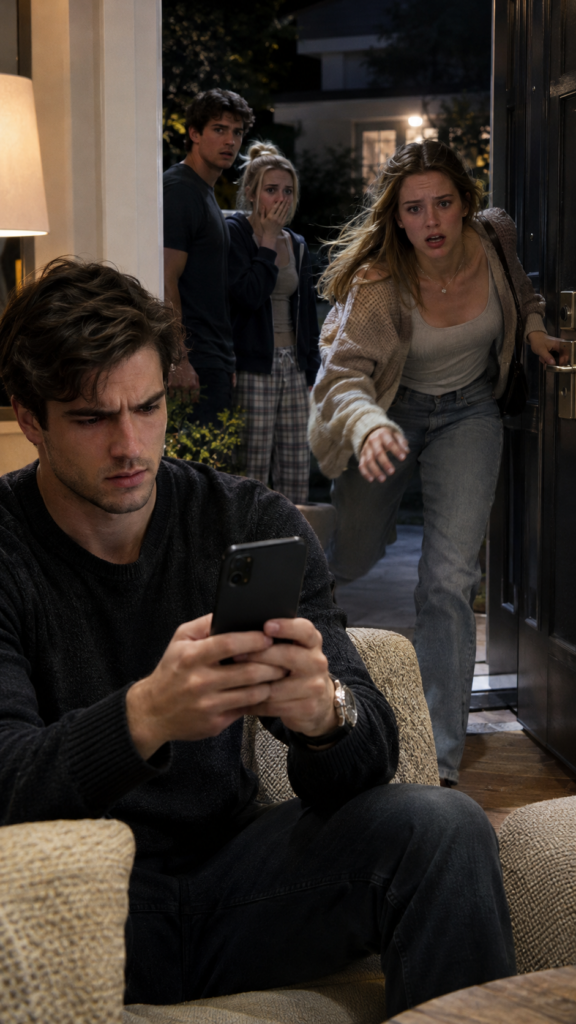
PART 1 — THE NIGHT ONE TEXT DESTROYED EVERY LIE
The Phone Beneath the Magazine
The first time I realized my wife was hiding something, she didn’t make a mistake. She made a movement so practiced that I understood immediately she had done it before.
It was 8:17 on a Thursday evening when I walked through the front door of our house in suburban Columbus, Ohio.
My name is Blake Morgan. I was thirty-seven years old, a scheduling and operations manager for a commercial supply company, and I had been married to Clara for almost six years.
Until that autumn, I thought we were reasonably happy.
Not the kind of happy people displayed in expensive anniversary photographs, but the kind that survived ordinary life. We paid our bills, argued over the thermostat, remembered each other’s birthdays, and occasionally ate dinner in silence because neither of us had enough energy left to talk.
I had always believed there was something valuable about that kind of marriage.
I was about to discover that silence could mean two entirely different things.
Clara stood at the kitchen island when I entered, her back partially turned toward me. She wore gray leggings and an oversized cream sweater, her dark blonde hair pinned loosely above her neck.
The light from her phone illuminated her face.
“Hey,” I said, setting my keys beside the door.
Her shoulders tightened.
The phone disappeared beneath a magazine before she turned around.
“You’re home late.”
“Traffic was terrible. Then the warehouse needed another shipment rescheduled.”
She looked toward the clock.
“You could’ve texted.”
“I did. Around six.”
“Oh.”
She glanced toward the magazine.
“I must’ve missed it.”
I watched her for a moment.
The phone was underneath an old issue of Better Homes & Gardens, the magazine she’d been threatening to throw away for months.
“What were you looking at?” I asked.
“Nothing. Just checking on Leah.”
“Everything okay?”
“She’s going through a rough time with her boyfriend.”
I nodded.
Leah Patterson had been Clara’s closest friend since college. She was a pediatric nurse, funny in a dry, understated way, and one of the few people who could make Clara laugh when she was genuinely upset.
I liked Leah.
What I didn’t like was how quickly my wife had hidden the screen.
“That’s too bad,” I said. “Tell her I’m sorry.”
Clara gave me a thin smile.
“I will.”
I opened the refrigerator and found a plate of chicken, roasted potatoes, and green beans covered with plastic wrap.
She had already eaten.
It wasn’t a crime. It wasn’t even particularly unusual. But recently, small changes had started collecting between us.
She no longer asked when I’d be home.
She stopped leaving the television on for me when she went upstairs.
And when I climbed into bed, she often rolled toward the opposite wall before I’d even turned off the lamp.
I took the plate from the refrigerator.
“Thanks for saving dinner.”
“Of course.”
Then, as casually as someone mentioning the weather, she said, “Oh, I told Tyler you couldn’t make it Saturday.”
I stopped.
“Tyler Harris?”
“Yeah. His birthday thing.”
“Why would you tell him that?”
She shrugged.
“You’ve been exhausted lately. I figured you wouldn’t want to go.”
“I never said I wasn’t going.”
“Blake, it’s just a party.”
“That’s not the point.”
She sighed and leaned against the counter.
“Here we go.”
I put the plate down.
“What does that mean?”
“It means you turn everything into a discussion about rules.”
“I asked you not to make a decision for me.”
“And I was trying to do something nice.”
“Then ask me first.”
Her smile hardened.
“Fine. Next time I’ll request written permission.”
I looked at her.
“Next time, just speak for yourself.”
For a second, the kitchen became completely still.
Then she laughed.
“Okay, boss.”
She reached beneath the magazine and retrieved her phone, turning it facedown beside the sink.
I warmed my dinner without saying anything else.
But that night, while Clara slept beside me, I lay awake thinking about something that had nothing to do with Tyler’s party.
She hadn’t looked embarrassed when she hid her phone.
She’d looked frightened.
And those were two very different things.
The Man Who Already Knew My Wife
Four days later, Clara insisted we attend a gathering at Melissa Trent’s apartment.
Melissa worked with Clara at a consulting firm downtown. She had recently been promoted, and the gathering was supposed to be a casual celebration with a handful of colleagues and friends.
The invitation surprised me.
Clara had spent the previous week telling me I worked too much and needed to rest. Now she wanted us both dressed and ready by seven.
“You’ll like these people,” she said, fastening a delicate gold necklace.
“Will I?”
She caught my eyes in the bedroom mirror.
“Could you at least try to enjoy yourself?”
“I haven’t complained.”
“You’re already making that face.”
“What face?”
“The one where you look like you’re reviewing everyone’s performance.”
I smiled.
She didn’t.
By the time we arrived at Melissa’s apartment, I was beginning to understand that Clara had already decided what kind of evening we were going to have.
She would be charming.
I would be difficult.
And if anything went wrong, I would be the reason.
Melissa opened the door wearing a bright red blouse, a glass of wine in her hand.
“Blake! We finally got you out of the office.”
“Only because I heard there’d be free food.”
She laughed and pulled us inside.
The apartment was crowded but comfortable. Music played from speakers near the windows, and people stood in small groups discussing work, vacations, and the rising cost of living.
Clara kept her hand on my arm as we entered.
Then she saw someone across the room.
Her fingers slipped away.
The change was almost invisible.
Almost.
“Come on,” she said. “There’s someone I want you to meet.”
She led me toward three people standing beside the balcony doors.
One of them was a tall man in his late thirties with neatly trimmed brown hair, an expensive watch, and the relaxed confidence of someone who rarely needed to introduce himself twice.
“Dustin,” Clara said brightly. “This is my husband, Blake.”
The man turned.
“Dustin Keller.”
He offered his hand.
“Good to finally meet you.”
Finally.
That word caught my attention.
“Same here,” I said.
Dustin smiled.
“Clara talks about you quite a bit.”
“Hopefully nothing too damaging.”
Before he could answer, Clara laughed.
“Oh, Blake’s very disciplined. Everything in his life has to follow a schedule.”
Dustin raised his eyebrows.
“Sounds useful.”
“Useful?” Clara repeated. “You should see our kitchen calendar. If I want to have friends over, I practically need a reservation.”
The others laughed.
I smiled politely.
“Actually, Clara makes most of our social plans.”
She waved a hand.
“Because otherwise we’d never leave the house.”
Dustin looked between us.
“Different personalities, I guess.”
“Different ideas about making decisions for other people,” I said.
Clara’s expression changed.
I continued before she could interrupt.
“She recently canceled a party invitation for me without asking.”
“It wasn’t that serious,” Clara said quickly.
“Then it shouldn’t be difficult to avoid next time.”
An uncomfortable silence followed.
Melissa appeared from the kitchen carrying another bottle of wine.
“Who needs a refill?”
The conversation recovered.
Clara didn’t look at me for several minutes.
But I noticed something else.
Every time Dustin spoke, she turned toward him before anyone else did.
Every time she made a joke, she searched his face to see whether he laughed.
And when she reached past him to pick up a napkin, her hand rested briefly against his forearm.
It was an ordinary gesture.
Except it wasn’t.
Because I knew the way my wife touched people.
And I knew the way she used to touch me.
Later, while I was standing near the kitchen, I overheard Dustin speaking quietly to Clara beside the hallway.
“You okay?”
“I’m fine.”
“You sure?”
“He’s just being Blake.”
Dustin lowered his voice.
“You don’t have to explain yourself to me.”
I couldn’t hear her response.
But I saw her smile.
It was soft and grateful.
A smile I hadn’t seen directed at me in months.
I stayed where I was, holding a glass of water.
There was no confrontation. No dramatic accusation. No reason to embarrass everyone.
But something inside me had become very quiet.
On the way home, Clara stared out the passenger window.
“Well,” she said eventually, “that was uncomfortable.”
“Which part?”
“You embarrassing me in front of my coworkers.”
“I answered something you said about me.”
“You made it sound like I’m controlling.”
“You made it sound like I’m impossible to live with.”
She turned toward me.
“Sometimes you are.”
The words came out sharper than either of us expected.
I kept my eyes on the road.
“Is that what you tell Dustin?”
She was silent for two seconds.
Then she laughed.
“Seriously?”
“I’m asking.”
“He’s my coworker.”
“That wasn’t my question.”
“He’s easy to talk to, Blake. Not everything has to be an interrogation.”
I waited until we reached a red light.
“There’s nothing wrong with having someone to talk to.”
“Good.”
“But there is something wrong with making your husband the problem every time he notices you’ve changed.”
Her phone lit up.
She immediately turned it toward her lap.
“You’re imagining things.”
The light changed.
I drove.
Neither of us spoke again before we reached home.
A Marriage Full of Small Absences
Over the next three weeks, I stopped asking Clara questions she didn’t want to answer.
Instead, I paid attention.
On Mondays, she stayed late because her department was apparently preparing a major presentation.
On Thursdays, her yoga classes stretched from one hour to almost three.
One Saturday afternoon, she left to help Melissa choose furniture and returned wearing perfume I didn’t recognize.
There were always explanations.
There were always names.
And whenever I expressed concern, Clara reacted as though I had accused her of something unforgivable.
One evening, I found her sitting in our bedroom, smiling at her phone.
“Something funny?”
The smile disappeared.
“Just work.”
“Good news?”
“Not everything is about you, Blake.”
I stood in the doorway.
“I didn’t say it was.”
She rubbed her forehead.
“I’m sorry. I’m tired.”
I walked over and sat beside her.
For a moment, I wanted to tell her exactly what had been troubling me. I wanted to ask whether she still loved me, whether the distance between us frightened her as much as it frightened me.
Instead, I touched her hand.
“Are we okay?”
She stared at our fingers.
Then she gently pulled away.
“Why wouldn’t we be?”
It was the sort of answer that ended a conversation without answering anything.
That night, I thought about the first house we’d looked at together.
We had been dating for eleven months when I brought Clara to the small two-story home I’d purchased several years earlier.
The kitchen had ugly yellow cabinets. The upstairs bathroom needed repairs, and the backyard was mostly weeds.
Clara had walked through every room, making plans before we even lived together.
“There’s so much potential here,” she’d said.
Then she’d turned toward me.
“Don’t you think?”
I’d been looking at her instead of the walls.
“Yeah,” I’d answered. “I really do.”
Over the following years, we painted rooms together, planted roses, replaced floors, and turned that imperfect house into something we were both proud to call home.
When we married, I believed we were building a life in the same direction.
Now, standing in that same kitchen, I sometimes felt like a guest who had overstayed his welcome.
The painful part wasn’t that Clara seemed unhappy.
It was that she no longer seemed interested in letting me understand why.
The Wednesday Night She Chose the Wrong Name
The following Wednesday, Clara came downstairs wearing dark jeans, a black top, and the tan coat she’d bought for our anniversary trip to Chicago.
Her hair was curled.
She carried an overnight bag.
I was sitting at the dining table reviewing delivery schedules on my laptop.
“Going somewhere?”
“Leah’s.”
I looked up.
“Everything okay?”
She adjusted the strap of her bag.
“Her boyfriend walked out. She’s really upset.”
“I’m sorry to hear that.”
“She doesn’t want to be alone.”
“Of course.”
Clara picked up her car keys.
“I might stay the night.”
“That’s fine. Want me to bring anything over?”
“No.”
The answer came too quickly.
She softened her voice.
“I mean, no, thanks. She just needs someone to talk to.”
“What time do you think you’ll be back tomorrow?”
“Probably around breakfast.”
I nodded.
“Tell her I hope things get better.”
“I will.”
She crossed the room and kissed my cheek.
It was the first time she’d kissed me without being prompted in more than a week.
But it felt strangely rehearsed.
“Don’t wait up,” she whispered.
I watched her walk through the front door.
A minute later, her car backed out of the driveway.
For nearly two hours, I tried to work.
I answered emails, reviewed a delayed shipment from Cleveland, and called a warehouse supervisor who had questions about Friday’s delivery routes.
Then I opened my phone to check the weather.
Leah’s social media account appeared near the top of my feed.
She was standing in a hotel lobby beneath a banner for a healthcare conference.
Denver, Colorado.
The photograph had been posted less than an hour earlier.
At first, I assumed I’d misunderstood something.
Maybe Clara was meeting someone else.
Maybe Leah’s conference had just ended.
I opened Leah’s profile.
There were several pictures from that afternoon. One showed her wearing a conference badge beside three colleagues. Another showed the Rocky Mountains through a hotel window.
The captions were cheerful.
Nothing suggested Leah was sitting alone at home after a breakup.
I called Leah.
She answered on the third ring.
“Blake? Hey! Everything okay?”
“Yeah. Sorry to bother you.”
“No problem.”
I heard laughter in the background.
“Are you still in Denver?”
“Yep. Until Friday. Why?”
I looked toward the empty chair across from me.
“No reason. Clara mentioned you were having a difficult week. Wanted to see how you were doing.”
Leah sounded confused.
“Difficult week?”
“With your boyfriend.”
A pause.
Then Leah laughed uncertainly.
“Matt? He’s sitting right here.”
I closed my eyes.
“Oh.”
“Blake, is something wrong?”
I stared at the kitchen counter where Clara had hidden her phone beneath the magazine.
“I think I’ve misunderstood something.”
“Do you want me to call Clara?”
“No. Please don’t.”
My voice surprised me with how steady it sounded.
“Just enjoy your conference.”
After hanging up, I sat completely still.
For a few seconds, I considered calling my wife.
Then I remembered the way she’d smiled at Dustin.
The way she’d turned her phone away.
The way she’d told other people what I wanted, what I felt, and where I would be.
I opened the location-sharing app on my phone.
Clara and I had shared our locations for years. It started after she broke down on an unfamiliar stretch of highway one winter evening, and we’d kept the arrangement for convenience and emergencies.
I had never used it to check whether she was telling the truth.
Until that night.
Her blue location marker appeared on the west side of Columbus.
It wasn’t anywhere near Leah’s apartment.
The address was 418 Westbrook Avenue.
I searched the address.
A modern residential complex appeared.
Underground parking. Private balconies. Expensive apartments.
I stared at the screen for a long moment.
Then I picked up my jacket.
The Message at 418 Westbrook
The drive took twenty-six minutes.
I remember the exact time because the dashboard clock changed from 10:12 to 10:38 as I turned into the complex’s visitor parking area.
The building was six stories tall, with broad glass doors and warm lighting inside the lobby.
Clara’s silver SUV was parked near a row of small trees.
I pulled into a space across the lot.
Turned off my engine.
And waited.
I didn’t know what I expected.
Part of me still hoped there was a reasonable explanation. A surprise. A misunderstanding. Something embarrassing but harmless.
Then a black sedan entered the lot.
It slowed beside Clara’s SUV.
A man stepped out.
Dustin Keller.
He looked exactly as he had at Melissa’s party: confident, relaxed, perfectly comfortable.
He glanced at his phone and smiled.
A moment later, the driver’s door of Clara’s SUV opened.
My wife stepped out.
She moved toward him without hesitation.
He said something I couldn’t hear.
She laughed.
Then he wrapped his arms around her.
Clara leaned into him and rested her face briefly against his shoulder.
It wasn’t the embrace of two coworkers greeting each other.
It was familiar.
Private.
The kind of embrace that belonged to people who had already crossed a line and stopped pretending otherwise.
Dustin kissed her.
And Clara kissed him back.
My fingers tightened around the steering wheel.
For several seconds, I couldn’t move.
I had spent six years learning the ordinary details of that woman. I knew how she took her coffee, which side of the bed she preferred, and how she covered her mouth when she laughed too hard.
Yet here she was, standing beneath a parking-lot light, looking happier in another man’s arms than she had looked in mine for months.
She touched Dustin’s chest.
He said something that made her smile again.
Then they walked toward the entrance together.
I watched the glass doors close behind them.
A strange calm settled over me.
There was no reason to knock.
No reason to fight him.
No reason to demand an explanation from two people who clearly understood what they were doing.
The truth was already standing in front of me.
I opened our text conversation.
Her last message, sent that afternoon, was a picture of a grocery list.
Can you grab milk on your way home?
I stared at it.
Then I typed one sentence.
“Didn’t know Leah lived at 418 Westbrook. Should I come up and say hello?”
I pressed send.
The message turned blue.
Delivered.
Thirty seconds passed.
Then a minute.
Then two.
At three minutes and forty-seven seconds, the doors of the apartment building flew open.
Clara came running out.
Her coat hung open, and her overnight bag was clutched against her side.
She stopped beneath the entrance lights and looked frantically across the parking lot.
I was sitting in darkness.
She couldn’t see me.
She pulled out her phone and called.
My screen illuminated.
Clara Calling.
I let it ring.
She called again.
Then she hurried toward her SUV, fumbling with the keys.
I watched her climb inside.
The engine started.
Her tires squealed as she backed out of the parking space and accelerated toward the street.
I remained where I was for another twenty seconds.
Then I started my own car.
I didn’t need to chase her.
I knew exactly where she was going.
For the first time in months, she was desperate to get home to her husband.
Not because she missed him.
Because she’d finally realized he knew the truth.
Three Months of Betrayal
When I pulled into our driveway, Clara was already standing near the front door.
Her face was pale.
She rushed toward me as I stepped out of the car.
“Blake.”
I closed the driver’s door.
“You’re home early.”
“How did you know where I was?”
I looked at her overnight bag.
“How’s Leah?”
Her mouth opened.
Nothing came out.
“Is she feeling better?”
“Blake, please.”
“Because I spoke to her. She sounded pretty happy in Denver.”
Clara looked toward the street.
Then back at me.
“You followed me?”
“We share our locations, Clara. You know that.”
“You had no right to stalk me.”
I studied her face.
For a moment, I almost laughed.
Not because anything was funny.
Because the person standing in front of me had just been caught kissing another man, and her first instinct was to make my discovery the problem.
“Let’s go inside,” I said.
She followed me.
The kitchen looked exactly as it had when we’d left it.
Two coffee mugs drying beside the sink.
A grocery receipt on the counter.
The refrigerator humming quietly beneath the cabinets we’d painted together.
I placed my keys on the island.
Clara set down her bag.
“I can explain.”
“Okay.”
She blinked.
“Okay?”
“I’m listening.”
She folded her arms, then unfolded them.
“Dustin and I have been spending time together.”
“I know.”
“It started as friendship.”
“I assumed that.”
“He’s been helping me through some things.”
I leaned against the counter.
“What things?”
She looked down.
“Feeling lonely. Feeling like we don’t communicate anymore.”
“Have you told me you felt that way?”
“I’ve tried.”
“You’ve told me I work too much. You’ve told me I’m too serious. You’ve told me you hate my schedules.”
My voice remained quiet.
“But you never told me you wanted to be with another man.”
Tears filled her eyes.
“I didn’t want this to happen.”
“Then why did it?”
She shook her head.
“It got complicated.”
“How long?”
“Blake—”
“How long, Clara?”
She stared at the floor.
“Three months.”
The words were so soft I almost didn’t hear them.
Three months.
Ninety days of ordinary mornings.
Ninety days of asking whether she needed anything from the store.
Ninety days of sitting across from her at dinner while she carried an entire secret relationship through our home.
I thought about our anniversary.
We’d eaten at a little Italian restaurant downtown.
Clara had worn a green dress I loved. I’d given her a bracelet she’d admired in a jewelry-store window.
She’d kissed me over dessert.
That was seven weeks ago.
My stomach tightened.
“Our anniversary,” I said.
She looked up.
“What?”
“Was he already in your life then?”
She covered her mouth.
The answer was obvious.
“Did you see him that week?”
“Blake, please don’t make me go through every detail.”
“You were there. I wasn’t. The details are all I have.”
She began crying.
“It wasn’t supposed to go this far.”
“Then when were you going to stop?”
“I don’t know.”
“Did you plan on leaving me?”
“No.”
“Did you plan on telling me?”
She hesitated.
“Eventually.”
I nodded.
“Eventually.”
She reached for my hand.
I stepped back.
“Don’t.”
Her expression crumpled.
“I love you.”
I looked at the woman standing in our kitchen.
For six years, those three words had meant safety to me.
Now they sounded like another explanation I was expected to accept without evidence.
“Does Dustin know you’re married?”
“Of course he does.”
“And he knows me.”
“Yes.”
“He shook my hand.”
She began crying harder.
I remembered Dustin smiling at me beside Melissa’s balcony doors.
Good to finally meet you.
He hadn’t looked ashamed.
He’d looked curious.
As though he’d been examining the man whose place he expected to take.
“Is it over?” I asked.
Clara wiped her cheeks.
“Yes.”
“Did you end it?”
“I will.”
“That’s not what I asked.”
She stared at me.
Then whispered, “No.”
I walked toward the hallway.
“Where are you going?”
“Guest room.”
“Blake, we need to talk.”
“We have been talking.”
“You can’t just walk away.”
I stopped.
“That’s interesting coming from someone who was planning to spend the night with another man.”
Her face twisted.
“I made a mistake.”
“No. You made a series of choices.”
I turned the hallway light on.
Behind me, Clara’s phone vibrated against the kitchen counter.
Then again.
She hurried to pick it up.
But as she reached for it, the screen illuminated where I could see it.
A message from Dustin.
I wasn’t trying to read it.
I didn’t have to.
The first sentence was displayed across the screen.
DUSTIN: You told me Blake was already planning to move out. Is that still happening?
I slowly turned toward my wife.
She stared at the message.
Her face changed.
Not with sadness.
With fear.
“Clara,” I said, “what exactly have you been telling him about our house?”
She didn’t answer.
I took one step toward her.
“The house I bought before we even met?”
Her fingers closed around the phone.
“Blake, there’s something you need to understand.”
I had never heard her sound so frightened.
And suddenly, I understood something far worse than the affair.
Clara hadn’t simply been hiding another man from me.
She had been planning a future with him in the home she was still sharing with her husband.
And I had no idea how much of that future she’d already arranged.
PART 2 — SHE HAD BEEN REWRITING OUR MARRIAGE WITHOUT ME
The Future She Promised Another Man
“Answer me.”
Clara stood beside the kitchen island, holding her phone so tightly her knuckles had turned white.
“What did you tell Dustin about our house?”
She took a shaky breath.
“I told him things were difficult between us.”
“That’s not what his message says.”
“I know.”
“Then explain it.”
She sat down as though her legs had suddenly stopped supporting her.
For the first time that night, she seemed to understand that crying wasn’t going to end the conversation.
“Dustin thought we were going to separate.”
I pulled out the chair opposite her.
“Did you tell him we had already discussed it?”
She nodded.
“Did you tell him I’d agreed to move out?”
A longer silence.
“Yes.”
I looked around the kitchen.
At the cabinets we’d painted together.
At the little crack above the doorway that we’d been meaning to repair.
At the wedding photograph sitting on the shelf near the pantry.
“So you told another man I was leaving my own home.”
“I didn’t mean it like that.”
“How else could you mean it?”
She rubbed her temples.
“I was confused. I didn’t know what I wanted.”
“You knew enough to tell him I’d be gone.”
“Because he kept asking what was going to happen!”
The sudden volume of her voice startled both of us.
She lowered it immediately.
“He wanted to know whether I was serious. I didn’t know what to say.”
“So you lied.”
She nodded.
“Yes.”
“To him.”
“Yes.”
“And to me.”
Her eyes filled again.
“Yes.”
I sat back.
For weeks, she’d made me feel unreasonable for noticing the distance between us. Now I learned she’d been discussing the end of our marriage with another man while refusing to discuss our marriage with me.
“Did you actually believe I’d leave?” I asked.
She looked toward the living room.
“I thought maybe, if we separated, we’d figure out the house later.”
“The house?”
“Blake, I helped make this a home.”
“I know you did.”
“I put money into the renovations. I chose the furniture. I spent years here.”
“All true.”
She looked relieved for half a second.
Then I continued.
“And every one of those things matters. But none of them gave you permission to promise Dustin that I would disappear.”
She lowered her gaze.
“I never should have said it.”
“That’s the first thing tonight we agree on.”
Her phone vibrated again.
She turned it off.
We sat in silence.
Finally, she whispered, “I don’t want to lose you.”
I looked at her wedding ring.
“Did you say that to him?”
She began crying.
I stood.
“I need to sleep.”
“Please don’t leave me alone right now.”
I stopped beside the doorway.
“Clara, you planned to spend tonight at his apartment.”
She covered her face.
“Being alone wasn’t something you were worried about an hour ago.”
I walked down the hall and closed the guest-room door.
For nearly six years, that room had been where visiting relatives slept.
That night, it became the first place in my own house where I could breathe.
The Morning After
I woke at 5:42.
For several seconds, I forgot what had happened.
Then I remembered the parking lot.
The kiss.
The message.
Three months.
I sat on the edge of the bed until the nausea passed.
In the bathroom, I washed my face and looked into the mirror.
Nothing about me had changed.
I had the same tired eyes, the same faint scar beneath my chin, the same silver beginning to appear near my temples.
But I couldn’t recognize the man staring back.
He was someone whose wife had been having an affair.
Someone whose home had been discussed as though he were already gone.
Someone who had spent months defending a marriage without knowing he was the only person still doing it.
I went downstairs.
Clara was asleep on the couch, still wearing yesterday’s clothes.
Her phone lay on the coffee table.
For one brief moment, I considered picking it up.
I wanted every message, every photograph, every date.
Then I looked at her.
She had cried herself to sleep.
I knew because her cheeks were still streaked with mascara.
And I realized something painful.
I didn’t need more evidence to justify being hurt.
I already knew enough.
I made coffee.
Clara woke when the machine finished brewing.
“Blake?”
I took a mug from the cupboard.
“Morning.”
She sat up.
“Did you sleep?”
“Some.”
“I didn’t.”
I said nothing.
She studied my face.
“Are you going to work?”
“Yes.”
“Can we talk tonight?”
“We’ll need to.”
Her eyes moved toward my wedding ring.
I was still wearing it.
She looked hopeful.
That hurt more than I expected.
Before leaving, I took the ring off and placed it beside my keys.
Clara watched the entire movement.
“Please don’t do that.”
I slipped my keys into my pocket.
“I need to figure out what I’m doing next.”
“You’re still my husband.”
I turned toward her.
“I was your husband last night, too.”
Then I left.
The Lawyer Who Didn’t Promise Revenge
At eleven that morning, I called Richard Cole.
Richard was a family-law attorney recommended by a former colleague. His office occupied the second floor of an old brick building near downtown Columbus.
I didn’t expect to see him that day.
But when I told his assistant my situation, she offered a cancellation appointment at noon.
Richard was probably fifty-five, with thinning gray hair and a manner that made every sentence sound carefully considered.
He listened without interruption while I described the marriage, the house, and the previous night’s discovery.
When I finished, he closed his notebook.
“First thing,” he said, “you don’t have to decide everything today.”
“I know.”
“Second, don’t make decisions designed to punish her. Make decisions you can defend six months from now.”
I nodded.
He asked about the house.
I’d purchased it four years before marrying Clara. The original mortgage had been in my name, but we’d refinanced during the marriage, and some improvements had been paid for from our shared income.
Richard explained that the property’s history mattered, as did the value accumulated during the marriage.
“I want to keep it,” I said.
“Then we’ll work out what a fair agreement could look like. But don’t assume premarital ownership makes every financial question disappear.”
He asked about our accounts.
We had a joint checking account for household expenses, a joint savings account, and separate retirement and personal accounts.
“Don’t empty anything,” Richard said. “Don’t hide anything. Preserve records, keep paying legitimate bills, and don’t try to lock her out of shared property.”
“I wasn’t planning to.”
“Good. You can protect your individual accounts and change passwords on your personal services. But we’ll handle marital finances transparently.”
He paused.
“Have you told anyone?”
“No.”
“Do you have someone you trust?”
I thought about Tyler Harris.
Then I shook my head.
“Not yet.”
Richard studied me.
“You’re very controlled.”
“People keep telling me that.”
“Control can help you avoid bad decisions.”
He leaned forward.
“But don’t confuse keeping calm with not feeling anything.”
I looked down at my hands.
There was a pale mark where my wedding ring had been.
“I don’t know what I’m supposed to feel.”
“You don’t need a correct answer.”
For the first time that morning, my throat tightened.
I swallowed.
“I drove to an apartment last night and watched my wife kiss someone else.”
Richard didn’t move.
“Then she told me she’d been making plans for me to leave our house.”
I stared at the folder in front of me.
“I keep thinking about all the mornings I made her breakfast.”
My voice broke on the last word.
Richard waited.
I pressed a hand over my eyes.
For perhaps thirty seconds, I couldn’t speak.
When I finally lowered my hand, he slid a box of tissues across the desk.
“That’s the part people don’t understand,” he said. “You’re not only grieving a person. You’re grieving what you thought your life was.”
I left his office with a list of documents to collect and the knowledge that I had options.
Not certainty.
Not revenge.
Options.
It was the first solid thing I’d felt since the parking lot.
An Apology Prepared Like a Presentation
Clara had cooked dinner when I returned home.
The dining table was set with our good plates. A candle burned between two glasses of water, and the smell of rosemary chicken filled the kitchen.
She stood near the stove.
“Hi.”
“Hi.”
“I made your favorite.”
I looked at the chicken.
“My favorite is the lemon pasta you make on Sundays.”
Her smile faded.
“Oh.”
“It’s okay.”
“No. It’s not. I should know that.”
I removed my jacket.
She’d also placed a framed photograph of us from our honeymoon on the sideboard.
I hadn’t seen it there in years.
We were standing on a beach in South Carolina, sunburned and laughing because a sudden wave had soaked our shoes.
Now the photograph felt less like a memory and more like an argument she was trying to make.
“Can we sit down?” she asked.
We did.
She reached across the table.
“I ended things with Dustin.”
I looked at her hand without taking it.
“When?”
“This afternoon.”
“How?”
“I called him. I told him I was choosing my marriage.”
“And?”
“He was upset.”
“Did you expect him to congratulate you?”
She withdrew her hand.
“That’s not fair.”
“Neither was introducing him to me while you were sleeping with him.”
She took a breath.
“You’re right.”
That surprised me.
She continued.
“I was selfish. I liked how he made me feel. And instead of telling you how unhappy I’d become, I did something unforgivable.”
I studied her.
It was the first apology that hadn’t begun with an explanation of what I’d done wrong.
“I’m listening.”
“I thought you didn’t notice me anymore.”
I looked up.
“You thought that?”
“You always had another deadline. Another emergency. Another schedule.”
“I did work a lot.”
“You were home, but sometimes I felt like I was talking to a wall.”
I considered her words.
There were nights I’d taken calls during dinner. Weekends when I’d promised to spend the afternoon with her and ended up answering emails.
I couldn’t pretend I’d been perfect.
“I should have listened better,” I admitted.
Her eyes brightened.
“But Clara, feeling lonely was something we could have worked on. Having an affair was a choice you made without me.”
The brightness disappeared.
“I know.”
“Those aren’t the same problem.”
“I know.”
She pushed back her chair and came around the table.
“I want us back.”
She stood close enough that I could smell her perfume.
The same perfume she’d worn to Dustin’s apartment.
I stepped away.
She stopped.
“Blake, please.”
“I need time.”
“How much?”
“I don’t know.”
“We could go away. Just for a weekend. Somewhere quiet.”
I shook my head.
“A hotel won’t make me forget the apartment.”
She began crying.
I wanted to comfort her.
That was the cruelest part.
For six years, when Clara cried, I went toward her.
Now the instinct was still there, even though she was the reason I could barely breathe.
I went upstairs instead.
And for the first time, I understood that loving someone didn’t always mean you could safely stay with them.
The Party I Was Never Supposed to Attend
Two days later, Tyler Harris called.
Tyler and I had been friends since our twenties. He worked in insurance, had two children, and possessed the irritating ability to detect when I was lying about being fine.
“Hey, man,” he said. “You alive?”
“Unfortunately. What’s up?”
“You never called me about Saturday.”
I sat back in my office chair.
“Saturday?”
“My birthday thing. Clara said you weren’t coming.”
“I know.”
“Then why did you sound surprised?”
I rubbed my forehead.
“Because I didn’t tell her to cancel.”
There was a pause.
“That’s weird.”
“Yeah.”
Tyler hesitated.
“Blake, can I ask you something?”
“Sure.”
“Are you and Clara separating?”
The office suddenly seemed too quiet.
“Why would you ask that?”
“Because that’s what she told me.”
I stared through the window at the parking lot below.
“When?”
“Couple weeks ago.”
“Exactly what did she say?”
Tyler exhaled.
“She said you two were figuring things out. That you wanted some space, and you probably wouldn’t be going to social events together for a while.”
I closed my eyes.
Clara hadn’t merely been canceling plans.
She’d been explaining my absence before it happened.
“Did she mention Dustin Keller?”
Another pause.
“Yeah.”
My fingers tightened around the phone.
“How?”
“She asked if Dustin could come to the birthday dinner. Said he was a friend from work.”
“Did you invite him?”
“No. I told her I didn’t have room for extra guests.”
I said nothing.
Tyler lowered his voice.
“Blake, what’s happening?”
I looked at the wedding photograph on my desk.
Clara had given it to me for our third anniversary.
“She had an affair.”
Tyler didn’t speak.
“With Dustin.”
A long silence followed.
Then he said, “I’m coming over.”
“You don’t have to.”
“I’m not asking.”
He arrived at my office forty minutes later with two coffees and a sandwich I hadn’t requested.
We sat in a small conference room.
I told him everything.
Not dramatically.
Not perfectly.
By the time I reached the parking lot at Westbrook, Tyler had stopped touching his coffee.
“She was setting up a whole different version of your marriage,” he said.
I nodded.
“Apparently.”
He leaned forward.
“Listen to me. Don’t let her make you feel crazy for noticing things.”
“I don’t.”
“You will. That’s what happens when someone keeps denying the obvious.”
I looked down at my hands.
“I still love her.”
Tyler’s expression softened.
“I know.”
“That’s what makes this so ridiculous.”
“No. That’s what makes it hurt.”
I stared at the table.
Tyler stayed with me until I finished the sandwich.
Then he gave me a piece of advice I didn’t realize I’d remember for years.
“Don’t make the decision that hurts her most.”
I looked up.
“Make the decision that lets you live with yourself.”
That evening, after Tyler left, I received a message from Melissa Trent.
Clara’s coworker.
The woman who’d hosted the party where I’d met Dustin.
Melissa: Blake, I heard what’s happened. I’m sorry. There’s something about the timing that you deserve to know. Can we talk?
I stared at the message.
Then typed back.
Me: Did you know about Dustin?
Three dots appeared.
Disappeared.
Appeared again.
Finally, her answer arrived.
Melissa: I suspected it. But there’s more. Clara told everyone you two were separating before the affair started. She also told Dustin you already knew about him.
I felt a cold sensation move through my chest.
Clara had told me the affair began three months earlier.
But she’d been telling other people our marriage was ending before she admitted anything was wrong.
I called Melissa.
She answered immediately.
“Blake, I’m so sorry.”
“Tell me what you know.”
She hesitated.
Then she said something that changed the way I understood the entire previous summer.
“Clara asked me to help her find a place where she and Dustin could spend time without anyone from work seeing them.”
I stood slowly.
“Westbrook?”
“Yes.”
I looked toward the darkening windows.
“How long ago?”
“Late August.”
“Did you help her?”
“No. I told her not to involve me.”
Melissa sounded close to tears.
“But I should’ve told you. Especially when I found out where some of the money was coming from.”
My grip tightened around the phone.
“What money?”
She swallowed.
“Blake, I thought you knew she was paying for part of his apartment.”
I looked toward the cabinet where I kept our household banking records.
Clara hadn’t only been spending nights with Dustin.
She had been spending money on him.
And I was suddenly afraid to discover exactly whose money it was.
PART 3 — THE PRICE OF HER SECRET LIFE
The Payments Hidden in Plain Sight
I didn’t sleep that night.
At 1:14 in the morning, I opened our joint checking account on my laptop.
I wasn’t looking for revenge.
I wanted to understand what had been happening while I was living in the same house as my wife, believing we were still building something together.
The first suspicious transaction was dated August 28.
An electronic transfer.
$780.
Recipient: Dustin Keller.
The second appeared twelve days later.
$650.
The third was $825.
All three had come from the joint account we used to pay household expenses.
I stared at the transaction descriptions.
Supplies.
Reimbursement.
Furniture.
The last word made my stomach tighten.
Clara had told me she’d spent money at a furniture store because she wanted to replace the old chairs in our dining room.
She’d shown me pictures.
We had never purchased those chairs.
I opened our messages from that week.
There it was.
Found the perfect dining chairs. A little expensive, but they’ll look amazing.
I’d replied:
Go for it if they’re what you want.
She’d answered with a heart.
I looked at the transfer again.
$825.
Furniture.
I couldn’t stop staring at that one word.
Not because of the amount.
Because I’d been standing in our kitchen imagining a future with new dining chairs while she was apparently furnishing one with someone else.
I printed the statements.
Then I made another cup of coffee.
At 6:20, Clara came downstairs.
She stopped when she saw the papers spread across the table.
“What’s that?”
I didn’t look up.
“Bank statements.”
She stood perfectly still.
I turned one page toward her.
“Tell me about the furniture.”
She looked down.
Then back at me.
“Blake—”
“Did you buy chairs for our house?”
Her shoulders dropped.
“No.”
“Where did the money go?”
She sat slowly.
“Dustin was having trouble covering some expenses.”
I waited.
“His apartment was more expensive than he’d expected.”
“And you helped him.”
“Yes.”
“With our joint account.”
She pressed her lips together.
“Yes.”
I looked at the papers.
“Two thousand two hundred and fifty-five dollars.”
“I was going to put it back.”
“When?”
“I don’t know.”
“Before or after you asked me to move out?”
She flinched.
I sat opposite her.
“Do you understand what this means to me?”
“Of course.”
“No. I don’t think you do.”
My voice was still calm, but my hands had begun trembling.
“I worked extra weekends that month. I missed my nephew’s baseball tournament because we were saving for repairs to the back deck.”
She lowered her eyes.
“You were there when I explained that to my brother.”
“I remember.”
“And while I was worrying about paying for the deck, you were helping Dustin pay for his apartment.”
Tears slid down her face.
“I’m sorry.”
I stared at her.
“Do you know what I keep thinking about?”
She shook her head.
“You asked me whether we could afford a new couch. I told you to wait until Christmas.”
Her face crumpled.
“I know.”
“And I felt guilty about it.”
I stopped.
For a moment, the words wouldn’t come.
“I felt guilty for telling my own wife we needed to save money.”
Clara reached across the table.
“Blake, I never wanted to hurt you like this.”
I moved my hand.
“But you were willing to let me keep paying for everything you wanted at home while you paid for the things you wanted somewhere else.”
She started crying harder.
I gathered the statements into a folder.
“I’m giving these to Richard.”
“Are you going to take everything from me?”
The question surprised me.
I looked up.
“Is that what you think I’m doing?”
She wiped her face.
“I don’t know what you’re going to do.”
“Neither did I, until you showed me who you’ve been.”
I stood.
“And I’m not taking everything, Clara. We’re going to deal with our property fairly.”
I picked up the folder.
“But I’m not going to pretend those transfers were groceries.”
The Woman Who Remembered Our First Apartment
Three days later, Clara asked me to meet her for coffee.
Not at our usual café.
At a small place near the park where we’d once walked almost every Sunday.
I agreed because she’d asked for one conversation without lawyers, accusations, or interruptions.
I arrived first.
She came in ten minutes later wearing a pale blue sweater I’d bought her for Christmas.
For a moment, she looked like the woman I’d married.
That was the problem with betrayal.
The person who hurt you didn’t suddenly become a stranger in every possible way.
Sometimes they still looked familiar enough to break your heart all over again.
Clara sat opposite me.
“Thanks for coming.”
I nodded.
She wrapped both hands around her coffee cup.
“I’ve been thinking about what you said.”
“Which part?”
“That I made choices.”
I waited.
“You’re right.”
Outside, a young couple crossed the street holding hands.
Clara watched them.
“I think I wanted to feel like someone was choosing me again.”
I didn’t respond.
She continued.
“When we first got married, we’d go out for breakfast on Sundays. We’d make stupid plans, like driving three hours just to look at antique stores.”
I remembered.
I remembered Clara finding an ugly brass lamp and insisting it was beautiful.
I remembered buying it for twelve dollars because she laughed so hard when I called it a museum piece.
The lamp was still in our living room.
“You stopped asking me to do things,” she said.
I looked at her.
“Sometimes I did.”
“And I stopped asking, too.”
“Yes.”
She took a breath.
“When Dustin started paying attention to me, I told myself it was harmless.”
Her eyes filled.
“He remembered things I said. He asked about my day. He made me feel interesting.”
I looked down at my coffee.
There was no satisfaction in hearing that.
Only a dull, persistent ache.
“And then?” I asked.
“Then I started looking forward to seeing him more than I looked forward to coming home.”
I nodded slowly.
She swallowed.
“I knew what was happening. I kept telling myself I could stop before it became real.”
“But you didn’t.”
“No.”
“Why?”
She looked at me directly.
“Because I didn’t want to.”
The answer hurt.
It was also the most honest thing she’d said since the night at Westbrook.
I appreciated that more than I wanted to.
“Thank you for telling me.”
She looked surprised.
“Does that help?”
“It helps me understand.”
She leaned forward.
“Then maybe we could start there.”
I shook my head.
“Understanding isn’t the same as trusting.”
“I know. But we could get counseling.”
I looked outside.
A little boy had dropped a mitten on the sidewalk. His father picked it up, brushed it off, and carefully tucked it into the child’s coat pocket.
It was an ordinary moment.
But it reminded me how love often lived in small acts of attention.
“Clara, I would have gone to counseling with you before this.”
Her expression tightened.
“I didn’t know how to ask.”
“You knew how to plan overnight stays.”
She looked away.
I regretted the sharpness of the words, but not their meaning.
“I don’t want to spend the next five years wondering whether every work dinner is real,” I said. “I don’t want to become someone who checks your phone because he’s frightened of what you’re doing.”
“I’d give you access to everything.”
“That’s not the marriage I want.”
She stared at me.
I continued.
“If the only way I can trust you is to watch you, then we don’t have trust.”
Clara began crying silently.
I let her.
After a while, she asked, “Do you still love me?”
I took longer to answer than I expected.
“Yes.”
She covered her mouth.
“Then why can’t we try?”
I looked at the woman across from me.
“Because I also have to love the person I’ll become if I stay.”
She lowered her eyes.
For several minutes, neither of us spoke.
Then I paid for our coffees and walked her to her car.
She stood beside the driver’s door, searching my face.
“Can I hug you?”
I hesitated.
Then nodded.
She wrapped her arms around me.
Her body was warm and familiar.
For one terrible moment, I wanted to pretend the previous month had never happened.
I wanted our ordinary mornings back.
Our ridiculous arguments about the dishwasher.
The small life we’d spent years building.
Then Clara whispered, “I wish I could go back.”
I closed my eyes.
“So do I.”
When she let go, I stepped away.
We drove home separately.
The Agreement That Changed Everything
Richard reviewed the financial records the following Monday.
He didn’t react dramatically.
He asked where the payments had come from, whether Clara acknowledged them, and whether we had statements supporting the amounts.
I answered each question.
“We can address those transfers in a negotiated settlement,” he said. “But remember, a divorce agreement needs to account for the whole picture.”
“I understand.”
“Have you decided?”
I looked at the papers.
“Yes.”
He watched me for a moment.
“Divorce?”
“Divorce.”
Saying the word aloud was different from thinking it.
It wasn’t a threat.
It wasn’t something I was using to frighten Clara into changing.
It was a decision about the life I was willing to live.
Richard nodded.
“Then we’ll prepare a proposal. Clara should have her own attorney review it.”
I returned home that evening to find Clara sitting on the back porch.
The roses she’d planted along the fence were losing their last petals.
She watched me through the glass door as I entered.
I went outside.
She was holding a photograph.
Our wedding day.
“You remember this?” she asked.
“Of course.”
She held it toward me.
In the photograph, I was laughing while trying to fix the clasp on her necklace.
Her eyes were closed.
We looked impossibly happy.
“I keep looking at that man,” she whispered.
I didn’t say anything.
“And I keep wondering how I could hurt someone who loved me like that.”
I sat in the chair beside her.
For a moment, I let myself remember everything good.
The proposal at Lake Erie.
The rainy honeymoon morning when we’d stayed in bed listening to thunder.
The Sunday afternoons painting the house.
The night she held me while I cried after my father’s surgery.
Those memories were real.
So was Westbrook.
Both truths had to exist.
“I’ve asked Richard to prepare a separation agreement,” I said.
Her hand went still around the photograph.
She turned slowly.
“What?”
“We’ll need to discuss the house, our accounts, and how to separate everything.”
She shook her head.
“No.”
“Clara—”
“No, you can’t be serious.”
“I am.”
“You said you still loved me.”
“I do.”
“Then why are you doing this?”
I looked at her.
“Because loving you doesn’t make what happened disappear.”
She stood.
“You’re not even going to try?”
“I spent the last month trying to understand what was happening. You spent it telling me I was imagining things.”
She began pacing across the porch.
“You’ve always been like this. Once you’ve made a decision, there’s no changing your mind.”
I remained seated.
“Clara, you made decisions about our marriage without telling me for months.”
She stopped.
I continued.
“I’m finally making one with all the information.”
She pressed both hands over her face.
Then she sank into the chair again.
“I don’t know how to live without you.”
The words hit harder than her anger.
I looked toward the backyard.
“I don’t know how to live without the marriage I thought we had.”
She lowered her hands.
“What happens now?”
“We both get legal advice. We divide things fairly. And we figure out how to move forward.”
She looked at the house.
“You want me to leave.”
“Eventually, yes.”
“I have nowhere to go.”
“You have family. We can make a reasonable plan and give you time.”
She sat silently for a long while.
Then whispered, “I thought you’d fight for us.”
I turned toward her.
“I would have.”
She looked up.
“But I needed you to be fighting for us, too.”
The porch went quiet.
Behind the fence, a neighbor started a lawn mower.
Somewhere down the street, children were calling to each other.
Life continued.
Our marriage was ending.
The Question I Hadn’t Thought to Ask
That night, Clara agreed to speak with her own lawyer.
For the first time since Westbrook, she stopped arguing that I was overreacting.
She knew I wasn’t bluffing.
The following evening, I began sorting our household documents.
I needed property records, insurance paperwork, tax returns, and receipts from the renovations we’d completed during the marriage.
Some were stored in the filing cabinet in my office.
Others were in a cardboard box in the upstairs closet.
I found photographs from our first Christmas, old receipts, and a handwritten list of things we’d wanted to improve when we bought the house.
At the bottom of the box was the receipt for the brass lamp.
Twelve dollars.
I sat on the bedroom floor holding it.
For reasons I couldn’t explain, that was when I started crying.
Not quietly.
Not gracefully.
I cried until my chest hurt.
Because somewhere beneath the lies and the anger, I still remembered the woman who’d been thrilled to bring home an ugly lamp.
I still remembered loving her.
And I was furious that remembering had become painful.
The doorbell rang downstairs.
I wiped my face and went to answer it.
An older man stood outside, wearing a work jacket with a plumbing company logo.
“Hey, Blake.”
It was our neighbor, Frank Ellison.
He lived two houses down and had helped us fix a leaking pipe the previous winter.
“Hey, Frank. Everything okay?”
“Yeah. Sorry to bother you. Just wanted to ask whether that contractor you had over back in July ever finished the upstairs bathroom.”
I frowned.
“What contractor?”
Frank scratched his head.
“The tall guy. Brown hair. Black sedan.”
My stomach tightened.
“Why?”
“I saw him coming over a couple times when you were out of town. Thought Clara said he was helping with some work.”
I stared at him.
“Out of town?”
“Yeah. That week you went to Cleveland.”
I remembered the trip.
A supplier emergency.
Three nights in a hotel near the warehouse.
I had called Clara every evening.
She’d told me she was staying in, watching television, and missing me.
Frank looked concerned.
“Everything all right?”
I forced myself to nod.
“Yeah. Thanks for letting me know.”
After he left, I stood in the doorway for almost a minute.
Then I walked to the living room.
Clara was sitting on the couch.
She looked up.
“Who was that?”
“Frank.”
“Oh.”
I watched her.
“Did Dustin ever come to this house?”
She went completely still.
“No.”
I didn’t move.
“Think carefully.”
“Blake, why are you asking?”
“Because Frank just told me he saw a man in a black sedan here while I was in Cleveland.”
All the color left her face.
I took another step toward her.
“Did you bring him into our home?”
She stared at me.
Her lips trembled.
Then, barely above a whisper, she said, “Once.”
I looked toward the staircase.
Toward our bedroom.
Toward the rooms where we’d spent six years building our life.
“Clara.”
My voice sounded unfamiliar.
“Where?”
She began crying.
I asked again.
“Where did you take him?”
She looked toward the stairs.
And in that single movement, I received an answer I hadn’t been prepared to hear.
The affair hadn’t stayed at 418 Westbrook.
She had brought it through our front door.
And whatever hope I’d still been carrying for our marriage died before she could say another word.
PART 4 — THE HOUSE WAS STILL STANDING, BUT OUR HOME WAS GONE
The Room I Could No Longer Enter
I didn’t shout.
That was what frightened Clara most.
She stood beside the couch, waiting for me to explode, while I stared toward the staircase.
“Was he in our bedroom?”
Her face crumpled.
“Blake, please.”
“Yes or no?”
She closed her eyes.
“Yes.”
For several seconds, I couldn’t hear anything except the refrigerator humming in the kitchen.
I thought about the Cleveland trip.
The hotel room where I’d eaten takeout alone.
The phone call I’d made to Clara before bed.
She’d said she was tired and going upstairs.
I’d told her I loved her.
She’d said it back.
Now I wondered whether Dustin had been standing beside her.
“Did he stay overnight?”
She nodded.
I felt something inside me finally give way.
Not rage.
Something worse.
The collapse of a belief I’d never thought to question.
“Was it only once?”
She hesitated.
Frank had said he’d seen the sedan more than once.
I looked at her.
“Don’t lie to me again.”
She wiped her cheeks.
“He came over twice. The first time was just dinner. The second time he stayed.”
I nodded slowly.
Two visits.
Two evenings when I hadn’t been there.
Two opportunities to turn around.
She hadn’t taken either.
I walked toward the stairs.
“Blake?”
I stopped at the bottom.
She followed me.
“Where are you going?”
I looked up toward our bedroom.
For years, that room had been the safest place in my life.
It was where I went after difficult days.
Where I’d held my wife when her grandmother died.
Where we’d whispered plans about vacations, family, and what our life might look like when we were old.
Now I couldn’t even imagine opening the door.
“I don’t know,” I said.
Clara began crying harder.
“I wish I could undo it.”
I turned.
“Then tell me something.”
She looked up.
“When you brought him here, did you think about me at all?”
Her mouth trembled.
“Yes.”
The answer was worse than no.
Because it meant I’d existed in her mind the entire time.
She had known exactly whose trust she was breaking.
And she’d done it anyway.
I walked past her and went into the guest room.
Then I called Tyler.
He answered on the second ring.
“Blake?”
I looked at the closed door.
“I need you to come over.”
His voice changed immediately.
“What’s wrong?”
I sat on the bed.
“I can’t be in my own house right now.”
Tyler didn’t ask another question.
“I’ll be there.”
Twenty minutes later, we drove to his place.
His wife, Amanda, left a blanket and clean towel in the spare bedroom without asking for an explanation.
Tyler sat beside me at the kitchen table until almost three in the morning.
At some point, I started talking.
Not about the money.
Not about the lawyer.
About the tiny things I was losing.
The smell of coffee on Sundays.
Clara calling me from the grocery store because she’d forgotten whether we needed eggs.
Her feet finding mine beneath the blankets on cold nights.
“I don’t understand how she could do it,” I whispered.
Tyler stared at his coffee.
“Maybe you never will.”
I rubbed my eyes.
“I keep trying to find the moment when I should’ve seen it.”
“Blake.”
He waited until I looked at him.
“You were married. You weren’t supposed to need a surveillance system to feel safe at home.”
I stared at the table.
For the first time, I stopped asking what I could have done differently to prevent someone else’s decision.
It didn’t make the pain disappear.
But it gave the pain somewhere honest to belong.
Thirty Days to Separate Six Years
Over the next week, our lives became a collection of conversations neither of us had imagined having.
Clara found an attorney named Evelyn Price.
Richard and Evelyn exchanged financial disclosures, property documents, and proposals about how to divide our assets.
The house remained the most complicated issue.
I had owned it before our marriage, but Clara had contributed to improvements and mortgage payments over the years.
We obtained a valuation and worked through the marital portion of the equity rather than pretending that six years of shared expenses hadn’t happened.
I didn’t want to take everything from her.
I wanted a fair ending.
The settlement we eventually negotiated accounted for the equity, our savings, the documented Westbrook transfers, and the debts we’d accumulated together.
Clara would keep her car and her retirement account, subject to our agreed financial adjustments.
I would retain the house and refinance the remaining mortgage obligations in my name as required.
She would receive an agreed payment to help her establish a separate home.
We also agreed on a thirty-day period for her to move out voluntarily, with clear arrangements for shared bills and the remaining belongings.
Nothing about it was revenge.
That disappointed a small, ugly part of me.
There were moments when I wanted her to experience every ounce of the humiliation I’d felt.
But I knew what happened when hurt people started making permanent decisions simply to cause more hurt.
I had watched my marriage become a place where people hurt each other rather than speak honestly.
I wasn’t going to build my next life on the same foundation.
One evening, Clara came home and found me measuring the living-room wall.
“What are you doing?”
“Thinking about moving the bookshelf.”
She looked toward the furniture.
“You’ve never wanted to move that.”
“I know.”
She watched me quietly.
Then said, “You’re really imagining this house without me.”
I put down the measuring tape.
“Yes.”
She swallowed.
“I keep thinking you’ll wake up and change your mind.”
I looked at her.
“I’ve spent a lot of nights wishing I could.”
She stepped closer.
“Then maybe you still can.”
I shook my head.
“Changing my mind wouldn’t change what happened.”
She looked toward the staircase.
Neither of us said another word.
The Envelope Between Us
The agreement was ready the following Friday.
Clara had reviewed it with her attorney and requested two changes to the payment schedule, both of which we’d resolved through our lawyers.
I brought the final copy home in a thick manila envelope.
She had made dinner.
This time, it really was my favorite.
Lemon pasta.
Parmesan.
Roasted asparagus.
Two glasses of sparkling water.
I sat across from her and ate.
For several minutes, we discussed ordinary things.
A broken fence panel.
A package that had arrived for her.
The weather forecast for the weekend.
Then I placed the envelope between us.
Clara stared at it.
“Is that it?”
“Yes.”
She touched the edge.
“You’ve already signed?”
“I’ve signed the settlement proposal. Richard has the completed version ready for both attorneys.”
She opened the envelope and read.
Her eyes moved from page to page.
I watched the woman I’d planned to grow old with study the financial terms of our separation.
Finally, she looked up.
“Thirty days.”
“That’s what we agreed.”
“I know.”
She swallowed.
“It just feels different seeing it written down.”
I nodded.
“Most things do.”
She touched the section dealing with the house.
“You get to stay.”
I looked around.
“I’ll keep the house, yes.”
“And I have to leave.”
“We agreed it was the best way to handle it.”
She stared at the paper.
“I planted those roses.”
“I know.”
“I chose the color for the kitchen.”
“I know.”
“I helped make this place beautiful.”
I looked at her.
“You did.”
She began crying.
“Then how can you stand being here without me?”
I didn’t answer immediately.
Because that was a question I’d been asking myself every day.
Finally, I said, “I don’t know yet.”
She looked surprised.
I continued.
“I’m going to have a hard time, Clara. There are things in this house I’ll probably have to change. There are rooms I can’t walk into without remembering what happened.”
Tears ran down her cheeks.
“But it’s still my home. And I have to believe I can make it feel safe again.”
She lowered her head.
For several minutes, the only sound was the faint ticking of the clock above the stove.
Then she said, “You don’t even look angry anymore.”
I looked at her.
“That doesn’t mean I’m not hurt.”
“I know.”
“No, I need you to understand something.”
She raised her eyes.
“I spent nights trying to decide whether I was enough for you. Whether I worked too much, talked too little, or stopped being the person you married.”
Her face tightened.
“And maybe there are things I should have done better.”
I took a breath.
“But I didn’t make you lie to me. And I didn’t make you bring another man into this house.”
She pressed a hand over her mouth.
“I know.”
I slid the envelope back toward her.
“I’m not going to spend the rest of my life proving I deserved to be treated honestly.”
Clara lowered her gaze to the documents.
Then she whispered, “I’ll sign.”
It should have felt like a victory.
Instead, it felt like watching the last light go out in a house we’d built together.
The Man Who Didn’t Stay
Clara began packing that weekend.
She had arranged to stay temporarily with her cousin, Rachel, who lived across town.
For the first few days, she packed only when I wasn’t home.
I’d return from work to find another empty shelf.
Another framed photograph missing.
Another drawer without her clothes.
The changes were small, but together they made the house feel unfamiliar.
One afternoon, I came home early and found her kneeling beside a cardboard box in the living room.
The brass lamp sat on the floor.
She was holding it in both hands.
“Do you want this?” she asked.
I stopped.
For a moment, I was twenty-nine again, standing in a crowded antique shop while Clara insisted a ridiculous old lamp was the most beautiful thing she’d ever seen.
“You should take it,” I said.
She shook her head.
“I bought it because you were with me.”
“I remember.”
She ran her thumb along the scratched brass base.
“You hated it.”
I almost smiled.
“I did.”
“You said it looked like something from a haunted hotel.”
“It did.”
She laughed through her tears.
For a few seconds, we were simply two people remembering something good.
Then she carefully placed the lamp back on the shelf.
“I think it belongs here.”
I didn’t argue.
The following Saturday, Rachel arrived with a rented moving van.
She was polite but reserved.
I helped carry boxes.
Clara stood by the front door watching us.
When the last large box was loaded, Rachel went to return a hand truck.
Clara and I were alone.
She looked exhausted.
Her hair was tied back. She wore an old sweatshirt and sneakers, and there was no makeup on her face.
“That’s everything except the clothes for next week,” she said.
I nodded.
“Okay.”
She looked toward the driveway.
“Can I ask you something?”
“Sure.”
“Do you hate me?”
I thought about it.
“No.”
She stared at me.
“How?”
“Because I loved you for six years.”
Her chin trembled.
“That doesn’t just turn into hatred because you hurt me.”
She began crying.
I continued.
“But it doesn’t mean I can stay married to you, either.”
She nodded slowly.
Then she said something I hadn’t expected.
“Dustin stopped answering my calls.”
I looked at her.
She wiped her face.
“After I told him about the separation, I thought he’d at least want to talk. I thought maybe he’d feel responsible for some of this.”
I remained quiet.
“He told me he never wanted things to become complicated.”
Her voice cracked.
“Then he said he needed space.”
I looked toward the empty moving van.
The phrase sounded painfully familiar.
Clara gave a bitter little laugh.
“Can you imagine? He needed space.”
I said nothing.
“All those nights he told me we were meant to find each other. All those plans.”
She looked at me.
“And when I actually lost you, he disappeared.”
I felt a flicker of anger.
Not because Dustin had left her.
Because she was standing in the wreckage of our marriage, finally understanding the difference between someone promising a future and someone doing the difficult work of building one.
Clara swallowed.
“I thought if I lost you, at least I’d have him.”
I looked at the woman I’d once imagined growing old beside.
She lowered her head.
“Now I don’t have either of you.”
For a moment, I wanted to put my arms around her.
Instead, I opened the front door.
Rachel was coming back up the driveway.
“Clara,” I said gently, “I’m sorry you’re hurting.”
She looked up.
“But you can’t make me responsible for what Dustin chose.”
Her eyes filled again.
“I know.”
She picked up her keys.
Then she stopped.
“Blake?”
“Yeah?”
“When you sent that text at Westbrook, I ran home because I was terrified of losing everything.”
I watched her.
She wiped one final tear from her cheek.
“The worst part is that I still believed I could talk you into staying.”
She looked around our nearly empty living room.
“I didn’t understand until now that I’d already lost you long before I came home.”
And for the first time since the affair began, Clara walked out of our house without asking me to stop her.
PART 5 — THE LIFE SHE LOST AND THE PEACE I FOUND
The Silence After She Left
The first night after Clara moved out, I ate dinner standing beside the kitchen counter.
There was no argument.
No phone lighting up beneath a magazine.
No carefully prepared apology waiting beside two plates.
Just a sandwich, a glass of water, and the quiet sound of rain against the windows.
I had imagined this silence would feel like freedom.
Instead, it felt enormous.
I walked through the living room and noticed the empty space where Clara’s favorite chair had been.
Her books were gone.
The little ceramic bowl where she kept her jewelry was missing from the hallway table.
Even the bathroom smelled different without her shampoo.
I stood in our bedroom doorway for almost five minutes.
Then I went downstairs and slept on the couch.
Healing, I discovered, wasn’t a clean decision.
It didn’t begin the moment someone signed a document or moved out.
It began with hundreds of moments when you wanted to return to something familiar and chose not to because you finally understood the price.
During the next few weeks, I changed the bedroom.
New sheets.
Different curtains.
A fresh coat of paint.
I moved the bed to the opposite wall and replaced the lamp on my nightstand.
I also called a contractor to repair the back deck.
It was a project Clara and I had planned together.
For a while, I considered abandoning it.
Then one Saturday morning, standing outside with a cup of coffee, I realized the house didn’t have to remain a museum of everything I’d lost.
I was still allowed to make plans.
So I did.
Tyler came over on weekends to help.
Sometimes Amanda joined us, bringing sandwiches and talking about ordinary things.
They didn’t ask whether I was over Clara.
They didn’t offer speeches about moving on.
They simply kept showing up.
That mattered more than either of them knew.
One evening, Tyler found me staring at the old brass lamp.
“You’re keeping that thing?”
I smiled faintly.
“Apparently.”
“It’s ugly.”
“It is.”
He laughed.
I looked at the scratched base.
“She loved it.”
Tyler waited.
I picked it up and turned it in my hands.
“I used to think that meant I had to love it, too.”
He nodded toward the lamp.
“What do you think now?”
I considered the question.
“That something can be part of a good memory without belonging in every version of your future.”
I set it aside.
A month later, I donated it to the same antique shop where we’d bought it.
I didn’t feel angry.
I felt ready.
The Divorce That Didn’t Feel Like Victory
The legal process took longer than the emotional decision.
There were documents to sign, financial details to verify, and the required waiting and court procedures to complete.
Clara and I communicated primarily through our attorneys.
The settlement we’d negotiated remained intact.
She received the agreed financial payment.
I retained the house.
We closed the joint accounts after settling our shared obligations, completed the necessary transfers, and established separate financial lives.
There was no public confrontation.
No humiliating courtroom performance.
No sudden discovery that one of us had become the villain in a television drama.
Just the slow, uncomfortable process of separating two lives that had once been carefully intertwined.
At work, Clara’s situation changed.
Melissa told me later that Dustin had requested a transfer to another project team.
Clara’s performance had suffered during the separation, and she’d missed several important deadlines.
Her supervisor eventually moved her into a less demanding role while she worked through her personal difficulties.
I didn’t celebrate.
Her career belonged to her.
So did the consequences of her choices.
I had enough responsibility rebuilding my own life.
The day our divorce became final, I stood outside the courthouse holding a thin folder.
Clara came through the doors several minutes after me.
Her hair was shorter.
She wore a dark green coat and carried a handbag I remembered buying her for her birthday.
For a moment, we stood facing each other.
“Well,” she said.
“Yeah.”
She looked down at the folder in my hand.
“So that’s it.”
I nodded.
“It is.”
She took a slow breath.
“I didn’t think it would feel like this.”
“How does it feel?”
She considered the question.
“Quiet.”
I looked toward the courthouse steps.
“I know.”
She stepped closer.
“I want you to know I never stopped caring about you.”
I watched her.
“I believe that.”
Her eyes filled.
“You do?”
“Yes.”
I took a breath.
“But caring about someone isn’t always the same as treating them well.”
She lowered her head.
“You’re right.”
We stood there for another moment.
Then she extended her hand.
It was an awkward gesture.
Almost formal.
I looked at it.
Then I shook it.
Her fingers tightened around mine for one brief second.
“Take care of yourself, Blake.”
“You too, Clara.”
She walked down the courthouse steps.
I watched until she turned the corner.
Then I went in the opposite direction.
There was no dramatic music.
No sudden burst of happiness.
But halfway to my car, I realized something.
I hadn’t looked back.
The Woman Who Didn’t Need a Performance
I met Maya Reyes at a supplier meeting in early spring.
She worked in regional logistics, coordinating transportation contracts for several manufacturing companies.
We were discussing a shipment problem when she pointed out an error in one of my delivery forecasts.
“Your numbers are right,” she said, “but your assumptions aren’t.”
I raised an eyebrow.
“That’s a diplomatic way of saying I’m wrong.”
She smiled.
“I was trying to be professional.”
I looked at the spreadsheet.
She was right.
I laughed.
It was the first time in months I’d laughed without feeling surprised by the sound.
We worked through the problem together.
Maya was direct, thoughtful, and unafraid to disagree.
When she didn’t know something, she said so.
When she made a mistake, she corrected it without searching for someone else to blame.
Those qualities had never seemed particularly romantic to me.
After Clara, they felt extraordinary.
For several weeks, our relationship remained professional.
Then one afternoon, after a long meeting, Maya asked whether I wanted to get coffee.
I hesitated.
She noticed.
“No pressure,” she said. “I just think you’re interesting when you’re not arguing about freight costs.”
I smiled.
“I’ve been told I live by schedules.”
“That’s fine.”
She gathered her notebook.
“Just leave room for something unexpected.”
I accepted.
Over coffee, we talked about books, her family in New Mexico, and the places we’d always wanted to visit.
Eventually, I told her I was divorced.
She listened.
When I finished, she didn’t ask for the ugly details.
She didn’t demand that I explain why the marriage ended.
She simply said, “That must have been difficult.”
“It was.”
“Are you ready to date again?”
I looked at her.
“I don’t know.”
She nodded.
“Fair answer.”
I almost laughed.
“That’s it?”
“What else should I say?”
“I don’t know. Most people want a more definite answer.”
Maya leaned back.
“I’d rather hear an uncertain truth than a confident lie.”
The words stayed with me.
We didn’t rush.
Sometimes we had coffee.
Sometimes we went weeks without seeing each other.
Gradually, I found that I looked forward to talking to her.
Not because she erased anything Clara had done.
Because Maya seemed interested in the person I was now, rather than the person I had been before everything happened.
And for the first time in a long while, I felt comfortable being exactly that person.
Three Months After the Final Signature
I saw Clara again in a grocery store on a Sunday afternoon.
Not our old store.
A smaller place across town with narrow aisles and a bakery near the entrance.
I had stopped to pick up milk, bread, and a few things for dinner.
She was standing beside the refrigerated dairy section, holding two cartons and comparing their labels.
I recognized her immediately.
Something about seeing her in such an ordinary place unsettled me.
For six years, grocery shopping had been one of our most familiar routines.
We had argued about which pasta sauce to buy, forgotten shopping lists, and laughed when one of us came home without the single item we’d actually needed.
Now we were strangers standing in the same aisle.
Clara looked up.
Her eyes widened.
“Blake?”
I stopped.
“Hey, Clara.”
She put one carton back.
“Wow. I wasn’t expecting to see you.”
“Same.”
For a moment, neither of us moved.
Then she gave me a small smile.
“You look good.”
“Thanks. You too.”
She looked different.
Not dramatically.
Her hair was shorter, and there were faint shadows beneath her eyes.
But she seemed calmer than she had during the separation.
“How’ve you been?” she asked.
“Pretty good.”
“Work?”
“Busy. Same as always.”
She smiled.
“Of course.”
I looked toward her shopping basket.
A carton of eggs.
A small package of coffee.
Bread.
Things for one person.
The sight made me unexpectedly sad.
“How about you?” I asked.
She shifted her weight.
“Better than I was.”
“I’m glad.”
She looked down.
“I moved into my own apartment last month.”
“That’s good.”
“Nothing fancy.”
She smiled faintly.
“But it’s mine.”
I nodded.
“That matters.”
She studied my face.
“You’re different.”
“How?”
She thought for a moment.
“Less tense.”
I considered that.
“Maybe I am.”
Her smile faded.
“I guess I put a lot of that tension there.”
I didn’t answer.
She took a breath.
“Dustin didn’t turn out to be what I thought.”
I looked at her.
“I heard you weren’t seeing each other.”
“We’re not.”
She stared at the cartons in her hands.
“I tried calling him after everything happened. I wanted to understand whether any of it had been real.”
I waited.
“He told me he cared about me, but he didn’t want to be responsible for the end of my marriage.”
Her voice tightened.
“As if he’d just happened to be standing nearby.”
I looked down at my shopping basket.
“Clara, I don’t think either of us needs to discuss him anymore.”
She nodded.
“You’re right.”
Then she looked up.
“But there is something I need to say.”
I waited.
“When we were married, I thought you were boring.”
The honesty caught me off guard.
She smiled sadly.
“You were predictable. You liked things planned. You always knew when the bills were due and whether the car needed an oil change.”
I almost smiled.
“Still do.”
“I know.”
She looked toward the floor.
“And I thought all of that meant you weren’t exciting anymore.”
Her eyes filled.
“But after I left, I realized how much of my life was peaceful because you were there.”
I said nothing.
“You remembered everything. You made sure the house was warm in the winter. You picked up my prescriptions when I was sick. You called my mother when she wasn’t feeling well.”
Her voice broke.
“And I treated all those things like they didn’t matter because Dustin made me feel special for a few hours.”
I felt a familiar ache.
But it was different now.
It didn’t pull me toward her.
It simply reminded me of something I’d survived.
“Clara,” I said gently, “you weren’t wrong to want attention or excitement.”
She looked at me.
“You were wrong to lie about how you were getting them.”
She nodded.
“I know.”
I continued.
“If you were unhappy, you could have told me. We could have tried to fix things. Or we could have separated honestly.”
Her chin trembled.
“But I never got that choice.”
She wiped her eyes.
“I know.”
We stood quietly for a moment.
Then she whispered, “I thought I’d feel free.”
I waited.
“Instead, I just felt small.”
I looked at her.
“You were never small, Clara.”
Her eyes lifted.
“But you traded respect for attention, and I think you finally understand what that cost.”
A tear slipped down her cheek.
She wiped it away quickly.
“I do.”
From the other end of the aisle, someone called my name.
“Blake?”
I turned.
Maya was standing near the bakery display, holding a small paper bag.
She smiled.
“Found the bread you wanted.”
I smiled back.
“Perfect.”
She glanced toward Clara, immediately sensing that she’d walked into a private conversation.
“Sorry. I didn’t mean to interrupt.”
“It’s okay,” I said.
Clara looked between us.
“Is she someone you’re seeing?”
I hesitated.
Then nodded.
“Yes.”
Her expression changed.
There was sadness there.
But no anger.
“She seems nice.”
“She is.”
Maya moved toward the next aisle, giving us a moment.
Clara watched her leave.
Then she looked at me.
“Are you happy?”
I thought about the question.
About the repaired deck.
The quiet mornings.
Tyler and Amanda coming over for dinner.
The evenings when I slept through the night without wondering where someone really was.
And the possibility of building something new, slowly, with another person.
“Yes,” I said.
Clara nodded.
“I’m glad.”
She took a breath.
Then asked the question I’d known might come someday.
“Do you think you could ever forgive me?”
I looked at her for a long moment.
For months, I’d imagined this conversation.
Sometimes I’d pictured myself telling her everything she’d destroyed.
Sometimes I’d imagined walking away without speaking.
But standing in that grocery store, looking at someone who had once been the center of my life, I didn’t want to hurt her.
I just wanted to be honest.
“I’ve already forgiven you for what I can,” I said.
She began crying.
“But forgiveness isn’t the same as coming back.”
She nodded slowly.
“I understand.”
I continued.
“I don’t want to spend my life being angry at you.”
She wiped her face.
“But I also don’t want to spend it pretending what happened didn’t matter.”
She took a shaky breath.
“I’m sorry, Blake.”
I believed her.
This time, I truly did.
“I know.”
We stood there for another moment.
Then Clara smiled through her tears.
“Goodbye.”
“Goodbye, Clara.”
She turned and walked toward the checkout.
I watched her disappear around the corner.
There was no urge to follow.
No unfinished argument rising in my throat.
No secret I still needed her to explain.
For the first time, the past felt like something I could remember without needing to return to it.
The Last Thing I Left Behind
That evening, Maya and I made dinner at my house.
Nothing elaborate.
Pasta, salad, garlic bread.
She teased me about measuring the pasta instead of simply pouring it into the pot.
I told her there was nothing wrong with consistency.
She rolled her eyes.
Then laughed.
It was a warm, uncomplicated sound.
After dinner, she helped me clear the table.
Her phone lit up on the counter.
She glanced at it.
“My sister,” she said. “She’s trying to convince me to visit for Thanksgiving.”
“Are you going?”
“Maybe.”
She smiled.
“You ever been to New Mexico?”
“Once. For work.”
“Then you haven’t really seen it.”
I laughed.
“Fair point.”
She answered her sister’s message and left the phone on the counter.
Faceup.
Unhidden.
Unimportant.
I looked at it for a moment.
Then I looked away.
Not because I was trying to prove something.
Because I didn’t need to know what was on it.
That night, after Maya went home, I stood alone in the kitchen.
The house was quiet.
But it no longer felt empty.
There was a new photograph on the shelf, taken at Tyler’s backyard barbecue. I was standing beside him, laughing with my head thrown back.
The kitchen cabinets were still the color Clara had chosen.
The roses were beginning to bloom again.
Some memories remained.
They didn’t all have to be destroyed for me to move forward.
I took my phone from my pocket and placed it on the counter.
The screen lit up with a message from Maya.
Made it home. Dinner was great. Thanks for tonight.
I smiled.
Glad you came over. Sleep well.
I set the phone down.
Faceup.
Then I looked toward the place where Clara had once slipped hers beneath an old magazine.
I remembered that first evening.
Her frightened expression.
The way I’d ignored my instincts because I loved her.
I remembered the parking lot at 418 Westbrook.
The one text that made her run home.
And the three months of lies that had already done their damage long before I pressed send.
For a long time, I’d believed the most important moment of my marriage was the night Clara finally got caught.
I had been wrong.
The most important moment came afterward.
When she cried.
When she begged.
When she promised everything would be different.
And when I realized I could still love the woman standing in front of me without giving her another chance to destroy the man I was becoming.
I turned off the kitchen lights.
Outside, the neighborhood was peaceful.
Somewhere nearby, a car door closed.
A porch light came on.
An ordinary evening continued.
I walked upstairs.
For the first time in a very long while, I wasn’t wondering where my wife was.
I wasn’t waiting for an explanation.
I wasn’t trying to understand why someone who claimed to love me had spent months making me feel unworthy of the truth.
I had learned something I wished I’d never needed to learn.
A person can run home the moment they’re caught betraying you, but that doesn’t mean they’ve chosen you. Sometimes they’re only running back to the security they were willing to risk.
Clara’s mistake wasn’t believing I would never discover her affair.
It was believing that even if I discovered it, my love would make me stay.
She had been wrong about that.
And I no longer needed her to understand why.
Because the night I sent that one text, I thought I was about to lose everything.
Instead, I was beginning to get myself back.
THE END