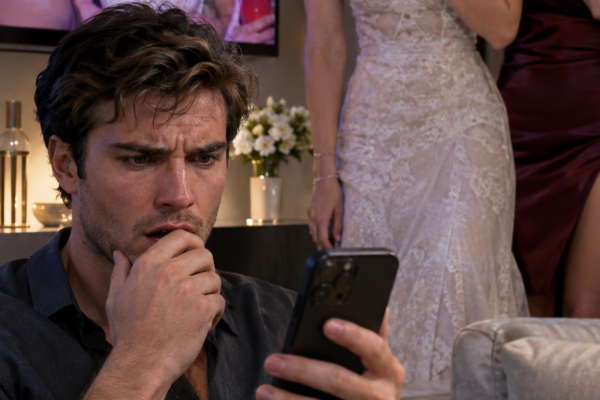
“I Tracked My Wife’s Phone To A Motel On Our Anniversary — I Sent Flowers To Room 237 With A Note…

I Tracked My Wife’s Phone to a Motel on Our Anniversary—So I Sent Flowers to Room 237 With a Note She Could Never Forget
She was lying in another man’s arms when the anniversary flowers arrived.
The card did not accuse her, threaten her, or ask her to come home.
It simply told her that her husband knew exactly where she was.

Scene One — The Flowers
The florist looked from the three crisp hundred-dollar bills on the counter to the address I had written on the order form.
“The Riverside Motel?” she asked. “Room 237?”
“That’s right.”
“And you want two dozen red roses delivered at exactly three?”
“Not before. Not after.”
She adjusted her glasses and read the card again, as though the meaning might change if she studied it long enough.
Happy anniversary, darling. Enjoy your special day. Your husband is thinking of you. Love, Nathan.
Her expression softened with the cautious pity people reserved for strangers who had not yet realized they were being humiliated.
“Sir,” she said quietly, “I don’t mean to pry.”
“It’s our tenth anniversary.”
The florist’s fingers stopped on the keyboard.
For a second, neither of us spoke. Behind her, refrigeration units hummed around rows of lilies and roses, preserving flowers that had already been cut from their roots.
“My wife is celebrating,” I said. “I want her to know I remembered.”
She took the money without asking another question.
At two fifty-eight that afternoon, I was sitting three blocks away in the office of Patricia Harman, a divorce attorney whose calm voice made devastating decisions sound like items on a grocery list.
Patricia turned the final page of the petition toward me.
“Once this is filed, Lauren’s attorney may argue about the house, your retirement account, the commissions she brought into the marriage, and the way you obtained certain records. We’re prepared for that.”
I glanced at the pen beside my hand.
Outside the office window, Richmond traffic moved beneath a white Virginia sky. Cars stopped, started, and changed lanes with no knowledge that the life I had occupied for ten years was about to split into two separate legal histories.
My phone vibrated.
The florist had sent a photograph confirming delivery.
A young motel employee stood outside room 237 holding a glass vase overflowing with roses. The gold numbers on the door were perfectly visible.
Patricia watched my face.
“Is that them?”
I nodded.
“Do you want a minute?”
“No.”
I signed the petition.
At three oh-seven, the flowers reached my wife.
At three eleven, my phone began to ring.
I turned it facedown and signed the next page.
Lauren called again.
Then again.
By the ninth call, Patricia’s assistant had stopped pretending not to notice.
“Are you certain you don’t want to answer?” Patricia asked.
“She spent three months making sure I never knew where she was,” I said. “She can spend one afternoon wondering where I am.”
At three forty-six, Patricia filed the petition electronically.
At three fifty-two, a copy was sent to Lauren’s personal email.
At three fifty-four, the calls stopped.
The silence lasted seven minutes.
Then a message appeared.
Nathan, please tell me you didn’t do what I think you did.
I read it twice.
There had been a time when the word please from Lauren could have changed my mind about almost anything. It had once persuaded me to leave work early, repaint a kitchen, drive through a snowstorm, forgive forgotten birthdays, and spend money we did not have on a real estate course she believed would transform her career.
Now it was only a word on a screen.
I typed four sentences.
Happy anniversary.
Dinner is still at seven.
I’ll be home at six thirty.
We have a great deal to discuss.
Three dots appeared immediately.
They vanished.
They appeared again.
No message came.
Patricia closed the case folder and placed both hands over it.
“She knows.”
“Yes.”
“You understand that panic can make people unpredictable.”
I looked once more at the photograph of room 237.
“I’m counting on it.”
Because the flowers were not the end of my marriage.
They were the moment Lauren finally realized I had been watching the end approach for months.
And she still did not know how much I had discovered.
Scene Two — The Pattern
Three months earlier, I had still believed I was happily married.
Not perfectly married. People who expected perfection usually mistook performance for intimacy. Lauren and I argued about grocery lists, thermostat settings, and whether my habit of answering work emails during dinner counted as dedication or avoidance.
But I believed we were solid.
We had met at seventeen, when she was the girl with silver bracelets and impossible confidence who had walked into our high school statistics class ten minutes late and taken the empty seat beside me.
I helped her pass the course.
She taught me how to dance without staring at my shoes.
At twenty-eight, we married beneath oak trees outside Charlottesville. At thirty-one, we bought a pale blue house in Richmond with a porch Lauren said looked like a promise.
By thirty-eight, I knew the exact sound her key made in our front door.
That was how I first noticed the change.
Lauren began coming home more quietly.
She no longer called my name from the foyer. She slipped inside, removed her shoes, and carried her phone upstairs before she even took off her coat.
On the first Thursday in March, she arrived at nine twenty carrying the sharp scent of rain and a man’s cologne.
“New client?” I asked.
She paused with one hand on the staircase railing.
“What?”
“The cologne.”
For half a second, something crossed her face. Not guilt exactly. Calculation.
She smiled.
“Ethan hugged everyone after the quarterly numbers came in. You know how brokers are.”
I did not know how brokers were, but I knew Lauren.
Her smiles had always reached her eyes when they were real.
That one stopped at her cheekbones.
She went upstairs and showered.
The following Tuesday, she returned late again. Thursday brought another client dinner. The next week came an emergency showing, followed by a networking event, followed by a seller who could only meet after eight.
I did not accuse her.
Accusations changed behavior. I needed to see the behavior before it knew it was being observed.
Lauren and I shared a mobile plan. Years earlier, after she had broken down on an isolated road outside Petersburg, we had enabled location sharing on both phones. She had insisted on it.
“For safety,” she had said.
One Saturday morning, while she was meeting a photographer at a new listing, I opened the family account.
I expected to feel ashamed.
Instead, I felt the same concentration I experienced when a data set contained an anomaly no one else had noticed.
I exported three months of location records and organized them by date and time. Most of the points were ordinary: our house, her office, grocery stores, listings, restaurants, the gym she rarely attended but faithfully paid for.
Then I saw the cluster.
Every Tuesday and Thursday, between approximately six thirty and eight forty-five, her phone stopped at the same address.
The Riverside Motel off Route 64.
I enlarged the map.
The motel sat behind a gas station and a closed furniture warehouse, far from the properties Lauren had claimed to be showing. It was the kind of place designed for motorists who needed a bed for one night—or people who needed anonymity for two hours.
I cross-referenced the dates with her calendar.
Client consultation.
Seller presentation.
Networking dinner.
Property inspection.
Each appointment covered the same window.
Each appointment was a lie.
For eleven minutes, I sat motionless in my office chair.
I had expected the evidence to hurt like a blow. Instead, my body reacted as though the room had quietly lost oxygen. My fingers turned cold. My hearing narrowed until the refrigerator downstairs sounded louder than the traffic outside.
On the desk stood a framed photograph from our ninth anniversary.
Lauren was laughing into the wind. I had one arm around her waist, looking at her instead of the camera.
I turned the photograph facedown.
Then I created a spreadsheet.
Date. Time. Claimed location. Actual location. Duration.
People later called that reaction cold.
It was not coldness.
It was the only structure strong enough to contain what I was feeling.
When Lauren came home that afternoon, she found me making pasta.
She kissed my cheek and reached around me for a piece of garlic bread.
“Productive day?” she asked.
“Very.”
“Find anything interesting?”
I looked at her.
Her hair was tied loosely behind her neck. Her wedding ring caught the kitchen light. She appeared so familiar that for a moment I wondered whether numbers could lie.
Then her phone buzzed.
She glanced down, smiled before she could stop herself, and turned the screen away.
“Just a client,” she said.
I nodded and stirred the sauce.
That evening, she sat across from me and described a fictional couple buying a fictional house in Midlothian.
I watched every movement of her face.
For the first time in our marriage, I understood that Lauren could lie while holding my gaze.
The discovery did not tell me who she was meeting.
It told me something worse.
Whoever he was, she had become comfortable deceiving me for him.
Scene Three — Forty-Seven Photographs
Marcus Bell did not look like the private investigators in movies.
He wore khaki pants, drove a dusty Honda, and kept mints in the cup holder. He had spent twenty-two years with the Richmond Police Department before leaving after a back injury, and he spoke in the restrained tone of a man who had learned that the worst facts did not need decoration.
We met in a diner near the interstate.
I slid the spreadsheet across the table.
Marcus read the first page, then the second.
“You did all this yourself?”
“Yes.”
“You ever follow her?”
“No.”
“Good.”
He tapped one line with his finger.
“Don’t start. People who follow spouses when they’re emotional make mistakes. They get seen, cause scenes, or do something they can’t undo.”
“I need proof.”
He studied me.
“You need proof for court, or proof for yourself?”
“Both.”
“They’re not always the same.”
I understood what he meant two weeks later.
Marcus called on a Friday morning and asked whether I could leave work.
“Is it done?”
“It’s done.”
We met in his small office above a tax preparation business. He locked the door, closed the blinds, and placed a thick manila envelope between us.
“Before you open that,” he said, “understand something. You already know enough to make a decision. The photographs won’t give you peace. They’ll only remove doubt.”
“I’m not looking for peace.”
“What are you looking for?”
“The truth.”
Marcus’s mouth tightened.
“Truth is rarely as clean as people expect.”
There were forty-seven photographs.
Lauren’s white Lexus entering the Riverside parking lot.
Lauren stepping from the car in a fitted navy dress I had never seen.
Lauren walking toward room 237.
A man opening the door.
The first photograph of his face made me stop breathing.
Ethan Voss.
Her broker.
Her mentor.
The man who had toasted Lauren at the company Christmas party and told me I should be proud of how hard she worked.
Ethan was forty-three, polished, married, and known throughout Richmond’s real estate community. His advertisements appeared on benches, mailers, and bus shelters. His smiling face promised integrity, discretion, and results.
In photograph twelve, he placed his hand against the small of my wife’s back.
In photograph nineteen, she laughed while he whispered something into her ear.
In photograph thirty-one, they kissed outside the motel door.
Marcus had included arrival times, departure times, vehicle records, and photographs from four separate meetings.
The final image showed Lauren leaving room 237 alone.
She stood beside her car checking her reflection in the window.
Her wedding ring was in her right hand.
I stared at that photograph longer than all the others.
She had not forgotten the ring. She had removed it, carried it through the affair, and put it back on before coming home.
That small deliberate act hurt more than the kiss.
It meant she had not temporarily lost herself.
She had divided herself.
Marcus leaned back in his chair.
“You know the man?”
“Yes.”
“That can complicate things.”
“He’s her boss.”
Marcus nodded slowly.
“That complicates them more.”
I returned each photograph to the envelope in order.
“Did you see any indication she was being forced?”
Marcus gave me a careful look.
“No visible indication. She arrived voluntarily. Left voluntarily. I saw no confrontation.”
“That isn’t exactly what I asked.”
“No,” he said. “It isn’t.”
I had spent the drive to his office imagining Ethan as a stranger. A faceless man who could be reduced to a role in my wife’s betrayal.
Now he had a name, a company, a wife, two teenage daughters, and a reputation built on handshakes.
The affair had expanded beyond our house.
It touched another family. A business. Clients who trusted both of them. Employees who depended on Ethan’s judgment.
Marcus pushed the envelope toward me.
“There’s one more thing.”
He handed me a printed vehicle report.
The BMW registered to Ethan’s company had been photographed at the motel on all four occasions.
“He used a company vehicle,” Marcus said. “Maybe it means nothing. Maybe it matters to his employer.”
I slipped the report into the envelope.
As I stood, Marcus spoke again.
“Mr. Cross.”
I turned.
“Whatever you do next, decide whether you want justice or pain. They can look similar at the beginning.”
I carried the photographs to my car.
For ten minutes, I sat behind the steering wheel without starting the engine.
Justice or pain.
At that moment, I could not tell the difference.
Then my phone rang.
Lauren’s name filled the screen.
I answered.
“Hey,” she said brightly. “Ethan wants me to attend a regional conference in Charlottesville next weekend. It could be important for my promotion.”
I looked down at photograph thirty-one.
“Will he be there?”
A pause.
“Of course. He’s the broker.”
I closed my eyes.
“Then you should go.”
Her relief traveled through the phone.
“Really?”
“Absolutely.”
What Lauren did not know was that her next lie had already given me another place to look.
Scene Four — The Cost of Betrayal
The Charlottesville conference did exist.
That was the first clever thing about Lauren’s affair. She rarely invented events from nothing. She attached her lies to real schedules, real clients, and real professional obligations.
The conference ran from nine in the morning until four in the afternoon.
Lauren booked a hotel room for two nights.
On our joint credit card.
I found the charge three days later.
Three hundred forty dollars at a boutique hotel several blocks from the conference center. Another one hundred eighty-two dollars at a restaurant with candlelit tables and a wine list longer than its menu. Ninety-five dollars at a lingerie shop in Short Pump.
The lingerie never entered our bedroom.
I spent an entire Sunday reviewing eighteen months of statements.
At first, the affair-related charges seemed scattered. Once organized by date, they formed another pattern.
Meals for two on evenings Lauren claimed to be meeting clients.
Ride-share charges between hotels and restaurants.
A spa treatment in Williamsburg during what she had described as a weekend training event.
Two purchases from a men’s clothing store.
The betrayal had a budget.
Lauren was not merely giving another man her time. She was quietly making me pay for portions of it.
I documented every transaction.
The work steadied me until I found a monthly transfer of eight hundred dollars to an account I did not recognize.
The transfers had begun seven months earlier.
I checked our tax records, loan statements, and banking profile. The destination was a personal checking account in Lauren’s name, opened at another bank.
The balance was not visible to me.
By then, secrecy no longer surprised me. The timing did.
Seven months meant the account predated the motel pattern by four months.
I printed the statements and placed them in the growing case file.
That night, Lauren stood before our bedroom mirror fastening earrings.
“How do I look?”
She wore a green dress I had bought her for her thirty-seventh birthday.
“Beautiful.”
She smiled at my reflection.
“You always say that.”
“I’ve always meant it.”
Her smile faded slightly.
She looked back at the mirror and adjusted an earring that did not need adjusting.
“Ethan thinks I could manage one of the new offices next year.”
“That’s a major promotion.”
“It would change everything.”
“Would it?”
Lauren turned.
“What’s that supposed to mean?”
“More responsibility. More evenings away. More conferences.”
“You knew my career mattered when you married me.”
“I know.”
The defensive edge in her voice arrived before any accusation had been made.
I crossed the room and straightened the chain at the back of her neck.
Our eyes met in the mirror.
“When did Ethan first mention the promotion?”
“Months ago.”
“How many?”
“I don’t know. Four or five.”
The hidden account was seven months old.
The motel visits had begun three months ago.
The timeline contained a gap, and gaps were where concealed decisions lived.
Lauren picked up her purse.
“Don’t wait up.”
“Enjoy dinner.”
She hesitated at the door.
For one impossible second, I thought she might confess.
Instead, she said, “You really are the least jealous man I’ve ever known.”
Then she left.
I waited until her car disappeared before entering my office.
Lauren used our shared desktop computer for business whenever her laptop battery died. Her email account often remained signed in because she hated entering passwords. That evening, a synchronization notification appeared in the corner of the screen.
A folder titled Regional Expansion had updated.
I opened it.
Most of the documents were ordinary: projections, marketing proposals, staffing plans.
Then I found a draft compensation agreement.
Lauren Cross was listed as the future managing agent of a new office scheduled to open the following spring.
The salary was higher than she had told me.
The bonus structure was extraordinary.
At the bottom of the final page, under “Additional Conditions,” one sentence had been highlighted.
Agreement subject to final approval by Regional Broker Ethan Voss.
Attached to the document was an email chain.
Lauren had written:
I have done everything you asked. I need to know you’re not going to change your mind.
Ethan had replied:
Stop worrying. As long as we understand each other, the office is yours.
I read the exchange repeatedly.
It did not sound romantic.
It sounded transactional.
For the first time, another possibility entered the room.
Perhaps Lauren had not begun the affair because she loved Ethan.
Perhaps she had begun because he controlled something she wanted.
That possibility should have made the betrayal easier to understand.
Instead, it raised a darker question.
What exactly had Ethan asked her to do?
Scene Five — The Emails
I met Patricia Harman on a gray Monday morning.
Her office occupied the seventh floor of a brick building overlooking the James River. The waiting room contained no family photographs, no decorative quotations about new beginnings, and no music.
Patricia did not sell comfort.
She sold preparation.
I brought three binders.
The first contained location records and Marcus’s photographs. The second held financial statements. The third held emails and employment documents I had accessed through accounts and devices lawfully shared within our household.
Patricia opened the first binder.
By page ten, she removed her glasses.
“Mr. Cross, most clients arrive with emotional descriptions and six screenshots they can’t authenticate. You have indexes.”
“I work with data.”
“You work with fear by organizing it.”
The accuracy of the statement irritated me.
“What can I prove?”
She leaned back.
“You can prove a sustained extramarital relationship far more convincingly than most people who walk through that door. You can also establish that marital funds may have been spent on it. That will matter during negotiation.”
“And the hidden account?”
“We can seek disclosure. Do not attempt to access it yourself.”
“I haven’t.”
“Good. Your strongest position depends on remaining more disciplined than everyone else involved.”
Patricia studied the expansion agreement.
“This concerns me.”
“Because Ethan controlled the promotion?”
“Because this may be more than an affair. If a supervisor tied professional advancement to a sexual relationship, the company will treat it as a serious issue. If Lauren participated voluntarily to gain an advantage over colleagues, that creates another kind of problem.”
“So which is it?”
“We don’t know yet.”
I disliked the answer, although it was honest.
Patricia closed the binder.
“What outcome do you want?”
The question sounded simple. It was not.
Part of me wanted the house, every dollar, and the public collapse of both careers. Another part wanted to return to the morning before I opened the location history.
“I want a divorce.”
“That’s the legal action. I’m asking about the outcome.”
“I don’t want to finance the life she was preparing to have without me.”
“That is specific.”
“I don’t want alimony. I don’t want to lose my retirement account. I don’t want her hidden decisions converted into my financial obligations.”
Patricia nodded.
“And Ethan?”
“He has a wife.”
“That wasn’t my question.”
I looked toward the river.
“I want the truth to reach everyone whose decisions depend on it.”
“That can be legitimate. It can also become retaliation if handled recklessly.”
“I’m not reckless.”
“No,” Patricia said. “You are angry enough to become dangerous while remaining calm enough to deny it.”
The words landed harder than an accusation.
She continued before I could respond.
“If information is relevant to your divorce, we use it. If information suggests workplace misconduct, we preserve it. We do not threaten exposure in exchange for settlement. We do not exaggerate. We do not send anonymous accusations we cannot support.”
“Understood.”
“Most importantly, we do not confuse punishment with protection.”
I thought of Marcus asking whether I wanted justice or pain.
Apparently, my face answered before I did.
Patricia’s voice softened.
“You can end a marriage without becoming the worst thing that happened inside it.”
I signed the representation agreement.
Over the next ten days, we documented everything carefully.
That was when I found the recovered email archive on the shared desktop.
Hundreds of messages had synchronized from Lauren’s business account before she logged out. Many were administrative. Buried among them was a private thread between Lauren and Ethan.
Some messages were intimate.
Others were cruel.
Nathan asked whether I wanted to renew our anniversary vows. I almost laughed. He still thinks reliability is a personality.
Ethan responded:
Reliability is useful in an accountant, not a husband.
Lauren corrected him:
Data analyst. See? Even you forget because it’s so boring.
I stopped reading.
My hand had begun trembling against the mouse.
For weeks, I had absorbed the physical evidence with almost mechanical calm. The motel photographs proved what she had done.
Those three lines revealed how she had justified it.
She had turned my loyalty into a defect because condemning my steadiness made her deception easier to admire.
I stood, crossed the office, and pressed both palms against the window.
Downstairs, Lauren moved through the kitchen humming.
I could smell onions cooking in butter.
It was a meal she made when she wanted the house to feel warm.
I returned to the computer.
Farther down the thread, the tone changed.
Lauren had written:
You said the account would be clean before the audit. I transferred my portion like you told me.
Ethan replied:
Stop discussing this over email.
Her answer came four minutes later.
Then answer your phone. I’m not losing everything because you got careless.
I printed the entire thread.
The affair was no longer the largest secret in our marriage.
Scene Six — The Account
Patricia read the new messages in silence.
When she reached the last page, she pressed the intercom button and asked her assistant to close the door.
“What audit?” she asked.
“I don’t know.”
“What account?”
“I don’t know.”
“Did you search Lauren’s work systems?”
“No. These emails synchronized to our shared computer.”
“Keep the device unchanged. Do not forward anything from her account. We may need a forensic professional to preserve what is already available.”
The formality in her voice told me the situation had shifted.
“What do you think happened?”
“I think speculation will hurt you. We follow documents.”
We followed them.
Through lawful financial disclosure connected to the divorce preparation, Patricia identified the bank holding Lauren’s private account. We could not see its full records until formal proceedings, but the transfers from our joint funds were clear.
Eight hundred dollars each month.
Seven payments.
Five thousand six hundred dollars.
The phrase my portion suggested she had sent additional money from somewhere else.
I reviewed every email and statement again.
The answer appeared in plain sight.
Several real estate marketing reimbursements had been deposited into our joint account and transferred out within days. The descriptions were vague—photography, staging, client event expenses—but the amounts did not correspond with Lauren’s normal business costs.
Patricia advised me not to investigate further on my own.
I listened.
For once, restraint felt more difficult than discovery.
At home, Lauren grew unusually affectionate.
She cooked my favorite meals. She suggested a weekend in the mountains. She rested her head on my shoulder while we watched television, but her body remained slightly rigid, as though she were performing tenderness from memory.
One night, she reached for my hand.
“Do you ever feel like we’ve become predictable?”
I kept my eyes on the television.
“Predictability isn’t always bad.”
“It can be.”
“Are you unhappy?”
The question silenced her.
She withdrew her hand.
“I didn’t say that.”
“I asked.”
Lauren rose and carried her wineglass to the kitchen.
“You always do this.”
“Do what?”
“Turn feelings into yes-or-no questions.”
I followed her.
“What answer are you trying not to give?”
She placed the glass in the sink too hard. The stem struck the porcelain but did not break.
“I want more.”
“More what?”
“More life. More risk. More excitement. I don’t know.”
“You know.”
She faced me.
For one second, naked fear moved across her expression.
Then she laughed.
“God, Nathan. Not everything is a data problem.”
“No. But problems usually leave data.”
Her face changed.
Only slightly.
That was the first moment I knew she suspected I had begun looking.
“What does that mean?” she asked.
“It means vague dissatisfaction is often attached to specific decisions.”
Lauren stared at me.
The refrigerator motor clicked off, leaving the kitchen unnaturally quiet.
Finally, she picked up her glass.
“You’re impossible to talk to when you get like this.”
She walked upstairs.
I remained beside the sink, watching the unbroken glass.
The next morning, she changed the password on her business email.
Two days later, her Tuesday motel visit was canceled.
The Thursday meeting happened as usual.
She was not ending the affair.
She was adjusting the pattern.
On Friday, Patricia called.
“We received preliminary records from opposing financial disclosure.”
“Already?”
“Lauren consulted an attorney yesterday.”
I sat straighter.
She knew something was coming.
“What did the records show?”
“The private account contains slightly over forty-one thousand dollars.”
My grip tightened around the phone.
“She transferred only fifty-six hundred from our account.”
“The rest appears to include bonus payments and multiple deposits from an entity called Voss Marketing Solutions.”
“Ethan.”
“Possibly. We need documentation.”
I stared at the calendar hanging beside my desk.
Our anniversary was twelve days away.
“What happens if she moves the money?”
“We request restrictions when we file.”
“And if she files first?”
“She may gain some procedural momentum, but your evidence does not disappear.”
I thought of the canceled Tuesday meeting, the changed password, the attorney.
Lauren had sensed movement on the board.
“Then we file on June fourteenth.”
Patricia was silent.
“Your anniversary.”
“Yes.”
“Are you choosing that date for legal reasons?”
“No.”
“Then make sure the symbolism does not interfere with the strategy.”
“It won’t.”
After the call, I opened Lauren’s calendar.
June fourteenth showed a client meeting from two until five.
The location field was blank.
But the repeating pattern had already told me where she intended to be.
Room 237.
That was when the idea of the flowers came to me.
Not as revenge.
Not at first.
I wanted one unmistakable message delivered into the lie she had constructed.
I know where you are.
I know who you are with.
And while you are deciding what to say, I am already leaving.
Scene Seven — Happy Anniversary
On the morning of June fourteenth, I woke before the alarm.
Lauren slept on her side with one hand beneath her cheek. In the soft blue light before sunrise, she looked almost exactly as she had at twenty-eight.
The illusion lasted until her phone vibrated under the pillow.
Her eyes opened immediately.
She saw me watching.
“Work,” she murmured.
“At five forty in the morning?”
“Ethan’s finalizing numbers for the expansion.”
She took the phone into the bathroom.
I heard the lock turn.
Downstairs, I made coffee and placed a small wrapped box beside her cup.
Lauren entered the kitchen wearing a cream blouse and dark trousers. She stopped when she saw it.
“What’s that?”
“An anniversary gift.”
Her fingers remained on the back of the chair.
“We said we weren’t doing gifts.”
“You said you didn’t need anything expensive.”
“Nathan.”
“Open it.”
She sat slowly.
Inside the box was a silver fountain pen engraved with the date of our wedding.
Lauren held it between her fingers.
“It’s beautiful.”
“I thought you could use it when you sign the documents for the new office.”
Her gaze snapped toward mine.
“What documents?”
“The promotion you mentioned.”
“Oh.”
A flush rose along her throat.
“Right.”
I poured coffee.
“Do you still want dinner tonight?”
“Of course.”
“What time will your client meeting end?”
“Five. Maybe five thirty.”
“I made a reservation for seven.”
“That’s perfect.”
She came around the table and kissed my forehead.
Her lips lingered half a second longer than usual.
Guilt made people generous with gestures that cost nothing.
“Happy anniversary,” she whispered.
“Happy anniversary.”
She left at one thirty.
I watched from the upstairs window as she placed a garment bag across the rear seat of her Lexus.
There was no reason to bring a change of clothes to a client meeting.
At one forty-five, Marcus confirmed she was driving toward the Riverside Motel.
At two oh-six, she entered room 237.
Ethan arrived eleven minutes later.
I went to the florist.
At three, the roses were delivered.
The florist’s confirmation photograph reached me at three oh-seven.
Marcus sent another image at three twelve.
Lauren stood just inside the motel doorway holding the flowers. Her face was drained of color. Ethan was visible behind her, shirt collar open, reaching for the card.
Even in a still photograph, I could see the moment control shifted.
For three months, Lauren and Ethan had chosen the time, place, and language of their deception.
Now I had entered the room without opening the door.
My first missed call came at three eleven.
The second at three thirteen.
By three twenty, there were eight.
At three forty-six, Patricia filed the divorce petition and a request preserving marital assets.
At three fifty-two, Lauren received electronic notice.
The calls stopped.
At four seventeen, Ethan called me.
I did not answer.
His message arrived moments later.
Nathan, this is Ethan. There has clearly been a misunderstanding. Call me before you do anything that damages innocent people.
I showed Patricia.
“Innocent people?” I asked.
“Do not respond.”
“He thinks he can manage me.”
“He manages transactions for a living. He will try to convert this into one.”
At five twelve, Lauren’s private account attempted to transfer thirty-five thousand dollars to another institution.
The preservation request had already been received.
The transfer was flagged.
At five nineteen, Patricia’s office received an email from Lauren’s newly retained attorney demanding that I cease “unlawful surveillance, harassment, and interference with professional relationships.”
Patricia read it once.
“She had this lawyer prepared.”
“How long?”
“We’ll find out.”
At six fourteen, Marcus reported that Ethan had left the motel alone.
Lauren remained inside for another twenty-three minutes.
Perhaps she was crying.
Perhaps she was calling her attorney.
Perhaps she was looking at two dozen red roses and trying to calculate how the husband she had called boring had managed to move faster than both of them.
At six thirty, I returned home.
Lauren’s car was already in the driveway.
The fountain pen box lay open on the kitchen table.
Beside it sat the roses from room 237.
She had brought them home.
That was the first thing that frightened me.
The second was the man sitting beside her.
Ethan Voss had decided to come with her.
Scene Eight — The Man in My House
Ethan rose when I entered.
He had changed into a charcoal suit, but his hair was still damp from a hurried shower. His expression held the practiced concern of a man accustomed to calming unhappy clients before they terminated contracts.
“Nathan,” he said. “Thank you for agreeing to talk.”
“I didn’t.”
Lauren stood near the fireplace with her arms folded over her stomach.
Her makeup had been repaired, but her eyes were swollen.
“We need to handle this like adults,” Ethan continued.
I placed my keys on the entry table.
“You entered my house without permission.”
“Lauren invited me.”
“Lauren no longer has authority to invite her lover into a conversation about our marriage.”
His jaw tightened.
“This language isn’t helpful.”
Neither was his presence, but that appeared to be the point.
Ethan believed that if he stood beside Lauren, framed the affair as confusion, and made me appear unstable, he could control the first confrontation.
I looked at my wife.
“Did you ask him to come?”
She lowered her eyes.
“He said he could explain.”
“Can’t you?”
“Nathan, please.”
Ethan stepped closer.
“What happened between Lauren and me was complicated.”
“Room 237 is inexpensive, not complicated.”
Lauren flinched.
Ethan’s concern hardened.
“You have been tracking her phone, accessing private communications, and following us. Before you make accusations, you should understand the legal exposure you’re creating for yourself.”
I almost admired the efficiency of the threat.
“You should speak to my attorney.”
“We don’t need attorneys.”
“I filed for divorce this afternoon.”
Lauren pressed one hand against the mantel.
Ethan’s face remained composed, but his pupils widened.
“You what?”
“You received the petition,” I told Lauren.
Her voice broke.
“I thought it was a draft.”
“It was filed at three forty-six.”
“You did all this without talking to me?”
“You had hundreds of conversations about our marriage with Ethan. I assumed you had finished speaking.”
She crossed the room.
“This is not what you think.”
I took the first binder from my briefcase and placed it on the table.
“Tuesday, March tenth. Riverside Motel, six forty-one to eight thirty-two. Thursday, March twelfth. Six thirty-eight to eight fifty. Tuesday, March seventeenth—”
“Stop.”
Lauren’s voice came out thin.
I opened the binder to Marcus’s photographs.
Ethan did not look at them.
That told me he already knew what they contained.
I turned to the financial section.
“Charlottesville hotel. Williamsburg spa. Restaurants. Clothing. Forty-one thousand dollars in a private account. Payments from Voss Marketing Solutions.”
Ethan’s expression finally changed.
He looked at Lauren.
“You told him about the account?”
“No.”
“Then how—”
“I find patterns,” I said.
Lauren sank into a chair.
Ethan recovered first.
“The payments were legitimate consulting compensation.”
“Then your company will have documentation.”
“They were paid through a separate entity.”
“I noticed.”
He moved toward the table.
“You need to understand that distributing confidential business information could create substantial liability.”
“I have distributed nothing.”
“Yet.”
“Is that why you came? To frighten me before I showed someone?”
“I came to prevent three people from destroying their lives over a private matter.”
“Four.”
Ethan’s face tightened.
“Excuse me?”
“Your wife.”
The room changed.
Ethan stared at me with the stillness of an animal hearing movement behind it.
Lauren whispered, “Nathan, don’t.”
I looked at her.
“Does Claire know where her husband spends Tuesday and Thursday evenings?”
“This has nothing to do with her.”
I had not believed I could be surprised again.
“Nothing to do with her?”
Lauren covered her mouth.
Ethan stepped between us.
“We are prepared to make reasonable concessions.”
The sentence was so precise that I understood immediately.
He was not here to save Lauren.
He was here to negotiate my silence.
“What concessions?”
“Nathan,” Lauren said sharply.
I ignored her.
Ethan adjusted one cuff.
“Lauren will cooperate on an efficient divorce. No unnecessary disputes. No public allegations. Everyone moves forward.”
“And the hidden money?”
“Lauren retains her professional earnings. You retain your accounts.”
“My retirement savings are marital. Her secret payments are professional. Convenient.”
“This can be resolved.”
“Was the new office part of the resolution?”
Lauren went motionless.
Ethan looked at her again.
That second glance carried accusation.
I opened the third binder and placed the compensation agreement beside the emails.
As long as we understand each other, the office is yours.
For the first time, Ethan appeared afraid.
“You had no right to access those.”
“They synchronized to a shared household computer.”
“Those communications are confidential.”
“Then perhaps you should not have used them to discuss an affair, hidden payments, to discuss an affair, hidden payments, and an audit.”
Lauren began crying silently.
Ethan’s voice lowered.
“You don’t know what you’re looking at.”
“Then explain it.”
He did not.
“Tell him,” Lauren whispered.
Ethan turned on her.
“This is not the time.”
“You said you would handle it.”
“I am handling it.”
“No. You’re handling me.”
The words seemed to surprise all three of us.
Lauren wiped her face with both hands.
“I want him to leave.”
Ethan stared at her.
“Think carefully.”
“I have been thinking carefully for seven months.”
There it was.
The missing beginning.
The private account had opened seven months earlier because whatever bound them together had started then.
Ethan took his keys from the table.
At the doorway, he faced me.
“If you involve my family or my company, I will respond aggressively.”
I held his gaze.
“I expect you to.”
He left.
The door closed.
Lauren and I stood in the house we had bought together, surrounded by roses from the motel where she had betrayed me.
“Seven months,” I said.
She lowered herself into the chair Ethan had vacated.
“The affair started three months ago.”
“What started seven months ago?”
Her shoulders shook once.
Then she told me the truth.
Or the first version of it.
Scene Nine — The First Secret
Seven months earlier, Lauren had discovered irregular reimbursements in one of Ethan’s branch accounts.
She had been preparing year-end commission records when several marketing expenses appeared under agents who denied requesting them. The money had moved through vendor invoices and returned through Voss Marketing Solutions, an entity Ethan owned separately from the brokerage.
Lauren confronted him.
According to her, Ethan did not deny it.
He told her the transactions were temporary accounting adjustments connected to the planned expansion office. He said senior leadership knew, but formal approval had been delayed.
“I believed him at first,” she said.
“You transferred money for him.”
“He said it had to look like agents were investing in the expansion.”
“Through private accounts?”
“I know how it sounds.”
“It sounds like money was being concealed.”
Lauren pressed her fingers against her temples.
“He promised everything would be documented later.”
“And the eight hundred dollars from our account?”
“He said every future manager had to contribute.”
“There were other future managers?”
She did not answer.
I pulled out the chair across from her.
“When did he connect the money to your promotion?”
“Not directly.”
“Lauren.”
“He said loyalty mattered. He said people who helped build the office would be rewarded.”
“So you gave him money.”
“At first.”
“What happened after that?”
Her gaze drifted toward the roses.
“I started asking questions. The audit was getting closer. I told him I wanted my money back.”
“And he invited you to room 237?”
“No.”
The speed of her answer made it sound rehearsed.
She stood and walked to the window.
“The first time happened after a dinner in March. He had been drinking. I had been drinking. We talked about the pressure, the office, everything. He kissed me.”
“Did you leave?”
“No.”
“Did he threaten you?”
“Not then.”
“Did you kiss him back?”
Lauren closed her eyes.
“Yes.”
The honesty was too late to be merciful, but it was cleaner than another excuse.
She continued.
“The next morning, I told him it could never happen again. He said he understood. Then he reminded me that my name was connected to the transfers.”
A bitter laugh escaped her.
“He didn’t have to threaten me clearly. He just kept mentioning how bad the records would look if senior management misunderstood.”
“And you kept meeting him.”
“At first, I thought I could keep him calm until the expansion opened and the accounts were corrected.”
“By sleeping with him twice a week?”
Her face folded.
“I don’t know when fear became an excuse.”
The sentence stopped me.
Not because it absolved her.
Because it was the first thing she had said that sounded unpracticed.
Lauren sat again.
“The first few times, I told myself I was protecting my career. Then he made me feel chosen. Important. He said I was wasted here. He said you didn’t see what I could become.”
“And you believed him.”
“I wanted to.”
“Did you love him?”
“No.”
“Did you tell him you loved him?”
Her silence answered.
I opened the email binder.
“You called me boring.”
Lauren looked away.
“You read that?”
“Yes.”
“I was trying to impress him.”
“By humiliating me?”
“I hated myself every time.”
“Not enough to stop.”
“No.”
The word entered the room quietly.
I had spent months imagining a confrontation filled with denial. Her admission was worse because it left nothing to fight.
She moved one hand toward mine.
I withdrew before she touched me.
“Did you intend to leave?”
“I didn’t know.”
“The private account contains forty-one thousand dollars.”
“Most of that is money Ethan paid me.”
“For what?”
“Consulting. Recruiting agents. Preparing the expansion.”
“Was it declared?”
“I don’t know.”
“You’re a licensed real estate agent. You know whether forty thousand dollars in secret payments should be documented.”
Her mouth trembled.
“I was going to fix it.”
“When?”
“After the office opened.”
“And if I never discovered the affair?”
She stared at the floor.
“I don’t know.”
That answer told me more than a confession.
Lauren had not built an exit because she had chosen Ethan over me. She had built options because she wanted to preserve whichever future benefited her most.
If Ethan delivered the office, she could leave me with money and status.
If he failed, she could return to our marriage and call the affair a mistake no one knew about.
I had not been her husband.
I had been her safest remaining option.
“You need to leave tonight,” I said.
Her head lifted.
“This is my house too.”
“Then sleep in the guest room. Tomorrow, communicate through attorneys.”
“Nathan, I told you the truth.”
“You told me enough truth to explain your fear. Not enough to repair what you chose.”
She stood.
“We can still stop this.”
“The petition is filed.”
“Petitions can be withdrawn.”
“I’m not withdrawing it.”
Her face hardened.
“So that’s it? Ten years erased in one afternoon?”
“No. It took seven months to erase them.”
She flinched as though I had struck her.
I gathered the binders.
Behind me, Lauren whispered, “Ethan has copies of things with my signature.”
I turned.
“What things?”
“I don’t know all of them.”
“What did you sign?”
“He said they were expansion authorizations.”
“Lauren.”
She looked directly at me.
“I think he may be preparing to blame everything on me.”
The affair had destroyed our marriage.
The documents bearing my wife’s signature might destroy the rest of her life.
Scene Ten — The Counterattack
Ethan acted the following morning.
At eight twelve, Lauren’s company disabled her email access.
At eight twenty, the managing director called and placed her on administrative leave.
At eight thirty-seven, Ethan sent a formal complaint to the brokerage’s legal department accusing Lauren of unauthorized financial activity, misuse of company resources, and an “obsessive personal attachment” that had compromised her professional judgment.
He described himself as the victim of her advances.
Lauren read the complaint in Patricia’s conference room.
Her lips moved soundlessly over several lines.
“He wrote this last night.”
Patricia looked at her.
“You cannot know when it was drafted.”
“I know how he writes.”
“He included copies of transfers authorized by you.”
“Because he told me to authorize them.”
“Do you have evidence?”
“The emails.”
“Some help you. Some damage you.”
Lauren’s attorney, Daniel Price, sat beside her. He was younger than Patricia and visibly irritated by the joint meeting.
“My client’s employment dispute is separate from the divorce.”
“No,” Patricia said. “The hidden compensation, marital transfers, and credibility issues overlap. Pretending otherwise will waste time.”
I remained at the far end of the table.
It was the first time Lauren and I had seen each other since the confrontation.
She wore the same navy suit she had used for closings. Without makeup, she looked older and strangely smaller, but I did not allow pity to rewrite facts.
Daniel turned toward me.
“Mr. Cross, have you contacted the brokerage?”
“No.”
“Ethan Voss’s family?”
“No.”
“Any clients or colleagues?”
“No.”
“Do you intend to?”
“Relevant evidence will go through appropriate channels.”
“That sounds like a threat.”
“It sounds like an answer you don’t like.”
Patricia touched the table once.
“Let’s stay useful.”
Lauren pushed Ethan’s complaint away.
“He planned this.”
“Possibly,” Patricia said. “The timing supports that interpretation, but we prove planning through evidence.”
Lauren looked at me.
“You have his emails.”
“I have emails that synchronized before you changed the password.”
“There are messages where he told me what to approve.”
“There are also messages where you asked whether the account would be clean before the audit.”
“I was scared.”
“You were participating.”
“I know.”
Daniel placed a hand near Lauren’s arm.
“Do not make additional admissions.”
She pulled away from him.
“I am tired of people telling me which part of the truth is useful.”
Her eyes met mine.
“Nathan, he is going to say I designed everything.”
“Did you?”
“No.”
“Did you know it was improper?”
“Eventually.”
“And you continued.”
“Yes.”
The room became silent.
It was the most damaging answer she could have given and the first one that made me believe she might finally understand what honesty cost.
Patricia folded her hands.
“Mrs. Cross, the brokerage will conduct its own investigation. Your cooperation may matter. Concealment will make your position worse.”
Lauren laughed once without humor.
“Cooperation. That’s what Ethan called it too.”
After the meeting, I waited for the elevator alone.
Lauren stepped into the hallway.
“Nathan.”
I pressed the button.
“I know you hate me.”
“I don’t.”
“That’s worse.”
The elevator doors opened, but neither of us moved.
“I need your help,” she said.
“With the investigation?”
“With proving he controlled the payments.”
“You have an attorney.”
“You understand the records better than anyone.”
“You spent months mocking me for that.”
Tears filled her eyes, but she did not let them fall.
“I know.”
I entered the elevator.
She caught the door with one hand.
“I’m not asking you to forgive me.”
“What are you asking?”
“Don’t let him make me the only criminal in a scheme he built.”
The word criminal tightened something in my chest.
I had wanted consequences.
I had not pictured prison.
“You made choices,” I said.
“Yes.”
“He made choices too.”
“Yes.”
“Then tell the truth and let the records divide responsibility.”
“What if the records don’t?”
The elevator alarm sounded softly.
I looked at the woman who had shared half my life.
“I won’t lie for you.”
“I’m not asking you to.”
“But I won’t hide evidence for him either.”
Her grip loosened.
The doors closed between us.
That afternoon, Patricia received a subpoena request from the brokerage seeking copies of relevant financial communications connected to Lauren and Ethan.
Before we could respond, another email arrived.
This one came from Claire Voss.
Ethan’s wife already knew my name.
And she wanted to meet me alone.
Scene Eleven — The Other Wife
Claire Voss chose a quiet café near the Virginia Museum of Fine Arts.
She was forty-one, composed, and dressed in a pale gray coat despite the warmth. I recognized her from Ethan’s company Christmas party, where she had spent most of the evening asking younger agents about their children while her husband accepted compliments.
She did not order coffee.
She placed her phone on the table and looked directly at me.
“How long?”
“Approximately three months.”
Her face remained still.
“How certain are you?”
“I have photographs, location records, financial records, and messages.”
“Does Lauren admit it?”
“Yes.”
Claire nodded once.
“I found the motel receipt in February.”
My answer caught in my throat.
“February?”
“Room 237. He said he had stopped because a storm made driving home unsafe after a listing dinner.”
The documented affair with Lauren had begun in March.
“Was he alone?”
“I don’t know.”
Claire removed a folded sheet of paper from her purse.
The receipt showed a Tuesday-night stay in February. Two guests. Cash deposit.
“I believed him because I wanted to believe the version that allowed me to sleep.”
Her fingers rested on the receipt.
“Last year, there were messages from another agent. He said she was unstable. Before that, an assistant left the company suddenly. Ethan told me she had stolen client information.”
A pattern.
Not proof, but a pattern.
“Did you confront him about Lauren?”
“Yesterday. He said she became obsessed with him after he rejected her.”
“That is what he told the company.”
Claire smiled faintly.
“He always prepares one explanation for every audience.”
She unlocked her phone.
On the screen was a message Ethan had sent her at four twenty on our anniversary.
Lauren’s husband has been secretly tracking her and is threatening our family. I may need you to confirm I was home on certain evenings.
Claire looked at me.
“He wanted me to provide an alibi.”
“What did you say?”
“I asked which evenings.”
“He answered?”
“He sent dates.”
She turned the phone toward me.
The dates matched four motel visits Marcus had photographed.
Ethan had created evidence of his own fear by asking his wife to lie about specific nights.
“May I send this to my attorney?” I asked.
“Yes.”
“Why are you helping me?”
Claire looked through the window at pedestrians moving beneath the trees.
“For fifteen years, I thought surviving his lies made me strong. It only made me useful.”
The sentence stayed between us.
“I’m sorry,” I said.
“So am I.”
She finally ordered tea.
Over the next hour, we compared facts without discussing intimate details. Claire knew about Voss Marketing Solutions. Ethan had told her it handled advertising contracts and produced modest supplemental income.
The previous year, however, the entity had paid for their daughters’ tuition and a renovation to their house.
“More than modest,” she said.
She also knew about the proposed expansion office.
“He said the new manager was a man from Norfolk.”
“Lauren’s agreement names her.”
Claire’s expression hardened.
“He promised positions to more than one person.”
The possibility changed the case again.
If Ethan had offered the same office to multiple agents, the promotion was not merely compensation for Lauren’s cooperation. It was bait.
Claire scrolled through old family calendar entries.
“There was a company retreat in September. Ethan stayed an extra night.”
“Lauren’s hidden account opened in November.”
“He met with an accountant in October. I remember because he canceled our anniversary dinner.”
The irony was almost obscene.
Before leaving, Claire slid the motel receipt toward me.
“Keep a copy.”
“Are you filing for divorce?”
“I met with an attorney this morning.”
Her voice held no triumph.
Only exhaustion.
At the door, she paused.
“Mr. Cross, I need to ask you something.”
“Nathan.”
“Did you send the flowers?”
I nodded.
For the first time, Claire almost smiled.
“Ethan hates flowers. He says they are expensive things already dying.”
“That sounds like him.”
“He brought the roses home.”
I frowned.
“Lauren brought them to our house.”
“Not all of them.”
Claire opened her phone and showed me a photograph taken in Ethan’s kitchen.
A red rose lay crushed in the garbage disposal.
Beside it was the anniversary card bearing my name.
Ethan had taken the card from room 237 before leaving.
He had brought it home, perhaps intending to destroy it.
Instead, Claire had found it.
The note meant for my wife had reached his.
And now both marriages were moving toward the same courtroom.
Scene Twelve — The Audit
The brokerage hired an outside forensic accounting firm.
For three weeks, investigators interviewed agents, reviewed reimbursements, reconstructed commission adjustments, and compared payments from Voss Marketing Solutions with internal company records.
Lauren cooperated.
Ethan did not.
Through his attorney, he claimed the private company had performed legitimate marketing services. He described undocumented payments as referral fees and blamed administrative errors on Lauren.
Then the investigators found duplicate invoices.
Properties that had been photographed once were billed twice. Client events that never occurred generated catering expenses. Staging reimbursements were approved for vacant homes.
The money traveled through Voss Marketing Solutions.
Portions returned to Ethan.
Smaller portions were paid to selected agents, including Lauren.
Some agents believed the money represented bonuses.
Others had never received it.
Lauren had approved nine transactions.
She had questioned three.
She had personally benefited from five.
The facts did not make her innocent.
They made her useful.
At the disciplinary interview, Lauren admitted she had suspected misconduct by December but continued approving documents because Ethan controlled her promotion and had implied she would share responsibility if the scheme was discovered.
She also admitted the affair.
The company’s attorney asked whether the relationship had been consensual.
Lauren sat very still.
“The first kiss was consensual,” she said. “The first motel meeting was consensual. After that, he used the financial records to remind me what I could lose.”
“Did he explicitly threaten you?”
“No.”
“Did you believe you could refuse him?”
“Yes.”
The answer surprised everyone.
Lauren looked toward the recorder.
“I believed I could refuse him. I was afraid to. Those are not the same thing.”
It was the most honest statement she gave during the entire investigation.
She did not present herself as powerless.
She described how fear, ambition, attraction, and self-interest had become tangled until she could no longer identify which motive controlled her.
She had wanted the office.
She had wanted Ethan’s approval.
She had wanted excitement.
Later, she had wanted escape.
Each desire had made the next compromise easier.
Ethan’s attorney attempted to portray her admission as proof that she alone had designed the transactions.
Then Claire provided his messages requesting false alibis.
Marcus provided time-stamped photographs of Ethan arriving at the motel in a company vehicle.
Patricia provided authenticated emails discussing the audit and expansion agreement.
Another agent came forward.
Her name was Marissa Lane. Two years earlier, Ethan had promised her a leadership role, begun a relationship, and later accused her of mishandling client data when she tried to end it.
Marissa had signed a confidentiality agreement when she left.
The company could no longer treat Lauren as an isolated problem.
Ethan was suspended.
Two days later, his photograph disappeared from the brokerage website.
A week later, the company terminated him for financial misconduct, undisclosed conflicts of interest, misuse of company resources, retaliation, and violations of supervisory policy.
Lauren was also terminated.
Her licensing board opened a review into the financial approvals bearing her signature.
When she received the notice, she called me for the first time in twenty-six days.
I almost let it go to voicemail.
“Nathan.”
Her voice sounded distant.
“I lost my job.”
“I heard.”
“My license may be suspended.”
“I heard that too.”
She waited for comfort I no longer knew how to provide.
“They said cooperating helped.”
“It probably did.”
“But it didn’t save me.”
“No.”
She inhaled unevenly.
“Ethan told everyone I created the invoices.”
“The records proved otherwise.”
“Not completely.”
“No.”
Silence stretched across the line.
“I keep thinking about the morning of our anniversary,” she said. “You gave me that pen.”
I looked at the fountain pen on my office desk. Lauren had left it behind when she moved into a temporary apartment.
“I thought it was a message,” she continued.
“It was a gift.”
“That makes it worse.”
“Why?”
“Because part of you still believed in me that morning.”
I did not answer.
The truth was more complicated.
I had bought the pen before discovering the affair. By our anniversary, it had become a final gesture toward the woman I thought I had married.
Lauren whispered, “I’m sorry.”
This apology did not contain explanations, demands, or promises.
It arrived too late.
But it was real.
“I know,” I said.
“Is there any chance—”
“No.”
She began to cry.
I closed my eyes.
“I don’t want you destroyed, Lauren.”
“You sent flowers to the room.”
“I wanted you to know I knew.”
“You filed the same day.”
“I wanted out.”
“You gave the company evidence.”
“I gave investigators records they legally requested.”
“And Claire?”
“She found the card Ethan took from the motel.”
Lauren breathed in sharply.
For the first time, she understood that the collapse had not come from one act of revenge.
It had come from every lie intersecting with another lie until none could remain standing.
“I thought you planned all of it,” she said.
“I planned the divorce.”
“What about everything else?”
“You and Ethan planned that.”
After the call, Patricia sent me a message.
Lauren’s attorney had requested mediation.
She was prepared to surrender her claim to the house.
But she wanted something in return.
Scene Thirteen — The Price of Silence
The mediation took place in a windowless conference center where every room was named after a Virginia river.
Lauren and Daniel sat in the James Room.
Patricia and I waited in the York Room.
The mediator moved between us carrying proposals, counterproposals, and the emotional wreckage of ten years translated into percentages.
Lauren offered to waive alimony.
She would relinquish her claim to my retirement account.
She would accept a reduced share of the home equity.
In return, she wanted confidentiality.
Not ordinary privacy concerning financial terms.
She wanted me prohibited from discussing the affair, the motel, the hidden account, Ethan, or the company investigation with anyone not legally required to know.
Patricia read the proposal and looked at me.
“She is afraid of reputational consequences.”
“Some consequences already exist.”
“Her licensing review is ongoing. Public discussion could make employment elsewhere more difficult.”
“I haven’t spoken publicly.”
“No. She wants certainty that you never will.”
I imagined signing.
The story would disappear into legal files. Lauren could rebuild without strangers knowing why her marriage and career had collapsed.
Part of me believed that was merciful.
Another part remembered the emails where she had turned my loyalty into a joke.
“What happens if I refuse?”
“We continue litigating. Outcomes become less predictable. The house may be divided. Legal expenses increase. Her conduct strengthens our position but does not guarantee every term you want.”
“So she’s buying silence with assets.”
“She is proposing an exchange.”
I walked to the blank wall.
“What do you recommend?”
“That depends on what you need after the divorce. Money? Vindication? Freedom to tell the story?”
“I don’t intend to humiliate her publicly.”
“Then consider whether retaining the right matters more than receiving the value.”
The mediator returned forty minutes later.
Lauren had modified the proposal.
The confidentiality clause would apply to both of us. Neither party could discuss intimate details publicly, but disclosures to courts, regulators, therapists, immediate family, and future partners would remain permitted.
I asked to speak with Lauren directly.
Patricia objected at first, then agreed to a five-minute conversation with both attorneys present.
Lauren entered the York Room wearing a black dress and no wedding ring.
She sat across from me.
“You want silence,” I said.
“I want a chance to work again.”
“Your licensing board will decide that.”
“I know.”
“Then why does my silence matter?”
“Because the flowers have become a story.”
I frowned.
“The florist told someone. Someone at the motel talked. People at the office know Ethan’s wife found the card. It’s spreading.”
I had not known.
Lauren’s cheeks flushed.
“I walk into a room and people stop talking. They don’t know about the payments or the threats or the investigation. They know room 237.”
“You are not the only person in that story.”
“No. But I’m the woman who brought the roses home.”
Her voice cracked on the final word.
I looked at her hands.
For ten years, I had known those hands folding laundry, planting herbs, signing birthday cards, and resting against my chest in sleep.
Now they were clenched together as if belonging to a defendant.
“Why did you bring them home?” I asked.
She stared down.
“I don’t know.”
“Yes, you do.”
Lauren swallowed.
“Because I thought if I carried them into the house, I could force you to look at what you had done.”
“What I had done?”
“I wanted you to seem cruel. I wanted the flowers to prove that you had humiliated me.”
She raised her eyes.
“But when I put them on the table, they didn’t make you look cruel. They made the whole house look honest.”
No lawyer moved.
Lauren continued.
“I could see us in them. Something beautiful that had already been cut away from what kept it alive.”
The metaphor might have sounded calculated from anyone else.
From Lauren, it sounded like surrender.
“I’m not going to sell this story,” I said. “I’m not contacting reporters, clients, or strangers.”
Relief flickered across her face.
“But I won’t sign anything that requires me to pretend it never happened.”
“What would you sign?”
“A mutual non-disparagement agreement. No false statements. No deliberate public campaign. Legal and personal disclosures remain allowed.”
Daniel leaned toward Lauren and whispered.
She shook her head.
“No,” she said. “I’ll accept it.”
The financial settlement followed.
I kept the house, subject to refinancing.
Lauren kept her car and the remaining lawful balance of her private account after disputed funds were addressed.
Neither of us received spousal support.
We divided ordinary household property with a precision that felt absurd.
She took the dining set her mother had given us.
I kept the piano neither of us could play.
She asked for the framed wedding photographs, then changed her mind.
At the end of the session, the mediator placed the agreement before us.
Lauren reached into her purse.
She removed the silver fountain pen.
The one I had given her on our anniversary.
“I thought you left that,” I said.
“I went back for it.”
She signed the settlement.
Then she slid the pen across the table.
“I don’t think I should keep it.”
I picked it up.
Her name was not engraved.
Only our wedding date.
A date that had once marked the beginning of our life together now rested between two signatures ending it.
Lauren stood.
At the door, she looked back.
“Did you know the flowers would do all this?”
“No.”
“What did you think would happen?”
“I thought you would understand that I knew.”
“And then?”
“I thought you would come home alone.”
Her face tightened.
“I should have.”
“Yes.”
She left.
The settlement was complete.
But one final hearing remained, and Ethan had decided he wanted me there.
Scene Fourteen — The Man Who Blamed Everyone
Ethan’s attorneys challenged portions of the brokerage investigation.
He claimed Claire’s messages were taken out of context, Lauren’s testimony was retaliatory, Marcus’s photographs proved only a private relationship, and Voss Marketing Solutions had been misunderstood by employees unfamiliar with its structure.
The company referred the financial findings to authorities.
No dramatic arrest occurred.
There were subpoenas, interviews, amended tax filings, and months of negotiations conducted behind office doors.
Real consequences rarely arrived with sirens.
They arrived through certified mail.
Ethan’s professional license was suspended pending further review. Civil claims followed from the brokerage. Claire filed for divorce and obtained temporary restrictions on several accounts.
He blamed Lauren.
He blamed the company.
He blamed Claire for failing to support him.
Eventually, he blamed me.
His attorney requested my testimony regarding the location records, emails, and timeline of discovery.
On the morning of the hearing, Ethan stood outside the courtroom speaking quietly with counsel. Without his tailored advertising smile, he appeared ordinary.
That seemed to anger him more than anything else.
He approached while Patricia reviewed documents with an assistant.
“You must be enjoying this,” he said.
“No.”
“Don’t pretend moral superiority. You tracked your wife, hired a man to photograph her, and sent flowers like some kind of psychopath.”
“I sent flowers to my wife on our anniversary.”
“You knew what you were doing.”
“Yes.”
His face reddened.
“You destroyed two families.”
“No.”
“You involved Claire.”
“You asked her to lie about dates when you were with Lauren.”
“That was private.”
“Not to her.”
Ethan stepped closer.
“You think because you stayed calm, you’re better than me?”
“I think calm made it harder for you to change the facts.”
“You were boring her long before I met her.”
There it was.
The insult he believed would still reach me.
Months earlier, it would have.
Now it sounded like a line he had used many times on many people.
Perhaps he had told Lauren she was wasted on me.
Perhaps he had told Marissa her husband did not understand her.
Perhaps every affair required the same script: reduce the absent spouse until betrayal resembled liberation.
“You didn’t meet Lauren seven months ago,” I said. “You supervised her.”
His expression sharpened.
“You don’t know anything about us.”
“I know you promised her an office you also promised someone else.”
For the first time, he looked away.
I continued.
“You made her feel chosen because chosen people cooperate. When she became a risk, you called her unstable.”
“She made her decisions.”
“Yes.”
The answer stopped him.
He had expected me to defend her completely or condemn her completely. Either position would have allowed him to place us on opposite sides.
Instead, I left responsibility where it belonged.
“Lauren betrayed me,” I said. “You exploited her ambition and participated in financial misconduct. Both can be true.”
Ethan laughed bitterly.
“And what are you? The innocent husband?”
“No.”
He studied me.
“I wanted to hurt both of you when I found out. I had to decide every day whether I was protecting myself or enjoying the damage.”
The admission unsettled him more than denial would have.
“Then admit it,” he said. “The flowers were revenge.”
“They were.”
Patricia had come close enough to hear.
She did not interrupt.
I looked at Ethan.
“But revenge didn’t create your invoices, your messages, your company, your affair, or your request for false alibis. It only told Lauren the hiding was over.”
The courtroom door opened.
Ethan’s attorney called his name.
He adjusted his jacket.
“You think you won.”
“No.”
“What would you call this?”
I looked through the open door toward the witness stand.
“An accounting.”
During testimony, I answered each question without adding more than necessary.
Yes, location sharing had been enabled mutually on our family account.
Yes, I had hired Marcus.
Yes, Lauren’s communications had synchronized to a shared household computer.
Yes, I sent the flowers.
No, I did not alter records.
No, I did not threaten Ethan.
No, I did not demand money in exchange for silence.
Ethan watched from the opposite table.
The documents did not care whether he was charming.
Numbers did not respond to intimidation.
Dates did not forget.
At the end of the hearing, the court preserved the company’s access to the disputed records and rejected Ethan’s attempt to characterize the entire investigation as marital retaliation.
Outside, Claire waited with her attorney.
She did not look at Ethan.
Lauren stood farther down the corridor.
Our eyes met.
For one moment, four people connected by two marriages and one motel room occupied the same narrow space.
No one spoke.
Then Claire walked toward the elevator.
Lauren followed several steps behind.
Ethan remained alone beside the courtroom door.
The final divorce hearing was scheduled for the following Monday.
Scene Fifteen — The Final Signature
The divorce was finalized sixty-eight days after our anniversary.
The hearing lasted less than twenty minutes.
A clerk verified our identities. The judge reviewed the settlement. Patricia answered procedural questions in the same measured tone she had used when I first walked into her office carrying binders.
Lauren sat across the aisle.
She wore a blue dress I remembered from a happier year. The sight did not make me want her back, but it reminded me that betrayal did not erase every morning that came before it.
That was the final cruelty of ending a marriage.
The past remained real even after the future became impossible.
The judge asked Lauren whether she had entered the agreement voluntarily.
“Yes.”
“Do you understand its terms?”
“Yes.”
“Do you believe the marriage can be reconciled?”
Her voice faltered.
“No.”
The judge turned to me.
I gave the same answers.
The decree was entered.
Ten years became a closed case.
Outside the courtroom, Patricia touched my shoulder.
“You handled a difficult matter with more restraint than most people.”
“Not every day.”
“Restraint is not the absence of ugly thoughts. It is the decision not to turn all of them into actions.”
She left to meet another client.
Lauren remained near the window at the end of the corridor.
I could have walked away.
Instead, I joined her.
For several seconds, we watched traffic moving below.
“I hope you’re satisfied,” she said.
The sentence held less bitterness than exhaustion.
“I’m not.”
“You got the house.”
“I’m selling it.”
Her head turned.
“Why?”
“Too many rooms I no longer want.”
“The porch?”
“Especially the porch.”
She looked down.
“I loved that house.”
“So did I.”
“I loved you.”
I felt the words enter the place where anger had lived.
“Part of you did.”
Lauren wiped beneath one eye.
“I don’t know how I became that person.”
“It wasn’t one decision.”
“No.”
“It was many small decisions you believed you could reverse.”
She nodded.
“I kept thinking I would stop after the next meeting. After the promotion. After the audit. After I moved the money back.”
“After you found a version of the truth that cost less.”
“Yes.”
Her honesty no longer changed the outcome, but it changed the silence between us.
“The licensing board suspended me for a year,” she said. “I have to complete ethics training and cooperate with the financial case.”
“You can work again?”
“Not as an agent yet. A property management company offered me an administrative position.”
“That’s something.”
“It’s less than half my old income.”
I did not say she deserved it.
Consequences did not require commentary.
She looked toward me.
“Do you regret the flowers?”
The question had followed us from room 237 to the courthouse.
“I regret that I wanted them to frighten you.”
“They did.”
“I don’t regret making it impossible for you to lie when you came home.”
Lauren considered that.
“I hated you when I opened the card.”
“I know.”
“Ethan said you were unstable. He wanted me to leave with him and go directly to an attorney.”
“But you brought the roses home.”
“Yes.”
“Why?”
“I think part of me knew I had already lost you. I wanted to see whether anything in the house still belonged to me.”
I had no answer.
She reached into her bag and removed a small envelope.
Inside was the anniversary card.
The original card Ethan had taken from the motel and Claire had later provided during the investigation.
Happy anniversary, darling. Enjoy your special day. Your husband is thinking of you. Love, Nathan.
“I don’t want it,” Lauren said.
“Neither do I.”
“Then throw it away.”
I folded the card and returned it to the envelope.
“No.”
“Why keep it?”
“To remember the difference between precision and cruelty.”
She absorbed the answer quietly.
“Goodbye, Nathan.”
“Goodbye, Lauren.”
She walked down the corridor without looking back.
I stood by the window until the elevator doors closed.
I had imagined that moment many times.
In some versions, I felt triumphant.
In others, devastated.
The reality was quieter.
I felt the enormous absence created when a person finally stopped carrying something that had already become too heavy.
I was not happy.
But I was free.
And freedom, I discovered, did not always arrive as joy.
Sometimes it arrived as the first full breath after months of barely breathing.
Scene Sixteen — The House With No Witnesses
I sold the house in October.
The buyer was a young couple expecting their first child. They admired the porch, the kitchen windows, and the herb beds Lauren had planted along the fence.
The woman stood in the empty living room and said, “You can tell people were happy here.”
I smiled because correcting her would have been cruel.
“We were,” I said.
That was also true.
On the final evening, I walked through every room alone.
The guest room where Lauren had slept after the anniversary.
The office where I had built the first spreadsheet.
The kitchen where Ethan had offered to negotiate my silence.
In the dining room, sunlight fell across the empty floor where the roses had stood.
For months, I had imagined the flowers as a weapon.
Without the vase, without Lauren, without the confrontation, they seemed smaller.
Two dozen dying things had not destroyed my marriage.
They had merely arrived at the moment neither of us could pretend it was alive.
I moved into a condo downtown.
It had one bedroom, clean white walls, and no space chosen by anyone else. For the first several weeks, the silence felt unnatural.
Then it became peaceful.
I stopped checking location histories.
I stopped waking at histories.
I stopped waking at three in the morning to replay conversations.
I deleted the photographs from my personal devices after Patricia confirmed the legal copies were securely retained. I kept the financial records because some consequences were still unfolding, but I stopped reading Lauren’s old emails.
One Saturday, Marcus invited me for coffee.
He looked pleased when I arrived without a binder.
“So,” he said, “justice or pain?”
I stirred my coffee.
“Both.”
“Which one won?”
“Neither.”
He waited.
“I protected myself. I also wanted them hurt. Pretending otherwise would turn discipline into self-righteousness.”
Marcus nodded.
“Most people never admit the second part.”
“Patricia made it difficult not to.”
He smiled.
“Good lawyer.”
“The best.”
Ethan eventually reached a civil settlement with the brokerage. Public records showed financial penalties and professional restrictions, but no dramatic prison sentence.
Claire received primary control of several family assets during their divorce. She sold the renovated house and moved closer to her daughters’ school.
Lauren completed her required ethics program.
Six months after the divorce, she sent one email.
I am repaying every disputed dollar connected to the account. It will take years. I thought you should know.
I did not respond immediately.
The old version of me would have analyzed the wording, searched for manipulation, and wondered what she wanted.
The newer version understood that not every message required investigation.
I answered with one sentence.
I hope you finish what you started.
She never wrote again.
A year after the flowers, I returned to the same florist.
The woman behind the counter recognized me.
Her expression shifted with alarm.
“Room 237?”
“No.”
I looked around the shop.
“What would you recommend for someone starting a new job?”
She showed me sunflowers.
Bright, open, uncomplicated.
A colleague named Maya had recently joined my team after moving from Seattle. She was intelligent, direct, and unimpressed by silence used as a substitute for communication.
We were not dating.
Not yet.
She had mentioned that her first week had been difficult, and I wanted to place something warm on her desk without turning the gesture into a promise.
The florist arranged six sunflowers in brown paper.
“What should the card say?” she asked.
I thought for a moment.
Welcome to Richmond. You’re doing better than you think. —Nathan
The florist read it and smiled.
“No hidden meaning?”
“None.”
“That must be nice.”
“It is.”
Outside, the afternoon sun reflected from shop windows. People moved along the sidewalk carrying groceries, briefcases, coffee, and flowers meant for birthdays, apologies, hospital rooms, and beginnings.
I had once believed the lesson of room 237 was that the calmest person won.
I had been wrong.
Marriage was not a game, and evidence was not victory.
The lesson was simpler.
Love without honesty became performance.
Ambition without boundaries became surrender.
And revenge, even when precise, could not restore what betrayal had taken.
The flowers had not saved me.
The decision to stop bargaining with a lie had.
I kept the original anniversary card inside a sealed box with the divorce decree, not because I missed Lauren and not because I was proud of what I had done.
I kept it because it reminded me that a person could be correct and cruel at the same time.
That truth mattered.
It kept clarity from turning into arrogance.
It kept pain from becoming identity.
Most importantly, it reminded me that being underestimated was not a reason to destroy someone.
It was a reason to stop allowing them to define me.
Lauren had called me boring because I was reliable.
Ethan had called me unstable because I refused to be managed.
For months, I had believed proving them wrong was the ending.
It was not.
The ending came when their opinions stopped mattering.
On the first anniversary of the divorce, I woke early and made coffee in my quiet kitchen.
There were no missed calls.
No location records.
No locked bathroom doors or unexplained cologne.
Sunlight moved slowly across the counter.
My phone buzzed once.
Maya had sent a photograph of the sunflowers on her desk.
They’re still alive, she wrote. Apparently they’re more resilient than they look.
I smiled.
Then I placed the phone beside my coffee and looked through the window at the city below.
For the first time in years, I did not search for a hidden meaning.
I simply let the morning be exactly what it appeared to be.
And that was how I knew I had finally left room 237 behind.