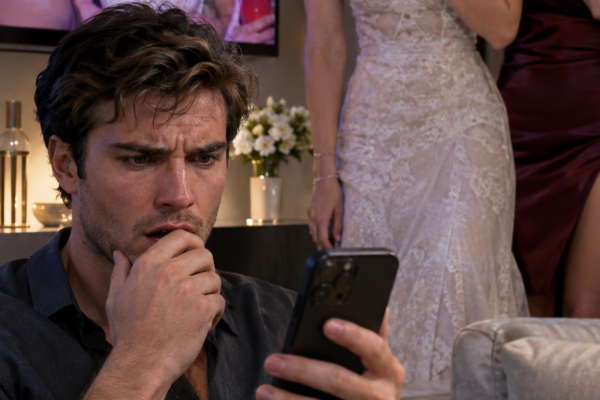
My cheating wife and her mean coworkers humiliated me until everyone got what they deserved!

MY CHEATING WIFE AND HER CRUEL COWORKERS HUMILIATED ME—UNTIL THEIR OWN LIES BROUGHT THEM DOWN
My wife humiliated me in front of an entire law firm and laughed while her coworkers joined in.
Three weeks later, I learned the cheating was only the smallest secret she had been keeping.
By the time they tried to destroy my name, one email had already begun destroying theirs.

PART 1 — THE NIGHT MY WIFE MADE ME THE JOKE
There are humiliations you can recover from because they happen in private.
Then there are the ones that happen under chandeliers.
My name is Michael Gregory. At thirty-seven, I was a certified public accountant with Thomas & McMaster in Columbus, Ohio, and a staff sergeant in the Marine Corps Reserve. I liked boring things: balanced ledgers, early coffee, predictable mortgage rates, and the quiet certainty that two plus two would still equal four tomorrow morning.
Numbers did not flirt with the truth.
People did.
I had been married to Jennifer Gregory for almost five years when I finally understood the difference.
Jenny and I met during my last year at Ohio State. I had already completed active duty in the Marine Corps, where I worked in financial administration, then joined the reserves while finishing my accounting degree. Jenny was studying legal support services and planned to become a paralegal before eventually attending law school.
She had been bright, quick, funny, and restless in a way I once found irresistible.
Our first apartment had thin walls, mismatched furniture, and a bathroom door that never closed properly. We ate takeout on moving boxes, argued about whether we could afford a better couch, and spent Sunday mornings drinking coffee on a balcony barely large enough for two chairs.
I thought we were building something.
For four years, I had no serious reason to believe otherwise.
Then Fridays changed.
At first, Jenny started joining coworkers for happy hour after work. Johnson & Associates was a powerful family-law firm downtown, and she told me networking mattered if she wanted promotions.
That sounded reasonable.
She would come home around seven-thirty, kick off her heels near the door, complain about attorneys who thought paralegals were invisible, then curl up beside me on the couch.
Gradually, seven-thirty became nine.
Nine became eleven.
Then one Saturday morning I woke at 6:40 and realized her side of the bed had never been disturbed.
She walked in twenty minutes later wearing yesterday’s clothes.
I was standing in the kitchen when she dropped her purse on the counter.
“Where were you?”
She glanced at me as though I had asked what color the ceiling was.
“I got drunk. Stayed at Monica’s.”
“You couldn’t call?”
“My battery died.”
“Jenny.”
“What?”
I studied her face. Her makeup had been wiped away badly, leaving dark traces beneath her eyes.
“If it happens again, call me. I don’t care what time it is. I’ll come get you.”
Her mouth tightened.
“I said I was fine.”
“I’m not accusing you of anything.”
“It sure sounds like it.”
Then she walked past me.
That was the first time I remember standing in my own kitchen and feeling like a guest.
Still, I convinced myself marriage had seasons. People got tired. Careers changed them. Stress created distance.
I believed every reasonable explanation because reasonable explanations hurt less than the unreasonable one.
The real shift became impossible to ignore at the Johnson & Associates year-end holiday gala.
Jenny tried to stop me from coming.
We were dressing in our bedroom when she stood in front of the mirror fastening a silver earring.
“You don’t have to go, you know.”
I looked up from tying my shoes.
“It’s your company party.”
“Exactly. You’ll be bored.”
“I survived eight weeks at Parris Island. I can survive lawyers and chicken hors d’oeuvres.”
She didn’t laugh.
Instead, she sprayed perfume onto her wrists.
“I’ll be networking most of the night. I don’t want you following me around looking uncomfortable.”
That sentence stayed with me during the entire drive downtown.
The gala occupied the ballroom of the Grand Meridian Hotel, all gold trim, white tablecloths, live jazz, and people who laughed too loudly at partners’ jokes.
Jenny transformed the moment we walked through the doors.
Her shoulders straightened. Her smile sharpened. She moved with the relaxed confidence of someone entering a room where she understood the hierarchy.
I was introduced to exactly four people.
“This is Mike,” she told a group near the bar. “My favorite spreadsheet with a pulse.”
They laughed.
I smiled because husbands sometimes smiled at jokes they didn’t enjoy.
A tall attorney named Jonathan Williams lifted his glass.
“CPA, right?”
“That’s right.”
“So you’re the guy who tells everyone they can’t afford anything fun.”
“Only when they can’t.”
Jon laughed.
Jenny slipped her arm away from mine.
“My little pencil-pushing ball and chain.”
More laughter.
This time I didn’t join.
Jenny had already turned toward Jon.
The night deteriorated from there.
She danced with coworkers while I sat beside people who clearly didn’t know what to say to me. Whenever I tried approaching her, somebody intercepted her, or she disappeared toward another part of the ballroom.
At 9:15, I saw her leave through a side corridor with Jon.
At 9:41, she returned alone.
At 10:10, she vanished again.
At 10:38, she came back with another attorney named Evan Pierce, her lipstick slightly faded.
My stomach had become a knot by then.
I told myself there were innocent explanations.
Conference rooms.
Phone calls.
Fresh air.
Anything.
Around eleven, Jenny finally dropped into the chair beside me.
Her cheeks were flushed from alcohol.
“You look miserable.”
“I haven’t seen you for half the night.”
She rolled her eyes.
“We’re at my work party, Mike.”
“Which apparently means I’m not your husband until we’re driving home.”
“Don’t start.”
“I asked you for one dance.”
“You’ll survive.”
The words were quiet.
That almost made them worse.
Jon passed our table and tapped Jenny lightly on the shoulder.
“Round two?”
She laughed and rose.
I caught her wrist—not hard, just enough to stop her.
“Jenny.”
She looked at my hand.
Then at me.
Around us, several people noticed.
“Let go.”
I did immediately.
Jon’s smile became almost sympathetic.
“Take it easy, Sergeant.”
Something about the way he said it made the table laugh.
I stood.
“I’m going home.”
Jenny’s expression changed for half a second. Maybe embarrassment. Maybe anger.
Then she lifted her glass.
“See? Spreadsheet with a pulse.”
They laughed again.
And that was the moment something inside me stopped trying to protect her.
I stayed.
Not because I wanted to.
Because suddenly I wanted to observe.
I watched who touched her shoulder. Who whispered into her ear. Who smiled when she insulted me. Who behaved as if they already knew something I did not.
Patterns appeared.
Jon was always nearby.
Evan watched Jenny the way men watch doors they expect to open.
Two female coworkers looked away whenever Jenny flirted.
And one older paralegal named Denise met my eyes from across the ballroom with an expression I did not understand then.
Pity.
Jenny finally decided to leave shortly after midnight.
Inside the parking garage, her heels clicked unevenly against the concrete.
When we reached the car, she leaned toward me.
I turned my face away.
“What is wrong with you?” she snapped.
“Where did you keep disappearing to?”
Her eyes narrowed.
“Excuse me?”
“Tonight.”
“I was socializing.”
“In hotel hallways?”
She laughed once.
Cold.
“That’s none of your business.”
I stared at her.
For several seconds neither of us spoke.
“My wife disappearing repeatedly during a party is absolutely my business.”
“Not everything I do belongs to you.”
“I never said it did.”
“You don’t have to.”
The drive home happened in silence.
I looked at the road.
Jenny looked at her phone.
When we reached our apartment, she disappeared into the bedroom without saying goodnight.
I slept on the couch.
Christmas came and went with forced smiles.
For a few days, she became almost tender again. She bought me a new watch. We visited both families. She rested her hand on my knee beneath her parents’ dinner table as though nothing had happened.
I wanted desperately to believe the party had been one ugly night.
Then January arrived.
The Friday outings increased.
Affection disappeared.
Jenny stopped leaving her phone unattended.
And while preparing documents for our joint tax return, I noticed something else.
Her W-2 income was far higher than I expected.
Much higher.
I pulled twelve months of our joint account statements.
Her deposits had barely changed.
Yet according to the tax documents, Jenny had received a substantial raise and a five-figure year-end bonus.
The money was going somewhere else.
I sat at our dining table after midnight, staring at the figures.
Thirty-one thousand dollars.
At minimum.
Hidden.
I heard our bedroom door open behind me.
Jenny walked toward the kitchen for water.
“What are you doing?”
“Taxes.”
She stopped.
For only a second.
But I saw it.
Fear.
Then the mask returned.
“Don’t stay up too late.”
I watched her disappear down the hallway.
That night I didn’t confront her.
A financial secret could be explained.
An affair could be suspected.
But accusations without evidence were just noise.
Three days later, evidence arrived.
At 2:17 on a Wednesday afternoon, an email appeared in my personal inbox.
The sender’s address meant nothing to me.
The subject line did.
YOUR WIFE ISN’T OUT WITH THE GIRLS.
For almost a minute, I didn’t open it.
My hand simply rested on the mouse.
Then I clicked.
There was one sentence.
I’m sorry. You deserve to know. Watch until the conversation after.
A video file was attached.
I put on my headphones.
The first frame showed a hotel room.
Jenny stood near the bed.
Jonathan Williams stood beside her.
Whatever desperate possibility remained inside me died in less than ten seconds.
I did not need to watch the intimate part to understand what I was seeing. I skipped forward, my fingers shaking so violently that I clicked the wrong place twice.
Then their voices came through my headphones.
Jon laughed.
“So when are you finally leaving Captain Calculator?”
Jenny’s voice answered.
“Why would I? Mike makes life easy.”
“You don’t even respect him.”
Another laugh.
Hers.
“That’s kind of the fun part.”
I stopped breathing.
Jon said something lower that I couldn’t catch.
Then Jenny replied clearly.
“If I ever leave him, we’ll make sure he doesn’t fight me. Your firm knows how to handle husbands who get difficult.”
Jon chuckled.
“And if he gets suspicious?”
Jenny’s answer came without hesitation.
“We’ll make him regret it.”
I froze the video.
Behind Jenny, reflected faintly in the hotel mirror, was the person holding the camera.
A woman.
I stared at her reflection.
Then another email appeared.
My name is Tracy Williams. Jon is my husband.
A phone number followed.
And beneath it was one final sentence.
Mike, the affair isn’t the worst thing I’ve discovered.
PART 2 — THE WOMAN WHO BROUGHT ME THE TRUTH
I called Tracy from the parking garage beneath my office because I didn’t trust myself to speak where anyone could hear me.
She answered on the first ring.
“Michael?”
Her voice was steady, but strained.
“Yes.”
“I’m sorry.”
Those were the first words she said to me.
Not hello.
Not an explanation.
I’m sorry.
It nearly broke something open in me.
“How long?”
“At least five months.”
I leaned against the concrete wall.
“Jenny and Jon?”
“Yes.”
“Only Jon?”
There was a pause.
“No.”
I closed my eyes.
Traffic hummed faintly above us.
“Where are you?”
“There’s a coffee shop on High Street. Public place. Twenty minutes?”
“I’ll be there.”
Tracy Williams was forty, maybe forty-one, with dark hair pulled into a low ponytail and the exhausted posture of somebody who had spent too many nights examining evidence she wished did not exist.
A manila envelope rested beside her coffee.
She pushed it toward me.
“My attorney told me not to contact you without documentation.”
I sat down.
“Your attorney?”
“I’m filing for divorce.”
I opened the envelope.
Hotel receipts.
Photographs.
A private investigator’s report.
Dates.
Times.
License plates.
Five months became seven.
Seven became perhaps nine.
The investigators had documented Jenny meeting Jon repeatedly at the downtown Marriott, sometimes after Friday drinks and sometimes during hours when she told me she was working late.
Other names appeared.
Evan Pierce.
A junior partner named Stephen Cole.
One weekend date made my chest tighten.
October 14.
Reserve drill.
I remembered calling Jenny that Saturday night from the base.
She had told me she was curled up watching a movie.
According to the report, Jon’s car had been parked outside our apartment overnight.
I lowered the paper.
“He was in my home.”
Tracy nodded.
“I’m sorry.”
I rubbed my thumb across my wedding band.
“How did you find out?”
“Jon got careless.”
She looked toward the window.
“We had tablets linked to the same cloud account. He thought he’d turned off backup. He hadn’t.”
“The videos?”
“Some were recorded by them. I found enough to know what was happening. Then I hired someone.”
I sat very still.
My coffee remained untouched.
“Why send everything to me?”
“Because you have a right to know. And because Jenny may become part of my divorce.”
“Meaning?”
“My lawyer expects Jon’s firm to come after me.”
That made me look up.
“His own firm?”
“You’ve heard how Johnson & Associates works.”
I had.
Family-law firms were supposed to represent people during some of the worst moments of their lives. Johnson & Associates had built a reputation for winning ugly cases.
Jenny used to boast about it.
“They don’t lose,” she once told me.
I had thought she meant preparation.
Tracy’s laugh was humorless.
“They don’t just beat people in court, Mike. They pressure them before court.”
“What kind of pressure?”
She studied me.
“Threats. Reputation. Employers. Custody accusations. Anonymous messages. Whatever scares somebody into settling.”
My stomach tightened.
“Are you saying they fabricate things?”
“I’m saying that’s what my investigator believes.”
I thought of Jenny in the video.
Your firm knows how to handle husbands who get difficult.
“Do you have proof?”
“Not enough yet.”
She took a sip of coffee.
“But my lawyer thinks the divorce may force discovery.”
I stared at the envelope.
In less than twenty-four hours, my marriage had gone from damaged to fictional.
“Does Jon know you know?”
“No.”
“Does Jenny?”
“No.”
“Good.”
Tracy tilted her head.
“What are you going to do?”
The Marine in me wanted confrontation.
The accountant wanted records.
I listened to the accountant.
“Nothing emotional.”
She gave me the first real smile I’d seen from her.
“That’s probably smarter than what I wanted to do.”
“What’s that?”
She shook her head.
“Doesn’t matter.”
We agreed not to contact each other again unless our attorneys approved it.
Before leaving, Tracy handed me a card.
Sally Hawkins — Attorney at Law.
“She’s representing me.”
“I thought you said your attorney.”
“She is. She also told me that if you needed someone, she’d speak to you separately and deal with any conflict issues.”
I slipped the card into my wallet.
“Thank you.”
Tracy stood.
“Don’t thank me yet.”
That afternoon, I went home early.
I copied every file twice.
One encrypted drive went into my office safe. Another went to a secure cloud account Jenny could not access.
Then I reviewed our finances.
Half our shared checking balance belonged to me. I moved that half into a new individual account and left the rest untouched.
I canceled my card on our joint credit account and documented everything.
Then I called Sally Hawkins.
She saw me the following morning.
Sally was in her mid-fifties, wore a charcoal suit, and had the expression of a person professionally unimpressed by excuses.
She reviewed the affair evidence first.
Then the financial discrepancy.
Then the conversation in which Jenny and Jon discussed using his firm against me.
When the video ended, Sally leaned back.
“Don’t confront her yet.”
“I was planning to tonight.”
“Then change the plan.”
“Why?”
“Because people behave differently when they believe they still control the board.”
She tapped the financial paperwork.
“We need documentation of the hidden account. We need to preserve the electronic evidence properly. And most importantly, we need to know whether what you heard on that recording is drunken arrogance or an actual threat.”
“You think she could really try to frame me?”
“I don’t know.”
Sally’s eyes hardened.
“And neither do you. That’s the problem.”
We prepared the divorce petition.
Adultery would be documented, but Ohio’s no-fault pathways meant the affair mattered less financially than people often believed. The hidden money, however, absolutely mattered if it was marital property.
Sally explained everything without promising revenge.
That helped me.
I did not need revenge.
I needed a clean exit.
For the next two days, I acted normally.
That was one of the hardest things I have ever done.
Jenny sat across from me Thursday evening eating Thai food while answering messages.
“Reserve weekend coming up?”
“Next month.”
She nodded without looking at me.
“Okay.”
That one word hurt more than I expected.
Once, she used to complain when I left for drill.
Now she was scheduling around it.
Friday afternoon, my phone buzzed.
Sally.
“Michael, we have enough to file Monday. One issue: if you’re going to confront Jennifer before service, record the conversation if it’s lawful where you are and if you can do so safely.”
“Why confront her at all?”
“You don’t have to.”
I thought about it.
Part of me needed to hear whether my wife could look directly at me and continue lying.
That night, she walked through the front door at 8:46.
I was sitting at the dining table.
The laptop was open.
Her smile vanished.
“What’s going on?”
“Sit down.”
“Mike, I’m tired.”
“Sit.”
Something in my voice made her stop.
She slowly lowered herself into the chair opposite me.
I turned the laptop around.
The paused hotel footage showed her and Jon.
For the first time in months, Jenny had absolutely nothing to say.
I pressed play for six seconds.
Then stopped it.
Her face went pale.
“Where did you get that?”
I had expected denial.
Maybe crying.
Maybe shame.
Instead, she asked about the source.
That told me everything.
“Is it real?”
Her jaw tightened.
“Obviously.”
“How long?”
She looked away.
“Does it matter?”
“Yes.”
“Why?”
“Because I’m your husband.”
Jenny actually smiled.
Small.
Tired.
Almost pitying.
“Mike, I think we’re past that.”
The sentence struck with surgical precision.
I kept my hands flat against the table.
“Who’s the hidden bank account for?”
That changed her.
Her eyes snapped toward me.
“What account?”
“The one your raise and bonus went into.”
Silence.
“There isn’t one.”
“Don’t.”
“Don’t what?”
“Lie when we both know you’re lying.”
Jenny pushed her chair backward.
“So what now? You want a divorce?”
“Yes.”
She stopped.
The confidence returned.
“You should think very carefully.”
“I have.”
“No. You haven’t.”
Her voice softened.
That was worse.
“You have no idea what you’re walking into.”
“What does that mean?”
She stared at me.
Then she leaned forward.
“You think one video makes you powerful? Jon’s firm handles people like you every week.”
“People like me?”
“Angry husbands.”
“I’m not angry.”
She smiled.
“You will be.”
I felt the recorder in my shirt pocket capturing every word.
“What exactly are you threatening?”
Jenny stood.
“If you try to embarrass me publicly, I’ll protect myself.”
“From what?”
“Whatever I need protecting from.”
I looked at her for several seconds.
“Did you ever love me?”
For the first time, the mask slipped.
Something moved across her face.
Pain, maybe.
Then it disappeared.
“I don’t know.”
That answer was somehow worse than no.
I stood.
“I packed a bag. I want you to stay somewhere else tonight.”
Her eyes narrowed.
“You can’t throw me out of my own home.”
“I’m asking you to leave voluntarily. If you don’t, I’ll leave.”
She stared at the suitcase near the doorway.
Then at me.
“Forty-eight hours.”
“For what?”
“To reconsider.”
“I’m filing Monday.”
Jenny picked up her purse.
At the door she turned back.
“Then Monday might be the day your life starts getting very difficult.”
The door closed behind her.
I remained standing in the silence.
Ten minutes later, I stopped the recording.
At 11:32 p.m., an email arrived.
There was no sender name.
The subject line read:
FINAL WARNING.
The message contained only twelve words.
Withdraw the divorce, or everyone you love will learn what kind of man you are.
Attached was a photograph.
A manipulated photograph.
My face.
Someone else’s crime.
And beneath it, a demand for one hundred thousand dollars.
PART 3 — THEY THOUGHT FEAR WOULD MAKE ME OBEY
I did not reply.
That decision probably saved me.
Fear makes people move quickly, and whoever sent that email had counted on fear being faster than judgment.
Instead, I forwarded it to Sally.
Then I called Bill Frederick, the cybersecurity manager at Thomas & McMaster.
Bill had spent fifteen years telling accountants not to click suspicious links. When I described what I had received, his tone changed immediately.
“Forward the original message as an attachment. Don’t copy and paste it.”
“Can you trace it?”
“I can tell you more once I see the headers.”
Twenty-seven minutes later he called back.
“Mike.”
“Yeah?”
“You need your lawyer.”
“I have one.”
“Good.”
“Why?”
“The sending server belongs to Johnson & Associates.”
I stopped pacing.
“You’re certain?”
“As certain as I can be without their internal logs.”
“Could somebody fake that?”
“Parts of an email can be forged. This one wasn’t done carefully enough.”
I sat down.
“Anything else?”
“Yeah.”
Bill paused.
“It was sent from an authenticated internal account.”
“Whose?”
“I don’t have enough to prove a specific user. But your lawyer needs this preserved.”
Sally answered immediately.
When I finished explaining, there was silence.
Then she said, “You do absolutely nothing.”
“I wasn’t planning to.”
“No calls to Jennifer. No replies. No confronting anyone at the firm.”
“Okay.”
“I’m contacting law enforcement.”
The next forty-eight hours changed the nature of my divorce.
What had begun as betrayal now looked like extortion.
Sally arranged for me to speak with Detective Aaron Fuller from the Columbus Police Department’s financial crimes unit.
Fuller listened without drama.
He reviewed the threat.
Then the video of Jenny telling me her firm knew how to “handle husbands.”
Then the footage Tracy had supplied.
“You understand the affair and the criminal issue are separate?” he asked.
“Yes.”
“Good.”
He leaned toward me.
“If Jennifer contacts you, don’t bait her. Don’t interrogate her. Don’t try to get clever.”
“I won’t.”
“People watch too much television.”
Despite everything, I almost laughed.
Fuller did not.
“One more thing. Your attorney mentioned the firm may have done this before.”
“That’s what I’ve been told.”
“If that’s true, your case just became larger than you.”
I discovered how much larger on Monday morning.
My divorce petition was filed at 9:06.
Jenny was served at Johnson & Associates at 11:14.
At 11:23, my phone began vibrating.
I ignored the first call.
And the second.
And the third.
At 11:41, she texted.
YOU HAVE NO IDEA WHAT YOU JUST DID.
At 11:43:
CALL ME.
At 11:47:
THIS CAN STILL BE FIXED.
At 12:03:
JON SAYS YOU’RE MAKING A SERIOUS MISTAKE.
I photographed everything and sent it to Sally.
At 12:19, another message arrived.
This one was different.
Please, Mike.
I stared at those two words for a long time.
They sounded like the Jenny I remembered.
The woman on our first apartment balcony.
The woman who cried when I left for my first two-week reserve exercise after we married.
The woman who once taped a note inside my lunch bag that said, Come home safe, Marine. I like having you around.
But memories are dangerous when the person in them no longer exists.
I put the phone down.
At one in the afternoon, my boss, David McMaster, entered my office.
“Door.”
I closed it.
He sat across from me.
“Somebody called HR.”
My pulse changed.
“What did they say?”
“They accused you of domestic violence.”
I felt heat move up my neck.
David held up a hand.
“Before you say anything, I know about the divorce situation because you told me Friday. HR has been informed that this may be retaliatory.”
“Who called?”
“Anonymous.”
I laughed once.
There was no humor in it.
“They’re doing it.”
“Your lawyer?”
“Already involved.”
David studied me.
“You okay?”
“No.”
It was the first honest answer I had given anybody all day.
“But I’m functional.”
“Good enough for today.”
He stood.
“Take the rest of the week if you need it.”
I shook my head.
“I’d rather work.”
“Then work.”
At three-thirty, Sally called.
“We have movement.”
“What kind?”
“The investigator assigned to your complaint found something interesting.”
I waited.
“The email threatening you isn’t the only message sent through that account.”
My fingers tightened around the phone.
“How many?”
“Nobody’s giving us a number yet.”
Her voice lowered.
“But they asked for permission to coordinate with the state attorney general’s office.”
That meant scale.
I leaned back in my chair.
“Sally.”
“Yes?”
“How bad is this?”
“I don’t know.”
She paused.
“But I suspect Jennifer wasn’t exaggerating when she said they did it all the time.”
That evening I went home to an apartment that no longer felt like mine.
Jenny’s closet still smelled faintly of her perfume.
Her coffee mug sat beside the sink.
A sweater she wore constantly was draped over the back of a chair.
Ordinary objects became evidence that the person who had betrayed me was also the person I had shared thousands of ordinary mornings with.
I sat on the edge of our bed.
For the first time since receiving Tracy’s email, I cried.
Not violently.
No shouting.
Just tears falling onto my hands while the room remained completely silent.
I grieved someone who was still alive.
That is a strange kind of funeral.
My phone rang.
Unknown number.
I almost ignored it.
Then instinct made me answer.
“Michael Gregory?”
“Yes.”
The man’s voice was unfamiliar.
“My name is Raymond Ellis.”
“Do I know you?”
“No.”
A breath.
“But Johnson & Associates knows me.”
I sat straighter.
“How did you get my number?”
“Your name is going around among some men who had cases against that firm.”
“What do you want?”
“To tell you you’re not the first one.”
My skin went cold.
“First one what?”
“First husband they tried to scare with fabricated evidence.”
I said nothing.
Raymond continued.
“They destroyed my custody case three years ago.”
“How?”
“They said they had proof I was dangerous. By the time we proved pieces of it were manipulated, my ex-wife had moved my kids out of state.”
“I’m sorry.”
“I don’t want sympathy.”
His voice cracked.
“I want someone to finally stop them.”
“Then talk to the police.”
“I already did.”
“When?”
“Today.”
A pause followed.
Then he added quietly:
“And so did twenty-six other men.”
PART 4 — THE FIRM THAT NEVER LOST
Johnson & Associates did not collapse overnight.
Institutions rarely do.
First, they denied.
A spokesperson called the allegations “malicious fabrications made by disgruntled opposing parties.”
Then they attacked credibility.
Former clients who spoke publicly were described as abusive, unstable, dishonest, or financially motivated.
For two days, the strategy almost worked.
Then the search warrants happened.
I learned about them from the morning news.
Three unmarked government vehicles appeared outside the firm’s downtown office before eight. Investigators carried boxes and computer equipment through the lobby while cameras gathered behind police barriers.
Jenny called me seventeen times before nine-thirty.
I answered none.
At ten, Sally called.
“Don’t celebrate.”
“I wasn’t going to.”
“I’m serious.”
“So am I.”
She exhaled.
“Good. This may get ugly.”
“Will it affect the divorce?”
“Almost certainly.”
“How?”
“Jennifer’s financial disclosures are due. If the hidden account contains what we think it contains, we’ll deal with that separately.”
“What do you think it contains?”
“That’s what discovery is for.”
The answer came sooner than expected.
Jenny’s secret account held more than her missing salary increase and bonus.
There were deposits labeled as “case support incentives.”
Amounts varied.
Three thousand.
Five thousand.
Eight thousand.
Many were paid within days of settlements involving unusually serious allegations against opposing spouses.
Sally slid the preliminary records across her conference table.
“This doesn’t prove she fabricated anything.”
“I understand.”
“But it gives investigators something to ask about.”
I stared at the entries.
My wife had not merely fallen into an affair.
She had become financially tied to whatever Johnson & Associates had been doing.
“She told me she wanted to become a lawyer.”
Sally looked at me.
“What?”
“When we met. That was her dream.”
I touched one of the transaction lines.
“She used to talk about helping women who were trapped in terrible marriages.”
“People don’t usually wake up one morning as somebody else.”
Sally closed the folder.
“They become somebody else one compromise at a time.”
That stayed with me.
I started remembering things differently.
Stories Jenny had once told over dinner about “destroying” a difficult husband.
A joke she made about an opposing party losing his job after an anonymous complaint.
A woman at a company picnic who said, “Around here, winning isn’t enough. We make sure they remember us.”
I had dismissed those comments as dark workplace humor.
Now they rearranged themselves into a pattern.
And there was a more painful realization.
Jenny had not hidden her values completely.
I had simply translated them into versions I could live with.
Aggressive became ambitious.
Cruel became competitive.
Secretive became independent.
Contempt became stress.
Love can make excuses sound sophisticated.
Three days after the search, Jenny appeared outside my office building.
I saw her through the glass doors.
She wore a dark coat despite mild weather. Her hair was pulled back, and her face looked smaller than I remembered.
I did not go outside.
Instead, I called Sally.
“She’s here.”
“Do not meet with her alone.”
“Understood.”
Security approached Jenny before I could decide anything.
She refused to leave at first.
Then she saw me through the glass.
For several seconds, we simply looked at each other.
She held up her phone.
Mine rang.
I answered.
“What are you doing here?”
“Please talk to me.”
“Through lawyers.”
“Mike.”
“No.”
“I made mistakes.”
“Mistakes?”
Her eyes closed.
“Fine. Terrible choices.”
“Go home, Jenny.”
“I don’t have one.”
That hit harder than it should have.
She was staying with her parents.
Jon had apparently stopped answering her calls.
Several attorneys at Johnson & Associates had been placed on administrative leave.
People who once toasted her at the holiday gala were hiring separate criminal lawyers.
“What do you want from me?”
“I need to explain.”
“You had five years.”
“Please.”
I watched her through the glass.
Security waited several feet away.
“What explanation changes anything?”
Her mouth opened.
Nothing came out.
Then she said quietly, “I was scared.”
“Of what?”
“Being ordinary.”
The answer surprised me.
Jenny pressed the phone harder against her ear.
“At the firm, everybody had power. Money. Influence. People moved when they walked into rooms. And I was just the girl organizing exhibits and calendars.”
“So you slept with them?”
She flinched.
“That’s not what I’m saying.”
“What are you saying?”
“I’m saying it started with wanting them to see me.”
I almost laughed.
“Congratulations.”
“Mike—”
“They saw you.”
Her face folded for a second.
I hated that I still knew exactly what her face looked like before she cried.
“I never planned for it to become this.”
“What was the plan?”
“There wasn’t one.”
“There was when you threatened me.”
Silence.
“There was when someone created fake evidence.”
Her eyes dropped.
“There was when money started appearing in that account.”
Jenny looked toward the sidewalk.
“Jon said everybody did it.”
The phrase made something inside me go cold.
“Everybody.”
“He said the firm was protecting clients.”
“By threatening people?”
“Not at first.”
“Then when?”
She wiped beneath one eye.
“It started with research. Finding embarrassing things. Affairs. Tax problems. Old arrests. Anything that encouraged settlements.”
“And the fake evidence?”
Her silence answered.
“Jenny.”
“I never made videos.”
“But you knew.”
She started crying.
“I knew some material was altered.”
There it was.
Not drunken arrogance.
Not misunderstanding.
Knowledge.
“Did you know about the email they sent me?”
Her expression changed.
That was enough.
“Did you send it?”
“No.”
“Did you help?”
Another silence.
“Jenny.”
“Jon told me they needed something strong enough to scare you.”
I could hear blood beating in my ears.
“What did you give them?”
“Your picture.”
The world seemed to narrow.
“From where?”
“Our vacation photos.”
I gripped the phone.
She began talking faster.
“I didn’t know exactly what they were going to create. I swear. I thought it would just be something embarrassing.”
“You gave them my photograph.”
“I was angry.”
“So they could fabricate evidence against me.”
“I wasn’t thinking.”
“That is not an excuse.”
“I know.”
“No, you don’t.”
My voice remained low.
That frightened me more than shouting would have.
“You stood in our kitchen and told me you could ruin my career. Then you helped people try.”
She pressed her fist to her mouth.
“I know.”
I ended the call.
Security escorted her away.
That evening I gave Detective Fuller a statement about the conversation.
The investigation expanded again.
A former Johnson & Associates IT contractor turned over archived server backups.
Internal emails surfaced.
Spreadsheets tracked “pressure opportunities.”
Employees had rated opposing parties according to job vulnerability, family relationships, licensing exposure, military status, and public reputation.
My name appeared on a newly created row.
MICHAEL GREGORY.
Occupation: CPA.
Military affiliation: Marine Corps Reserve.
Pressure points: professional licensing, military command, parents.
Recommended leverage: sexual misconduct allegation.
I stared at the printed page in Fuller’s office.
For a while I could not speak.
Finally I asked:
“Who entered my information?”
Fuller tapped the last column.
There was a username.
J.GREGORY.
My wife’s login.
Underneath, in the notes section, she had typed six words.
He’ll fold if his reputation breaks.
PART 5 — THE NIGHT EVERYTHING BROKE OPEN
People later called what happened next karma.
They were wrong.
There was nothing satisfying about it.
Nothing just.
Nothing I would ever wish to happen again.
The Lamplighter Bar & Grill shooting occurred on a Thursday night.
A former opposing party in a Johnson & Associates divorce case entered the restaurant during a gathering of firm employees and opened fire.
I will not turn what happened into spectacle.
Four people died.
Others were wounded.
The attacker was stopped by an armed patron and died at the scene.
Jonathan Williams was among the dead.
Jenny was among the wounded.
When two police officers appeared at my apartment shortly after ten, my first reaction was disbelief.
“Your wife has been transported to Mercy Hospital.”
“How bad?”
“We don’t have complete information.”
For weeks, I had imagined Jenny being served with papers, sitting across from investigators, answering for what she had done.
I had never imagined a doctor fighting to keep her alive.
On the way to the hospital, Tracy called.
Her voice broke before she completed the first sentence.
“Jon is dead.”
I pulled into an empty parking lot because I could no longer concentrate on driving.
“I’m sorry.”
“I hated what he did.”
She was crying hard now.
“But I didn’t want this.”
“I know.”
“He was still my children’s father.”
I closed my eyes.
“I know.”
Then I told her Jenny had also been shot.
For a few seconds, neither of us spoke.
Two people betrayed by the same affair were suddenly grieving people who had betrayed them.
Human beings are inconvenient that way.
Hate does not erase history.
The hospital waiting room was filled with police, reporters, families, and fluorescent light.
Jenny’s parents arrived around midnight.
Her sister Emily came twenty minutes later.
They sat on the opposite side of the room.
Nobody spoke to me.
At some point, Jenny’s father finally approached.
“Why were they all at the bar?”
“I don’t know.”
He looked exhausted.
“You knew something was happening at her office.”
“The firm is under investigation.”
“For what?”
I stared at him.
“Ask Jenny when she’s awake.”
His jaw tightened.
“You’re her husband.”
“Legally.”
“Then act like it.”
I stood.
For a moment, I felt every month of humiliation rise inside me.
Then I saw how afraid he was.
Not angry.
Afraid.
So I lowered my voice.
“I am here because she is still my wife and because nobody deserves what happened tonight. But being shot doesn’t erase what she did before she was shot.”
He looked away.
At five in the morning, a surgeon finally came out.
Jenny had survived.
One bullet had damaged a lung. Another caused spinal trauma. A third injury affected the nerves around her right eye.
They could not yet predict the extent of her recovery.
Her mother covered her face.
Her father sat down heavily.
Emily began crying.
I felt relief.
Real relief.
And underneath it, guilt that relief did not bring forgiveness with it.
Her father noticed me standing apart.
“So you’ll stop the divorce.”
It was not phrased as a question.
I looked at him.
“No.”
He stared at me.
“She almost died.”
“I know.”
“She may not walk normally again.”
“I know.”
“How can you do this now?”
I took several seconds before answering.
“Because what happened to her tonight was terrible. It was not justice. It was not something she deserved.”
His expression changed slightly.
“But neither does it restore our marriage.”
I left at six-thirty.
News of the shooting spread nationally by afternoon.
Then something unexpected happened.
The attack forced reporters to examine the shooter’s earlier divorce.
Court records showed that Johnson & Associates had represented his former wife.
The man had repeatedly claimed the firm fabricated damaging evidence.
That did not excuse his violence.
Nothing did.
But journalists began investigating the underlying accusations.
Other former opposing spouses came forward.
Then former employees.
Then clients.
By Monday, the story was no longer about one divorce firm.
It was about a possible systematic extortion operation.
State investigators announced additional arrests.
Two senior partners were taken into custody.
A forensic audit began.
Records revealed secret payments to employees who helped develop “leverage packages.”
The phrases were sanitized.
The conduct beneath them was not.
I returned to work because normality had become medicine.
I balanced accounts.
Answered emails.
Ate lunch at my desk.
At three-fifteen on Tuesday, Sally called.
“Jennifer’s awake.”
I stopped typing.
“How is she?”
“Stable.”
“Good.”
“She asked for you.”
I looked out the office window.
Rain streaked the glass.
“What does she want?”
“She didn’t tell me.”
“Should I go?”
“That’s your decision.”
I thought about it.
“Will she be served?”
“The process server can meet you there.”
I nearly said no.
Then I remembered something Jenny once told me during our first year of marriage.
Never leave important things unsaid. Silence turns into ghosts.
So I went.
Her parents were outside the hospital room.
Her mother’s face changed when she saw the manila envelope carried by the process server.
“You can’t be serious.”
I said nothing.
We entered.
Jenny looked shockingly small in the hospital bed.
A brace supported her torso. Bruising marked one side of her face, and a protective shield covered her right eye.
For the first time since I had known her, she looked powerless.
That did not make me feel powerful.
It made me sad.
The process server confirmed her identity.
Then handed her the divorce papers.
“You’ve been served.”
Jenny looked at the envelope.
Her fingers trembled.
When he left, Detective Fuller entered.
He placed another folder on the table beside her.
“Jennifer Gregory, I’m not here to conduct a full interview without your attorney present.”
Jenny swallowed.
“But I need you to understand that we have preserved electronic evidence tied to your user credentials, financial records, and internal firm communications.”
Her eyes moved toward me.
Fuller continued.
“You are a subject in an ongoing investigation involving attempted extortion, conspiracy, evidence fabrication, and obstruction-related conduct.”
Jenny began crying.
Her mother stared at her.
“What is he talking about?”
Jenny closed her eyes.
Fuller glanced at me.
“I’ll give you a few minutes.”
He stepped into the hallway.
Her mother picked up the copy of the threatening email.
Her eyes moved line by line.
Then she looked at Jenny.
“You knew about this?”
Jenny said nothing.
“Jennifer.”
“I helped.”
Her mother’s face emptied.
“You tried to do this to Michael?”
Jenny started shaking.
“I thought they would just scare him.”
Her mother sat down.
For several seconds, the only sound in the room was the monitor beside the bed.
I walked closer.
Jenny finally looked at me.
“Mike.”
I waited.
“I’m sorry.”
I had imagined those words many times.
In some versions, I shouted.
In others, I laughed.
In reality, I simply felt tired.
“Why?”
She looked toward her hands.
“I wanted to matter.”
“You mattered to me.”
“I know.”
“Wasn’t that enough?”
Her face crumpled.
“At the time? No.”
There was the truth.
Ugly.
Simple.
Human.
“And the affair?”
“At first it made me feel chosen.”
“And humiliating me?”
Silence.
“Jenny.”
She wiped tears from her cheek.
“Once they knew I was cheating, I felt like I had to make you small.”
That answer cut deeper than the affair.
“Why?”
“So I wouldn’t feel like the bad person.”
I nodded slowly.
Finally, something made sense.
Not morally.
Psychologically.
If I was pathetic, then betraying me could feel less cruel.
If I was weak, then her behavior could become liberation.
If I was controlling, her deception could become rebellion.
She had needed a villain.
So she manufactured one at home before helping her coworkers manufacture them in case files.
Her mother began crying quietly.
Jenny looked at me.
“Can you forgive me?”
I thought about our balcony.
Our wedding.
The hidden account.
Jon in our home.
The holiday party.
The fake photograph.
Six words entered into a firm database.
He’ll fold if his reputation breaks.
“I hope someday I can stop carrying anger toward you.”
Hope appeared briefly in her face.
Then I finished.
“But I will never be your husband again.”
She shut her eyes.
I removed my wedding band.
For a moment I held it between my fingers.
Then I placed it on the table beside the divorce papers.
“Goodbye, Jenny.”
I turned toward the door.
“Mike.”
I stopped.
Her voice was barely audible.
“The account.”
I looked back.
“What about it?”
“There’s more money than you know.”
My stomach tightened.
“How much?”
She swallowed.
“Almost four hundred thousand dollars.”
Her mother gasped.
I stared at Jenny.
“Where did it come from?”
She looked toward the hallway where Detective Fuller waited.
Then back at me.
“Not all of it belongs to me.”
PART 6 — THE MONEY TRAIL
Four hundred thousand dollars changed everything again.
Investigators initially believed Johnson & Associates rewarded employees through relatively small off-book payments.
Jenny’s account showed something larger.
Money had been moved through several employees’ accounts before eventually being transferred elsewhere.
Jenny claimed senior staff told her the arrangement involved “consulting bonuses” that needed temporary routing for tax and privacy reasons.
By then, even she admitted she had stopped believing that explanation months earlier.
She participated anyway.
The forensic accountants followed the money.
I understood that part better than most.
Numbers do not care if you are ashamed.
They do not become loyal because you cry.
They simply connect.
One transfer linked to another.
One bonus matched one settlement.
One shell company led to another account.
One account led to a senior partner.
Then another.
The firm had created a system in which financial pressure, reputation threats, and manipulated evidence could be used to force settlements.
Not every Johnson & Associates case was corrupt.
That distinction mattered.
Hundreds of clients had legitimate disputes.
Many attorneys at the firm had no knowledge of criminal behavior.
But a core group did.
And Jenny had moved close enough to that group that pretending ignorance eventually became impossible.
She hired her own criminal attorney and began cooperating.
I heard most developments through Sally.
Our divorce became strangely quiet.
There were no screaming negotiations.
No dramatic courtroom speeches.
Jenny disclosed everything.
The secret money was frozen pending investigation.
Our shared property was divided under a settlement structured around legitimate marital assets.
She waived any request for support.
Most important to me, written findings documented that allegations sent to my employer had been retaliatory and unsupported.
My career survived.
My reserve status survived.
My professional license survived.
But something less visible did not.
Trust.
Months after the separation, I still checked locks twice.
If a coworker whispered after I entered a room, my body reacted before logic did.
If a woman I was speaking to turned her phone face down, I noticed.
I hated that.
Betrayal had taught my nervous system lessons I had never asked it to learn.
The criminal cases took nearly two years.
The firm’s founding partner, Maxwell Johnson, was charged along with several senior attorneys and administrative employees.
Johnson died before trial.
Others accepted pleas.
Some went to trial and were convicted.
Professional disciplinary boards suspended or revoked multiple licenses.
A civil action eventually brought together hundreds of former opposing parties who claimed damages ranging from lost employment to corrupted custody proceedings and reputational harm.
Courts did not automatically reverse every old case.
Evidence had to be reviewed individually.
Some accusations against former spouses remained substantiated.
Others did not.
That nuance frustrated reporters who wanted a simple story with clean heroes and villains.
Real life did not cooperate.
Jenny faced multiple felony counts.
Because she cooperated, testified, surrendered financial records, and helped investigators identify document trails, prosecutors offered a plea agreement.
She received a lengthy prison sentence, with eligibility for eventual supervised release.
I did not attend sentencing.
Sally asked if I wanted to submit a victim impact statement.
I did.
It was only three pages.
I did not call Jenny evil.
I did not ask the judge to destroy her.
I wrote about the email threatening my career.
I wrote about learning that the person who slept beside me had entered my vulnerabilities into a database.
I wrote about calling my commanding officer before someone else could and explaining that fabricated sexual allegations might arrive.
I wrote about sitting across from my employer’s HR director defending myself against something that never happened.
And at the end, I wrote:
The affair ended my marriage. The conspiracy changed how safe I felt inside my own name.
Sally later told me the courtroom had gone very quiet when that sentence was read.
Three years after the night of the holiday gala, the civil case settled.
My portion was meaningful but not life-changing after legal fees and taxes.
I used some of it to pay off debt.
Some went into retirement.
I donated a portion to a veterans’ legal assistance organization because the idea of somebody else defending their uniform, job, or reputation against fabricated claims had become deeply personal.
Then I tried to become ordinary again.
That was harder.
Friends encouraged me to date.
I refused.
My mother tried introducing me to the divorced daughter of somebody from her church.
I refused more politely.
David McMaster once told me over lunch, “You know avoiding every woman on Earth is a pretty inefficient way to avoid Jenny.”
I gave him a look.
“That’s why you’re the managing partner and I’m the accountant.”
He laughed.
But he was right.
Eventually, loneliness stopped feeling safe and started feeling empty.
I went on a few dates.
Nothing serious.
Then one November afternoon, I attended a Marine Corps Reserve retirement ceremony for an old friend.
That was where I met Caroline Bennett.
Carol was thirty-nine, two years younger than me, and a former Marine financial management specialist.
We discovered that within fifteen minutes.
“You were disbursing?”
She pointed at me.
“Don’t tell me.”
I smiled.
“Dispersing clerk.”
She laughed.
“You poor man.”
“You too?”
“Four years.”
“Then you understand.”
“People lie.”
I finished the sentence with her.
“Numbers don’t.”
We both stopped.
Then laughed.
Something about the familiarity of it disarmed me.
Carol was widowed.
Her husband, David, had died suddenly from a heart condition four years earlier.
She did not rush conversation.
She did not perform vulnerability.
When she asked a question, she listened to the answer rather than preparing her next one.
We had coffee.
Then dinner.
Then another dinner.
After our fifth date, she touched the wedding-band tan line that somehow still seemed visible on my finger.
“You never talk about her.”
I looked at the table.
“No.”
“Do you want me not to ask?”
The question mattered.
She was giving me a choice.
“I was married.”
“I assumed.”
“She cheated.”
Carol waited.
“There was more.”
“Okay.”
I told her.
Not everything.
Not at first.
But enough.
The affair.
The firm.
The threats.
The investigation.
The hospital.
The trial.
Carol never interrupted.
When I finished, the restaurant had grown quieter around us.
She folded her hands on the table.
“That explains some things.”
“Like what?”
“You notice exits.”
I blinked.
“You watch people’s phones.”
I felt embarrassed.
“And when I cancel plans, you always say it’s fine too quickly.”
I leaned back.
“That obvious?”
“To somebody who pays attention.”
I looked away.
“I’m working on it.”
“I know.”
“How?”
“Because you’re here.”
That sentence stayed with me.
Carol did not promise never to hurt me.
She did not tell me I needed to trust her.
She simply behaved consistently.
When plans changed, she explained why.
When she felt angry, she said she was angry.
When an old friend called late one evening, she didn’t hide the phone or over-explain it.
Ordinary transparency slowly became extraordinary medicine.
A year into our relationship, I finally asked the question I had avoided.
“What if I never trust anybody the way I used to?”
We were sitting on the back steps of her house.
Carol considered it.
“Maybe you shouldn’t.”
I looked at her.
She smiled.
“The way you used to trust Jenny included ignoring things you saw because you wanted the marriage to stay comfortable.”
That hurt because it was true.
“Trust isn’t blindness, Mike.”
She took my hand.
“It’s seeing clearly and staying because what you see is real.”
For the first time, I understood that healing might not mean becoming the man I had been before Jenny.
Maybe that man had needed to change too.
PART 7 — THE LAST THING JENNY EVER ASKED FROM ME
Six years after my divorce, a letter arrived.
The return address belonged to the state correctional facility where Jenny was serving her sentence.
I left it unopened for three days.
Carol never asked me to open it.
She never asked me to throw it away.
On Sunday morning, I finally sat at the kitchen table and broke the seal.
Jenny’s handwriting had changed.
Smaller.
Careful.
The letter was four pages long.
She wrote that prison had taken away the excuses she used to live inside.
She wrote about counseling.
About replaying the holiday party in her head.
About finally understanding why humiliating me had felt necessary.
She said cruelty had made her feel briefly powerful because admitting she was betraying a good man would have required her to look directly at herself.
She wrote about her coworkers.
How status became addictive.
How each unethical act made the next one easier.
How everybody in the inner circle kept reassuring everybody else that they were only fighting dirty people with dirty methods.
Eventually, they stopped asking whether the targets were dirty at all.
One paragraph stopped me.
The worst lie I told wasn’t that I wasn’t cheating. The worst lie was the one I told myself—that because you were predictable, loyal, and decent, you were somehow less valuable than people who made me feel powerful. I confused chaos with importance. By the time I understood the difference, I had destroyed the safest thing I ever had.
I read that paragraph twice.
Near the end she wrote:
I don’t expect forgiveness, and I won’t ask you to visit. I only want to know one thing. Are you happy? If you are, please don’t feel guilty about telling me. I think knowing I didn’t permanently destroy that part of you would help me live with what I did.
Carol was outside tending to a planter.
I watched her through the kitchen window.
She wore an old Marine sweatshirt with paint on one sleeve.
A mug of coffee sat on the porch railing.
Nothing glamorous.
Nothing dramatic.
Nothing secret.
I took out a sheet of paper.
My response was six sentences.
Jenny, I received your letter.
I am happy.
It took a long time, and happiness looks quieter to me now than it once did.
I hope you continue doing the work necessary to become someone you can live honestly with.
I don’t carry the marriage with me the way I used to.
I wish you peace, but my life is somewhere else now.
I did not write I forgive you.
I did not write I hate you.
Both would have given the past more space than it deserved.
I mailed the letter Monday morning.
Jenny never wrote again.
Two years later, Carol and I married in a small ceremony near Hocking Hills.
No ballroom.
No company partners.
No chandeliers.
Just family, close friends, barbecue, string lights, and a retired gunnery sergeant who gave a wedding toast so embarrassing that Carol threatened to throw him into the creek.
During the reception, she found me standing near the edge of the property watching everyone dance.
“You disappearing on me, husband?”
I smiled.
“Just observing.”
“Dangerous habit.”
“So I’ve been told.”
She held out her hand.
“Dance with me.”
“I am a terrible dancer.”
“I know.”
“How?”
“Marines talk.”
I laughed and took her hand.
Halfway through the song, something unexpectedly painful moved through me.
A memory.
Jenny dancing with Jon while I sat alone beneath hotel chandeliers.
For years, that scene had represented humiliation.
Now another woman was standing in front of me beneath cheap string lights, laughing because I had stepped on her shoe.
The memory did not disappear.
It simply lost its authority.
That may be the closest thing to freedom I have ever felt.
Eventually, I retired from the Marine Corps Reserve as a master sergeant.
Carol and I bought a used RV after months of arguing about whether buying one was financially responsible.
Naturally, I created a spreadsheet.
Naturally, Carol mocked it.
We planned to drive west after retirement.
Yellowstone.
Glacier.
The Oregon coast.
Then down through California before heading back across Arizona and New Mexico.
One evening while we were mapping the trip, Carol looked across the table.
“You ever think about how different your life would’ve been if you hadn’t opened that email?”
“Sometimes.”
“What do you think would’ve happened?”
I considered it.
Maybe Jenny would have continued cheating.
Maybe I would have ignored more signs.
Maybe we would have bought the house we talked about.
Maybe children would have become trapped inside the collapse.
Maybe the firm would have succeeded in threatening someone who eventually broke.
There was no useful answer.
“I don’t know.”
Carol nodded.
Then she moved a map brochure out of the way.
“Good.”
“Good?”
“Means we’re not living there.”
I smiled.
She was right.
For years, people who heard fragments of my story focused on the downfall.
The affair exposed.
The firm raided.
The attorneys prosecuted.
The money recovered.
Jenny imprisoned.
They sometimes used the phrase everyone got what they deserved.
I understood what they meant.
But I never saw the shooting that way.
Nobody deserved bullets.
Nobody deserved death.
The real consequences came later—in courtrooms, financial records, revoked licenses, prison sentences, lost careers, broken reputations, and the slow realization that power built on lies eventually becomes a cage for the people using it.
Jon lost his life before he ever answered fully for his choices.
Jenny lost decades to choices she once treated like games.
The senior partners who believed they could ruin strangers discovered that their own emails, payment records, and databases were more truthful than they had been.
And me?
I got something different.
Not revenge.
A life.
A quieter one.
A life where I no longer mistake drama for passion, intimidation for strength, or blindness for trust.
Sometimes the thing that saves you does not look like justice when it arrives.
Sometimes it looks like a terrible email on an ordinary Wednesday afternoon.
Sometimes it looks like divorce papers.
Sometimes it looks like sitting alone at three in the morning realizing the person you loved never existed exactly the way you believed they did.
And sometimes, years later, it looks like a woman in an old Marine sweatshirt leaning across an RV brochure and saying, “If you make one more spreadsheet for this vacation, I’m leaving without you.”
I looked at Carol.
“You’d be back in twenty minutes.”
“Why?”
“You have no idea where the campground reservations are.”
She narrowed her eyes.
“Spreadsheet?”
“Spreadsheet.”
Carol groaned.
I laughed.
And somewhere inside that completely ordinary moment, I realized I had finally reached the ending I once believed Jenny had stolen from me.
Not the ending where everyone suffered.
The ending where their choices no longer controlled mine.
The people who tried to make me ashamed of being loyal eventually had to answer for what they had done.
The woman who treated my trust like weakness learned too late that loyalty had never been weakness at all.
And the man they once called a pencil-pushing ball and chain walked away with his name, his career, his integrity, and eventually his heart intact.
That was enough.
More than enough.
Because the greatest consequence Jenny and her coworkers ever faced was not that I defeated them.
It was that, in the end, they could no longer make me become anything like them.