My Ex Saw Me and a Woman in Public and Lost Her Mind… POLICE INVOLVED…
MY EX SAW ME AND A WOMAN IN PUBLIC AND LOST HER MIND… POLICE INVOLVED
She cheated on me, chose another man, and ended our relationship before I could end it myself.
Ten months later, she saw me holding another woman’s hand on a sunny Saturday afternoon—and looked at me like I had betrayed her.
Less than fifteen minutes later, someone was calling 911.
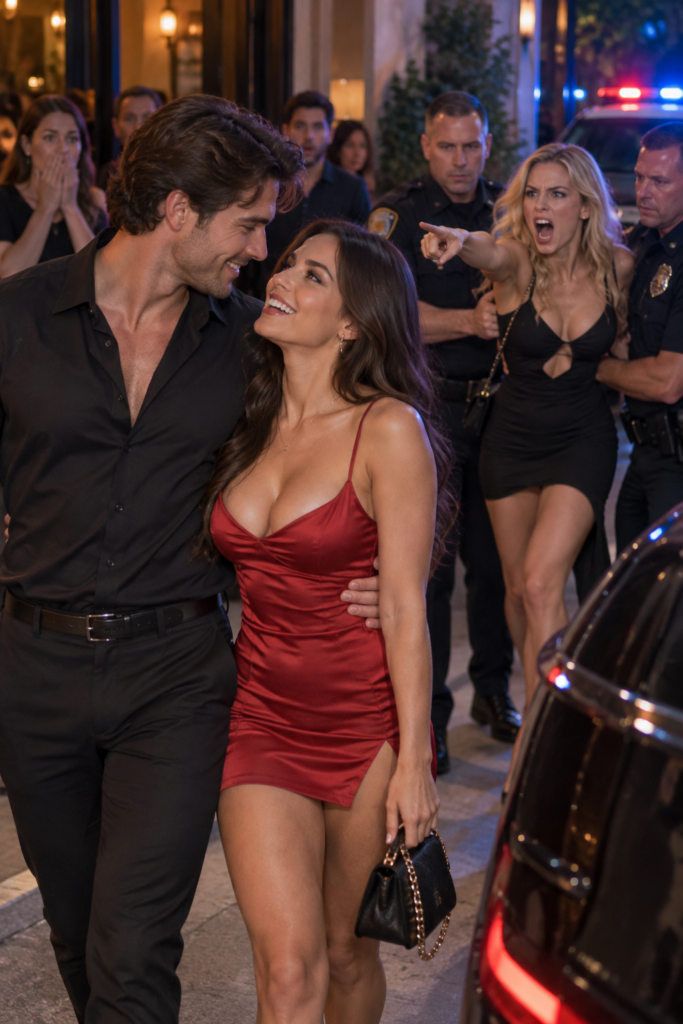
PART 1 — THE WOMAN WHO HAD ALREADY LEFT ME
The first thing I noticed was the way Sarah stopped walking.
One second, Ila and I were moving down Larimer Street in downtown Denver, arguing over whether we wanted tacos or Italian food for lunch. The next, Sarah Bennett was standing twenty feet ahead of us with a paper shopping bag hanging from one hand, staring at me like she had just seen someone climb out of a grave.
I hadn’t seen her in almost ten months.
Not since the afternoon she’d brought the last cardboard box of my things to my apartment, placed it outside my door, and left before I could come downstairs.
Ila was talking when I saw her.
“…and if you say that place with the terrible garlic bread again, I swear—”
Her voice faded in my head.
My fingers tightened around hers without meaning to.
She looked up at me. “Evan?”
I considered turning around.
That sounds cowardly now, but I wasn’t afraid of Sarah. I simply knew enough about her to understand that some fires weren’t worth testing just because you had a bucket nearby.
“Someone you know?” Ila asked.
Before I could answer, Sarah looked directly at me.
Our eyes met.
Her face changed.
Shock came first.
Then disbelief.
Then something harder.
Her gaze dropped to our joined hands.
I felt Ila notice.
“That’s Sarah, isn’t it?” she asked quietly.
I’d told Ila the story months earlier. Not dramatically. Not over drinks at two in the morning. Just enough so she understood why I sometimes froze when her phone buzzed late at night, or why I had once asked a question about one of her male coworkers and immediately hated myself for asking it.
Sarah had taught me how quickly trust could turn into evidence.
“Yeah,” I said. “That’s her.”
Ila squeezed my hand once.
“We can cross the street.”
We should have.
I actually took one step toward the curb.
Sarah came toward us first.
She moved quickly, heels striking the sidewalk with sharp little clicks. Her shopping bag swung beside her leg. By the time she reached us, the pleasant expression she’d probably worn five minutes earlier was gone.
She looked at me.
Then at Ila.
Then back at me.
“Wow.”
That was all she said.
I tried to keep my voice neutral. “Hey, Sarah.”
She laughed once through her nose.
“Hey?”
Ila shifted slightly beside me.
I knew that movement. She wasn’t preparing to fight. Ila wasn’t built that way. She was uncomfortable and calculating how quickly we could leave without making the moment worse.
I should have listened to what her body was telling me.
Instead, some old reflex from two and a half years with Sarah made me attempt politeness.
“This is Ila,” I said. “Ila, Sarah.”
Sarah’s mouth curled.
“So this is her.”
I felt something cold settle between my ribs.
Ila looked at me.
I said, “There is no ‘her.’ We met months after you and I broke up.”
Sarah didn’t even look at me.
She studied Ila from her shoes upward with such deliberate contempt that I felt embarrassed for her.
Then she said, “She’s the one you replaced me with?”
Ila’s eyebrows lifted.
I stared at Sarah.
“You ended our relationship.”
“That doesn’t answer my question.”
“You cheated on me.”
Her jaw tightened.
There it was.
The detail she still hated hearing out loud.
I had learned something about Sarah after our breakup: she didn’t mind what she’d done nearly as much as she minded having to hear it described accurately.
“You don’t need to do this,” I said.
“Do what?”
“This.”
She smiled.
“God, Evan. You always loved acting calm when you were actually furious.”
That almost got me.
Because there had been a time when Sarah could say one sentence and rearrange my emotional furniture without raising her voice.
But that was before I walked into her bedroom carrying flowers.
Before I learned what silence sounded like when the person you loved was sleeping peacefully beside someone else.
I had been twenty-eight then, stupid enough to think tragedy announced itself before entering a room.
It didn’t.
Sometimes it looked like a bouquet of yellow roses.
Ten months earlier, Sarah had texted me around two in the afternoon.
Feeling awful. Think I’m going to sleep for a few hours.
I had been working from home that day. I’d finished early and remembered she’d mentioned having a rough week.
So I bought flowers.
Nothing elaborate.
Yellow roses because she’d once told me red ones felt like someone was apologizing.
I still had a key to her apartment.
Usually I texted before coming over.
That afternoon I decided surprising her would be romantic.
For months afterward, I would wonder how different my life might have been if I had simply sent one text.
On my way.
Instead, I opened her door quietly.
The apartment was dim.
I placed the flowers on the kitchen counter.
Her bedroom door was mostly closed.
I smiled like an idiot.
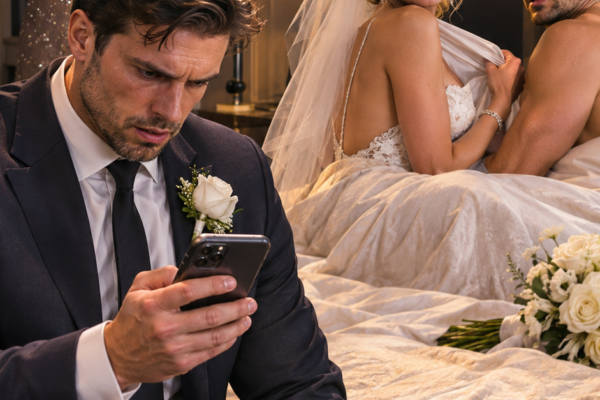
Then I pushed it open.
Sarah was asleep.
A man was asleep beside her.
For several seconds, I couldn’t process what I was seeing.
There are moments when the mind protects itself by refusing to translate images into meaning.
His shirt was on the floor.
Sarah’s hand rested near his shoulder.
Her face looked peaceful.
That detail hurt most.
Not the clothes.
Not the stranger.
Her peace.
She had told me she was feeling terrible.
Apparently she had meant something entirely different.
I stood in that doorway for nearly a minute.
Neither of them woke.
Finally, my hand moved before the rest of me did.
I took out my phone.
I recorded them.
Not because I planned revenge.
Because I knew Sarah.
I knew what panic did to her relationship with the truth.
I needed proof for the version of myself who might wake up the next morning and wonder whether I’d misunderstood.
I walked closer.
Captured both their faces.
Then I left.
That evening Sarah found the flowers.
My phone started vibrating.
Did you come over?
Then:
Evan?
Then:
Please answer me.
The calls began.
I turned off my apartment lights and bolted my front door.
She came over thirty minutes later.
She still had a key, but the deadbolt stopped her.
“Evan!”
I sat on my couch in the dark.
“Please open the door.”
I didn’t move.
“You don’t understand.”
That nearly made me laugh.
There were some things in life that became simpler the closer you stood to them.
Two people naked in the same bed was one.
“Evan, I can explain.”
I stayed silent.
Eventually she left.
The next morning, I texted her.
I’ll come by at eleven.
She answered immediately.
When I arrived, Sarah looked like she hadn’t slept.
I handed her apartment key to her.
“Mine.”
She stared at the key.
“Evan—”
“My key.”
She disappeared into the kitchen and returned with it.
I put it in my pocket.
Then she started explaining.
The man’s name was Lucas.
She had met him through friends.
They had been “getting to know each other.”
She still cared about me.
She hadn’t planned for things to “go that far.”
“I was going to tell you,” she said.
“When?”
She looked down.
“When I figured out what I wanted.”
I felt something inside me go very still.
“So while you were figuring it out, I was supposed to keep being your boyfriend?”
“That’s not fair.”
I stared at her.
She actually said it.
Not fair.
“You had another man in your bed.”
“I know.”
“You told me you were taking a nap.”
“I know.”
“I brought you flowers.”
That finally cracked something in her expression.
Her eyes filled.
“I’m sorry you saw it that way.”
I almost couldn’t speak.
“That way?”
She closed her eyes. “That’s not what I meant.”
“No. I think it’s exactly what you meant.”
Then Sarah did something I hadn’t expected.
She straightened.
Wiped her face.
And said, “Maybe we should end this.”
I remember actually laughing.
Not because anything was funny.
Because the absurdity was too large to fit inside anger.
“You cheated on me.”
“I know.”
“I came here to break up with you.”
“Then why does it matter?”
“It doesn’t.”
But it did.
Not because I wanted her back.
Because even then, after betraying me, she needed to control how the story ended.
She needed to be the person making the decision.
So I gave it to her.
“Fine,” I said. “We’re done.”
I walked out.
For months, that was the last real conversation we had.
Then I met Ila Brooks.
She wasn’t a rescue.
I didn’t want one.
She was simply a woman who laughed with her whole face, hated olives, worked as a physical therapist, and had an almost unnerving ability to sit through silence without trying to fill it.
We dated slowly.
I told her about Sarah only after we’d been together long enough for my past to become relevant.
Ila didn’t promise she’d never hurt me.
That would have been easy.
Instead she said, “I can only show you who I am. You get to decide whether you believe me.”
I did.
Four months later, we were walking down Larimer Street when Sarah stepped into our path.
Back in the present, Sarah looked at Ila again.
“You really downgraded.”
I felt Ila’s fingers loosen from mine.
Not because she was leaving.
Because she wanted both hands free.
“Babe,” she said, looking at me instead of Sarah, “let’s go.”
It was the most sensible sentence anyone spoke that afternoon.
I nodded.
We stepped around Sarah.
For half a second, I thought it was over.
Then Sarah said, “I know you didn’t just walk away from me.”
Neither of us stopped.
I heard quick footsteps behind us.
I turned.
But Sarah wasn’t coming for me.
Her hand shot past my shoulder.
She grabbed Ila by the hair.
Hard.
Ila’s head snapped backward so violently that her sunglasses flew off and skittered across the pavement.
She gasped.
I shoved Sarah away instinctively.
“What the hell is wrong with you?”
Sarah stumbled backward.
Her eyes were wild.
“She spit on me!”
“No, I didn’t!” Ila shouted, one hand pressed against her scalp.
Sarah pointed at her.
“You think you can take my man and disrespect me?”
The sentence silenced me.
My man.
Ten months after she had cheated.
Ten months after she had ended us.
Ten months after I had rebuilt everything she’d broken.
I moved between them.
“Go home, Sarah.”
She looked past me toward Ila.
Then something changed in her face.
She saw Ila’s fallen sunglasses.
She saw two people staring from outside a coffee shop.
She realized she had an audience.
And instead of calming down, Sarah turned toward an outdoor restaurant table.
Her fingers closed around the back of a metal chair.
I saw what she intended to do one second before she lifted it.
And from somewhere behind us, a woman screamed.
“Someone call the police!”
Sarah raised the chair over her shoulder.
And threw it.
PART 2 — THE METAL CHAIR
The chair hit the pavement with a sound I still remember.
Metal against concrete.
Sharp.
Ugly.
Final.
It missed Ila by several feet, bounced once, and struck the base of a planter outside the restaurant.
For a second, nobody moved.
Then Ila laughed.
Not loudly.
Not because it was funny.
It was the strange involuntary laugh people make when something becomes so ridiculous the body has nowhere else to put the shock.
Sarah heard it.
That made everything worse.
“You think this is funny?” she screamed.
I stepped in front of Ila again.
“Enough.”
“Get out of my face.”
“No.”
Sarah tried to move around me.
I shifted with her.
Behind us, restaurant employees were coming outside. A man in a black apron picked up the chair and moved it away.
A woman near the coffee shop had her phone raised.
Another man was speaking into his.
I heard him say, “Yes, downtown. A woman just attacked somebody.”
That sentence brought reality crashing back into the moment.
Police were coming.
Sarah heard it too.
Her posture changed immediately.
Her breathing slowed.
Her face softened.
It was astonishing.
She looked at the growing crowd and suddenly became the woman I’d dated again.
Controlled.
Embarrassed.
Almost fragile.
I recognized that transformation.
It had happened whenever one of her private explosions accidentally acquired witnesses.
“Ila,” I said quietly, “are you okay?”
She was rubbing the back of her head.
“My scalp hurts.”
“Anything else?”
“No.”
“Are you dizzy?”
She looked at me.
“I’m a physical therapist, remember?”
Despite everything, I nearly smiled.
“Humor me.”
“I’m okay.”
Sarah scoffed.
“Of course she’s okay. Nobody even touched her.”
I turned slowly.
“You pulled her hair.”
“Because she spit on me.”
“Where?”
Sarah blinked.
“Where is it?”
“What?”
“The spit. Show us.”
Her face hardened again.
“You calling me a liar?”
“I’m asking you to show us.”
She didn’t.
Ila picked up her sunglasses. One lens was scratched.
She slid them into her purse.
Then she looked at Sarah for the first time since being grabbed.
Her voice was quieter than mine.
“If you ever touch me again, we’ll have a different conversation.”
Sarah smiled.
“Oh, I’m terrified.”
“No,” Ila said. “You’re angry. There’s a difference.”
That landed.
Sarah’s face flushed.
Before she could answer, sirens became audible somewhere nearby.
Then she looked at me.
Not Ila.
Me.
The fury in her expression shifted into something almost wounded.
“Evan, seriously?”
I couldn’t believe it.
“What?”
“You’re going to let them arrest me?”
I stared at her.
“I didn’t call them.”
“But you’re going to stand there?”
“What exactly do you want me to do?”
Her eyes widened, as though the answer should have been obvious.
“Tell them what happened.”
“I will.”
Something about my tone must have warned her that my version wouldn’t help.
The first patrol car pulled toward the curb.
Two officers stepped out.
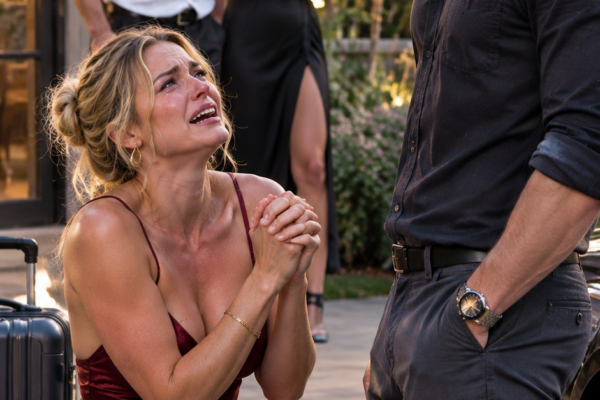
Sarah started crying before they reached us.
Not gradually.
One moment dry-eyed.
The next, tears.
I watched it happen like a stage curtain dropping.
“She attacked me,” Sarah said immediately.
The officer closest to her lifted a hand.
“Ma’am, slow down.”
“She spit on me and came at me because I’m his ex.”
Ila looked at me.
I looked back.
Neither of us spoke.
The officer separated everyone.
Sarah went toward one end of the sidewalk.
Ila and I stood near the restaurant.
A second officer began talking to witnesses.
For fifteen minutes, I answered questions.
What happened?
Who touched whom first?
Had there been threats?
Did I know Sarah?
Had she contacted me recently?
I told the truth.
So did Ila.
Apparently, so did almost everyone else.
The woman outside the coffee shop had recorded part of it.
The restaurant had exterior cameras.
One employee had seen Sarah grab Ila from behind.
The chair had been witnessed by at least six people.
Sarah’s story collapsed faster than she could modify it.
I watched from a distance as an officer asked her something.
She shook her head.
He asked again.
She folded her arms.
Then the officer turned her around.
I knew what was happening before the cuffs appeared.
Sarah did too.
Her head jerked toward me.
“Evan!”
I stayed where I was.
“Evan, tell them!”
My stomach tightened.
There are attachments the body keeps long after the mind has broken them.
For two and a half years, Sarah calling my name like that would have sent me running.
Now I stayed beside Ila.
Sarah stared at me while the officer secured the handcuffs.
“You’re really doing this?”
I almost answered.
Then Ila touched my arm.
Not to stop me.
Just to remind me where I was.
Sarah was placed in the back of the cruiser.
The door shut.
And as the car pulled away, I thought the worst part was over.
I was wrong.
Because thirty minutes later, an officer came back toward us holding his phone.
“There is something else you two should probably know.”
PART 3 — EVERYONE SAW IT
The officer’s name was Martinez.
He had the tired expression of someone who had spent years watching people manufacture disasters and then act surprised by the consequences.
He looked at Ila first.
“Someone sent us a video from before our arrival.”
My stomach tightened.
“What video?” I asked.
“The confrontation.”
He turned the screen toward us.
The recording had begun before Sarah touched Ila.
A woman across the street had apparently noticed the argument and started filming.
The audio wasn’t perfect.
But it was good enough.
Sarah’s voice came through clearly.
You really downgraded.
Then mine.
You cheated on me.
Then Sarah again.
So I don’t get to have an opinion?
The video showed us walking away.
Showed Sarah following.
Showed her grab Ila’s hair.
There was no spit.
No attack by Ila.
Nothing remotely ambiguous.
Then came the chair.
Martinez stopped the video.
Ila exhaled.
“Okay.”
“You want to pursue charges?” he asked.
Ila looked at me.
That surprised me.
“This is your decision,” I said.
“I know.”
“Then don’t make it based on me.”
She glanced toward the street where the patrol car had disappeared.
“I don’t want to ruin someone’s life over one stupid moment.”
That sentence told me more about Ila than anything Sarah had said all afternoon.
But it also scared me.
Because I had once spent years minimizing Sarah’s explosions precisely because most of them ended without consequences.
Wrong order.
Wrong parking spot.
Someone cutting in line.
A server forgetting dressing.
Sarah could ignite spectacularly, cool down twenty minutes later, then speak so rationally about what happened that you started wondering whether you’d exaggerated it in your own head.
I used to believe that meant she wasn’t truly dangerous.
Now Ila’s scalp was red where Sarah’s fingers had twisted into her hair.
A metal chair lay against a planter.
“One stupid moment can still be a real moment,” I said.
Ila studied my face.
“You think she’ll do it again.”
I didn’t answer immediately.
That was answer enough.
Martinez said, “You don’t have to decide based on what might happen. Decide based on what did.”
Ila nodded.
“Then yes.”
She pressed charges.
Afterward, we didn’t go to lunch.
We went home.
The entire drive, Ila was unusually quiet.
At a red light, I looked over.
“You okay?”
“Physically?”
“Any way.”
She watched pedestrians crossing in front of us.
“I’m angry.”
“I know.”
“No, I don’t think you do.”
I waited.
She turned toward me.
“I’m angry that I feel bad for you.”
That caught me off guard.
“For me?”
“She attacked me, Evan. And somehow half my brain is thinking about what it must’ve been like dating someone who can change faces that fast.”
The light turned green.
I didn’t move until the car behind us honked.
That night, Ila sat on my bathroom counter while I checked the back of her head.
No broken skin.
Just tenderness.
She watched me in the mirror.
“Did she ever hit you?”
“No.”
“Throw things?”
“Not at me.”
“That’s not what I asked.”
I stopped.
There had been a wineglass once.
Not thrown at me.
Thrown into the kitchen sink during an argument.
Another time Sarah had kicked a cabinet hard enough to crack the lower panel.
She’d cried afterward because she was embarrassed.
I’d helped her repair it.
“No,” I said finally. “But there were moments.”
Ila held my gaze through the mirror.
“Moments you explained away.”
I nodded.
She didn’t say I told you so.
That made it worse somehow.
For the first time, I wondered if I had confused Sarah’s ability to apologize with her ability to change.
Two days later, Sarah was released.
I learned through an unexpected text from her younger sister, Megan.
Megan and I had always gotten along.
Her message was brief.
I am sorry about what happened. Sarah is home. Mom took her phone for now. I know she’s an adult, but we’re trying to keep her from making this worse.
I read it twice.
Then replied:
Thank you. Please tell her not to contact either of us.
Megan sent one answer.
I already did.
For nearly three weeks, nothing happened.
No calls.
No messages.
No drive-bys.
The silence started working on me.
I returned to ordinary life.
Work.
Gym.
Dinner with Ila.
Sunday grocery runs.
Small things began convincing me that the incident had ended.
Then the court notice arrived.
Sarah had pleaded not guilty.
I looked at the paperwork in my kitchen.
Ila stood beside me.
“So she wants a trial?”
“Apparently.”
Ila took the papers and read them.
Her mouth tightened.
“What exactly does she think happened?”
I didn’t know.
But I knew Sarah.
When reality trapped her, she didn’t always retreat.
Sometimes she rebuilt the story.
And two nights later, I learned what her new story was.
A mutual friend sent me a screenshot.
Sarah had started telling people Ila attacked her first.
But that wasn’t the part that made my hands shake.
The last sentence was.
Evan helped that woman set me up because he still hasn’t forgiven me.
PART 4 — THE STORY SHE TRIED TO REWRITE
I stared at the screenshot for a long time.
Not because I believed anyone who mattered would accept Sarah’s version.
Because it confirmed something worse.
She wasn’t embarrassed.
She wasn’t sorry.
She was building a case inside her own mind where she remained the victim.
The message had been posted in a private group chat involving several people Sarah and I had known as a couple.
One person forwarded it to my friend Marcus.
Marcus sent it to me with four words.
You need to see this.
Sarah claimed Ila had recognized her and deliberately insulted her.
She claimed I had encouraged it.
She claimed Ila had “gotten physical,” forcing Sarah to defend herself.
The chair became “something I knocked over while scared.”
The police became “people who automatically believed Evan because he’s a man who knows how to act innocent.”
Every sentence moved responsibility one inch farther away from her.
Ila read the screenshots beside me.
Then she handed my phone back.
“Don’t respond.”
“I wasn’t going to.”
“You were thinking about it.”
“Maybe.”
“That’s responding.”
She was right.
The old version of me wanted to correct every sentence.
To send the video.
To explain.
To prove.
But evidence mattered in court.
It didn’t matter inside a person determined to misunderstand it.
So I did nothing.
Sarah hated that.
A week later, Megan called.
I almost didn’t answer.
“Hey,” she said.
Her voice sounded exhausted.
“Hey.”
“I probably shouldn’t be calling.”
“Then why are you?”
“Because Sarah thinks everyone is against her now.”
I leaned against my kitchen counter.
“What am I supposed to do with that?”
“Nothing. I’m not asking you to do anything.”
Megan paused.
“She and Lucas broke up.”
There it was.
The missing piece.
“When?”
“A couple months ago.”
I shut my eyes.
Ila was sitting on my couch across the room. She watched my expression change.
Megan continued.
“It was bad.”
“Did he hurt her?”
“No. Nothing like that.”
“Then what?”
“He cheated.”
I actually laughed.
One sound.
Small.
Ugly.
Megan went quiet.
“Sorry,” I said.
“No. I understand.”
Apparently Lucas had begun seeing someone else while he and Sarah were still together.
Sarah discovered messages.
Photos.
Reservations.
The same architecture of betrayal she had once built around me.
Only this time she was standing inside it.
“She took it hard,” Megan said.
“That doesn’t make what she did to Ila my responsibility.”
“I know.”
“Or Ila’s.”
“I know.”
“So why tell me?”
Another pause.
“Because after Lucas, she started talking about you again.”
The room seemed to shrink.
“What do you mean?”
“She kept saying she made a mistake.”
I looked toward Ila.
“Did she ever say she wanted me back?”
“Not exactly.”
“That’s not an answer.”
Megan sighed.
“She said she wondered what would have happened if she’d stayed.”
That explained the street.
Not excused it.
But explained it.
Sarah hadn’t seen me with Ila and suddenly fallen in love with me again.
She had seen proof that the life she abandoned had continued without her.
I wasn’t frozen in the apartment where she’d left me.
I wasn’t lonely enough to remain available.
Someone else had taken my hand.
Someone else knew how I drank coffee.
Someone else sat beside me on Sunday mornings.
Sarah wasn’t mourning me.
She was mourning access.
“When is her hearing?” Megan asked.
“Next Thursday.”
“She’s still planning to fight it.”
“The video exists.”
“I know.”
“Then what’s the plan?”
“I don’t think she has one.”
That scared me more than a strategy would have.
The hearing took place on a gray Thursday morning.
Ila wore a navy blouse and black slacks.
I wore the same suit I used for client presentations.
Sarah arrived with her attorney and her mother.
For the first time since the arrest, I saw her clearly.
She looked smaller.
Not physically.
Something about the confidence she carried had thinned.
Still, when she saw me and Ila seated together, her mouth hardened.
The attorney pulled her aside immediately.
They talked.
Then argued quietly.
Sarah shook her head.
The attorney showed her something on a tablet.
The video, probably.
Sarah looked away.
Ten minutes later, her attorney approached the prosecutor.
Conversations happened that we couldn’t hear.
The hearing was delayed.
Then delayed again.
Finally, we were told Sarah would accept a plea arrangement rather than take the case to trial.
She entered a guilty plea to a misdemeanor charge related to the assaultive behavior and accepted additional conditions connected to the chair incident.
The judge watched the video before sentencing.
He asked Sarah to stand.
“You had multiple opportunities to disengage.”
Sarah stared forward.
“Yes, Your Honor.”
“You followed them.”
“Yes.”
“You physically grabbed Ms. Brooks.”
Silence.
Her attorney touched her elbow.
“Yes.”
“And then you threw a metal chair.”
“It wasn’t at her.”
The judge’s expression changed.
Sarah’s attorney closed his eyes.
The judge leaned forward.
“Ms. Bennett, this is the moment where you should be especially careful about minimizing your own conduct.”
Sarah swallowed.
“Yes, Your Honor.”
The sentence was not enormous.
Five days in county jail.
Mandatory anger-management counseling.
Court costs.
Probationary conditions.
And a written apology to Ila.
Sarah began crying.
This time, whether the tears were real or strategic didn’t matter.
The sentence stayed.
Outside the courtroom, Ila looked almost sad.
“You okay?” I asked.
“I don’t know.”
“You wanted consequences.”
“I did.”
“And?”
She watched Sarah disappear down the hallway with her attorney.
“I thought consequences would feel cleaner.”
They never do.
A week later, Sarah served her five days.
I thought that would finally create enough distance for everyone to move on.
Then Ila received the apology.
It was four sentences long.
The third sentence read:
I am sorry that the circumstances between Evan and me created a situation where emotions became so intense.
I read it twice.
Ila laughed softly.
“She apologized to the circumstances.”
“Apparently.”
“Not me.”
“No.”
Ila folded the letter and placed it back in the envelope.
“Keep it.”
“Why?”
She looked at me.
“Because I don’t think she’s finished.”
Three weeks later, Ila’s phone buzzed at 1:14 in the morning.
She picked it up.
Read the message.
And stopped breathing for a second.
Then she handed the phone to me.
The account had no profile photograph.
No followers.
No posts.
The message contained thirteen words.
You really think you won? Sleep with one eye open, little thief.
PART 5 — THE MESSAGE FROM A GHOST
I felt my heartbeat in my hands.
Not my chest.
My hands.
It was strange how fear could choose its own place to live.
I read the message again.
Ila sat beside me in bed, knees pulled up.
“Do you know anyone else who would send that?”
“No.”
“Neither do I.”
I clicked the profile.
Created three days earlier.
Almost empty.
Username made from random letters and numbers.
No identifying details.
I wanted to message Sarah immediately.
Ila stopped me.
“No.”
“I need to tell her to stop.”
“You need to not give her anything.”
“She threatened you.”
“Then we save it.”
Her calmness irritated me.
Not because she was wrong.
Because I wanted action.
Sarah had invaded my relationship once through betrayal.
Now she was reaching into this one through fear.
I wanted to close the door.
I wanted to lock it.
I wanted to control something.
Instead, Ila took screenshots.
Recorded the profile.
Saved the message.
Blocked the account.
The next morning another account followed her.
Then another.
No messages.
Just presence.
Digital footsteps.
We saved those too.
For four days, nothing else happened.
On the fifth evening, Ila called while I was driving home from work.
“Don’t freak out.”
No sentence has ever prevented anyone from freaking out.
“What happened?”
“I got another message.”
My hands tightened around the steering wheel.
“What did it say?”
Silence.
“Ila.”
“I should’ve pulled harder.”
I stopped hearing traffic.
She continued.
“Maybe then you’d remember not to touch what belongs to someone else.”
I changed lanes and pulled into a parking lot.
“Send me the screenshot.”
“Evan—”
“Please.”
She sent it.
The wording removed whatever doubt remained.
Sarah had pulled Ila’s hair.
That detail had been in the police report and among witnesses, but the phrase I should’ve pulled harder felt personal in a way random harassment didn’t.
I called Sarah.
That was my mistake.
She answered on the fourth ring.
“Hello?”
Her voice was casual.
Too casual.
“Stop messaging Ila.”
Silence.
Then: “What?”
“You heard me.”
“I have no idea what you’re talking about.”
“Sarah.”
“I haven’t spoken to either of you since court.”
“The accounts.”
“What accounts?”
I shut my eyes.
“Don’t do this.”
“Do what?”
“Play stupid.”
Her tone changed.
“You call me after everything that’s happened and immediately start accusing me?”
“I’m telling you to stay away from her.”
“Then maybe your girlfriend should stop blaming me for every problem in her life.”
I went still.
“I never said she blamed you.”
Sarah didn’t answer.
There it was.
Small.
Not proof.
But a crack.
I said, “Don’t contact her again.”
“You’re insane.”
She hung up.
That evening, Ila wasn’t happy with me.
“You gave her confirmation.”
“Of what?”
“That the messages are bothering us.”
“I couldn’t just do nothing.”
“We weren’t doing nothing.”
She walked into my kitchen, set her purse down, then turned around.
“We were collecting evidence.”
I hated that she was right.
“I feel responsible.”
“For what Sarah chooses to do?”
“For bringing this into your life.”
“You didn’t bring her.”
“I dated her.”
“Before you knew me.”
“She targeted you because of me.”
Ila crossed her arms.
“Evan, listen carefully.”
I did.
“You are allowed to regret ignoring signs in your old relationship. You are not allowed to take ownership of another adult woman’s crimes.”
That word hit me.
Crimes.
This had moved beyond a bad breakup.
Beyond drama.
Beyond jealousy.
Someone was threatening the person I loved.
That night, we contacted Officer Martinez through the number on the original paperwork.
He told us to preserve everything.
Do not respond.
Do not delete.
Document dates.
Document usernames.
Bring screenshots.
The following afternoon, we made a formal report.
The officer taking our statement asked whether Sarah knew Ila’s workplace.
I looked at Ila.
“Does she?”
“I don’t know.”
“Could she find it?”
Ila nodded slowly.
“My employer is on my professional profile.”
I felt sick.
The officer noticed.
“This doesn’t mean she’s going to show up,” he said. “But until we determine who’s behind the accounts, change your routines where practical.”
The harassment had done what the street assault couldn’t.
It entered normal life.
Ila started parking closer to the clinic entrance.
I walked her to her car when possible.
She stopped posting locations.
One evening, she checked my apartment hallway before unlocking the door.
I saw her do it.
She saw me see.
Neither of us said anything.
That silence hurt more than Sarah’s messages.
A week later, there was another one.
This time it included a photograph.
Ila standing outside her clinic.
Taken from across the street.
The caption underneath contained only five words.
Pretty brave when he’s around.
Ila stared at the picture.
Then at me.
Her face had lost all color.
“This was taken yesterday.”
My stomach dropped.
Because I hadn’t been with her yesterday.
Sarah—or whoever was behind that account—had been watching her alone.
PART 6 — SOMEONE WAS WATCHING
Fear changed Ila quietly.
That was what disturbed me most.
She didn’t cry every night.
She didn’t stop working.
She didn’t become dramatic.
She became efficient.
Her car doors locked before she started the engine.
Her phone stayed charged.
She told the receptionist not to confirm her schedule to anyone.
She stopped walking to the coffee shop two blocks from her clinic.
Once, while we were eating dinner, a car slowed outside my apartment building.
Ila’s fork stopped halfway to her mouth.
The car drove on.
She lowered the fork.
“I’m starting to hate myself.”
“For what?”
“For becoming this person.”
“What person?”
“The person who notices every car.”
I reached across the table.
“You didn’t choose this.”
She looked at my hand but didn’t take it.
“Maybe not. But I’m still the one living it.”
That sentence stayed with me.
I had spent weeks thinking about Sarah as my unfinished history.
Ila was telling me the cost was happening in her present.
The next morning, I called the police again.
This time the photograph changed the tone.
An investigator named Detective Holloway contacted us.
He was quiet, methodical, and almost aggressively unimpressed by drama.
Exactly what we needed.
He looked through every screenshot.
Dates.
Times.
Account names.
The original physical incident.
Court records.
The apology.
My call to Sarah.
Then he looked at the clinic photograph.
“You kept the original message?”
“Yes,” Ila said.
“Good.”
He nodded toward me.
“You’ve had direct contact with Ms. Bennett since sentencing?”
“Once. I called her after the messages.”
“Don’t do that again.”
“I know.”
“Do you?”
I nodded.
“Yes.”
He wasn’t cruel.
Just clear.
“Harassment cases get messy when both sides keep contacting each other. From now on, don’t give her anything she can characterize as mutual communication.”
I thought about all the years I’d tried to talk Sarah out of anger.
There was always one more explanation.
One more conversation.
One more chance to make her understand.
Maybe that had been my mistake from the beginning.
I had confused communication with control.
Sometimes people understood perfectly.
They simply didn’t agree that your boundaries mattered.
Holloway asked Ila to provide the links and copies of the accounts.
Then he asked a question I hadn’t considered.
“Has anyone else received messages about you?”
Ila shook her head.
I thought of Megan.
Marcus.
Former mutual friends.
“I don’t know.”
Holloway told us not to investigate Sarah ourselves.
So naturally, three days later, someone else contacted me.
Marcus called around nine at night.
“Bro, this is weird.”
“What?”
“Sarah messaged me.”
My stomach tightened.
“What did she say?”
“Asked if you and Ila were still together.”
I sat down.
“When?”
“Yesterday.”
“Why didn’t you tell me yesterday?”
“I thought it was random.”
“What changed?”
“She messaged again today.”
I waited.
“She asked if Ila still works at that rehab clinic near Cherry Creek.”
I stood up so fast my chair scraped across the floor.
“Did you answer?”
“Obviously not.”
“Screenshot everything.”
“Already did.”
Marcus knew about the harassment by then.
He sent the messages directly to me, and I forwarded them to Holloway.
Two days later, Megan called again.
This time she was crying.
“I think Sarah is in trouble.”
“What happened?”
“I found another phone.”
My entire body went cold.
“What do you mean, another phone?”
“A cheap one. Prepaid. In her room.”
“Did you look at it?”
“She left it unlocked.”
“Megan—”
“I know I shouldn’t have.”
“What was on it?”
Silence.
“Megan.”
“Your girlfriend’s pictures.”
I closed my eyes.
“How many?”
“I don’t know. A lot.”
“From where?”
“Social media, I think. Some screenshots. Some look like they were taken outside.”
I paced to the window.
“Does Sarah know you found it?”
“No.”
“Don’t touch it again.”
“Evan, I’m scared.”
“So am I.”
I called Holloway immediately.
He told Megan not to remove the phone.
He handled the rest.
I don’t know every procedural step that followed.
Some details were never explained to us, and others weren’t ours to know.
But electronic harassment leaves traces.
Accounts have creation data.
Devices connect to networks.
People make mistakes.
Sarah’s biggest mistake was believing the word anonymous meant invisible.
It didn’t.
Within days, investigators had enough to confront her.
The messages traced back in ways that linked the accounts to devices and information associated with Sarah.
The prepaid phone became part of the investigation.
So did the photographs.
When Holloway called me, his voice was flat.
“We’re moving forward.”
“With what?”
“Harassment charges.”
I looked across my living room.
Ila was standing near the window.
She heard the word.
Her shoulders dropped slightly.
Not relief.
Not yet.
“What happens now?” I asked.
“We’ll request protective conditions.”
“Meaning?”
“No contact.”
Ila turned toward me.
For the first time in weeks, I saw hope in her expression.
Then Holloway added something.
“There’s one complication.”
Of course there was.
“What?”
“Ms. Bennett says she wasn’t the person outside the clinic.”
I looked at Ila.
“Then who was?”
Holloway paused.
“That’s what we’re trying to determine.”
PART 7 — THE PERSON IN THE CAR
For forty-eight hours, that question consumed me.
If Sarah hadn’t taken the clinic photograph, someone else had.
Was she lying?
Probably.
But probably was no longer enough.
Ila and I had spent weeks reacting to certainty.
Now uncertainty was worse.
The clinic’s cameras became important.
Footage showed a dark SUV parked across the street around the time the photograph had likely been taken.
The angle wasn’t ideal.
The driver’s face couldn’t be identified.
A partial plate was visible.
Holloway didn’t tell us much more.
For the first time, Sarah’s claim bothered me because it was technically possible.
Maybe she had convinced someone to help.
Maybe someone was feeding her information.
Maybe Lucas was involved.
Maybe we were doing exactly what fear encourages—filling blank spaces with the worst imaginable answer.
Ila finally said, “We have to stop guessing.”
We were sitting on her couch.
Her television was on mute.
Rain moved against the windows.
“I can’t,” I admitted.
“You have to.”
“Someone photographed you.”
“I know.”
“Someone watched where you worked.”
“I know.”
“And I’m supposed to sit here?”
“You’re supposed to let the police investigate.”
I stood.
“That’s easy to say.”
Her expression changed.
“Easy?”
I knew immediately I’d said the wrong thing.
“Ila—”
“No. Finish.”
“I didn’t mean—”
“You think this has been easy for me?”
“No.”
“Then don’t talk to me like you’re the one carrying the whole thing.”
She stood too.
For the first time since Sarah appeared on Larimer Street, the fear between us became anger directed at each other.
“I can’t sleep without checking my windows,” Ila said. “I changed my work schedule. I carry pepper spray from my car to the clinic. And every time your phone rings, I wonder whether it’s another person telling us something Sarah did.”
“I’m trying to protect you.”
“By turning yourself into another camera?”
I stared at her.
She softened slightly.
“I don’t need you watching everything, Evan.”
“Then what do you need?”
“I need my life back.”
The words landed harder than yelling would have.
I sat down.
She sat beside me.
For a while, neither of us spoke.
Then she took my hand.
“This is how she wins.”
I shook my head.
“I don’t care about winning.”
“Neither do I. That’s my point.”
The next afternoon, Holloway called.
They had identified the SUV.
It belonged to Sarah’s cousin, Amanda.
My stomach dropped.
But the explanation was stranger than I expected.
Amanda had driven Sarah to Cherry Creek that afternoon.
According to Amanda, Sarah claimed she needed to visit a store and asked to borrow her phone because Sarah’s own was dying.
Amanda parked across from Ila’s clinic while waiting.
Sarah took the picture from the passenger side.
Amanda insisted she didn’t know why.
Holloway said the available evidence supported that version.
Sarah had lied about being there.
But she had not been alone.
That mattered.
Because it meant this hadn’t been accidental internet harassment from a bedroom.
Sarah had physically gone to Ila’s workplace.
Again.
That fact changed everything.
At the next hearing, the prosecutor presented the history together.
The assault.
The chair.
The jail sentence.
The messages.
The new accounts.
The photograph outside Ila’s workplace.
The continued contact after being told to stop.
The judge’s expression stayed unreadable until Sarah’s attorney finished speaking.
Then he addressed Sarah.
“I want to be clear about something.”
Sarah looked up.
“The issue is no longer whether you regret the end of a relationship.”
She said nothing.
“The issue is whether you understand another person has a legal right to live without being contacted, followed, threatened, or monitored by you.”
Sarah’s mouth trembled.
“Yes.”
“Your conduct suggests otherwise.”
For once, she had no answer.
The court imposed a no-contact order.
Sarah could not message Ila.
Could not approach her workplace.
Could not use third parties to communicate.
Could not contact me about Ila.
Specific distance restrictions were established.
Violating the order could bring consequences far more serious than five days in jail.
When it was finished, Ila and I walked outside.
There were no reporters.
No dramatic crowd.
Just courthouse steps wet from morning rain.
People moving around us.
Traffic.
Ordinary life.
Ila stood still.
“It’s over,” I said.
She looked at me.
“Don’t say that.”
I almost smiled.
“Fair.”
She took my hand.
“Say we have something enforceable now.”
“We have something enforceable now.”
“Better.”
We walked toward the parking garage.
Halfway there, my phone rang.
Megan.
I stopped.
Ila looked at the screen.
“Answer it.”
I did.
Megan wasn’t crying this time.
She sounded furious.
“I need to tell you something before Sarah finds a way to twist it.”
“What happened?”
“I found out why she kept saying you belonged to her.”
I looked at Ila.
“What are you talking about?”
Megan took a breath.
“After Lucas cheated, Sarah didn’t just start missing you.”
A pause.
“She started making plans.”
PART 8 — THE LIFE SHE THOUGHT SHE COULD TAKE BACK
Megan told me everything.
Not because she wanted to destroy her sister.
Because she was exhausted from helping Sarah avoid reality.
Months before the street incident, after Lucas’s betrayal, Sarah had apparently begun revisiting our relationship in conversations with her family.
At first, it sounded like regret.
She talked about how patient I had been.
How stable our life felt.
How she’d probably ruined “the one healthy relationship she’d ever had.”
Nothing wrong with regret.
People are allowed to look backward.
Then the language changed.
Sarah started speaking as though reconciliation was delayed, not impossible.
She asked Megan whether I was dating.
Checked old mutual friends.
Looked at my public accounts.
When she couldn’t find much—because I rarely posted—she interpreted the absence as evidence that I was still single.
Maybe even still hurt.
Maybe waiting.
Then someone posted a group photograph from a brewery.
Ila stood beside me.
Not touching.
Not obviously my girlfriend.
But Sarah noticed her.
“She asked who Ila was,” Megan said.
“What did you tell her?”
“Nothing.”
“Did someone else?”
“I don’t know.”
Sarah searched.
Found Ila.
Learned enough to understand we were together.
Then she told Megan something chilling.
He’s rebounding. He’ll realize.
Megan had argued with her.
Sarah insisted she knew me.
Insisted my relationship with Ila wouldn’t last.
Insisted I couldn’t possibly love someone else so soon.
Ten months.
As if grief had a contractual waiting period.
Then came the Saturday downtown.
Sarah hadn’t planned to see us.
That part really was coincidence.
But when coincidence placed the truth directly in front of her, whatever private story she’d built collapsed.
I wasn’t waiting.
I wasn’t heartbroken in the way she needed me to be.
I was laughing.
Holding Ila’s hand.
Choosing lunch.
Living.
“She didn’t lose control because she still loved you,” Megan said.
“I know.”
“I don’t think she knows that.”
I sat in the parked car with Ila beside me.
“Then what was it?”
Megan exhaled.
“She thought you were proof she could make terrible decisions and still go back to the version of her life she liked best.”
I stared through the windshield.
That sentence answered a question I’d carried since the sidewalk.
Sarah didn’t want me.
She wanted the door to me to remain unlocked.
I had been backup.
Evidence of safety.
A life she believed she could reclaim whenever the consequences of her choices became uncomfortable.
Seeing Ila meant someone had closed the door from the inside.
“I hope she gets help,” Megan said.
“So do I.”
“I mean that.”
“So do I.”
“And I hope you never speak to her again.”
That surprised me.
“She’s your sister.”
“Exactly.”
We ended the call.
Ila watched me.
“You okay?”
“I think so.”
“Do you feel sorry for her?”
I considered lying.
Then didn’t.
“A little.”
Ila nodded.
“So do I.”
That was one of the reasons I loved her.
She could hold compassion without confusing it with permission.
“I also never want to see her again,” Ila added.
“Also fair.”
The no-contact order worked.
Weeks passed.
Then months.
No messages.
No unfamiliar accounts.
No suspicious cars outside the clinic.
Ila started walking to coffee again.
The first time she did, she texted me afterward.
I did something wildly dangerous today.
My stomach dropped.
Then another message arrived.
I bought a latte without checking the parking lot eight times.
I laughed so loudly a coworker looked over.
Small freedoms returned slowly.
I stopped checking the street every time I opened my curtains.
Ila stopped lowering her voice when Sarah’s name came up.
We didn’t erase what happened.
We stopped organizing our lives around it.
Five months after the no-contact order, Ila and I drove into the mountains for the weekend.
No dramatic anniversary.
No grand symbolic reason.
We rented a cabin near Estes Park.
Cooked terrible pasta.
Walked through cold air until our faces hurt.
That Saturday night, Ila sat beside the fireplace reading while I watched her.
Eventually she looked up.
“What?”
“Nothing.”
“You’re staring.”
“I know.”
“That’s creepy.”
“Probably.”
She closed the book.
I thought about yellow roses.
A dark apartment.
A bedroom door.
A woman sleeping peacefully beside a stranger.
For almost a year, I’d thought Sarah’s betrayal had given me a permanent defect.
A little alarm inside my head that would ring whenever I got too comfortable.
But the alarm wasn’t ringing now.
“I used to think trusting someone meant believing they couldn’t hurt you,” I said.
Ila tilted her head.
“And now?”
“I think it means knowing they could and choosing not to build your whole life around that possibility.”
She smiled.
“That’s annoyingly healthy.”
“I hate it too.”
She leaned against me.
For the first time, Sarah’s name did not appear anywhere in the thought.
That should have been the ending.
But six weeks later, an envelope arrived at my apartment.
No return address.
My body reacted before my brain did.
Ila saw my face.
“What is it?”
“I don’t know.”
Inside was a single sheet of paper.
Handwritten.
Sarah’s handwriting.
Ila went completely still.
Because Sarah was legally forbidden from contacting us.
And the letter began with five words:
I know I shouldn’t write.
PART 9 — THE LAST THING SHE LOST
I didn’t read the next sentence.
Not immediately.
I put the letter down.
Photographed the envelope.
Photographed the page.
Called the number Holloway had given us.
Old Evan would have read every word first.
He would have searched for tone.
Meaning.
Remorse.
Danger.
An explanation.
New Evan understood something simpler.
A boundary didn’t become optional because the person violating it had beautiful handwriting.
Holloway told us not to respond.
We complied.
The letter was collected.
Sarah had violated the no-contact order.
The violation triggered another court process.
I never learned whether she’d mailed it impulsively or spent weeks writing it.
I never asked.
Parts of the letter eventually became relevant in court, and from what I was permitted to know, Sarah claimed she had only wanted closure.
The judge was not impressed.
She had been given instructions.
Clear ones.
No contact meant no contact.
Not no angry contact.
Not no threatening contact.
Not no contact unless you have something emotionally important to say.
No contact.
Sarah faced consequences for violating the order, including stricter conditions and additional supervision.
The court made clear that another violation could result in incarceration.
This time, something finally changed.
Maybe fear reached where remorse hadn’t.
Maybe counseling started working.
Maybe her family stopped rescuing her.
Maybe she simply ran out of ways to convince herself that obsession was love.
I don’t know.
Because Sarah disappeared from our lives.
Completely.
A year passed.
Then another.
I heard small pieces through mutual acquaintances.
She changed jobs.
Moved to another part of Colorado.
Continued counseling.
I didn’t ask for details.
Megan sent me a message once.
She’s doing better. She knows I don’t update her about you.
I replied:
Glad she’s doing better.
And meant it.
That surprised me.
There was a time I wanted Sarah to suffer.
Not violently.
Not forever.
I simply wanted the universe to balance the equation.
She hurt me.
Therefore she should hurt.
She frightened Ila.
Therefore she should be frightened.
She caused chaos.
Therefore chaos should follow her.
But eventually, punishment stopped feeling relevant.
The legal system had done what it needed to do.
More importantly, distance had done what anger couldn’t.
It had made Sarah unimportant.
Two years after Larimer Street, Ila and I passed the restaurant where the chair had been thrown.
Neither of us planned it.
We were downtown meeting Marcus for dinner.
The tables outside were different.
New chairs.
Ila noticed first.
“That’s the place.”
I looked.
“Yeah.”
We stopped for maybe three seconds.
There was no music swelling somewhere.
No cinematic revelation.
A server was wiping down tables.
Someone pushed a stroller past us.
Two college-aged men laughed near the corner.
Ordinary Saturday noise.
Ila looked at me.
“Want to eat there?”
I stared at her.
“Seriously?”
“They have good reviews.”
“You want to have dinner at the place where my ex threw furniture at you?”
“Technically, she threw furniture near me.”
I laughed.
“There she is.”
“Also, I refuse to let that woman own a restaurant she doesn’t even work at.”
So we ate there.
Halfway through dinner, I realized I hadn’t thought about the incident for almost an hour.
Then another hour.
Then not again until we were walking back to the car.
That was healing.
Not forgetting.
Not forgiving everything.
Just realizing the memory no longer demanded the whole room.
Six months later, Ila and I got engaged.
I didn’t propose in a crowded restaurant.
I didn’t hire a photographer.
I didn’t hide a ring in champagne.
We were standing in my kitchen on a rainy Tuesday night.
She was barefoot.
Her hair was tied up badly.
There was flour on her cheek because she had attempted to make bread despite having no idea how yeast worked.
I had bought the ring three weeks earlier and planned something better.
Then she looked at me while laughing over the ruined dough.
And I suddenly understood that waiting for the perfect moment would mean missing the real one.
So I opened the drawer.
Pulled out the box.
She stopped laughing.
“Evan.”
“I had a speech.”
“Oh, God.”
“It was good.”
“I don’t believe you.”
“I forgot all of it.”
Her eyes filled.
I stepped closer.
“I spent a long time believing love was proven by how much chaos you were willing to survive for someone.”
Ila’s face changed.
Softened.
“I don’t believe that anymore.”
I opened the box.
“Love should feel like the place you don’t have to survive.”
She covered her mouth.
“So…”
I took a breath.
“Will you marry me?”
She looked at the ring.
Then at me.
Then laughed through tears.
“Yes.”
I slipped the ring onto her finger.
No audience.
No screaming.
No police.
No one throwing chairs.
Just rain against the windows and a kitchen that smelled like burned bread.
Months later, while going through old files on my phone, I found the video from Sarah’s apartment.
The original one.
The day with the yellow roses.
I hadn’t watched it since the week we broke up.
My thumb hovered over the screen.
For years, that video had felt important.
Evidence.
Proof.
A receipt from the worst day of my life.
I opened it.
There was Sarah.
Sleeping beside Lucas.
There was the corner of the bed.
The curtains.
A sweater on the floor.
I watched for three seconds.
Then stopped.
No pain arrived.
Not really.
Just a faint sadness for the man behind the camera.
He had no idea what the next two years would contain.
He thought catching his girlfriend cheating was the catastrophe.
He didn’t know there would be a street confrontation.
A fistful of Ila’s hair.
A flying metal chair.
Police lights.
Courtrooms.
Threats.
Anonymous accounts.
A photograph taken outside a workplace.
A no-contact order.
A letter that should never have been mailed.
But he also didn’t know about Tuesday-night proposals.
Burned bread.
Mountain cabins.
The kind of relationship where silence meant peace instead of suspicion.
I deleted the video.
Then I emptied the trash folder.
Not because Sarah deserved forgiveness.
Not because the past no longer mattered.
Because evidence only matters while there is still a case to prove.
And I had nothing left to prove.
Sarah had made her choices.
She cheated.
She ended our relationship.
She convinced herself she could return whenever she wanted.
Then she saw me happy with someone else and mistook losing control for losing love.
That mistake cost her more every time she refused to accept reality.
First my trust.
Then our relationship.
Then her dignity on a public sidewalk.
Then five days of freedom.
Then her ability to contact us.
Then the illusion that consequences could always be argued away.
I never got revenge.
I didn’t need to.
I simply stopped protecting her from the consequences of her own decisions.
And maybe that was the one thing Sarah had never expected from me.
For years, whenever she exploded, someone softened the landing.
A boyfriend calmed her down.
A sister covered for her.
A friend said she was stressed.
A parent explained that she didn’t mean it.
An apology reset the clock.
That Saturday on Larimer Street, the clock didn’t reset.
Witnesses saw what happened.
A camera recorded it.
Ila pressed charges.
The police believed evidence instead of tears.
A judge imposed consequences.
And when Sarah came back through anonymous accounts, technology gave her fewer places to hide than she imagined.
She kept believing someone else was doing this to her.
Me.
Ila.
Lucas.
The police.
The judge.
Her family.
Everyone except the one person present at every disaster.
Herself.
The last time I ever saw Sarah was not in person.
It was several years later in a photograph Megan posted from a family birthday.
Sarah stood near the edge of the picture.
She looked different.
Older.
Calmer.
She was smiling.
I looked at the image for a moment.
Then kept scrolling.
No anger.
No satisfaction.
No longing.
Nothing.
That was when I finally understood something I had once thought impossible.
The opposite of loving someone isn’t hating them.
Hate still makes them important.
The real opposite is reaching a day when their name no longer changes your heartbeat.
I looked across my living room.
Ila was sitting on the floor surrounded by wedding invitation samples, arguing with herself about fonts.
“Evan,” she called. “Come here. I need you to pretend you care whether this one is ivory or cream.”
“They’re the same color.”
Her mouth fell open.
“Take that back.”
I laughed and walked toward her.
My phone went dark behind me.
Sarah’s photograph disappeared with it.
And for the first time since the day I carried yellow roses into the wrong apartment, I understood exactly where my life was going.
Forward.
Not because the past had finally apologized.
Not because justice had erased what happened.
And not because Sarah had become a different person.
I was moving forward because the door behind me was finally closed.
This time, I wasn’t waiting to see who knocked.