Single Dad Took a Night Cleaning Job — Until the CEO Saw Him Fix a Problem No One Could….
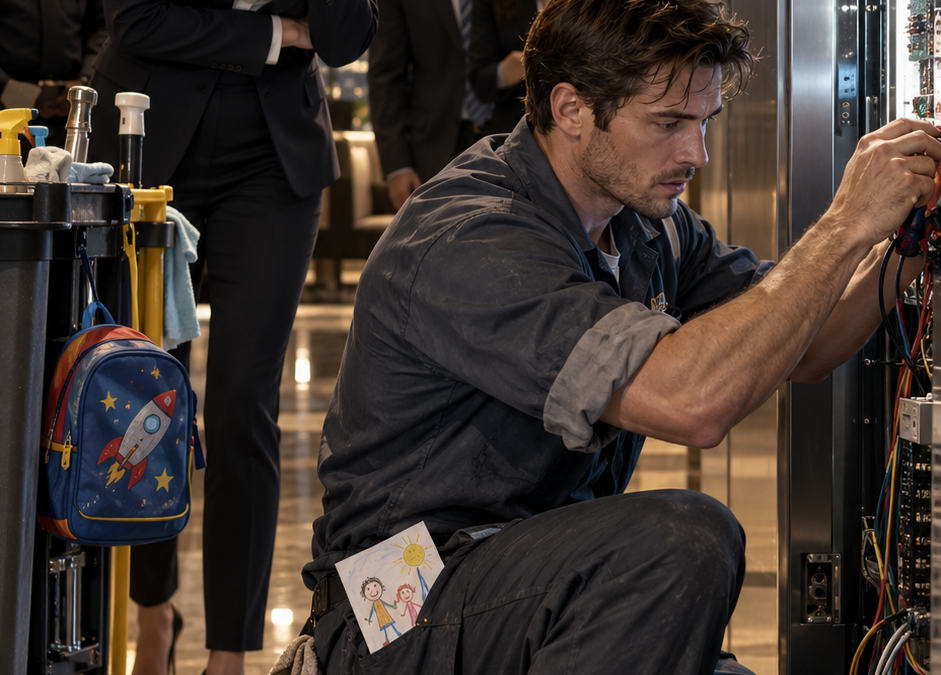
Single Dad Took a Night Cleaning Job — Until the CEO Saw Him Fix a Problem No One Could
At 9:47 p.m., Ryan Holloway broke the only rule that had kept him employed for the last six months: never touch anything you weren’t paid to touch.
Three minutes later, three dead screens on the thirty-first floor were alive again.
By eight the next morning, the CEO wanted to know why her night cleaner understood the company’s most important system better than the people paid to protect it.
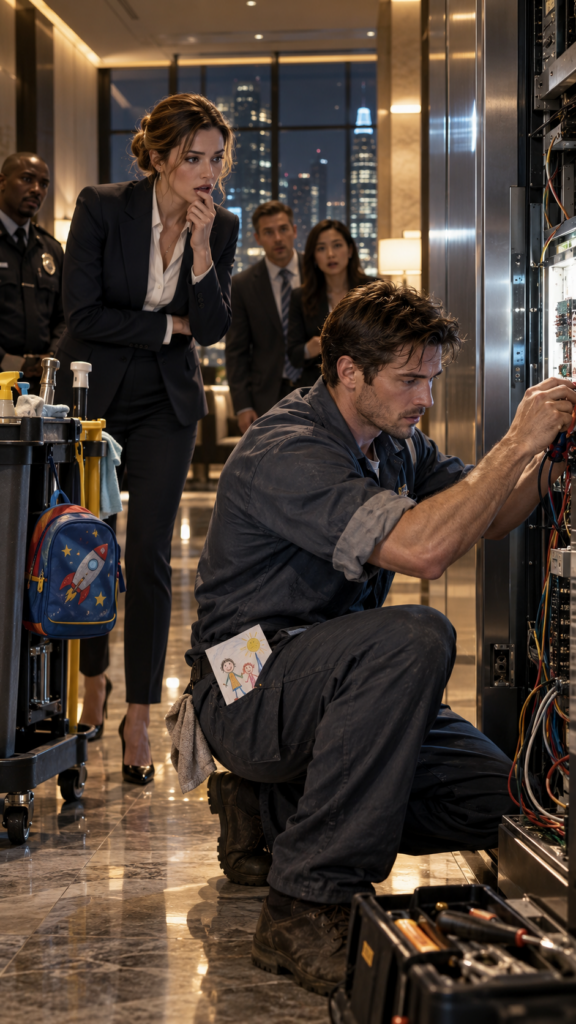
PART 1 — THE FLOOR THAT WAS SUPPOSED TO BE EMPTY
The conference room on the thirty-first floor of Stratton Dynamics was supposed to be empty by nine at night.
That was one of the reasons Ryan Holloway had taken the job.
Come in after the executives left. Clean the offices. Empty the trash. Wipe fingerprints from glass walls no one noticed until they were gone. Leave before Denver traffic started building and get home before his seven-year-old daughter woke for school.
Invisible work for invisible hours.
At thirty-four, Ryan had become surprisingly good at being invisible.
The green Knight Services uniform hung awkwardly across his shoulders, never quite looking like it belonged to him. His dark hair was usually a little too long, his jaw carrying two or three days of stubble because shaving had become one of those small things that lost arguments against lunch boxes, laundry, bills, and exhaustion.
His badge said only:
RYAN H.
NIGHT MAINTENANCE
Nothing on it said he had spent eleven years designing infrastructure systems.
Nothing said that two years earlier he had stood in server rooms wearing a corporate badge with administrative clearance across three data centers.
Nothing said he once earned enough money that he had never checked his account balance before buying Lily new shoes.
Life had changed quietly at first.
His wife, Emily, had died two years earlier after an illness that had moved faster than either of them had been prepared to understand. Ryan had returned to work because adults still needed paychecks even when their houses felt hollow. Fourteen months later, his company eliminated his division during a restructuring.
He had savings.
Then he had less savings.
Then there was the mortgage, health insurance, Lily’s after-school program, the transmission in the Honda, and the brutal arithmetic of being the only adult in a house where one small person trusted you to make everything feel normal.
By the time Knight Services offered him overnight cleaning work, pride had become something Ryan could no longer afford.
So he took it.
And he told Lily only that Daddy had “a night job downtown.”
She never asked what kind.
At 9:37 that Tuesday evening, Ryan pushed his cleaning cart through the glass doors of Stratton Dynamics’ executive floor. The city stretched beyond the windows in thousands of white and amber lights, the mountains beyond them reduced to black shapes against the sky.
The boardroom smelled faintly of coffee and expensive wood.
Ryan sprayed the mahogany conference table and began wiping from one end to the other.
Then he noticed the screens.
There were twelve monitors mounted across the far wall, displaying logistics activity from Stratton facilities in Denver, Phoenix, Atlanta, Seattle, Toronto, and Mexico City. Colored routes moved across maps while numbers updated beside inventory totals.
Three monitors on the left were black.
Ryan stopped moving.
His cloth remained pressed against the table.
There were different kinds of black screens.
Powered-off screens had a particular emptiness. Dead displays looked different. Anyone who had spent enough years around systems eventually developed an instinct for it.
These screens weren’t dead.
They were waiting for something that wasn’t arriving.
Ryan looked toward the conference room door.
Empty hallway.
He looked back.
“Not your problem,” he whispered.
He kept cleaning.
Eleven seconds later, he stopped again.
One monitor briefly flashed gray before going dark.
Ryan closed his eyes.
“Come on.”
He knew himself well enough to understand he had already lost the argument.
He removed one glove and took out his phone.
The monitoring platform was familiar. Different branding, different interface, but the architecture underneath behaved like systems he had spent years building.
Ryan watched the remaining live displays.
Seven seconds.
Refresh.
Seven seconds.
Refresh.
Seven seconds.
A fourth screen flickered.
“Cascade,” he murmured.
The dropout was spreading from upstream.
By morning, executives would probably walk into the room and find the entire monitoring wall dark. IT would start tracing hardware, then network connectivity, then application services, losing valuable time because the symptom looked larger than the fault.
Ryan walked to the side console.
The terminal should have been locked.
It wasn’t.
Someone had left a maintenance override active.
He stared at the login prompt.
This was the moment to stop.
He was a subcontracted cleaner standing beside a restricted system on an executive floor after business hours.
Being correct would not necessarily protect him from being fired.
Ryan thought of Lily sleeping at home while their neighbor Mrs. Alvarez listened for the baby monitor they no longer technically needed but still used because it made Ryan feel better.
He thought about the mortgage payment due Friday.
Then another screen flickered.
Ryan sat down.
“Three minutes,” he told himself.
He traced the failing feeds backward.
The refresh service was querying two competing synchronization sources. One source was current. The other appeared to be an old failover node that should have been retired.
Each time the refresh process received conflicting timestamps, it tried again.
The retries were stacking.
Ryan found the configuration.
There.
A refresh interval had been changed during a previous update without the corresponding cascade limit being corrected.
Simple mistake.
Dangerous consequence.
He disabled the obsolete reference, reset the synchronization priority, then cleared the queued refresh attempts.
One change.
Second change.
Third.
Save.
Ryan stood.
For four seconds, nothing happened.
Then the first monitor returned.
Phoenix.
The second illuminated beside it.
Seattle.
The third flashed once and came alive.
Ryan released a breath he hadn’t realized he was holding.
“Okay.”
He backed away from the console.
That was when another line appeared briefly at the bottom of the diagnostic window.
LEGACY SYNCHRONIZATION SOURCE: KESTREL NODE 04
Ryan froze.
Kestrel.
He had not heard that name in years.
His previous company had used the name for an internal recovery architecture developed during a major platform migration.
Ryan had helped design part of it.
He leaned closer.
Before he could open the diagnostic details, the maintenance session automatically closed.
The boardroom monitors continued updating normally.
Ryan stood there for nearly a minute.
Then he put his glove back on.
He wiped the conference table.
He emptied the trash.
He vacuumed the hallway.
At 11:18 p.m., Ryan rode the service elevator down to the parking garage and climbed into an eight-year-old Honda beneath a fluorescent light that flickered every twenty seconds.
He told himself Kestrel meant nothing.
Common internal project name.
Coincidence.
By 12:06 a.m., he was home.
Lily had kicked her blanket onto the floor.
Ryan pulled it back over her shoulders and moved a strand of brown hair away from her cheek.
She opened her eyes halfway.
“You’re home?”
“I’m home.”
“What time is it?”
“Sleeping time.”
Her eyes closed again.
Ryan remained beside the bed for several seconds.
This was why he cleaned offices.
Not because he had forgotten what he used to be.
Because this little girl needed him more than his pride did.
The next evening, Ryan arrived at Knight Services fifteen minutes early.
His supervisor, Tom Bennett, was waiting beside the supply room.
Tom was fifty-eight, permanently tired, and had spent enough years managing cleaning crews to recognize trouble before people admitted it existed.
“Ryan.”
Something in his tone stopped him.
“What happened?”
Tom folded his arms.
“The executive team is asking about their monitoring system.”
Ryan said nothing.
“They said someone corrected a system failure from the maintenance terminal on thirty-one at 9:47 last night.”
A beat.
“Security says you were the only contractor on that floor.”
Ryan slowly set down his backpack.
“I touched it.”
Tom stared at him.
“Ryan.”
“The access override was already open.”
“That isn’t the point.”
“I know.”
“Do you?”
“The refresh protocol was cascading because an obsolete synchronization source was still active. Three screens were already down. The rest would have followed.”
Tom’s expression changed slightly.
Not understanding.
Recognition.
He suddenly remembered that there had always been something unusual about Ryan—the way he fixed the floor-buffer charger instead of reporting it, the way he once corrected the inventory spreadsheet without being asked.
“What exactly did you do before you came here?”
“Systems engineering.”
“How long?”
“Eleven years.”
Tom looked almost offended.
“And you’re cleaning conference rooms?”
Ryan gave him a tired half-smile.
“Conference rooms have better hours.”
Tom did not smile back.
“They want you upstairs tomorrow.”
Ryan’s stomach tightened.
“Who?”
“The CEO.”
At 7:52 the next morning, Ryan stood inside Stratton Dynamics wearing the only suit he still owned.
It had fit better eighteen months ago.
Mrs. Alvarez had taken Lily to school after Ryan explained he had an early meeting. Lily had made him promise he would still pick her up.
“Three fifteen,” she had said sternly.
“I know.”
“You forgot last Thursday.”
“I was seven minutes late.”
“That counts.”
Ryan had smiled then.
He wasn’t smiling now.
At 8:01, an assistant opened a glass door.
“Ms. Marsh will see you.”
Victoria Marsh looked exactly like someone who had spent twenty years learning how not to waste movement.
Forty-two, dark wavy hair, navy suit, no unnecessary jewelry. She stood near the windows reading something on a tablet before turning toward Ryan.
“Mr. Holloway.”
“Ms. Marsh.”
“Sit.”
There was another man in the room.
Mid-forties. Gray suit. Controlled expression.
Victoria gestured toward him.
“Caleb Mercer. Director of Infrastructure Systems.”
Ryan shook Caleb’s hand.
Caleb did not sit.
Victoria did.
“You corrected a fault in our operations monitoring system Tuesday night.”
“Yes.”
“Our infrastructure team had received no alert.”
Ryan hesitated.
“That may be part of the problem.”
Caleb’s jaw shifted.
Victoria noticed.
“Explain.”
Ryan walked them through what he had seen.
The refresh timing.
The cascading retries.
The obsolete synchronization source.
The three configuration changes.
He spoke without trying to impress anyone.
After several minutes, Victoria stopped looking at the file in front of her.
She started looking directly at him.
Caleb did too.
When Ryan finished, the room remained quiet.
Victoria finally spoke.
“Your employment record says night maintenance.”
“That’s correct.”
“It says nothing about systems engineering.”
“That wasn’t relevant to the position.”
Victoria leaned back slightly.
“Eleven years?”
Ryan looked at her.
“How did you—”
“We verified your employment history this morning.”
Caleb turned.
“You worked at Northbridge Systems.”
“Yes.”
“You were senior infrastructure engineer.”
“For the last four years.”
Victoria’s expression stayed unreadable.
“Why are you cleaning offices?”
Ryan could have given the version people found comfortable.
Reorganization.
Bad timing.
Family obligations.
Instead, he gave her the truth.
“My wife died two years ago.”
Neither executive interrupted.
“I have a seven-year-old daughter. My division was eliminated fourteen months ago. Most positions at my level required travel, relocation, or hours I couldn’t guarantee.”
He paused.
“This job lets me work while Lily sleeps and be home when she wakes up.”
Victoria didn’t say she was sorry.
Ryan appreciated that more than he expected.
She simply nodded once.
“Thank you.”
Then Caleb placed a printed sheet on the table.
“There’s something else.”
Ryan looked down.
It was a system log.
9:47:12 p.m.
9:47:19.
9:47:33.
His maintenance-terminal session.
Then one line beneath the others had been highlighted.
KESTREL RECOVERY SIGNATURE — RHOLLOWAY BUILD 7.3
Ryan stopped breathing.
Victoria watched his face.
“You recognize it.”
Ryan stared at the page.
“I recognize the architecture.”
Caleb’s voice hardened.
“It contains your name.”
“I can see that.”
“Kestrel is embedded inside one of our oldest operational layers. No one on my current team knows why.”
Ryan looked up.
“How long has Stratton been running it?”
“That is exactly what I would like you to tell us.”
“I’ve never worked for Stratton.”
Caleb slid another sheet across the table.
“Our records show the Kestrel node was supposedly retired six years ago.”
Ryan looked at the timestamp again.
Victoria folded her hands.
“And yet last night,” she said quietly, “when a night cleaner touched our system, software carrying that cleaner’s name woke up inside our network.”
She held his gaze.
“So before we discuss anything else, Mr. Holloway…”
Her voice became very still.
“…tell me why.”
And for the first time since Ryan had entered the building, he had absolutely no answer.
PART 2 — THE NAME BURIED IN THE CODE
Ryan read the highlighted line three times.
It did not change.
RHOLLOWAY BUILD 7.3
Caleb Mercer remained standing as if sitting might imply patience he did not possess.
Victoria simply waited.
Ryan finally looked up.
“Kestrel was an internal recovery framework at Northbridge.”
“What did it do?” Victoria asked.
“It kept distributed monitoring systems synchronized during partial network failures. If one data source disappeared, Kestrel temporarily redirected requests to a mirrored source.”
Caleb frowned.
“So you built it.”
“Parts of it.”
“Then why is it here?”
“I don’t know.”
Caleb gave a humorless laugh.
“That’s convenient.”
Ryan turned toward him.
“You asked me a question. I gave you the answer.”
“And I’m supposed to believe proprietary code you helped design accidentally appeared inside our production environment?”
“I’m saying I didn’t put it here.”
Victoria lifted one hand.
The room stopped.
“How could Stratton have acquired it legitimately?”
Ryan thought.
“Licensing. Acquisition. Vendor integration. Northbridge sold platform components to dozens of enterprise customers.”
Caleb looked at Victoria.
“We acquired Broadline Logistics seven years ago.”
Ryan’s eyes shifted.
“Broadline used Northbridge.”
That changed the room.
Caleb pulled out his phone.
Ryan continued.
“If Broadline licensed the recovery stack, Kestrel could have entered Stratton’s infrastructure during the acquisition.”
“Then why is your name still attached?” Victoria asked.
“Because engineers are lazy about internal metadata.”
For the first time, Victoria almost smiled.
Ryan continued.
“And because nobody expects an internal build tag to matter six years later.”
Caleb was already typing.
“Even if that explains the code, it doesn’t explain why a retired recovery layer is still responding to production traffic.”
“No,” Ryan said.
“That part worries me.”
Victoria watched him.
“Why?”
“Because forgotten systems don’t stay harmless just because people forget them.”
Silence.
Then Victoria closed the file.
“We have a senior infrastructure position open.”
Caleb turned sharply.
“Victoria.”
She ignored him.
“Four months. Three candidates reached final round. None were approved.”
Ryan said nothing.
Victoria continued.
“You will go through the same process.”
“I’m not asking for—”
“I know.”
Her eyes remained on him.
“That’s one reason I’m asking.”
Ryan looked between her and Caleb.
“If this is because of last night—”
“Last night tells me you notice things people have trained themselves not to notice.”
She paused.
“That is not the same as being qualified for the position.”
“I agree.”
Caleb studied him more carefully now.
Victoria said, “Interview Thursday.”
Ryan checked the wall clock.
8:24.
He had thirty-six minutes before he needed to leave to guarantee he reached Lily’s school by 3:15 after sleeping.
“I need the schedule.”
Victoria’s expression changed almost imperceptibly.
“School?”
He nodded.
“Drop-off is 7:45. Pickup is 3:15.”
“HR will work around it.”
Ryan glanced at her.
“You don’t have to.”
“I know.”
A brief silence.
“You almost refused this morning’s meeting because of school drop-off.”
Ryan blinked.
“How did you know?”
“Single father. Seven-year-old child. Eight o’clock meeting.”
A faint smile touched the corner of her mouth.
“It wasn’t a difficult calculation.”
Thursday morning, Ryan sat across from four engineers in a room two floors below the boardroom he normally cleaned.
Osei Grant led the panel.
He was fifty, soft-spoken, with the patient expression of someone who had survived enough technology trends to distrust enthusiasm.
Dana Brooks specialized in network architecture.
Miguel Santos managed platform automation.
Priya Shah handled reliability engineering.
Nobody mentioned the green maintenance uniform.
Ryan appreciated that.
For the first hour, they attacked him with scenarios.
Partial database partition.
Regional failover.
Certificate rotation failure.
Multi-cluster synchronization drift.
Ryan answered slowly when the answer required thought and quickly when it didn’t.
Then Osei slid a technical assessment toward him.
“Ninety minutes.”
Ryan finished in thirty-nine.
He did not announce it.
He reviewed his answers twice, then placed the pen down.
Osei looked at the clock.
“Seriously?”
Ryan shrugged.
“I’ve seen versions of most of these problems.”
Osei leaned back.
“Where have you been for fourteen months?”
Ryan glanced upward.
“Thirty-first floor.”
Miguel laughed before he could stop himself.
The room relaxed for exactly twelve seconds.
Then every monitor along the wall turned yellow.
A warning tone sounded.
Osei’s expression changed.
“Phoenix telemetry just dropped.”
Dana was already moving toward her laptop.
“Seattle too.”
A second alarm appeared.
Osei stood.
“Interview’s over.”
Ryan pushed back his chair.
No one told him to leave.
For three minutes, he watched the team work.
Logs opened.
Commands appeared.
People spoke in clipped sentences.
Then Ryan saw the timestamps.
Phoenix was lagging seven seconds.
Seattle fourteen.
Denver twenty-one.
The sequence was too clean.
“That isn’t packet loss.”
No one answered.
Ryan stepped closer.
“It’s clock drift.”
Dana looked at him.
“Across regions?”
“Not the hosts. The reference service.”
She checked.
Her face changed.
“Osei.”
He moved beside her.
Ryan pointed.
“Don’t restart the monitoring service.”
Miguel’s hand stopped over the keyboard.
“Why?”
“Because if the reference service is cycling, the restart will synchronize everything to the bad source.”
Osei looked at Ryan.
“What would you do?”
“Fail the monitoring layer onto the secondary clock source first.”
Dana said, “Secondary hasn’t been tested since the Broadline migration.”
Ryan’s stomach tightened.
Broadline.
Kestrel.
Osei made the decision.
“Do it.”
Dana switched reference sources.
The yellow alerts stopped multiplying.
Five seconds.
Ten.
Phoenix returned.
Then Seattle.
Osei exhaled.
Ryan stared at the configuration history now visible on Dana’s monitor.
A maintenance script had modified the reference priority nine months earlier.
The script name was almost meaningless.
KM_ARCHIVE_SYNC
Ryan leaned closer.
“Open that.”
Dana did.
The change ticket appeared.
Closed.
Approved.
Ryan looked at the authorization name.
His expression shifted.
Osei saw it.
“What?”
Ryan pointed.
The ticket had been approved by one person.
CALEB MERCER — DIRECTOR, INFRASTRUCTURE SYSTEMS
Osei went very still.
Behind them, the conference room door opened.
Caleb Mercer stood in the doorway.
No one spoke.
His eyes moved from Ryan to the screen.
Then back again.
And Ryan understood that whatever problem had begun with three dark monitors was no longer just a technical failure.
Someone had known Kestrel was still there.
PART 3 — THE SHORTCUT NO ONE WANTED TO NAME
Caleb did not deny approving the change.
That surprised Ryan.
He entered the room, closed the door, and looked at the ticket on Dana’s monitor.
“That was part of the Phoenix expansion.”
Osei folded his arms.
“You reactivated an archived synchronization bridge?”
“For forty-eight hours.”
“It has been nine months.”
Caleb’s jaw tightened.
“The vendor migration failed.”
Ryan watched him carefully.
This was not the posture of a man caught stealing.
It was the posture of a man who had made one compromise and then spent months defending everything required to keep that compromise invisible.
Victoria arrived twenty minutes later.
No raised voices followed.
That made the meeting more uncomfortable.
She sat at one end of the table while Caleb explained.
Stratton had opened two distribution facilities ahead of schedule after signing a major retail contract. The new telemetry platform had not been ready. Missing the launch window would have cost millions and threatened hundreds of jobs.
Caleb’s team needed a temporary synchronization solution.
Someone remembered the old Broadline recovery layer.
Kestrel worked.
So they used it.
“For two days,” Victoria said.
“That was the plan.”
“But you kept it.”
“We kept getting blocked on migration.”
“And you didn’t document that to me.”
Caleb looked at her.
“No.”
“Why?”
A long silence.
“Because each week it became harder to explain why it was still there.”
Ryan lowered his eyes.
He understood that sentence more than he wanted to.
Bad systems rarely began with people deciding to create disasters.
They began with Tuesday problems.
Deadlines.
Emergency patches.
Someone promising they would clean it up Friday.
Then Friday arrived with another fire.
Victoria turned to Ryan.
“What would you do?”
Caleb’s expression hardened.
Ryan did not answer immediately.
“I’d map every dependency first.”
“That could take weeks,” Caleb said.
“Then it takes weeks.”
“We don’t have weeks.”
Ryan looked at him.
“That sentence is probably how you got nine months.”
Osei glanced toward the table.
Caleb’s face flushed.
Victoria said nothing.
Ryan continued more carefully.
“I’m not saying rip it out tomorrow. I’m saying we need to know what still depends on it before anyone touches anything.”
Victoria nodded.
“Do it.”
Caleb stared at her.
“With what team?”
“Osei chooses.”
“And Holloway?”
Victoria looked at Ryan.
“He hasn’t been hired.”
Ryan expected that to end the question.
Instead she added, “Yet.”
Eight days later, Ryan received an offer.
Senior Infrastructure Engineer.
The salary figure on the letter made him sit down at his kitchen table.
Lily was coloring beside him.
She looked up.
“Are we in trouble?”
Ryan laughed softly.
“No.”
“You only make that face when something costs money.”
He looked at her.
“This is the opposite.”
That evening he made buttered pasta with Parmesan because it was her favorite meal and because Ryan had learned that important conversations with seven-year-olds worked better when nobody was hungry.
“I got another job.”
Lily twirled pasta around her fork.
“Downtown?”
“Yes.”
“Nighttime?”
“No.”
Her fork stopped.
Ryan smiled.
“I’d work during the day.”
She stared at him.
“So you’d be home at bedtime?”
“That’s the idea.”
“Every night?”
“As many as I can.”
She considered the answer with grave seriousness.
Then she nodded.
“Okay.”
Ryan felt something tighten behind his ribs.
All the salary numbers on the offer letter suddenly became secondary.
Lily took another bite.
Then she said, “What job did you have before?”
Ryan looked down at his plate.
“Maintenance.”
“What does that mean?”
He hesitated.
“Cleaning offices.”
Lily blinked.
“Oh.”
Ryan waited for embarrassment.
Confusion.
Anything.
Instead she said, “Did you clean toilets?”
He laughed despite himself.
“Sometimes.”
“Gross.”
“Very.”
She returned to her pasta.
That was all.
Ryan realized he had spent months protecting his daughter from an embarrassment that had existed almost entirely inside himself.
Monday morning, he entered Stratton Dynamics through the front lobby instead of the loading entrance.
Tom Bennett was waiting near security.
Ryan stopped.
“You didn’t have to come up.”
“Wanted to see if the suit still fit.”
Ryan smiled.
Tom held out his hand.
“You were a good cleaner.”
“That might be the nicest thing anyone has said to me this month.”
“I’m serious.”
“I know.”
Tom shook his hand.
Then he pulled Ryan closer and spoke quietly.
“Don’t become one of those people who forgets our names.”
Ryan looked at him.
“I won’t.”
His first official assignment came at 10:15.
Map Kestrel.
Ryan expected a few leftover dependencies.
By lunchtime, they found eleven.
By three, nineteen.
By the end of the second day, thirty-seven production services still relied in some way on an undocumented recovery framework officially retired six years earlier.
Osei stood beside Ryan staring at the architecture map.
“This is impossible.”
“No,” Ryan said.
“It’s expensive.”
Dana pointed to a certificate entry.
“What’s that?”
Ryan zoomed in.
The room became quiet.
The authentication certificate securing Kestrel’s synchronization service had an expiration date.
Friday.
6:00 p.m.
Osei checked the calendar.
Three days.
Dana swore under her breath.
“We renew it.”
Ryan shook his head.
“Certificate authority doesn’t exist anymore.”
“What?”
“Northbridge retired it years ago.”
Osei stared at him.
“So what happens Friday at six?”
Ryan looked across the map containing thirty-seven connected services.
“If we’re lucky, they fail independently.”
“And if we’re not?”
Ryan’s eyes remained on the screen.
“They fail together.”
No one spoke.
Then Osei asked the question none of them wanted answered.
“Does Caleb know?”
Ryan opened the old ticket history.
Someone had attached an automated warning two months earlier.
The warning had been acknowledged.
Then the ticket had been closed.
Ryan stared at the username.
Caleb Mercer.
Again.
PART 4 — FORTY-SEVEN HOURS
Victoria read the certificate-expiration report once.
Then she read it again.
“How long?”
“Forty-seven hours,” Osei said.
She looked at Caleb.
He seemed older than he had a week earlier.
“I saw the warning.”
Victoria’s voice remained level.
“And closed it.”
“I sent it to our migration vendor.”
“They’re bankrupt,” Dana said.
“They weren’t then.”
Ryan watched Caleb rub his thumb along the edge of the table.
“I thought they renewed it.”
“You thought?”
Caleb looked at Victoria.
“I had eighteen open projects and thirty-two people doing the work of fifty.”
“That explains pressure,” she said.
“It doesn’t explain silence.”
Caleb said nothing.
Victoria turned to Osei.
“What do you need?”
“Authority to freeze noncritical infrastructure changes.”
“Done.”
“Everyone we can get.”
“Done.”
Osei looked at Ryan.
“And him.”
Victoria nodded.
Caleb pushed his chair back.
“Victoria, you’re putting a man who started here last Monday into the center of a production migration.”
Ryan expected anger.
What surprised him was that Caleb sounded frightened.
Victoria heard it too.
“He knows the system.”
“He knows the old system.”
“Right now, the old system is the problem.”
Caleb looked at Ryan.
“This isn’t a technical exercise.”
“I know.”
“You make the wrong call, people stop receiving inventory data. Trucks stop loading. Stores miss deliveries.”
“I know.”
“Do you?”
Ryan met his eyes.
“Better than you think.”
For a second, Ryan was back six years earlier at Northbridge, sitting in another fluorescent conference room while an executive demanded a deadline that engineering knew was impossible.
Ryan had warned them.
Once.
Twice.
Then he had allowed himself to be overruled.
He had told himself his responsibility ended when management made the decision.
Three weeks later, an outage lasted seven hours.
No one died.
Nothing exploded.
But customers lost money, people lost sleep, and engineers spent months repairing trust.
Ryan never forgot the lesson.
Knowing a problem existed was not the same as taking responsibility for it.
By Thursday evening, they had reduced Kestrel’s dependencies from thirty-seven to twenty-two.
By Friday morning, fourteen.
The office smelled like cold coffee and takeout food.
At 2:30 Friday afternoon, Ryan checked his phone.
A photograph from Lily.
A cardboard volcano stood on their kitchen table.
Beside it was a handwritten sign.
PRESSURE BUILDS UNTIL SOMETHING HAS TO MOVE
Ryan smiled.
Science night.
6:30.
He had promised.
At 4:10, nine dependencies remained.
At 5:02, four.
At 5:37, Phoenix failed.
Every screen in the operations room flashed red.
Dana swore.
Ryan moved beside her.
“Which service?”
“Inventory reconciliation.”
“Rollback?”
“Would reattach Kestrel.”
Ryan looked at the clock.
5:39.
Twenty-one minutes.
Osei said, “We can extend locally.”
“No,” Ryan said.
Dana looked at him.
“Why?”
“Because then Phoenix becomes a permanent exception.”
“We need it up.”
“I know.”
He pointed at the routing table.
“Move reconciliation through Denver temporarily. Thirty minutes. Finish the Phoenix migration clean.”
“That doubles latency.”
“For half an hour.”
Osei nodded.
“Do it.”
5:48.
Phoenix returned.
5:53.
Two dependencies.
5:57.
One.
Everyone stared at the migration console.
Ryan could hear the ventilation system.
A keyboard somewhere in the room.
His own pulse.
5:59:18.
Dana hit Enter.
Migration completed.
6:00.
The old Kestrel certificate expired.
Nothing happened.
One second.
Five.
Ten.
All systems remained green.
Someone behind Ryan started laughing.
Then the room erupted.
Not cheering exactly.
Something more exhausted.
People clapped shoulders, dropped into chairs, released breaths they had been holding for two days.
Osei looked at Ryan.
“You have somewhere to be.”
Ryan checked the clock.
6:02.
He ran.
Science night had already started when Ryan entered Rosemont Elementary at 6:41.
Parents crowded the gym.
Children stood beside projects involving magnets, baking soda, plants, and balloons.
Ryan searched desperately.
Then he saw Lily.
She stood beside her volcano wearing a yellow sweater.
Mrs. Alvarez was beside her.
Lily saw him.
Her face changed.
Not dramatically.
Just enough.
Ryan knew he had made it before disappointment became memory.
He walked over.
“I’m sorry.”
“You said you’d come.”
“I know.”
“You’re eleven minutes late.”
“Technically.”
“Dad.”
“I’m here.”
She looked at him for one long second.
Then she pointed at the volcano.
“Want to see it explode?”
“More than anything.”
At 8:17 that night, Ryan’s phone vibrated while he and Lily shared frozen yogurt.
Osei.
Ryan almost ignored it.
Then he saw the second message.
We found something in the post-migration reconciliation.
A photograph followed.
Rows of mismatched inventory records.
Millions of dollars.
Ryan read the last line twice.
These aren’t random errors. Somebody has been manually correcting the numbers for months.
Ryan looked across the table at Lily licking chocolate from a plastic spoon.
For forty-seven hours, Ryan had believed they were trying to save Stratton from a technical failure.
He suddenly understood they had uncovered something much larger.
And someone inside the company had known it was there.
PART 5 — WHAT THE DARK SCREENS HAD BEEN HIDING
Monday morning began with Internal Audit.
Ryan hated that phrase.
It brought back memories of conference rooms where everyone chose sentences based on how they might sound later in court.
Victoria made one thing clear before the meeting started.
“No theories.”
She looked around the table.
“Facts first.”
The facts were uncomfortable enough.
Kestrel’s synchronization problems had caused transaction updates to arrive late or twice. Most discrepancies had been corrected automatically.
Some had not.
Over nine months, employees in operations had manually reconciled hundreds of records.
That alone was not suspicious.
Then Priya found the pattern.
Certain adjustments were consistently delayed until after monthly reports closed.
The values were not enormous individually.
Together, they affected millions of dollars in inventory reporting.
Caleb sat silently through the presentation.
When Victoria asked who authorized the process, he answered.
“I did.”
No one moved.
Victoria’s eyes narrowed.
“You instructed employees to adjust records after close?”
“I instructed them to reconcile confirmed inventory after close instead of reopening reports.”
“Why?”
“Because reopening each report would have delayed month-end certification.”
The CFO leaned forward.
“You allowed inaccurate operational data to remain in closed reports?”
“Temporarily inaccurate.”
“That distinction will make the auditors feel wonderful.”
Caleb looked toward Victoria.
“We weren’t stealing anything.”
Ryan believed him.
That almost made it worse.
Caleb continued.
“The inventory existed. The deliveries happened. The timing was wrong.”
“Then why hide the timing?” Victoria asked.
“Because we were six weeks from refinancing a major facility expansion.”
The room went silent.
There it was.
Not theft.
Not an evil mastermind.
Fear.
Caleb had built too much, too quickly.
He had chosen a shortcut to keep operations moving.
Then another shortcut to keep reporting stable.
Then another decision to hide the first two until there was never a safe moment to admit how deep the problem had become.
Victoria looked at him for a long time.
“You should have told me.”
Caleb’s laugh held no humor.
“You would have stopped the expansion.”
“Yes.”
“Four hundred jobs depended on that facility.”
“So you decided for everyone.”
“I kept it running.”
Ryan finally spoke.
“You kept it quiet.”
Caleb turned.
The words landed because Ryan had said them without anger.
Caleb looked exhausted.
“You think this is simple because you weren’t sitting in my chair.”
Ryan shook his head.
“No.”
He remembered Northbridge.
The seven-hour outage.
The warning he had allowed management to ignore.
“I think people tell themselves silence is temporary.”
Caleb stared at him.
“And then?”
Ryan looked at the old Kestrel architecture on the screen.
“Temporary lasts nine months.”
By Wednesday, Internal Audit found no evidence that Caleb or anyone else had stolen money.
They found something less dramatic and more believable.
Bad governance.
Hidden technical debt.
Reporting decisions that had prioritized deadlines over transparency.
Stratton would need to correct previous disclosures and explain the issue to lenders.
The financial damage was survivable.
The reputational damage might not be.
Caleb was placed on administrative leave.
Before leaving the building, he stopped beside Ryan’s desk.
People nearby became very interested in their monitors.
Caleb placed his access badge on Ryan’s desk.
“You know what’s funny?”
Ryan looked up.
“What?”
“When we activated Kestrel, I thought I was saving the company.”
Ryan said nothing.
“Maybe I did.”
Caleb looked toward the elevators.
“For a while.”
Then he walked away.
That afternoon, Victoria asked Ryan to attend Monday’s emergency board meeting.
“No.”
Her eyebrows lifted.
Ryan continued.
“I’m an engineer who has worked here for nine days.”
“You understand the technical failure better than anyone in that room will.”
“Then Osei should explain it.”
“Osei is explaining remediation.”
Ryan leaned back.
“What do you want me to explain?”
“How it happened.”
“You already know.”
“I want them to understand.”
Ryan looked toward the office door.
“What happens if they don’t?”
Victoria’s eyes stayed on him.
“That depends on what they believe leadership should have known.”
Ryan understood.
Her job was in danger.
Monday morning, thirteen board members gathered on the thirty-first floor.
The same room Ryan had cleaned.
The same mahogany table.
The same wall of screens.
Ryan stood near the end while Victoria opened the meeting.
He had spoken for nine minutes when the monitors went black.
All twelve.
At once.
Nobody moved.
One board member slowly turned toward Ryan.
Another looked at Victoria.
Then the room’s main display flashed a single message.
AUTHORIZATION FAILURE — SESSION INVALID
Osei whispered something under his breath.
Victoria looked at Ryan.
“Is this Kestrel?”
Ryan stared at the error.
“No.”
“Are you sure?”
“Yes.”
“How?”
Ryan walked toward the console.
“Because we removed Kestrel.”
He opened the authentication logs.
Then his stomach dropped.
A security token used by the new monitoring platform had expired.
Different system.
Different cause.
Same result.
Ryan heard a board member behind him say, “You have got to be kidding me.”
He ignored the voice.
Two minutes later, Ryan found the dependency.
The emergency migration had moved the monitoring service onto a secondary authentication path.
The path had a temporary token.
Temporary.
Again.
Ryan looked across the table at Victoria.
She understood before he said anything.
They had fixed the hidden old system.
In doing so, they had created the first workaround of the new one.
PART 6 — THE PROBLEM WAS NEVER JUST THE SOFTWARE
Ryan did not fix the authentication failure alone.
That mattered.
Osei took identity services.
Dana traced the token chain.
Priya validated production access.
Ryan coordinated.
Seven minutes later, the operations displays returned.
No one applauded.
Ryan preferred it that way.
He turned toward the board.
“This is what we’re actually dealing with.”
The room was silent.
“Not one bad engineer. Not one bad system. Not one old piece of software.”
He pointed toward the restored monitors.
“We built a culture where temporary fixes became normal because shipping today always mattered more than cleaning up yesterday.”
Nobody interrupted.
Ryan continued.
“Kestrel became dangerous because it stayed invisible. The token failure happened because we were moving too fast to remove something else that had stayed invisible.”
One board member asked, “So who is responsible?”
Ryan glanced at Victoria.
Then Osei.
Then the engineers through the glass wall outside.
“Everyone who had authority to see the pattern.”
The board member frowned.
“That includes Ms. Marsh.”
“Yes.”
Victoria did not move.
Ryan added, “It also includes people like me.”
That surprised them.
“I worked at a company years ago where I raised concerns about a temporary architecture. Management overruled me.”
He paused.
“I let that become the end of my responsibility.”
The room stayed quiet.
“The system failed later. I spent years telling myself I had warned them.”
He looked at the screen.
“I had.”
Another pause.
“But warning somebody once and then walking away doesn’t always protect the people who have to live with the result.”
Victoria spoke after him.
“This failure happened under my leadership.”
No excuse followed.
“I approved growth that outpaced our controls. I accepted green dashboards without asking enough questions about what was required to keep them green.”
Her voice remained steady.
“I will not ask this board to pretend otherwise.”
The meeting lasted another three hours.
Victoria kept her job.
Caleb did not.
Two weeks later, his resignation became official.
Ryan expected to feel victorious.
Instead he felt tired.
Caleb had made serious choices.
Consequences mattered.
But Ryan had learned enough about failure to understand that removing one person rarely fixed the environment that created the behavior.
So he focused on the part he could influence.
Processes changed.
Temporary fixes received automatic expiration reviews.
Emergency changes required named owners.
Engineers were given time specifically for infrastructure cleanup.
Most importantly, people were allowed to say, “This deadline is unsafe,” without being treated as obstacles.
Ryan should have felt settled.
Instead he began staying late.
First once.
Then twice.
Then four nights in one week.
The irony was not lost on him.
He had spent fourteen months cleaning offices at night so he could be present for Lily.
Now he had the job he wanted and was slowly disappearing again.
One Thursday, Ryan arrived home at 8:43.
A plate covered with foil waited in the microwave.
Lily was asleep.
Beside the plate was a piece of notebook paper.
Dad, I saved you the biggest pancake for tomorrow. Please don’t leave before I wake up.
Ryan stood in the dark kitchen holding the note.
The next morning he entered Victoria’s office at 9:10.
“I need to change how I’m working.”
She looked up.
“That sounds ominous.”
“I’m serious.”
“So am I.”
Ryan sat.
“I’ll handle real incidents. But I’m not staying until eight every night because someone scheduled a planning meeting at five-thirty.”
Victoria studied him.
“I thought the new role was working.”
“It is.”
“Then what’s wrong?”
Ryan placed Lily’s note on the desk.
Victoria read it.
Her expression softened almost imperceptibly.
Ryan said, “I took the night cleaning job because it gave me mornings and afternoons with my daughter.”
He leaned back.
“If I turn a better job into another reason she eats dinner without me, then I didn’t improve our life. I just improved my title.”
Victoria returned the note.
“What are you asking for?”
“Boundaries.”
“Define them.”
“No routine meetings after five. Real P1 incidents are different. Scheduled weekend work rotates. Nobody gets rewarded for being the last person online.”
Victoria was silent.
Then she opened her laptop.
Ryan frowned.
“What are you doing?”
“Writing it down.”
“For me?”
“For infrastructure.”
He stared.
Victoria shrugged.
“You found another system problem.”
A month later, Ryan arrived home most evenings before six.
Lily stopped leaving notes.
The new reliability program began working.
Then, on a Tuesday morning, a courier delivered an envelope to Stratton’s legal department.
By noon, Ryan was sitting with Victoria and two attorneys.
A letter lay on the table.
The letterhead belonged to Northbridge Systems.
Ryan’s former employer.
The first paragraph alleged unauthorized use of proprietary recovery software.
The second accused Stratton of operating Kestrel outside its original license.
The third named Ryan Holloway personally.
Victoria watched him read.
Ryan reached the final page.
Northbridge was threatening litigation.
But clipped behind the legal notice was another document.
A letter addressed only to Ryan.
Three lines.
We know what Stratton thinks they found in you.
We made a mistake fourteen months ago.
Come back, and we’ll make it right.
PART 7 — THE COMPANY THAT HAD LET HIM GO WANTED HIM BACK
Ryan took the letter home.
He did not read it again until Lily was asleep.
The compensation offer was almost absurd.
Vice President of Infrastructure Reliability.
Remote work.
Signing bonus.
Stock.
Nearly twice what Stratton paid him.
Fourteen months earlier, Ryan would have accepted before reaching the second page.
Now he felt mostly angry.
Not because the offer was bad.
Because it was late.
Northbridge had known his work for eleven years.
They had watched him handle outages, migrations, acquisitions, and nights when nobody went home until sunrise.
Then a restructuring spreadsheet had reduced him to a line item.
Fourteen months of rejection followed.
Recruiters saw the employment gap.
Hiring managers saw “single father requiring schedule flexibility.”
Nobody wrote that sentence down.
They did not have to.
Then a billionaire-dollar company discovered Ryan cleaning boardrooms, and suddenly his former employer remembered his value.
The next afternoon, Northbridge CEO Marcus Vale called him directly.
“I should have stopped your layoff.”
Ryan stood beside a window overlooking downtown Denver.
“But you didn’t.”
“No.”
“Why?”
Marcus hesitated.
“Because I had nine hundred employees and a board demanding twenty percent cost reduction.”
“That explains it.”
“I know it doesn’t excuse it.”
Ryan appreciated the distinction.
Marcus continued.
“You belong here.”
Ryan almost laughed.
“Where was ‘here’ fourteen months ago?”
Silence.
“We made a bad decision.”
“You made an efficient decision.”
“That’s fair.”
Ryan looked down at traffic moving below.
Marcus said, “You don’t owe Northbridge loyalty. I’m not asking for that. I’m asking you to consider the work.”
That was harder to dismiss.
Ryan had loved the work.
The people.
The technical problems.
The feeling of building something large enough to matter.
“What about the lawsuit?”
“Separate issue.”
“Nothing is separate when lawyers put my name in a letter.”
Marcus sighed.
“The Kestrel licensing question predates both of us.”
“I wrote part of Kestrel.”
“As a Northbridge employee.”
“I know who owns it.”
“And Stratton may not have had the right to continue running it after Broadline’s acquisition.”
Ryan shook his head.
“Then sue Stratton.”
“Our legal team named everyone associated with the code.”
“That isn’t what the letter says.”
“What do you mean?”
“It implies I transferred knowledge.”
Marcus went silent.
Ryan’s voice hardened.
“I never brought Northbridge code to Stratton.”
“I believe you.”
“Then remove my name.”
Another silence.
“I’ll handle it.”
Ryan ended the call.
Three days later, Northbridge formally withdrew the allegation against him.
Two weeks after that, legal teams discovered Broadline’s original acquisition contract had included a perpetual operational license.
The lawsuit collapsed quietly.
The job offer remained.
Ryan did not tell Victoria immediately.
He wanted to know what he wanted before listening to what anyone else wanted from him.
Saturday morning, Lily sat at the kitchen counter eating cereal while Ryan stared at Northbridge’s offer on his laptop.
“What’s that?”
“A job.”
“You already have a job.”
“Another one.”
She ate another spoonful.
“Is it nighttime?”
“No.”
“Far away?”
“No.”
“Do you have to wear the green shirt?”
Ryan smiled.
“No.”
Lily shrugged.
“Then I don’t know.”
Ryan laughed.
“That makes two of us.”
She studied his face.
“Which one makes you nicer?”
Ryan blinked.
“What?”
“When you cleaned the offices, you were tired, but you made pancakes.”
“Okay.”
“When you started the computer job, you were happier, but then you worked all the time and got grumpy.”
Ryan winced.
“Fair.”
“Now you make pancakes again.”
He looked at her.
“So Stratton?”
“I don’t know what Stratton is.”
“The place where I work.”
“Oh.”
She drank her milk.
“I like pancakes.”
Decision-making according to Lily Holloway.
Strangely effective.
Ryan declined Northbridge on Monday.
Not because Stratton paid enough.
Not because he owed Victoria anything.
Because he realized he no longer wanted his old life back.
He wanted the new life he was learning how to build.
Three months later, Victoria asked him into her office again.
“We’re creating a reliability architecture group.”
Ryan waited.
“I want you to lead it.”
He shook his head immediately.
Victoria raised an eyebrow.
“No?”
“Interview process.”
“You’re already here.”
“Doesn’t matter.”
“You want us to interview you for a job I created because of the work you’re already doing?”
“Yes.”
Victoria stared.
Ryan smiled slightly.
“One night told you more than most interviews?”
She recognized her own words.
A small smile appeared.
“Fine.”
He interviewed.
Osei made the panel unnecessarily difficult.
Ryan loved him for it.
He got the role.
That evening, the anniversary of Emily’s death, Ryan and Lily visited the small park near their old apartment where Emily used to take Lily to feed ducks.
They sat on a bench as sunset colored the lake orange.
Lily had become quieter about her mother as she got older.
Not because she remembered less.
Because the questions were becoming harder.
“Dad?”
“Yeah?”
“Would Mom be proud of your new job?”
Ryan looked across the water.
“I hope so.”
Lily kicked her sneakers against the bench.
“Would she be proud you cleaned offices?”
Ryan turned.
“Why wouldn’t she?”
“You didn’t like telling me.”
The question hit harder than any board meeting had.
Ryan looked at his daughter.
“How long did you know?”
Lily shrugged.
“I saw your shirt in the laundry.”
“The green one?”
“Yes.”
“When?”
“A long time ago.”
“And you never said anything?”
“You didn’t.”
Ryan swallowed.
Lily looked toward the ducks.
“Were you embarrassed?”
Ryan could have lied.
He didn’t.
“Yes.”
“Why?”
He stared at his hands.
“Because I used to have a job people thought was important.”
Lily frowned.
“Cleaning isn’t important?”
Ryan looked at her.
She wasn’t challenging him.
She genuinely didn’t understand.
He thought of Tom.
The overnight crew.
The trash cans that became full every day regardless of anyone’s salary.
The bathrooms executives assumed would simply be clean when they arrived.
The fingerprint-free glass.
Invisible work.
Invisible people.
“No,” Ryan said quietly.
“I was wrong.”
Lily leaned against his arm.
After a moment she asked, “Would Mom be mad?”
Ryan smiled through eyes that had suddenly become hot.
“At me?”
“Yeah.”
“For being embarrassed?”
Lily nodded.
Ryan looked at the sunset.
“Probably.”
That made her laugh.
And after a second, Ryan laughed too.
PART 8 — THE PEOPLE NOBODY SAW
Ryan changed small things first.
Names mattered.
He learned the names of every evening maintenance worker on the thirty-first floor.
Maria.
Devon.
Luis.
A woman named Sheila who had cleaned Victoria’s office for four years and somehow knew exactly which days the CEO forgot lunch because the trash can remained empty.
Nobody received grand speeches.
Ryan hated grand speeches.
He simply started saying hello.
When engineers left pizza boxes stacked beside overflowing trash cans, Ryan made them clean the conference room themselves.
Miguel complained once.
Ryan looked at him.
“You know the woman who empties that?”
Miguel hesitated.
“No.”
“Exactly.”
Miguel cleaned the table.
The technical changes were less visible but equally important.
Six months after Kestrel was removed, Stratton’s infrastructure had no undocumented production dependencies.
Temporary changes expired automatically unless reviewed.
Emergency fixes generated follow-up tickets that could not be silently closed by the person who created them.
Engineers rotated on-call coverage.
Nobody became a hero for working eighty-hour weeks.
Victoria called it operational discipline.
Ryan privately called it learning things the expensive way.
Caleb Mercer sent him an email one Thursday morning.
Ryan almost deleted it.
Then he opened it.
There were only four sentences.
I started consulting for a logistics company in Fort Collins.
Small place. They document everything because they’re terrified of becoming Stratton.
You were right about one thing. I confused keeping systems running with keeping problems hidden.
Those are not the same job.
Ryan read it twice.
Then he replied.
No. They’re not. Good luck.
Nothing else needed saying.
That spring, Rosemont Elementary held Career Day.
Ryan arrived carrying no laptop.
Lily had specifically told him laptops were boring.
“You fix computers,” she complained.
“I fix systems.”
“That sounds even more boring.”
“So what am I supposed to bring?”
She thought.
“The green shirt.”
Ryan stared.
“My cleaning uniform?”
“Yes.”
“Why?”
“Because it’s part of the story.”
Ryan had no answer to that.
So on Career Day, he stood in front of twenty-two second graders wearing khaki pants and holding two shirts.
One was a Stratton Dynamics quarter-zip.
The other was his old green Knight Services maintenance shirt.
A boy in the front row pointed.
“Were you a janitor?”
“Yes.”
“Then how did you become an engineer?”
“I was an engineer first.”
The children looked confused.
Ryan smiled.
“Life doesn’t always move in a straight line.”
That sounded too philosophical for seven-year-olds.
He tried again.
“Sometimes grown-ups have to do different jobs because their family needs something.”
That they understood.
Lily raised her hand even though she clearly did not need permission.
“My dad cleaned a really big building at night.”
Ryan nodded.
“And one night he fixed something nobody else fixed.”
The teacher smiled.
“That sounds lucky.”
Ryan looked at Lily.
“Yes.”
Then he looked at the green shirt in his hands.
“But not for the reason people think.”
The children waited.
“The important part wasn’t that somebody noticed me.”
He thought about the empty boardroom.
Three dark screens.
A cleaning cart beside a mahogany table.
“The important part was doing the job correctly before I knew anybody was watching.”
Lily grinned.
“That’s what Grandpa taught you.”
Ryan looked at her.
“Yeah.”
His father had been a mechanic.
Different systems.
Same rule.
Months later, Ryan found himself on the thirty-first floor again at 9:47 p.m.
The timestamp made him smile.
A scheduled infrastructure migration had run long, but the team was finishing.
Not Ryan alone.
The team.
Osei closed his laptop.
“Go home.”
“You first.”
“I’m fifty-one. My children moved out.”
“Show-off.”
Osei laughed and headed toward the elevator.
Ryan collected his backpack.
Across the conference room, a woman in a gray cleaning uniform pushed a cart through the door.
Maria.
“Sorry,” she said.
“I thought everyone left.”
“We’re leaving.”
Ryan moved his laptop.
She started wiping the far end of the table.
One monitor flickered.
Ryan saw it.
Maria saw him see it.
She pointed with the cleaning cloth.
“Is that your problem or mine?”
Ryan smiled.
“Definitely mine.”
He checked the display.
Loose cable.
Nothing dramatic.
He reseated it.
The monitor stabilized.
Behind him, someone spoke.
“Still fixing things after everyone leaves?”
Victoria stood in the doorway.
Ryan turned.
“You’re still here too.”
“I own the problem.”
“You’re the CEO.”
“Same thing some days.”
Maria laughed quietly.
Victoria looked toward the cleaning cart.
Then at Ryan.
“You know, when I first saw the security footage from that night, I thought you were reckless.”
Ryan raised an eyebrow.
“You hired me anyway.”
“I said reckless. Not wrong.”
Maria moved to another table.
Victoria walked toward the windows.
Denver glowed below them.
“Do you ever think about what would have happened if those screens hadn’t failed?”
Ryan understood the question.
If Kestrel had remained hidden.
If nobody had discovered him.
If he had kept cleaning offices.
If Northbridge had eventually rehired him.
If life had taken one of a thousand other turns.
He looked at his old reflection faintly visible in the glass.
“I would’ve kept working.”
Victoria glanced at him.
“Cleaning?”
“For as long as I needed to.”
No shame entered the answer.
That surprised him.
Ryan checked his phone.
A message from Lily.
PANCAKES TOMORROW. DON’T FORGET.
Below it was an alarming number of pancake emojis.
Ryan smiled.
“I have to go.”
Victoria nodded toward the phone.
“Higher authority?”
“Much.”
He picked up his bag.
At the conference room door, Maria called after him.
“Ryan?”
He turned.
“You left your coffee.”
He walked back and took the cup.
“Thanks, Maria.”
Her expression changed for half a second.
A small thing.
Being called by your name.
Ryan understood small things better now.
He rode the elevator to the garage.
The same level where his Honda had once waited beneath a flickering light.
The Honda was still there.
He could afford another car now.
He simply hadn’t found a reason to replace one that still worked.
At home, Lily was asleep sideways across her bed, one foot outside the blanket.
Ryan pulled the blanket over her.
She stirred.
“You’re late.”
He checked the clock.
10:18.
“Technically.”
Her eyes remained closed.
“Pancakes.”
“I remember.”
“Big ones.”
“The biggest.”
She relaxed again.
Ryan stood in the doorway for another moment.
Two years earlier, he had believed losing his engineering job meant losing part of himself.
Then he had believed cleaning offices meant becoming someone smaller.
Then one night, standing alone in a conference room with three dark screens, he had done the thing his father taught him when Ryan was still young enough to hold a flashlight beneath a car hood.
If something is broken and you know how to help, help.
Not because someone important might notice.
Not because it might lead somewhere better.
Because your name belongs to the work you do when nobody is looking.
Ryan switched off Lily’s light and quietly closed the door.
Tomorrow morning there would be pancakes.
Monday there would be systems to build.
Problems would return.
They always did.
But Ryan Holloway no longer measured the value of his life by the badge hanging around his neck.
The most important thing the CEO had discovered on the thirty-first floor had never been that her night cleaner could repair a system no one else could.
It was that the man pushing the cleaning cart had never stopped being an engineer.
And Ryan’s greatest discovery was even simpler.
He had never needed the title to prove it.