The Mafia Boss Found His Wife Sleeping in Her Car — Then Saw the Bills Hidden Under Her Seat


Chicago’s Most Feared Mob Boss Found His Wife Freezing in a Honda. The Cash Under Her Seat Was Ransom for Her Mother.
Vincent Romano found his wife freezing in a dead Honda while half of Chicago waited to photograph her in diamonds.
Under her seat were $56,000 in cash and a receipt for the ring he’d put on her finger.
The man holding her mother’s life over her said Vincent had given the order.
PART 1 — The Envelope Under the Seat
At 7:41 on the night his wife nearly froze to death, Vincent Romano let a roomful of people laugh at her. He had been standing beneath a photograph of Lake Michigan in winter, holding a glass of bourbon and listening to Diane Bell wonder aloud whether the caterers should set aside a second dinner for Josie. A few people laughed right away, and a few more did after looking at Vincent to see what he would do. He set the glass on a passing tray and asked the gallery director to delay the opening photograph. In the years ahead, when he tried to remember the exact sound of Diane’s laugh, what came back instead was the ease with which he’d gone on talking.
The Bellagio Art Exhibit occupied three floors of a converted bank on the Chicago River, with an old vault on the ground floor and black town cars lined up outside. Julian Hale, the New York financier whose foundation had helped bring the collection to town, was stationed by the entry with a champagne flute and a practiced hello for every couple that walked in. He caught Vincent by the arm and said they could move the photograph back another twenty minutes if Josie was running late. “She’ll be here,” Vincent said, with the confidence of a man who had paid somebody else to make sure of it. His wife’s name was printed immediately beneath his on the opening program, where there was space for exactly one line about each of them.
Josie had actually been there the week before, in jeans and a green winter coat, while the electricians were still hanging the gallery lights. She had asked the director why the photograph of the old South Side shipping yards gave a credit to its collector and left the men on the dock unidentified. She knew two of them by sight and a third by the blue lunch box she’d packed for him when his hands were in splints. The director had asked if she could write the names down, and she’d sent Vincent a photograph of what she’d written that evening. He had put a little heart beneath the message from a dinner table in Manhattan and turned his phone facedown.
By eight o’clock, he had called her four times. On the fifth attempt, he heard her recorded greeting all the way through, including the soft click at the end where she’d tried to turn off the recording. He remembered telling her once that she ought to redo it because he could hear her laughing at herself at the beginning. “I like hearing myself laugh,” she’d said, and when he asked who’d made her laugh, she answered, “Me.” At the time, the answer had amused him enough to tell the story to somebody else.
Lorenzo called just as Vincent reached the coat check. “She canceled the driver this afternoon,” his underboss said, in the patient tone he used whenever Vincent asked him to follow up on some domestic detail. “I figured she was feeling self-conscious about all the cameras, so I let it go.” Lorenzo had learned to speak about Josie in that insinuating way, leaving a space at the end of each sentence for Vincent to agree with him. Vincent had filled the space with silence often enough that Lorenzo had come to take the two things for the same.
“Have you spoken to her today?” Vincent asked. A pause followed, long enough for a coat-check attendant to find the black wool overcoat and hold it out over the counter. Lorenzo said he had been downtown all afternoon and promised to get somebody over to the penthouse. Vincent heard a car door close at the other end of the line, followed by the faint voice of a woman saying good evening. By the time he thought to ask where Lorenzo was, the call had ended.
His driver, Matteo, was waiting at the curb with the rear door open. Sleet ticked against the roof of the Maybach, and the river beyond the glass was the flat gray of a stainless steel sink. Vincent said to take him home, then changed his mind and told Matteo to call the building first. The night concierge checked with the service desk and came back to say Mrs. Romano hadn’t used her key since January. There had been instructions to send any deliveries addressed to her back to the sender.
“Whose instructions?” Vincent asked, leaning forward between the front seats when Matteo put the call on the speaker. The concierge paused before answering in a lower voice. “The instructions came from Lorenzo’s office, sir. We understood she’d gone to visit family.” The photographers were still outside the bank when Vincent ended the call, thinking of the family Josie could visit in Chicago, her mother in the oncology ward and her father beneath six inches of frozen ground.
A year earlier he had sat across from Josephine Carter in a corner booth at a diner on Archer Avenue while her father apologized to the waitress for occupying the table past the lunch rush. Vincent and the old man had spent months settling a dispute over the South Side yards, and the marriage was meant to give both families a reason to honor the agreement. Josie listened to both of them for so long that Vincent began to wonder if anyone had ever asked her what she wanted. Then she pulled a packet of documents across the table, flipped it open to the page about the dockworkers, and said, “You promised to keep their pension checks going. It needs to be on paper, and I want a copy.” She waited until he initialed the change before she took a bite of her pie.
Vincent remembered the pie because she ordered cherry while he was still trying to work out how much she guessed about him. She wore a blue wrap dress even though the February wind rattled the windows near their booth, and she had a round, lovely face that lit up at the waitress’s suggestion that she take the rest of the pie home for her mother. When he slid the ring box across the table after her father was gone, Josie opened it, saw the enormous diamond, and tested the weight of her hand against the Formica. “How am I supposed to knead bread in this?” she said. It was the first time that day he’d wanted anything about the marriage that he couldn’t put in a contract.
He had liked her confidence and spent the first year of their marriage expecting it to take care of itself. He gave her the penthouse, a black card, and a driver, and when her father died, he set up an account for Maria’s treatment. By the time trouble pulled him to New York six months ago, he had turned over most of the household decisions to Lorenzo, alongside the accounts that kept his family’s businesses going. He called home on Sundays until there were two Sundays when he couldn’t call, and eventually he let Lorenzo tell him how Josie was doing. The man always had a story about a spa visit or a shopping bag, and Vincent accepted every story because he thought comfort was something that could be verified with a receipt.
Matteo’s phone sounded halfway across the bridge. He glanced at the screen, then pulled over and looked again with the dome light on. Josie’s phone had come back on. The location was well south of downtown, and it had stayed in the same place for long enough that he’d asked for the address twice before believing it. “It’s under the old overpass by the shipping yards,” he told Vincent. Vincent looked at the address for a long time before he managed to say, “Drive.”
In late winter the yards looked like the city had forgotten to take them down after using them for something. Weeds leaned through the chain-link fences, old signs knocked against the posts, and there was a slant of yellow light under the viaduct where a single streetlamp still worked. At first Vincent saw only stacked pallets, a dirty snowbank, and the brick skeleton of a building he remembered as a payroll office. Then Matteo slowed beside a faded Honda Civic with a rear bumper held on by silver tape. There was frost in a half circle where the windshield wipers had stopped, and no exhaust disturbed the air behind it.
Vincent left his door open in the freezing rain. He went straight to the driver’s side, rubbed the glass clear with his sleeve, and saw Josie asleep in a sweater he’d never seen before. Her shoulders jerked beneath a thin blue fleece blanket, and her hands were tucked under her arms. Each breath drew a faint white patch on the window before the glass swallowed it up. A paper coffee cup sat empty in the holder, with a lipstick mark he recognized on the rim.
He called her name and knocked on the window, softly the first time. Her eyes opened, found his face, and widened so quickly he stepped back. He had expected her to reach for him, or for the lock, or even to shout through the glass that it was about time he came. Instead she lunged for something under the driver’s seat and shoved at it with both hands, frantic to hide it before he could see. When he tried the handle, she pressed her thumb on the lock as if it might hold more firmly under her weight.
“Josie, open the door,” he said. She shook her head, and her mouth formed words that disappeared behind the glass. With the light from the Maybach behind him he could see the bluish cast of her lips, and each time she tried to move, her elbow banged weakly against the steering wheel. By the time he got the door open, pieces of the broken window had fallen all over the blanket. His wife threw her arms over her face.
He stopped with one hand on the door. He had never struck her, and he’d been able to take a great deal of satisfaction in that fact until the moment he saw her brace for him. She had been in enough rooms with him to know what happened when he stopped raising his voice, when the men at the table pushed their chairs back and left a little more space. She had heard him say, “Handle it,” and watched everybody in the room become suddenly interested in their drinks. Somewhere along the way he had taught her what it meant when he gave an order and walked out.
“Are you hurt?” he asked, backing away far enough for her to see both of his hands. She dropped one arm and said she’d gone out for a drive, the car had broken down, and somebody was coming to get it. She tried the story a second time when he waited beside the door, as if the difficulty had been that her teeth were chattering and he hadn’t understood. The keys were in the ignition, and there was a grocery bag next to her with a toothbrush, two socks, and an empty packet of peanut butter crackers. On the floor behind her shoes he could see the curved top of a hospital visitor badge.
He took off his coat and held it out to her. For a second she reached for it, and the movement was so ordinary he thought she might finally believe he was there to help her. Then the streetlight caught her bare hand, and he saw the little groove left by the ring she’d worn for a year. He looked down at the space under her seat, where she’d tried to fold a fast-food wrapper across the corner of a manila envelope. “Please,” she said, and caught his wrist with a grip that startled him. “If you take it, my mother’s going to die.”
Matteo came around with an umbrella, heard her, and stopped. Vincent asked if Maria was at the hospital and Josie nodded, then dragged the envelope toward herself, holding it through the greasy wrapper as if she could keep the contents hidden by never touching the paper. Something inside shifted and flattened against the seat rail. Vincent bent down so their eyes were level and said, “You can tell me what it is, or we can look together.” She stared at him for a long time before releasing his wrist, and her fingers left four cold spots on the inside of his cuff.
The envelope contained neatly banded hundreds and several folded pieces of paper. For an instant Vincent thought the money was all she’d been afraid of him finding, and the obvious questions crowded into his head. Where could she possibly have gotten that much cash, and who had told her to bring it to the part of the city where a car could sit abandoned for a week? Then he slid out a receipt from a West Side jeweler and read the description of a platinum ring set with one five-carat diamond. He recognized the ring from six words on a piece of paper. The payout was $85,000.
“Did he make you sell this?” Vincent asked. Josie looked down at her finger, then at the receipt between his hands. “I decided to sell it,” she said, working hard to get the sentence out whole. “He told me how much it would cost to get her treatment moving again, and I knew how much the ring was worth.” The pride in that last part almost made him miss the first, and for a moment he stood holding the price of a wedding gift without knowing who she meant by “he.”
Beneath the receipt was a statement from St. Jude’s Oncology, with Maria Carter’s name in the window and a balance of more than $200,000. Somebody in billing had marked the payment arrangement suspended at the guarantor’s request, on a date when Vincent had been in New York. He could remember that day perfectly because Lorenzo had called him at the hotel, in high spirits over something his boss had thought was a joke about Josie’s shopping. On the statement, someone had drawn a line twice beneath the word “suspended.” He looked up at Josie, who still had ink on the side of her thumb where she always dragged it across a page when she wrote.
“I set that account up for her,” he said. Josie pulled the coat he’d offered into her lap instead of sliding her arms into it. She told him one of her mother’s appointments had been postponed, that she’d spent a whole morning calling different people in billing, and that nobody had the authority to explain who’d taken the money away. When she finally got through to the household office, Lorenzo was waiting for the call. He asked whether she’d like to be the one to tell Maria why there wasn’t any money left.
The first letter was on the heavy cream paper Vincent kept in his study. Lorenzo had a distinctive capital R that curved back under the line like a fishhook, and Vincent recognized it instantly in Maria Carter’s room number, written in the margin. Fifty thousand dollars by the end of the month, the letter said, with a meeting place Josie knew from her walks to see her father on the docks. In the next paragraph Lorenzo called her a fat embarrassment and told her that Vincent had withdrawn his support because he was sick of paying to look after her. He signed it with his own name, confident enough in Vincent’s indifference to have it down on paper.
The second letter arrived three weeks later. Lorenzo congratulated her on the sale of the ring and demanded another fifty thousand by the fifteenth. At the bottom, in the same handwriting that had signed her get-well flowers when her father died, he told her he could get into Maria’s room before Vincent could do anything to stop him. Vincent folded that page in half with great care. He had seen Lorenzo sign bank forms, wedding cards, and the condolence notes they sent to widows, and he had always admired how steady his hand was.
“You paid him already,” he said. Josie nodded and opened her hand, palm up on her lap, like someone gently setting out the numbers for a person who couldn’t see. She’d used fifty thousand from the ring for the first payment and sold her good coats and bags to bring the rest up to fifty-six. The extra six was for two weeks somewhere near the hospital, a working phone, and a ride, if her mother ever got well enough to move. She had thought about asking the jeweler for a better price, but the man had seen how many times she checked the clock.
Josie had still been in the penthouse when she got the first letter. Her key had stopped working one evening after she came back from the hospital, and the man at the desk, who always asked whether she needed somebody to carry her coffee, told her that her husband’s office had changed her access. She called Lorenzo from the lobby, with her overnight bag on the floor and the doorman holding the entrance open for a pair of guests coming in out of the wind. Lorenzo let her explain the whole mix-up before telling her he was surprised Vincent had let her stay as long as he had. She slept in the Civic that night with her face still made up from a dinner she’d put on a dress for, in case her husband came home.
The Honda had belonged to her father. When he’d stepped back from the yards, he left it with a friend and told Josie she should learn how to drive a car that made a different noise every week. It started most days, and when it didn’t, she waited for the afternoon sun and tried again. Lorenzo told her to make herself available near the old yard until he came for the second payment, and she kept the car there at night because his letters left so little to the imagination. “I kept thinking if I did every single thing he said, he’d run out of reasons to go near my mom,” she told Vincent.
The fleece blanket on her lap was one Maria had brought to the hospital when Josie’s father was sick. The little coffee cup had come from the all-night counter near the entrance, where Josie still went in every morning at five because the woman working then let her sit close to the radiator. Vincent tried to assemble those details into a day he could picture, then a week of days, then every night that had passed since she stopped coming home. He could remember the dinners in New York and the art-exhibit invitations, but he couldn’t remember the last time he had heard his wife’s voice and waited for her to finish a sentence. Somewhere in those weeks she’d learned how long a cup of coffee stayed hot when she wrapped both hands around it.
“Why did you believe him?” Vincent asked. He heard how it sounded as soon as he said it, and Josie let the question sit there for a while before giving him an answer he could use. “Because I’ve watched people say things about me right in front of you, and you always let them finish,” she said. “When Lorenzo told me you wanted him to say it for you this time, I already knew what it felt like to have you listen and do nothing.” “All I’d ever heard you call me in front of those men was Mrs. Romano.”
Vincent thought about that afternoon in the diner, the press of her hand to the tabletop as she tested the ring, and how seldom he had said the name she liked in public. He put the receipts and letters back where she could see them, and held the envelope out until she wrapped both hands around it. “Josie,” he said, as if he were starting the last twelve months over with the plainest thing he knew how to do. “I didn’t ask him to take anything from you. I should have known he had.” At last she looked at his face long enough for him to see how much effort it took her to trust the voice coming out of it.
Matteo had the heat running full blast in the Maybach, with the back door already open and a wool blanket out on the seat. Josie tried to stand on her own, and her knees buckled as soon as her boots touched the pavement. Vincent asked if he could carry her and waited through the small, awful interval in which she decided whether she trusted him to keep holding her once he felt her weight. She said his name, took hold of his shoulder, and nodded. He carried her across the icy pavement with her forehead tucked beneath his chin and heard her apologize for getting his shirt wet.
Once in the back seat, she sat rigidly next to him until the warm air reached the back of her neck. Then she leaned into his arm and cried so quietly he felt it before he heard it, each breath pushing against his coat. He had a dozen questions for her about Lorenzo, the dates, and the men who’d gone along with him, but the first thing he did was pull the blanket higher and ask Matteo to get St. Jude’s on the phone. Josie groped for the Civic’s keys in her pocket and said she wanted to come back for the car because it had been her father’s. Vincent promised her she would always know where it was.
The phone in her lap lit up before Matteo got through to the hospital. An unfamiliar number had sent a picture of a cream-colored door with a narrow window, and Josie knew the room by the little crease in the visitors’ notice she’d taped beside the handle. Someone had taken the picture from inside the ward, close enough that the edge of the door was blurred by the photographer’s breath. Down at the bottom were five words Vincent read over her shoulder while she fought to hold the screen still. “You should’ve come alone, Josie.”
PART 2 — The Price of His Silence
Josie had lied to her mother that morning about where she was sleeping. She’d said that the boiler at the penthouse was acting up and that she was staying at the Waldorf, where people left tiny chocolates beside your bed. Maria had asked whether she’d eaten the chocolate or saved it for her, and Josie had said she’d saved it. Now, as they pulled away from the Civic, Josie wanted to be back in that conversation, lying about something as easy as a piece of candy.
“Call the nurses’ station,” she said when Matteo reached the hospital. “Ask for Ruth. She knows my voice.” Ruth answered on the fourth ring and made Josie say her mother’s name twice because she could barely hear her. Then she walked into the room with the call still connected, and from a little way away Josie heard Maria ask if someone would turn the TV down.
A man claiming to represent the family had come to the ward earlier that evening. Ruth had kept him out of Maria’s room, and security was checking the sign-in record now. “I have her door shut and I’m here with her,” she told Josie, close to the phone again. Josie pressed her eyes closed as hard as she could and asked Ruth to stay until the next nurse came in, even if it was only a minute between them.
Vincent called his office and put up two million dollars for Maria’s care. He asked the hospital to confirm the financial arrangement with Josie directly, then offered her the phone so she could speak to the administrator herself. Her hand shook too badly to take it, so he held it between them while she spelled her name. It was the first time in months that somebody talking about her mother’s treatment had waited for her to finish asking a question.
Matteo took them in through the Waldorf Astoria’s private garage. Vincent had once used the suite upstairs to settle a dispute with two men who refused to sit in the same room, and now the concierge was carrying a pile of blankets into it. A physician looked Josie over, listened to her lungs, and stayed nearby while the shaking eased. When she asked if she could go to her mother, the doctor pulled a chair up to the bed and helped her arrange a call so she could hear Maria without getting up.
“I had the strangest dream this afternoon,” Maria said from the other end. “Your father was out in that awful Honda, honking because I made him wait while I found my scarf.” Josie turned her face into the pillow so Vincent wouldn’t see what the mention of the car had done to her. Then she remembered that he’d already seen the toothbrush on the floor and everything she’d been trying to fold out of sight. “I know the car you mean, Mama,” she managed.
Maria asked if Josie would come in the morning. “I’ll bring the chocolate,” Josie told her, and the simple promise broke something loose in her chest. After they hung up, she wept with her mouth pressed to a corner of the pillow, the way she’d learned to cry in a parking lot where people tended to knock on the window if they saw. Vincent sat on the far side of the bed and waited until she turned toward him.
“I went to the penthouse three times after they took my key,” she told him. The second time, she brought the doorman coffee because he’d been outside in the cold when she left the first time. The third time, a new doorman asked if she had an appointment, and she looked up at the windows trying to count them high enough to find the bedroom. There was a lamp she usually left lit on Vincent’s side when he traveled, and she’d wondered if somebody had finally gone up to switch it off.
“I would’ve come home,” Vincent said. Josie took her head off the pillow and asked him when, and the answer he’d been about to give seemed to fall away where she could watch it happen. He thought of the message she’d sent around Thanksgiving asking when he’d be back, and of how he’d replied that he was in a meeting. She had answered, “Of course,” and he had taken that for an understanding between them.
“When we came in tonight, they asked whether I needed anyone to go get my things,” she said. “I told them everything I have is in the car. I said it so easily, Vincent.” She looked around the room, at the immaculate rug and the slippers arranged carefully beside her bed. “That’s the part I’m trying to understand. When did I start thinking that was just how things were going to be?”
Vincent put one hand on the bed between them, close enough for her to take it if she wanted to. She let it stay there while she told him how Lorenzo had described her in front of the men who handled the hospital account and how one of them had laughed before catching himself. “I was the same woman when you married me,” she said, “and the same woman when I walked in there asking for the money you had promised my mother. I spent weeks thinking I had to become somebody else before I was worth helping.” Vincent looked down at his hand on the coverlet, the hand she’d once taken willingly at the courthouse, and said, “I made it easy for him to convince you of that.”
The phone vibrated in Vincent’s pocket and he left it there. She reached across the bed for the manila envelope, which someone had set next to a glass of water on the bedside table. “I want him to know I kept the letters,” she said. She had read them over and over thinking one day there would be something in them that made sense, and tonight she had finally watched somebody else read them. “I want him to know you got them from me.”
Matteo knocked and came in only after Josie told him to. He stood at the foot of the bed, looking as if he had to remind himself to take his coat off. “We found Lorenzo at his townhouse,” he said. “He had a bag packed and a ledger on the desk.” He glanced at the blanket around Josie and stopped talking, until she looked straight at him and told him to finish.
Matteo held out his phone. On the screen was a picture of the ledger lying open, with a folded authorization tucked into the binding, and at Josie’s request he came close enough for her to read it herself. The paper approved a withdrawal from the widows’ pension fund on the day Vincent flew to New York, the very fund he’d promised to protect before she agreed to marry him. She could remember how he’d pinned the agreement to the diner table with his wrist so the pages would stay flat while he wrote. “Look at the signature,” she said, and waited until her husband saw that it was his.
PART 3 — The Woman in Red
The signature on Matteo’s phone was so familiar that Vincent could feel the motion his hand made when he signed it. He remembered sitting at the breakfast counter before his flight to New York with a stack of papers Lorenzo had brought up from the office. He had signed the papers authorizing the regular pension checks and set them beside a plate of toast Josie made because she knew he’d forget to eat on the plane. The paper on the screen was a different document with a signature that belonged to him as surely as the hand he’d used to break the window.
“Where is he now?” Josie asked Matteo. He said Lorenzo had been taken to the old Romano packinghouse in Fulton Market, a place her father used to point out on the drive north because he remembered when the whole block smelled of sausage. She looked back at Vincent and found him on his feet, reaching for the coat that had been brought up to replace the wet one. A little while ago she had been afraid to let him touch her. Now she was afraid he would leave in such a hurry that he would only remember the parts of their conversation that made him angry.
“When you get back, tell me what happened,” she said. Vincent drew his hand off the coat and turned toward her, long enough for her to say the rest. “I spent months asking people for the truth about my own life and getting whatever answer they thought I could stand. Please give me the real one.” He promised. As he left, he told Matteo to make sure the hospital could reach them both.
In Fulton Market, ice was building up on the lip of the loading dock. Vincent crossed toward the packinghouse door with a good coat on his back and a little piece of the Honda’s safety glass still caught in the welt of his shoe. The men waiting for him had already taken Lorenzo’s jacket and phone, and he was sitting under a white work light with his shirt collar open. Vincent had known him for nineteen years and had once sat at the end of a hospital corridor with him for eleven hours while Lorenzo’s wife was in surgery. Ever since, he’d thought he knew what Lorenzo was capable of when somebody he loved was sick.
“Were you at St. Jude’s this evening?” he asked. Lorenzo had prepared himself for a different question, and Vincent watched him make the mistake of looking surprised before he said he’d stopped by to see Maria. He claimed the oncology nurse had turned him away before he could ask how Maria was doing. He looked up then, expecting that to count in his favor. “You thought I’d leave my wife at the gallery and you’d have time to get past her nurse,” Vincent said, and set the letters where Lorenzo could see them.
Lorenzo stared at the creases in the paper as if he’d forgotten he’d written on both sides. Then he told Vincent he’d had six months to keep Chicago together with everyone in town asking when their boss was coming home. The O’Connors, who controlled much of the territory to the north, were willing to make a deal if Vincent married into their family. “You had the Carter yards,” Lorenzo said. “I figured she’d take what she had left and go somewhere else. I thought I was getting you out of a marriage you treated like a business meeting you could keep rescheduling.”
For a few seconds the only sound in the room was water dripping somewhere past the work light. Vincent could think of nothing to say about the rescheduling because there was too much evidence of it in his own phone. He stepped closer and asked how many times Lorenzo knew Josie had slept in that car. “The first two,” Lorenzo said, a little too quickly. Vincent waited, and at last the man dropped his eyes. “I saw her out there most nights.”
Vincent opened the ledger Matteo had taken from the townhouse. The entries tied to the widow payments were kept in a different hand from the bank authorizations, but Lorenzo had drawn lines between some of the figures and added dates to make them easier for himself to read. There were withdrawals from the fund and, on separate pages, two million dollars taken from Romano accounts and sent to Dublin. There were dollar amounts beside runs from the South Side yards, including dates when Vincent knew the legitimate businesses had made no shipments at all. Lorenzo reached across the table as if he could shut the book, then remembered who was holding it.
“They gave you a better price for my shipping routes than I did,” Vincent said. Lorenzo steadied his elbow on the table and began to talk about assurances he had from the Irish, then about how easy it was to get a signature approved when two people at the bank already took his calls. The O’Connors had promised him Vincent’s seat once it looked like the man in it was going to stay in New York. When Vincent asked who’d promised to keep him there, Lorenzo mentioned a friend back east and tried to move past it. By then Vincent was turning pages again, looking for the first time Josie’s mother had appeared in the book.
Her name was all the way near the back, between a car payment and a set of figures for a dinner Lorenzo had put on the company account. He’d noted the first fifty thousand he took from Josie and penciled the second installment beneath it, along with a question mark next to the estimated value of her other jewelry. Vincent studied the page until he could see where the pencil had pressed through onto the sheet below. For all the effort Lorenzo had made to convince Josie that she was a burden, he’d put a precise dollar value on keeping her desperate.
Lorenzo said he had a daughter. Vincent knew that, too, because he had once taught Elena to play five-card draw one long Thanksgiving while her father brought a turkey up from the oven. Elena was twenty-eight now and ran a framing shop, and Vincent could still picture how she’d looked across the Thanksgiving table at a grown man trying to take back a bet she’d won. He had promised her he’d pay up, and she made him count it in front of her.
“What did you think Maria said when she asked Josie how her day went?” Vincent asked. Lorenzo stared at him, blank for a moment, as if he’d heard plenty about the woman whose payments he’d interrupted and never once thought about what her voice might sound like. “All winter my wife went into her mother’s room and tried to look happy enough to keep her from being scared,” Vincent said. “You could’ve stopped it any morning you went out there and saw her car.” At last Lorenzo opened his mouth to answer, but whatever defense he’d been reaching for seemed to desert him.
Matteo waited on the other side of the door. He could hear a chair scrape on the tile and then, after a long stretch of silence, a single shot. When Vincent came out carrying the ledger, Matteo looked at his face and left his questions for later. By daylight there would be smoke over the packinghouse, and before noon word would reach the O’Connors that the man they had been counting on was dead.
The Waldorf suite smelled of ginger tea when Vincent got back. Josie wore a white hotel robe and had perched on the edge of the bed so she could watch the slow gray arrival of daylight above the city. The first thing she asked was whether Lorenzo was alive. When Vincent said no, she looked down at the cup between her hands and concentrated on setting it back in the saucer without the china rattling.
“He talked about his daughter at the end,” Vincent said, because a few hours earlier Josie had asked him for the truth. She had met Elena twice, and both times Elena asked about Maria because she remembered having a mother who had been ill. Josie thought about the small amount of breath it took to say someone’s name and how many people in Vincent’s world saved even that much for the people they already considered important. “Elena gets to ask what happened to her father,” she said. “And if anybody comes after her for what he did, she gets to call somebody who’ll pick up.”
Vincent sat in the chair by the bed, leaving Josie the whole mattress. There was a tremor in her right hand even though it was warm in the room now, and he could see how tightly she held her fingers together when she noticed him looking. “I want to tell you something you should have heard from me a year ago,” he said. “I thought you looked beautiful in that blue dress at the diner. I would’ve liked to sit there with you until they put the chairs up if either of us had been brave enough to ask for a second cup of coffee.”
Josie looked across at him, suspicious at first of how badly she wanted to believe him. She had spent the best part of her life in a body that strangers felt they had a right to discuss, and a year married to a man who’d bought her dresses for photographs without ever telling her how she looked in them. He said he remembered how she wore the blue dress with the sleeves pushed up, how she laughed with her whole face, and how she’d walked ahead of him down the block because she was cold and thought he took too long saying goodbye. He remembered details a man would have to have been looking at her to know. “Tell me again sometime when the day’s going well,” she said, and put her hand over his.
She waited until she could feel the warmth of his palm, then asked him to look under the envelope on the bedside table. There was a small notebook there, grease-stained and curled at the corners, with a department store pencil held in the spiral. She had taken it from the glove compartment of the Honda the first week she slept out there, intending to keep track of what she owed Lorenzo and what could still be sold. After she saw him across the yard on a night he’d said he was out of town, she started keeping a second set of notes from the back of the book.
Josie knew the shipping yards from before the marriage, before the Romano name had meant anything to her other than something her father said under his breath at the kitchen table. When she was old enough to help, her father had let her bring the time sheets out to the men and taught her to recognize a signature scribbled through cold, tired fingers. She knew which foremen stayed late and which loading crews had keys for the older buildings. Seeing a man she recognized from the O’Connor crew walk beside Lorenzo on the wrong side of the yard had bothered her for nearly a week. Then a driver her father had trusted told her in a whisper that he had seen weapons come through the old yard and was afraid his name would end up on the paperwork.
She wrote down dates, container markings, and the names of the men who were allowed to come and go. There were nights she brought the notebook inside the hospital and finished writing in the cafeteria because her hands shook too much in the Honda. One entry described Lorenzo talking with a port official she recognized from a retirement party, on the same night he told her there was no way to extend her deadline. Another tracked a shipment from the date on a line in Lorenzo’s ledger to a location the Irish controlled. Vincent spent several minutes turning back and forth between the two books until the full shape of what she’d seen came into focus.
“Did you know all the way back at the car what you had in here?” he asked. Josie nodded and told him that if the Honda had started that night, she meant to put the notebook in the hands of the driver who’d warned her, so someone could get it out of the yard. She had been saving a little money for the trip too, although at the end it felt like the sum she needed changed every hour. Vincent looked down at the handwriting, at how small and careful it got toward the end of the list, when she must already have known how cold she was. Of all the things Lorenzo had guessed about the woman he was trying to frighten, it had apparently never occurred to him that she could be watching him back.
Vincent asked what she wanted him to do with the notebook. She pictured the people on the dock who’d been working an extra night a week since the pension checks slowed, and the driver who’d asked her twice whether she remembered the names of his daughters. “Get the money back to the widows,” she told him. “If there’s a choice between keeping some piece of the yards and keeping the people who work there safe, I want you to pick the people.” She had spent months having other men decide what she was owed. Before Vincent left that room with either book, he waited while she told him where she wanted the copies kept and who she wanted holding them.
Josie got to St. Jude’s that afternoon with a scarf Vincent stopped to buy and a single foil-wrapped chocolate she’d taken from the hotel. Maria looked at the chocolate, took in Josie’s borrowed scarf and scratched cuff, and moved to make space beside her on the bed. “Sit with me a little,” Maria said, which was what she always said when she knew Josie was preparing an explanation she hadn’t asked for. Vincent came in ten minutes later and carried the extra chair over from the window so that he could sit wherever there was room.
When Maria dozed off, Josie told him the hospital cafeteria made terrible coffee after lunch, when the pot had been sitting too long. He offered to go across the street for some. She took his sleeve and said she’d go down with him, then changed her mind when she saw how close Maria’s hand lay to the edge of the blanket. Vincent went to get the coffee and came back carrying it himself, with enough sugar packets for Josie to complain that he must have taken the whole bowl. After the way he’d spent the previous night, she needed to see him do something that small, wait for nothing in return, and stay when the coffee was gone.
It took six months for the O’Connors to lose what they’d spent thirty years building. Josie’s entries gave Vincent names and dates he never would have found in Lorenzo’s ledger alone, and once people realized there was evidence they could point to, some of them agreed to talk. The men who’d handled the shipments began turning on one another, their supporters quit returning calls, and two O’Connor brothers died before the summer was over. By August, the surviving members of their inner circle were gone and their businesses on the docks answered to Romano again. Vincent had restored the missing pension money by then, and Josie asked two of the women entitled to the fund to sit on its board and tell her themselves if a check ever came late.
Maria’s doctors gave her news that summer in increments small enough for a family to build a day around. One afternoon she had the energy to walk to the end of the hallway and look out a different window. Another day she could go home for dinner, and she stood in Josie’s kitchen holding a dish towel, insisting she show Vincent how long to leave a pie on the rack before he cut it. When he lifted the knife too early, both women told him to put it down in exactly the same voice. Josie laughed hard enough to have to lean against the counter, and it occurred to her that Vincent had never once asked her to record her greeting again.
The Honda was still parked in the garage even though it ran now and someone good at bodywork had fixed the glass. Josie had asked the mechanic to leave the silver tape on the bumper, then driven herself over to pay him because she wanted to be there when he handed her back the keys. On the day the West Side jeweler called to say he could probably find the ring again, she took the call in the Honda with the driver’s window wide open. She thanked him for thinking of her and told him to let whoever had it keep it. Later, when Vincent asked what she’d like to wear to the next opening at the Bellagio, she went with him to choose a ten-carat diamond pendant and told him exactly which dress she planned to wear it with.
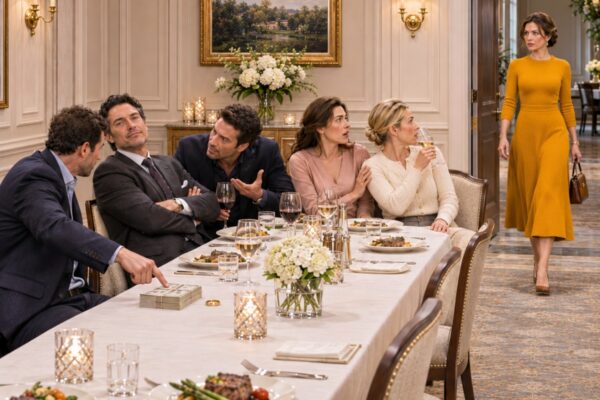
In August the doors of the old bank opened on the summer showing of the Bellagio collection. Josie came through them in blood-red velvet cut to fit her broad hips and the soft curve of her waist, with the pendant warm against her skin and nothing at all on her ring finger. Vincent held her wrap while she stopped to look at the photograph of the shipping yards, now displayed in a different place near the entry where people could read the names of the men on the dock. He had been standing back long enough for her to finish looking when she reached for his arm. Across the room, the first person to fall silent was Diane Bell.
Diane came over holding a drink she appeared to have forgotten she was holding. She said everybody was very glad Josie had been able to make it this time, which might have been an ordinary thing to say if they hadn’t both known who had laughed near that very spot in February. Josie asked if she remembered the joke about putting aside a second dinner. Diane glanced at Vincent, and he let her look at him exactly as long as it took to understand he was waiting for her to answer his wife. “I remember,” Diane said, and then, in a voice the people nearest them could hear, “It was a cruel thing to say. I’m sorry, Josie.”
Josie had once pictured an apology from that room in great detail, always with Vincent crossing the floor to demand her due, leaving her to stand behind him and look grateful. Now she saw the caterers go by with the first round of dinner plates and realized she was hungry. She told Diane she’d heard her and asked one of the waiters to point out where her mother could sit. From up near the front, Maria lifted her hand impatiently to show she’d already found a chair with a view, and Josie waved back across a roomful of people accustomed to making her wish she could disappear.
The gallery director asked Vincent whether he’d like to give the opening toast. He said the person who knew the collection best was standing right beside him, and offered his wife the microphone. Josie spoke briefly, telling the crowd about a dockworker in the photograph who’d carried a blue lunch box through thirty-two Chicago winters. She introduced herself at the end as Josie, thanked the former workers who’d helped identify people in the picture, and left enough time for them to stand and be seen. Vincent watched several men who had once waited for his permission to speak turn their heads when she moved to hand the microphone back.
“Bored yet?” he asked afterward, leaning down where she could hear him. Josie knew he would kiss her temple if she turned her head, and she did, letting the smile find her in front of everyone who had once studied her for weaknesses. The people with an interest in the Romano business still called Vincent the king of Chicago when they went looking for a favor. But when a glass broke near the front of the room and Josie lifted her hand to signal that Maria was fine, it was Josie’s face they searched before anybody dared to move.
Elena waited until she could catch Josie by the old vault, where the music was low enough for a private word. She wore a black dress and carried a flat cream envelope with one corner bent from being held too tightly. Josie had sent her an invitation herself, with enough space underneath the address to write that she’d be glad to see her whenever she felt like coming. Elena didn’t smile when she thanked her for it, but she said, “You were the only one who called me afterward and asked what I already knew.”
Josie made room beside her near the wall. Elena told her that the last time she saw her father, he’d left a box at her apartment with some family photographs and papers, saying he had errands to finish and would collect it the next day. She had finally opened it and found a few things that seemed to belong to other people, including something she thought mattered to Josie. “My father wrote the date on the back,” she said. “It’s the day somebody first took the money away from your mother.”
The envelope held a photograph of Lorenzo having lunch in New York with a man Josie recognized immediately. Clipped to it was a note in Lorenzo’s handwriting about keeping Vincent occupied until the Carter account was frozen and Josie was out of the penthouse. Across the ballroom a man laughed into the microphone before setting it down, and Josie had time to look up and see that he was wearing the same silver cuff links he had on in the photograph. Julian Hale was coming away from the dais with an easy smile, walking toward Maria’s chair. By the time she managed to say his name, he was standing beside Maria, and her mother had already taken his arm.